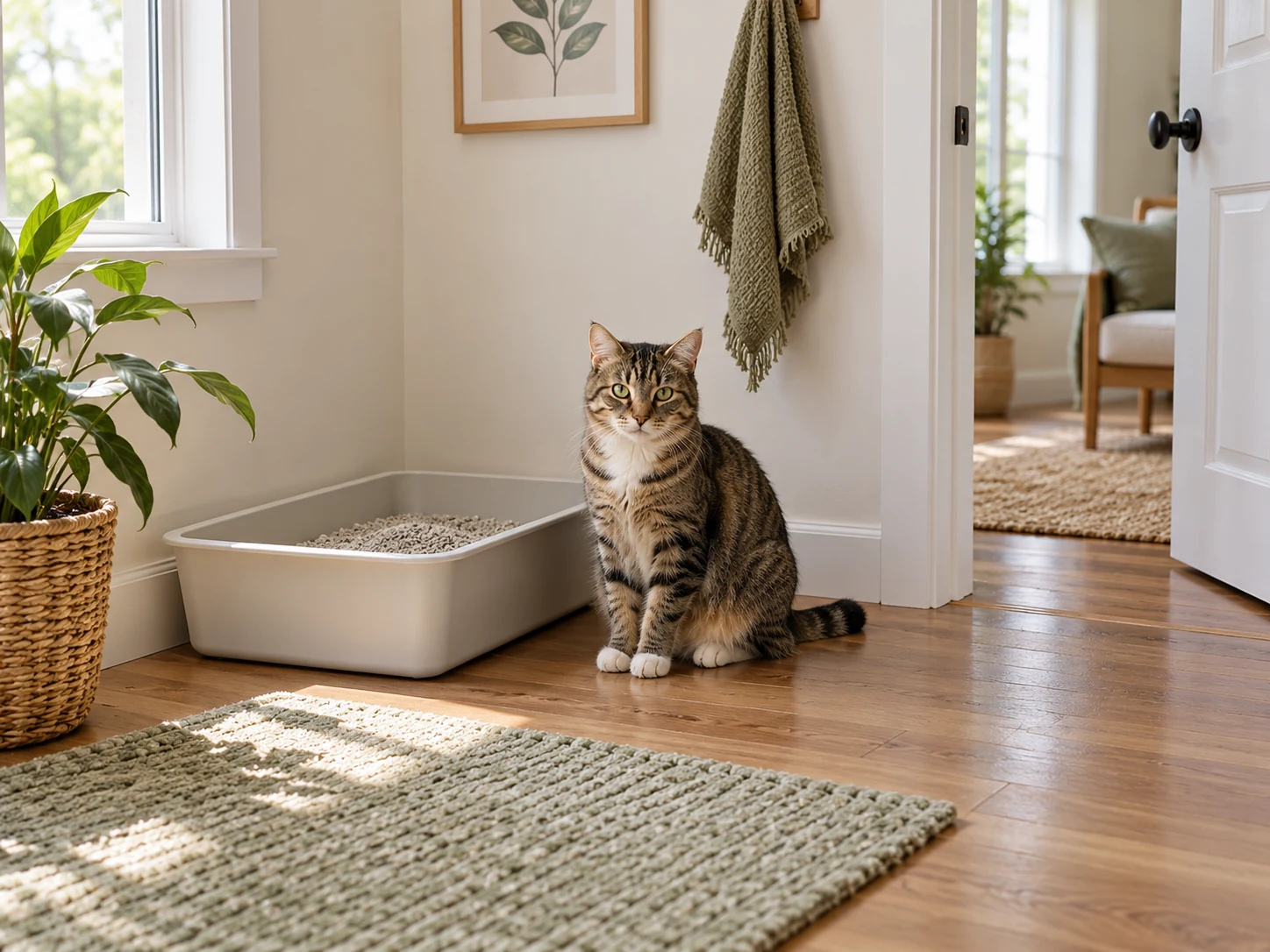
AI-created editorial scene. An open route and room to clean are useful checks; observe your own cat before deciding that a location works.
The best place for a litter box is a location your cat can reach easily, use quietly and leave without being blocked. Start with those conditions rather than the room where the tray is least visible. You also need enough space to inspect, scoop and clean it routinely.
A spare bathroom, bedroom corner or laundry area is only a candidate. Doors, noise, stairs and other animals can change whether that location works. Before buying another enclosure or accessory, assess the routes and care conditions around the box you already own.
Choose the best place for a litter box by access
Cat Friendly Homes recommends quiet locations where a cat cannot easily be cornered, blocked off or prevented from leaving in its litter box guidance. Walk through each candidate from the cat’s usual resting areas, including at night when household doors may be closed.
| Location check | Question | Reason to reconsider |
|---|---|---|
| Reliable entry | Can the cat reach it whenever needed? | A door is routinely shut or access depends on someone noticing. |
| Clear departure | Can the cat leave without passing a blocking animal? | A narrow route creates a bottleneck. |
| Quiet use | Is it away from startling noise and busy traffic? | A machine starts nearby or people repeatedly interrupt. |
| Usable space | Can the cat enter, turn and toilet normally? | Furniture crowds the tray or a cover limits movement. |
| Daily care | Can you reach the entire box? | The hiding place makes cleaning awkward. |
Reject a location with a clear access problem before comparing its appearance. A discreet spot has little value if the cat cannot reliably use it.
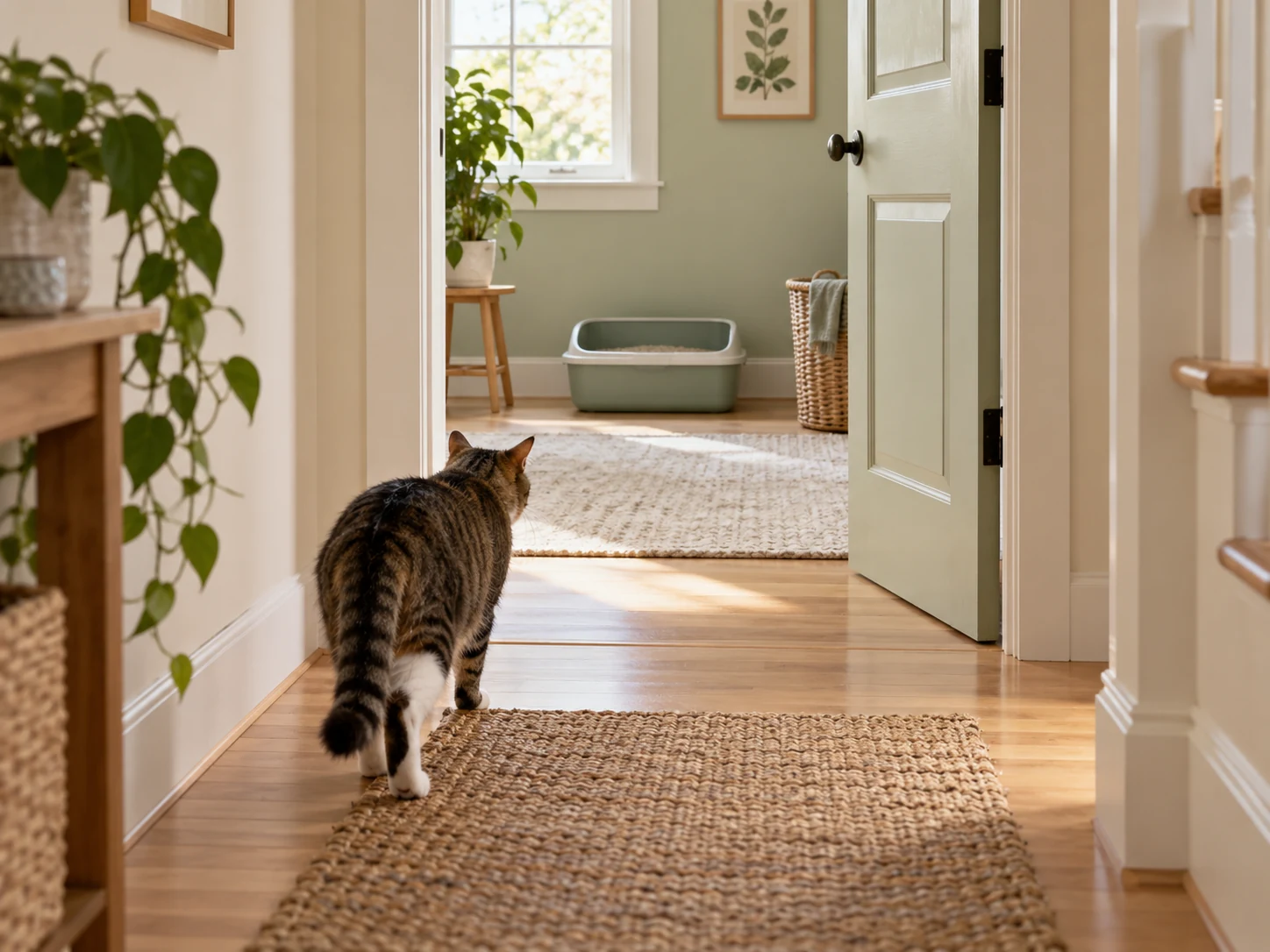
Check the room during ordinary household use
An empty room can look suitable during setup and behave differently later. A bathroom may be locked or closed. A hallway may become busy. A laundry machine can introduce a sudden noise that was absent when you first placed the tray.
Cat Friendly Homes identifies startling noise and negative experiences near the box as possible contributors to avoidance in its house-soiling guidance. That does not mean every laundry room is unsuitable; assess the actual equipment, route and cat’s response.
Include the people who use the space
Check whether a door can remain accessible without compromising the household’s ordinary needs. If a room is unsuitable whenever someone showers, sleeps or works, it may be a poor sole toilet location. Discuss the route with everyone who uses it.
Look for obstacles at floor level, including laundry baskets, stored supplies and moving doors. A route that requires the cat to squeeze past items may become inaccessible after routine tidying or storage changes.
Give each cat meaningful location choices
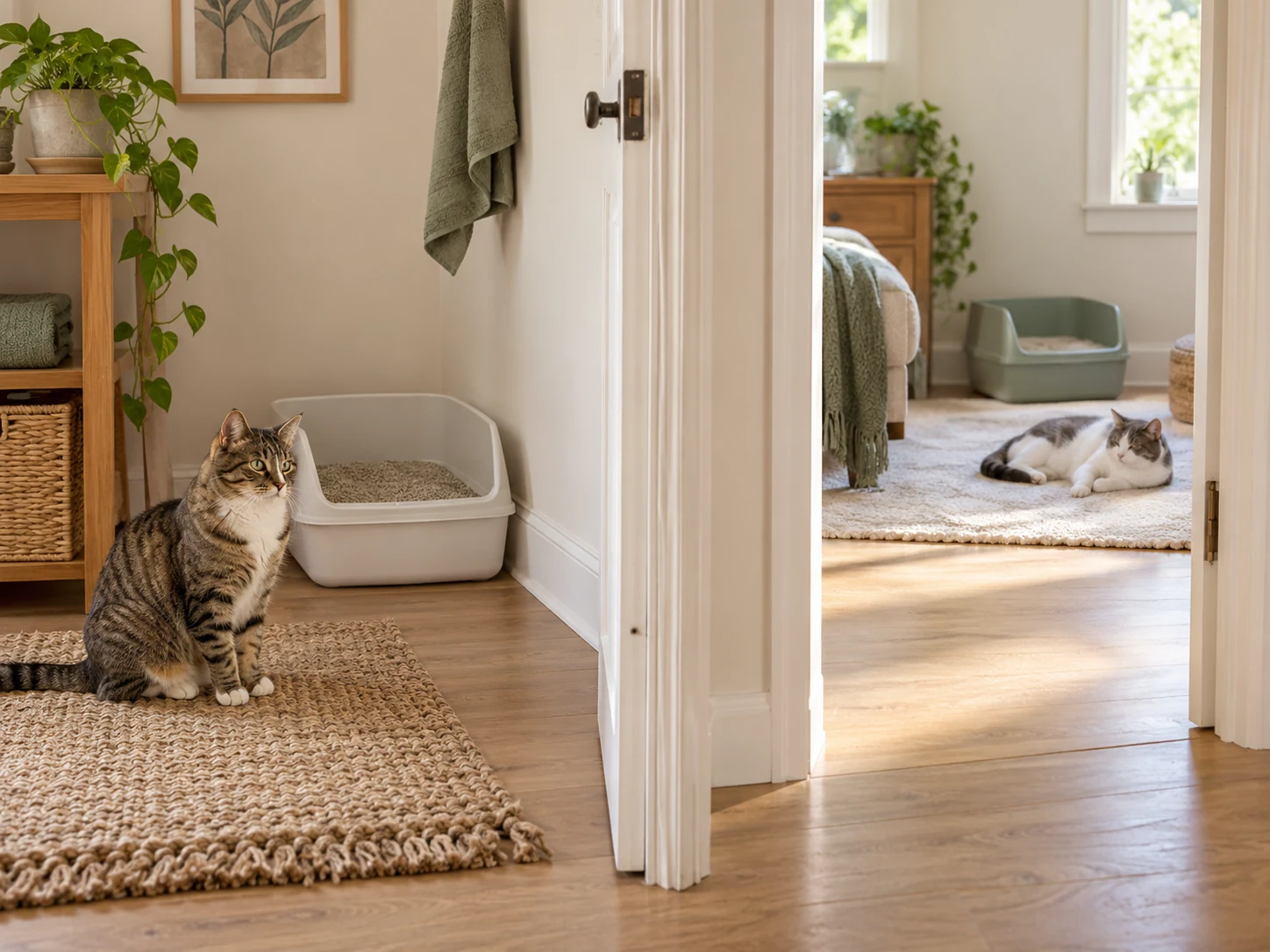
The general Cat Friendly Homes recommendation is one litter box per cat plus one additional box, placed in separate locations. Boxes clustered together can function as one shared resource area rather than offering independent access choices.
For two cats, that starting recommendation means three boxes, but location still matters. One animal should not have to pass another cat stationed in a narrow hallway to reach every toilet option. Watch the routes rather than assuming a larger total solves the problem.
Think vertically in a multi-level home
Cat Friendly Homes recommends a box on each level. For an older cat, it emphasizes keeping a box on the level where the cat spends most time. Stairs can become a practical barrier even when a cat could previously manage them.
When choosing the best place for litter box access, account for distance, stairs and the cats using the home now. Do not move every tray to a remote basement simply to hide the setup. If movement has changed, discuss the cat’s needs with your veterinarian rather than interpreting the issue as unwillingness.
Keep food and water away from the toilet area
Cat Friendly Homes advises separating food and water from litter boxes. A convenient utility corner is not automatically a good place to group every pet resource. Give the cat useful separation rather than arranging all equipment around a single outlet or cabinet.
Human food preparation needs consideration too. The CDC’s guidance on cats advises keeping litter boxes away from food preparation areas, children and other animals. A lid or furniture door does not turn stored waste into a clean kitchen item.
Check what happens during cleaning
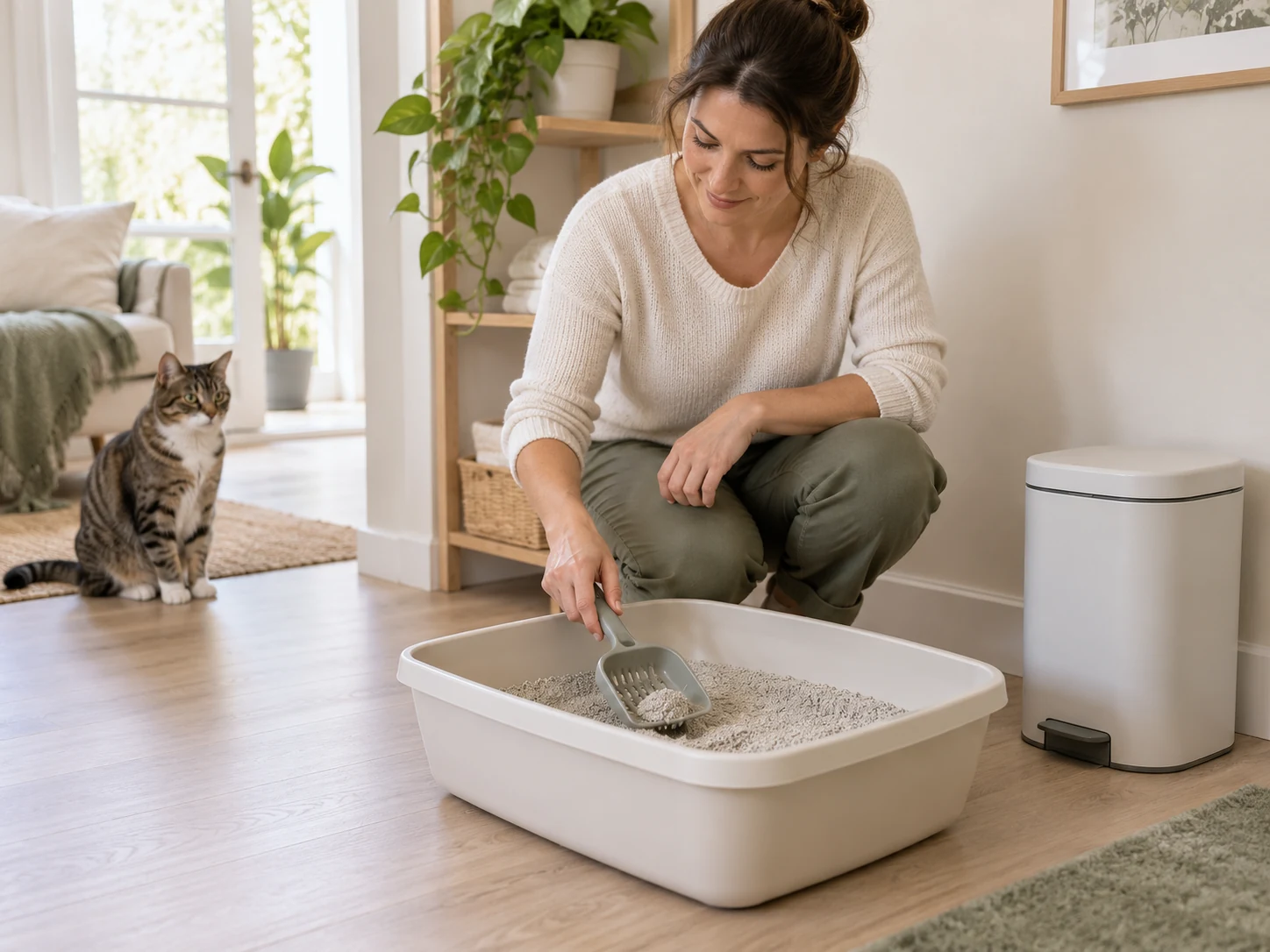
Identify where the scoop, removed litter and waste container will go while you work. Avoid carrying an overloaded scoop across the room or setting used tools on food surfaces. Wash hands after cleaning, even when you used a scoop.
The CDC advises that another person handle litter cleaning where possible for someone who is pregnant or has a weakened immune system. The location should support a practical household care plan rather than make that task harder to organize.
The best litter box location leaves room to clean
The best place for litter box care leaves access to the far corners, the floor around the tray and any lid you need to remove. A box tucked beneath a shelf may fit physically while making ordinary scooping awkward. Trace a complete cleaning cycle before treating the location as finished.
Cat Friendly Homes recommends waste removal at least daily and periodic washing of the box. Choose a location where you will notice a problem and maintain that routine. Out of sight should not become out of inspection.
Preserve enough usable tray space
The same guidance recommends a box around one and a half times the cat’s nose-to-tail-base length, with room for normal movement. Do not choose a cramped tray simply because it fits a decorative gap.
If you already use an automatic box, follow its exact installation and service requirements too. Room placement does not establish that a machine can operate inside furniture or against an obstruction. The Neakasa versus Litter-Robot comparison addresses different equipment designs; the chosen machine’s own instructions still control its setup.
Test a new location without removing reliable access
Where practical, offer a suitable box at the proposed site while retaining an established option. Watch normal visits, not just investigation of a fresh tray. A cat stepping into the room is not evidence that it uses the location comfortably for toileting.
Keep the litter and tray familiar when the question is location. Changing surface, box design and room together makes a refusal harder to interpret. Avoid forcing the cat into the box or repeatedly placing it there to prove the site works.
Use a short location record
Note which cat visits, whether the route stays open, interruptions and how manageable cleaning is. Include evenings and overnight conditions rather than judging only a quiet daytime period. If another animal waits near the entrance, record that interaction too.
A site that looks ideal on a floor plan may need adjustment after observation. You can revise the route, restore an option or choose another room without buying a new container. The goal is dependable access, not making the original plan succeed at any cost.
Do not treat a toileting change as a placement diagnosis
A blocked or noisy site can matter, but it is not the only explanation for a cat avoiding the box. Cat Friendly Homes describes physical, social and medical needs as possible contributors. Its guidance advises veterinary assessment when a cat starts house-soiling.
Do not punish the cat or assume spite. Record what changed and discuss concerning behavior with your vet. Moving the tray repeatedly can make the setup less predictable while leaving the underlying cause unresolved.
Litter box location questions
Is a bathroom always the best choice?
No. It can work when access remains reliable, the space is suitable and cleaning is practical. A bathroom door routinely closed against the cat can make it a poor sole location.
Can all the boxes stay together?
Separate locations provide more meaningful choices. A cluster can leave every box behind the same blocked route or social bottleneck.
Should I hide the tray in a cabinet?
Only if cat access, usable space and cleaning remain suitable. Concealment is an optional preference; it does not outweigh a reliable toilet setup.
Do I need to buy something before changing the location?
Not necessarily. First assess the existing tray, route, room use and care conditions. Placement can often be improved with the tray and equipment you already have.
Choose access you can preserve every day
The best place for a litter box combines a quiet route, an easy exit, enough space and reliable care. Check doors, noise, stairs, other animals and overnight conditions before deciding. Keep a familiar option during a trial, observe the individual cat and involve your vet when toileting changes raise concerns.
Comments are reviewed before they appear publicly. Please keep questions and feedback relevant to this article.