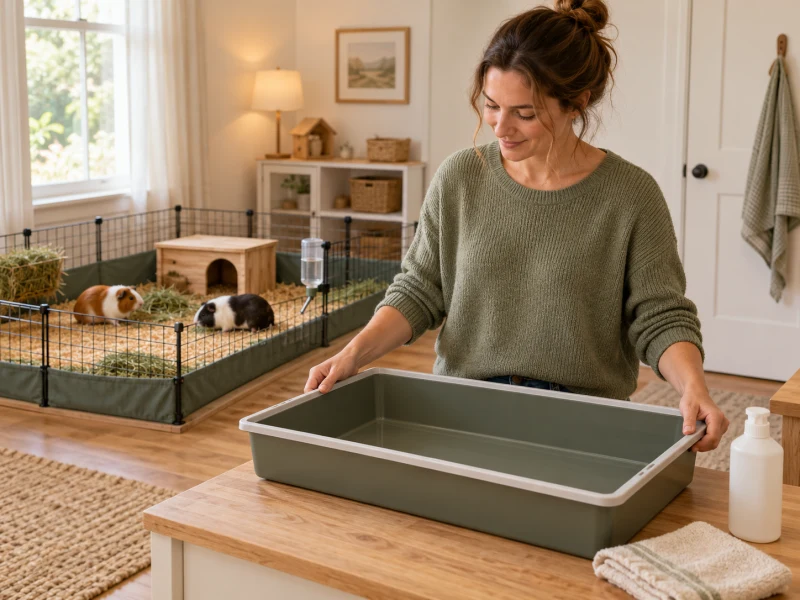
AI-created generic small-pet habitat cleaning scene; not a named-model product photograph or a hands-on test.
A cage cleaner for guinea pigs should fit a complete cleaning routine: move the animals to a secure place, remove soiled material, use the product exactly as labeled, remove residue and let the habitat dry before the guinea pigs return. “Natural” or “enzyme-based” does not mean a spray can be used around an animal without precautions.
One optional commercial cleaner is the 16 fl oz Absolutely Clean Small Animal Cage Cleaner, Amazon ASIN B0761471F1. Its manufacturer describes an enzyme cleaner and deodorizer for cage mess. The checked information does not establish a specific pathogen-killing claim, so do not rely on it as a disinfectant.
Choosing a cage cleaner for guinea pigs
Start with what needs removing and what the enclosure is made from. Wet bedding, old food and accumulated waste need physical removal before a surface product can do its job. A pleasant smell after spraying is not proof that the underlying material is clean or dry.
PDSA’s guinea-pig housing guidance describes daily removal of wet or dirty bedding and old food, regular cleaning of food and water containers, a weekly thorough clean and a more complete periodic clean. Adjust attention to actual conditions rather than waiting for a calendar date when bedding is already wet.
| Situation | First action | What a bottle cannot establish |
|---|---|---|
| Wet bedding or fleece | Remove and replace or launder the soiled material appropriately. | Spray does not make a wet sleeping surface dry. |
| Food debris and droppings | Remove loose material before treating the empty surface. | Odor reduction does not replace waste removal. |
| Routine marks on a washable tray | Choose a label-compatible cleaner, then remove residue and dry. | A broad surface claim does not prove compatibility with every finish. |
| Suspected infection or a prescribed disinfection need | Ask the veterinarian for the appropriate product and process. | A general enzyme cleaner is not a verified germ-kill treatment. |
| Repeated strong odor soon after cleaning | Inspect bedding, leaks, ventilation and hidden soiled areas. | More fragrance does not explain why the problem returns. |
What the Absolutely Clean bottle is for
The manufacturer’s Small Animal Cage Cleaner page describes enzymes intended to break down cage stains and odors. It says the treated habitat is rinsed and wiped afterward. That supports a routine-cleaning role, with the current packaging instructions controlling the actual use.
The selected retailer image shows a 16 fl oz spray bottle labeled for small animal cages. The manufacturer also offers other sizes and a separate concentrate option. Do not transfer a concentrate’s dilution instructions to a different bottle or assume a marketplace selection has the same formulation as an older purchase.
The brand makes broad claims about gentle cleaning and several surface types. Those are manufacturer statements, not independent proof that the product is safe to lick, safe to spray onto guinea pigs or suitable for every enclosure finish. Check the current label and the enclosure maker’s instructions, and test an inconspicuous area when the material guidance calls for it.
Consider the 16 fl oz Absolutely Clean Small Animal Cage Cleaner for routine removal of cage mess and odor when the current bottle instructions suit the surface. Do not choose it as a verified disinfectant or as a replacement for removing wet bedding, rinsing residue and drying the enclosure.
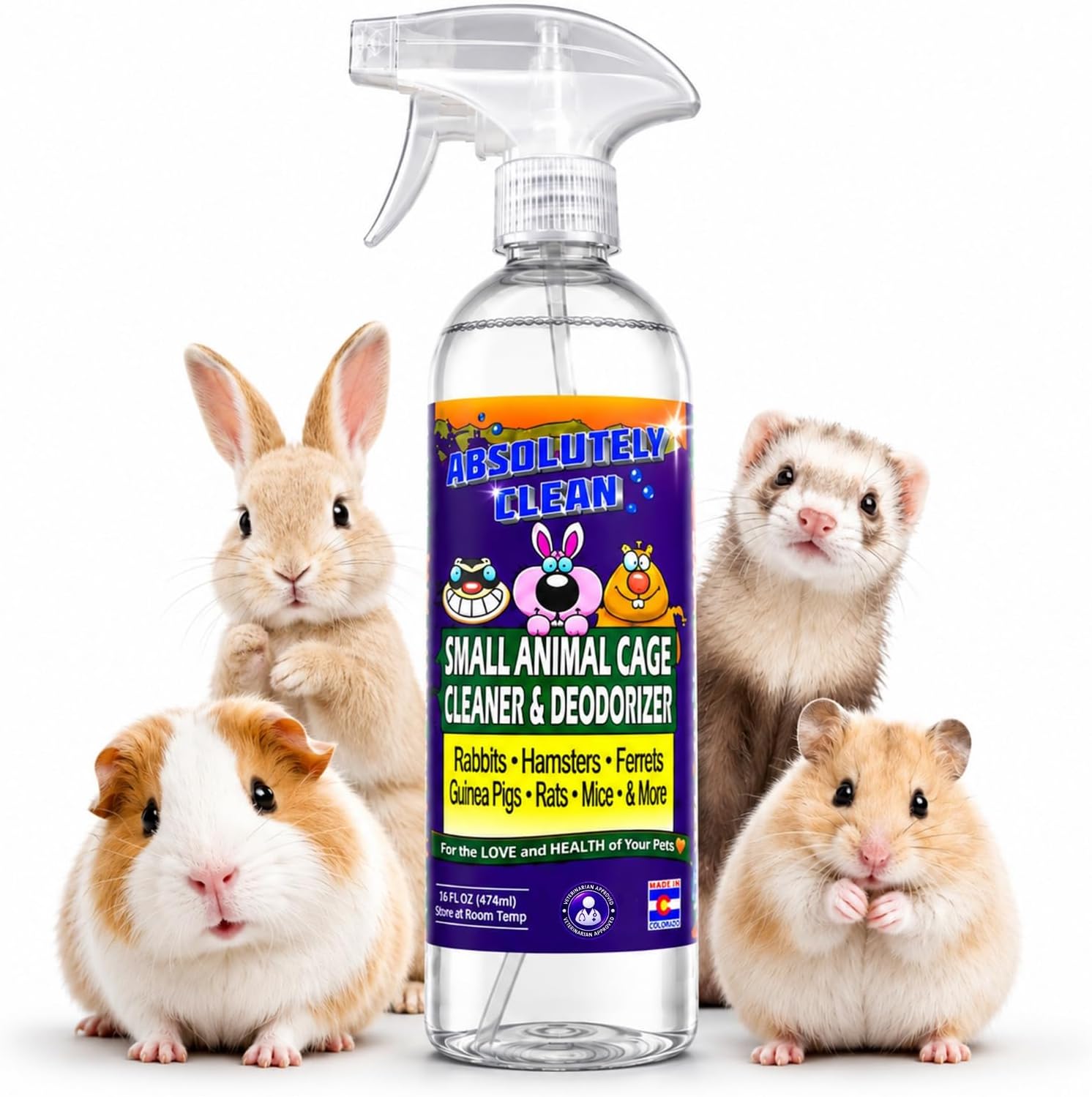
PRODUCT MENTIONED
Absolutely Clean Small Animal Cage Cleaner — 16 fl oz
Amazon · Details on the retailer’s website
Move the guinea pigs before using cleaner
Prepare the temporary space first so the animals are secure while the enclosure is unavailable. Provide a suitable hide and their ordinary essentials, keep them away from cleaning supplies and supervise the arrangement. Do not leave them on an open countertop or in the room where a product is being sprayed.
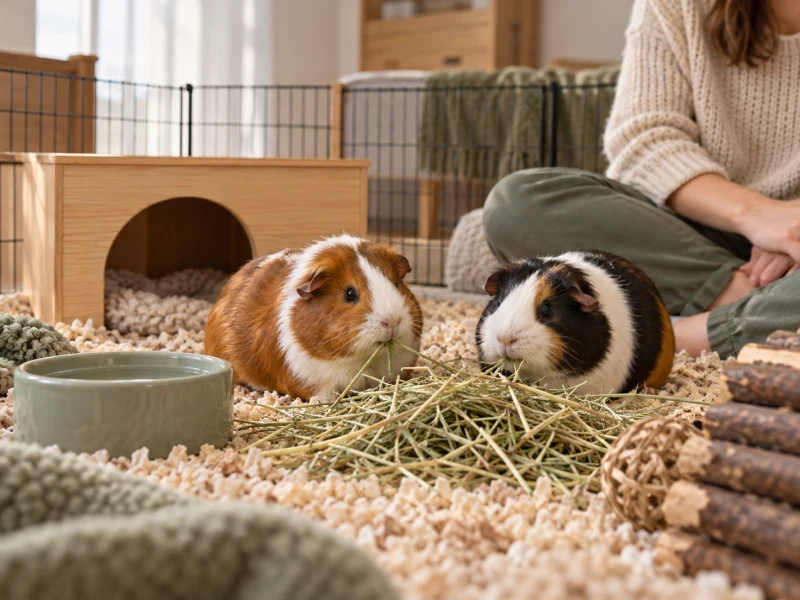
PDSA’s cleaning-product safety guidance advises keeping pets away during cleaning, following packaging instructions, removing excess product with clean water and allowing surfaces to dry before pets return. Those precautions still matter when a product is marketed for animal habitats.
Keep the animals’ food, hay, toys and water containers out of the treatment area. Use separate tools for the habitat and household food preparation. Store the bottle securely after use, rather than leaving it beside the pen where an inquisitive animal can reach it.
Using a cage cleaner for guinea pigs: a practical sequence
Read the specific bottle before starting. The manufacturer page does not establish a dilution ratio or contact time for this bottle; do not guess those instructions. If those instructions are missing or illegible, obtain them from the maker before applying the product.
- Place the guinea pigs in their prepared secure space, away from the cleaning area.
- Remove bedding, food remnants and loose waste from the habitat.
- Check that the empty surface is compatible with the current product label.
- Apply only as directed; do not mix products or improvise a stronger solution.
- Remove residue using the rinsing and wiping steps required by the label and material.
- Allow the habitat and permitted components to dry completely.
- Add clean bedding and restore hides, hay and water before returning the animals.
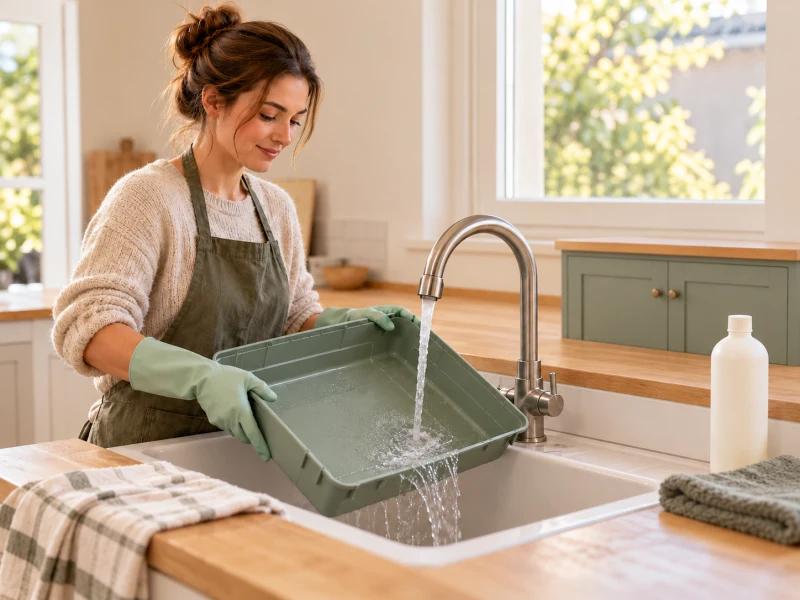
Use the least complicated process that follows the actual instructions. A spray labeled for routine cleaning is not a reason to saturate porous wood or soak joints that the enclosure maker says to keep dry. If a part cannot be cleaned or dried effectively, assess that material problem separately.
Check corners, seams, undersides of hides and the area around the water supply. A leaking bottle or repeatedly damp patch can make the enclosure smell again quickly even when the main tray was cleaned well. Address the cause instead of covering it with additional product.
Rinsing and drying deserve as much attention as spraying
The step after treatment matters because guinea pigs live close to the surfaces you clean. The manufacturer’s page describes rinsing and wiping; PDSA similarly advises removing excess cleaning product and returning animals only when the area is dry. Follow the exact delivered label if it gives more specific requirements.
Do not judge readiness from a timer alone. Inspect seams and removable parts as well as the middle of the tray. Keep a clean temporary arrangement available long enough to finish the job rather than rushing animals back because the visible surface looks nearly dry.
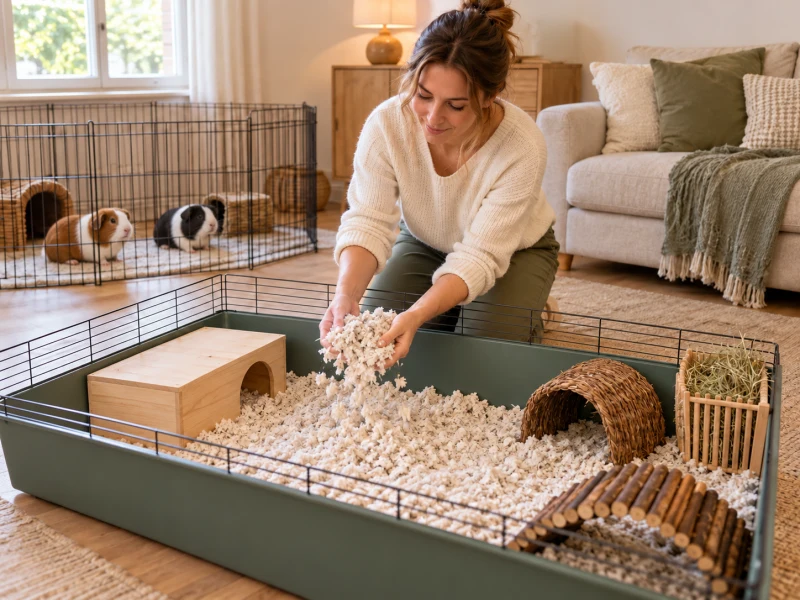
Fresh bedding also needs a clean starting point. Putting dry fleece over a wet tray does not establish a dry habitat. Restore the enclosure only after the treated components are ready, then watch for a new leak or a damp area that returns.
When a cage cleaner for guinea pigs is the wrong fix
A cleaner is the wrong tool for a problem that needs a different response. Persistent moisture may involve bedding or water leaks; inadequate space and ventilation need habitat changes. A new or concerning change in the animals themselves needs veterinary attention, not a stronger deodorizing routine.
If a veterinarian has advised disinfection because of illness, ask which product, dilution, contact time, rinsing and material precautions apply. Do not assume the enzyme cleaner meets that purpose. Cleaning and a specific disinfection process are separate claims.
Similarly, avoid interpreting the words “natural” or “veterinarian approved” as proof of a documented independent review of your particular setup. The relevant practical evidence is the current product label, a compatible surface and a process that keeps the animals away until the habitat is ready.
Before you buy a cleaning product
Check what is already causing the mess and whether ordinary removal of soiled material plus the appropriate wash routine solves it. A commercial bottle may help with routine stains and odor, but it adds storage, label-checking, residue removal and drying work rather than replacing those steps.
If that role fits, review the 16 fl oz Absolutely Clean Small Animal Cage Cleaner on Amazon. Confirm the selected size, current directions and material compatibility before use. Keep the product away from the animals and use it for the documented cleaning purpose.
Common questions
Can I spray cage cleaner while my guinea pigs are inside?
Move them to a suitable secure place away from the treatment area first. Follow the bottle instructions, remove residue and let the habitat dry completely before returning them.
Is the Absolutely Clean enzyme cleaner a disinfectant?
The checked material supports a cage-cleaning and deodorizing role. It does not establish a specific pathogen-killing claim. Use veterinary guidance for an actual disinfection need.
Does a natural cage cleaner for guinea pigs need rinsing?
Follow the specific label. The manufacturer page for this cleaner describes rinsing and wiping after application, and PDSA advises removing excess cleaning product with clean water. “Natural” is not permission to leave residue.
Should stronger odor mean using more spray?
First inspect wet bedding, hidden waste, a leaking water source and the habitat conditions. More product can add residue without solving the reason the smell returns.
View Absolutely Clean Small Animal Cage Cleaner — 16 fl oz on Amazon.
Comments are reviewed before they appear publicly. Please keep questions and feedback relevant to this article.