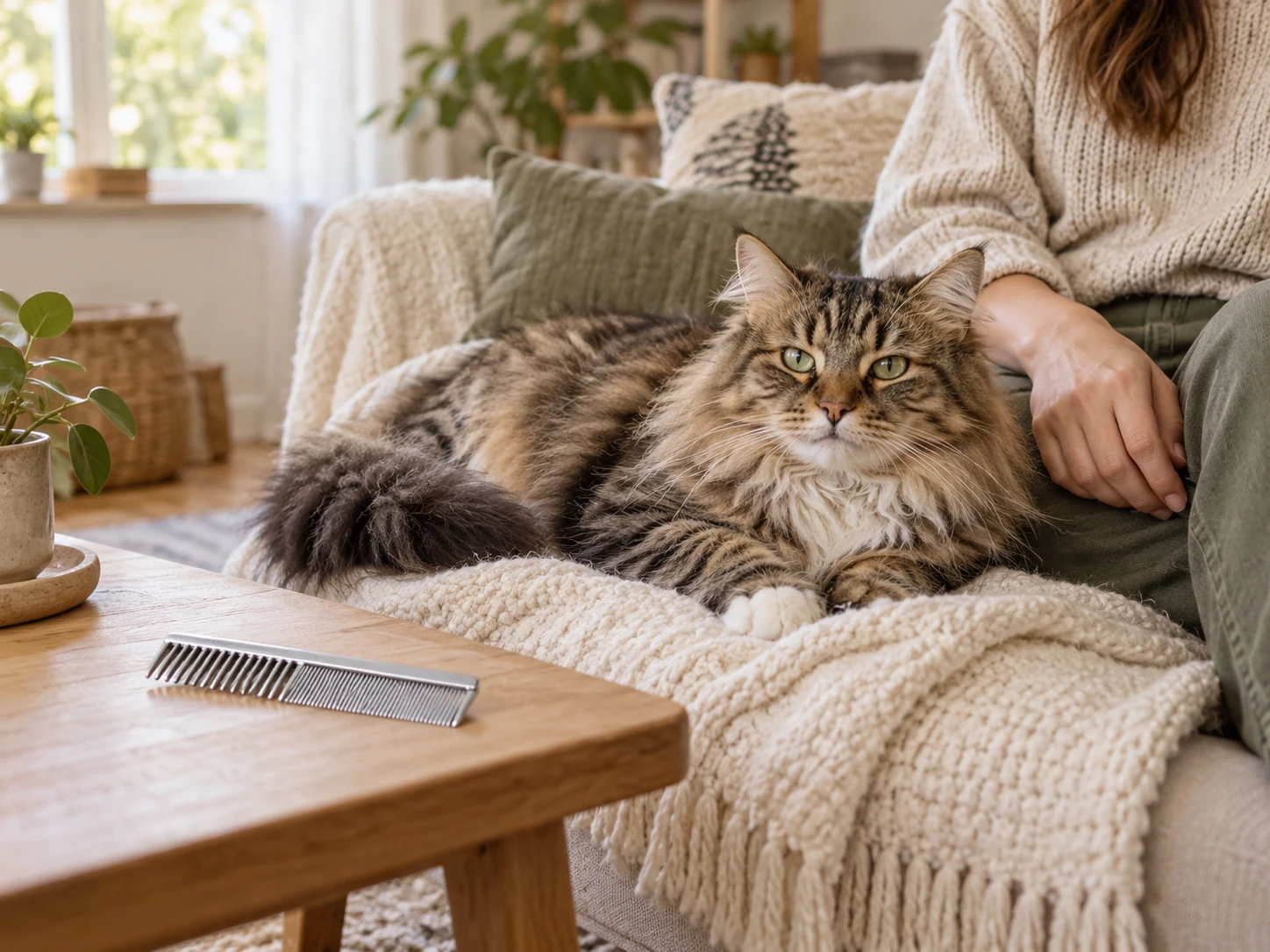
AI-created editorial scene. The comb is generic, and the cat's coat and response still determine tool suitability.
A cat comb should match the coat and a grooming routine your cat accepts. A metal comb can help check accessible hair and collect loose material, but it should move gently rather than pull through a tight mat or scrape the skin.
The specified Andis 65730 is a 7½-inch stainless-steel comb with coarse and fine teeth. Consider it as one maintenance tool, not a universal answer for every coat or a reason to attempt difficult mat removal at home.
Choose a cat comb by the actual coat
Start with the hair and the cat, rather than the tool category alone. Coat length, density, existing tangles and tolerance for handling can change what is useful. A comb that moves easily on one cat can be an uncomfortable choice on another.
Cats Protection’s grooming guidance describes combs as useful for long-haired cats, while some short-haired cats may prefer a soft brush or grooming mitt. The cat’s preference matters alongside coat length. Buying metal teeth is not automatically an improvement over a softer tool that already works.
Look at the task you want to do. Collecting accessible loose hair, checking an area already gently brushed and working on a dense mat are different jobs. Choose a routine you can stop at resistance. You do not need to remove every snag before ending the session.
For an unfamiliar coat, ask a veterinarian or an appropriately experienced cat groomer to assess the tool and demonstrate comfortable routine care. A product photograph cannot establish how far its teeth reach into your cat’s coat or how the cat will respond.
| Coat or situation | Useful consideration | Reason to pause |
|---|---|---|
| Long coat with accessible loose hair | A suitable comb and gentle demonstrated handling | Teeth catch repeatedly or the cat pulls away |
| Short coat already maintained comfortably | Whether a soft brush or mitt meets the task | Adding a metal tool without a clear need |
| Fine finishing check | Tooth spacing that moves without resistance | Using the fine section to force through a knot |
| Dense mat or hidden skin | Veterinary assessment and an appropriate care plan | Pulling harder or reaching for scissors |
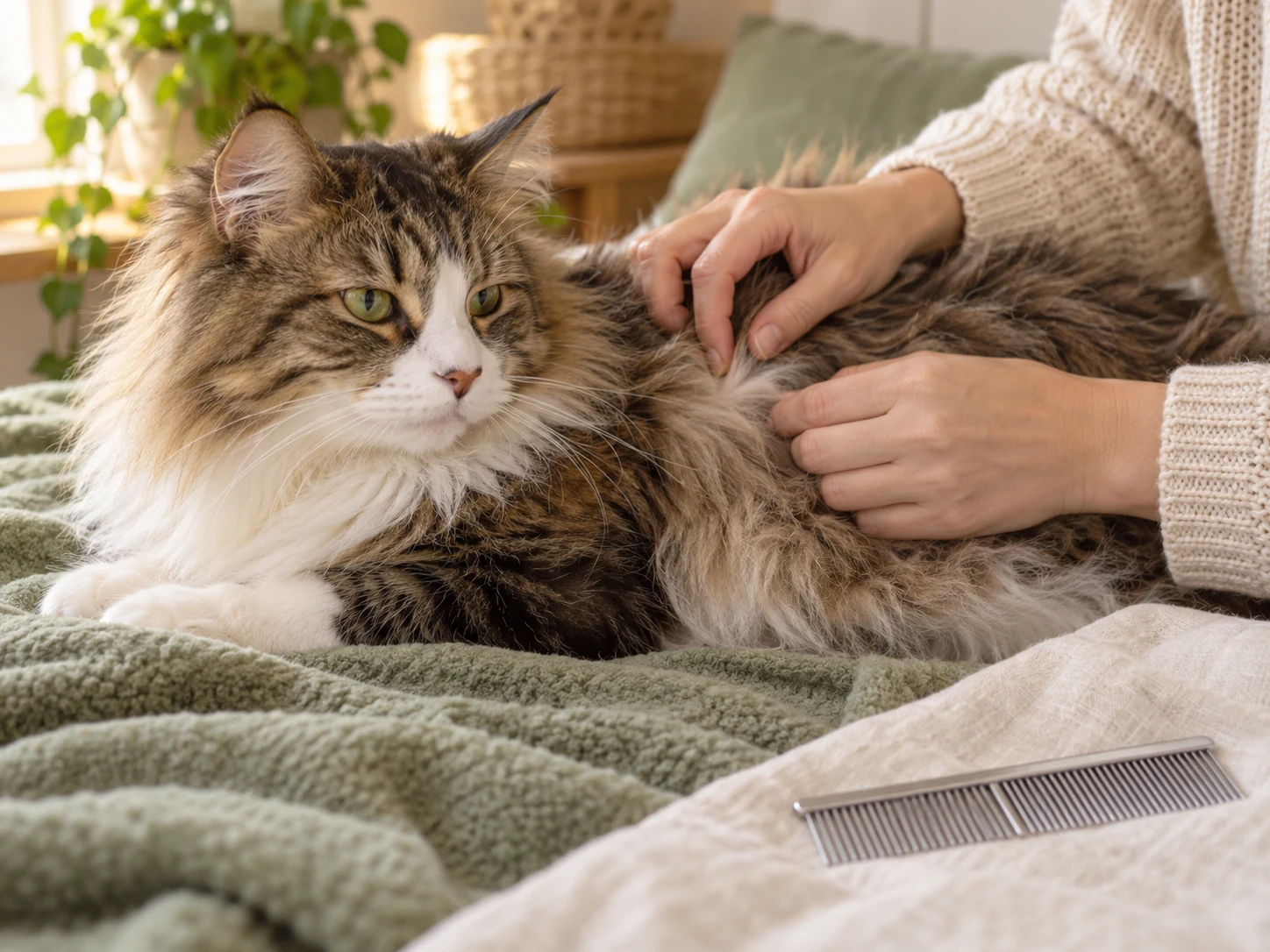
Coarse and fine teeth have different working spaces
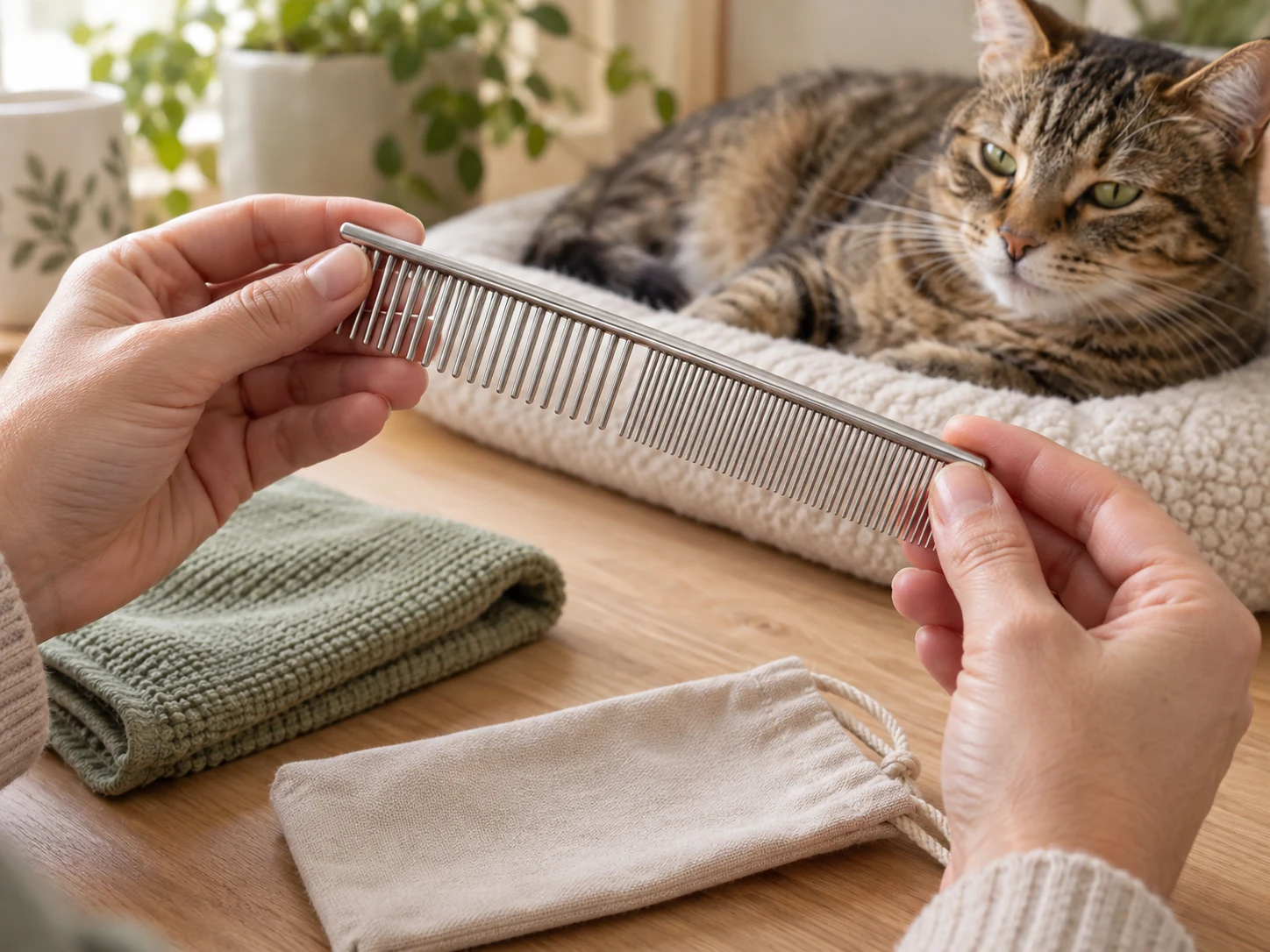
A combined comb offers two tooth spacings along one spine. That gives you a choice of contact area, not two stages that every coat must pass through. The closer section can catch where the wider section appears to move freely.
Ask the person demonstrating the routine to show which section suits the actual area and when to stop. Do not push the fine teeth toward the skin or pull a knot through the wider section.
A comb can provide useful feedback: a smooth passage and a repeated catch are different observations. Treat the catch as information about the coat, the tool or the working position. It is not an instruction to add pressure.
Rounded ends also have limits. They do not remove the possibility of uncomfortable pressure or pulling hair. Inspect the teeth and keep contact gentle. The cat’s response matters more than the listing’s safety claims.
A cat comb option: Andis 65730 stainless steel
The selected Amazon listing is Andis 65730 Stainless-Steel Comb, silver, 7½ inches, ASIN B004UTDHP2. Its current item-model field identifies 65730, and its product description specifies coarse and fine teeth. The main image shows both tooth spacings on one straight comb.
For an appropriate routine, check the Andis 65730 7½-inch stainless-steel comb on Amazon. Confirm the delivered label, tooth condition and supplied care directions rather than choosing another Andis comb by a similar photograph.

PRODUCT MENTIONED
Andis 65730 Stainless-Steel Grooming Comb — Silver, 7.5 Inch
Amazon · Details on the retailer’s website
The useful feature is a simple manual tool with two spacings and no motor or charging routine. Its size still needs to feel controlled in your hand and suit the accessible area. A long straight spine may be less convenient around a small or sensitive area than it appears in a product image.
The retailer describes use across dogs, cats and different coat lengths. That broad description does not establish a suitable routine for every cat. Nor do claims about circulation, static reduction or effortless dematting establish measured health or grooming benefits.
Snag resistance, tooth finish, corrosion resistance, grooming time and durability have not been independently verified for this comb. Exact tooth-gap measurements also remain unverified. Check the actual teeth rather than assuming a numerical spacing from the coarse and fine labels.
Keep the model number visible when ordering. A current Andis comb with another part number is not automatically the same 65730 product or package. Confirm dimensions, coating and care for 65730; a newer model’s specifications do not establish those details for the older listing.
Inspect the cat comb and skin before grooming
The ASPCA’s cat-grooming guidance advises checking the coat and skin and obtaining professional help if grooming could lead to injury. Bald patches, wounds, unusual bumps or a painful response should change the task before a comb touches the area.
Look gently at accessible areas without forcing the coat apart. Stop if hair clings close to the skin, you cannot see the skin or the cat guards the spot. Do not try to make the problem visible by digging the comb beneath it.
A change in self-grooming also matters. A cat suddenly grooming much more or less may need veterinary assessment. Buying a finer cat comb does not tell you whether mobility, pain, skin disease or another factor explains the change.
Inspect the tool separately for bent, loose or rough teeth, debris and damage. Follow the supplied care directions rather than filing, bending or improvising a repair. Keep a questionable tool off the coat until you resolve the issue.
Keep introduction short and comfortable
Choose a quiet location with secure footing and an easy stopping point. Allow the cat to become comfortable with the tool nearby before expecting a complete coat session. Work in small stages rather than combining unfamiliar touch, position and combing at once.
Cats Protection recommends introducing grooming gradually with as little restraint as possible. For a cat with previous frightening experiences, get qualified help with the introduction. Holding the cat still does not establish comfortable acceptance.
Watch the whole response. Tension, attempts to leave, repeated turning toward the tool or an uncomfortable reaction are reasons to pause. Do not keep going to finish one side or to match the appearance of the other side.
Once the cat accepts gentle work on a small, appropriate area, keep the routine predictable. The useful measure is whether the task stays gentle and manageable. More minutes or more collected hair do not automatically mean better care.
Treat a mat as a different problem
Cats Protection’s long-haired-cat guidance warns that brushing tight mats near the skin can tear skin and that cutting them out with scissors is particularly dangerous. A metal comb marketed for dematting does not remove that boundary.
If the cat comb catches on a mat, stop and contact your veterinarian for an appropriate plan rather than force it apart. The required handling and any clinical support depend on the cat and the area. Your veterinarian should decide whether the cat needs sedation or a particular clipping procedure.
Keep routine maintenance separate from that assessment. Do not insert scissors beneath a comb as though the teeth create a reliable skin shield. Hidden skin can move with the coat, and a comb does not certify a cutting line.
- Stop for resistance. Repeated catching calls for reassessment.
- Stop for hidden skin. Do not work blindly beneath a compacted patch.
- Stop for discomfort. Do not trade restraint for a finished appearance.
- Stop for skin changes. Seek suitable veterinary advice.
- Stop for tool damage. Inspect the comb away from the cat.
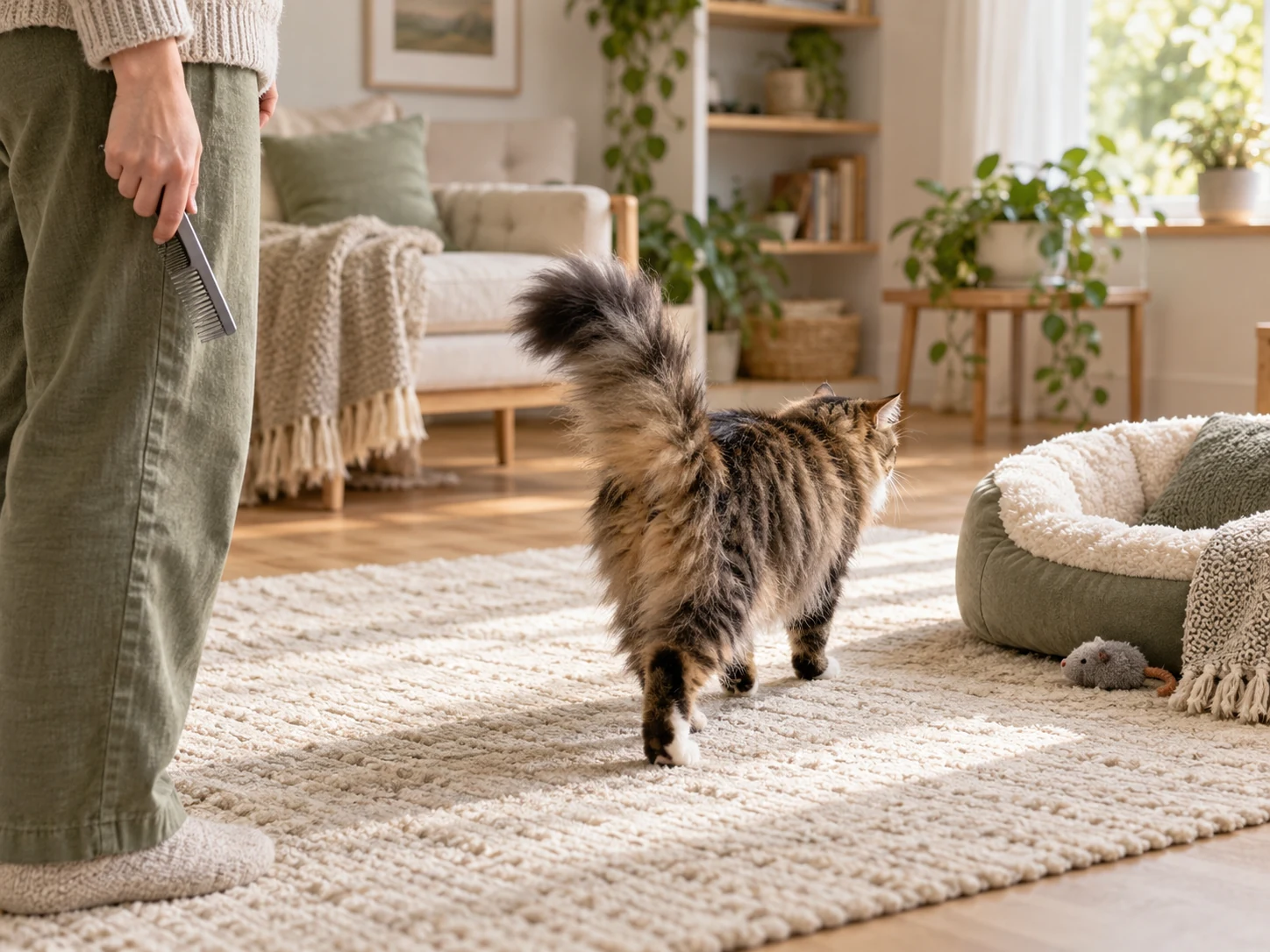
Cat comb care: set a routine and protect the teeth
Set the routine from the coat’s condition and the advice you receive. Cats Protection suggests more frequent attention for long-haired cats than many short-haired cats, but a general calendar does not override discomfort, existing mats or an individual care plan.
Older cats or cats with reduced mobility may need changes to the handling arrangement. Keep the posture comfortable and ask for advice when a previously easy area becomes difficult. That is a reason to reassess the cat, not automatically extend grooming time.
Remove collected hair, follow the comb’s cleaning instructions and store it dry and protected from damage. No specific chemical soak or sterilization method has been verified for this exact listing. Do not assume stainless steel makes every cleaner appropriate.
Keep useful notes on recurring snags, the cat’s response and any change in self-grooming. Those details can help a professional adjust the routine. Use those observations to review your cat-comb routine rather than buy another tool whenever hair remains on the coat.
Frequently asked questions
Does every cat need a metal cat comb?
No. Coat type, the actual task and the cat’s preference matter. Some short-haired cats accept a soft brush or mitt comfortably. Consider a comb when it has a clear role rather than treating a metal tool as a necessary upgrade.
Can the fine teeth clear a tight mat?
Do not force them through one. Fine spacing does not make hidden skin safe to work around. Stop at resistance and ask your veterinarian for an appropriate plan when mats are present, especially close to the skin.
Does the 7½-inch size describe tooth spacing?
No. It is the selected comb’s listed size, not a measurement of the gaps between teeth. The product has coarse and fine sections, but the exact gaps remain unverified. Assess the actual tool and the coat together.
Choose a gentle, observable routine
A useful cat comb makes a suitable maintenance task easier to observe and control. Match the tool to the coat, inspect the skin and teeth, introduce handling gradually and stop when the coat or the cat resists the work.
The Andis 65730 is one defined coarse-and-fine comb to consider for that role. Its listing does not prove universal suitability or safe mat removal. Keep difficult tangling and unexplained grooming changes with appropriate professional assessment, and let comfortable routine care guide the purchase.
View Andis 65730 Stainless-Steel Grooming Comb — Silver, 7.5 Inch on Amazon.
Comments are reviewed before they appear publicly. Please keep questions and feedback relevant to this article.