AI-created introduction scene with generic equipment; not a Neakasa test, a required distance or evidence that this cat accepts powered grooming.
A cat grooming vacuum is an optional way to collect loose hair during coat care. It belongs only in a routine the cat accepts voluntarily, with an appropriate attachment and a clear stopping point. A larger bin or a low-noise label cannot establish those conditions.
The Neakasa P2 Pro is a defined option with manufacturer instructions that include cats. That does not make every tool in its five-piece set suitable for every cat. Start with the animal’s coat, health and response to handling before deciding whether collection during grooming would help.
Decide whether a cat grooming vacuum solves a real problem
Separate three tasks: helping maintain the coat, collecting hair during that work and cleaning household surfaces afterward. A cat may accept an ordinary brush comfortably while finding powered equipment unnecessary or upsetting.
Cats Protection’s grooming advice notes that some cats need help, especially with longer hair or reduced ability to groom themselves. It also makes tool choice dependent on fur length and the cat’s preferences. A suitable soft brush, comb or mitt may already meet the need.
Choose collection equipment only after the underlying coat-care task is suitable. If a mat is tight, an area hurts or self-grooming has changed, do not start by increasing suction or buying a sharper attachment. Identify the reason the routine has become difficult.
Read the cat’s response before adding sound and suction
Cat Friendly Homes’ handling advice, contributed by feline veterinarians, recommends inviting the cat to approach, avoiding abrupt movements and limiting handling to the individual’s tolerance. Those principles matter before an appliance is involved.
Watch for a tense body, ears moving back, hissing, crying out or attempts to leave. A cat becoming very still can also be uncomfortable. Stillness without struggling is not enough evidence of acceptance.
| Observation | Practical decision | What it does not prove |
|---|---|---|
| Cat approaches switched-off equipment voluntarily | Keep the encounter easy and brief | Readiness for running sound or coat contact |
| Cat remains comfortable with distant sound | Assess that experience separately | Readiness for every attachment or body area |
| Cat turns away, stiffens or tries to leave | Pause and remove the demand | That stronger restraint is needed |
| Cat accepts a suitable manual tool | Keep that routine available | A need to replace it with an appliance |
| Handling response or self-grooming changes | Arrange appropriate veterinary advice | A simple equipment or training problem |
Read the response in context rather than using one sign as a diagnosis. Noise, position, coat contact and existing discomfort can overlap. A cat should be able to end an ordinary grooming interaction without being chased back to the equipment.
Introduce a cat grooming vacuum in separate, optional stages
Begin in a quiet, familiar area with comfortable footing and a clear way to move away. Let the cat choose whether to investigate the switched-off equipment. Keep the hose still and avoid crowding the animal with unfamiliar objects.
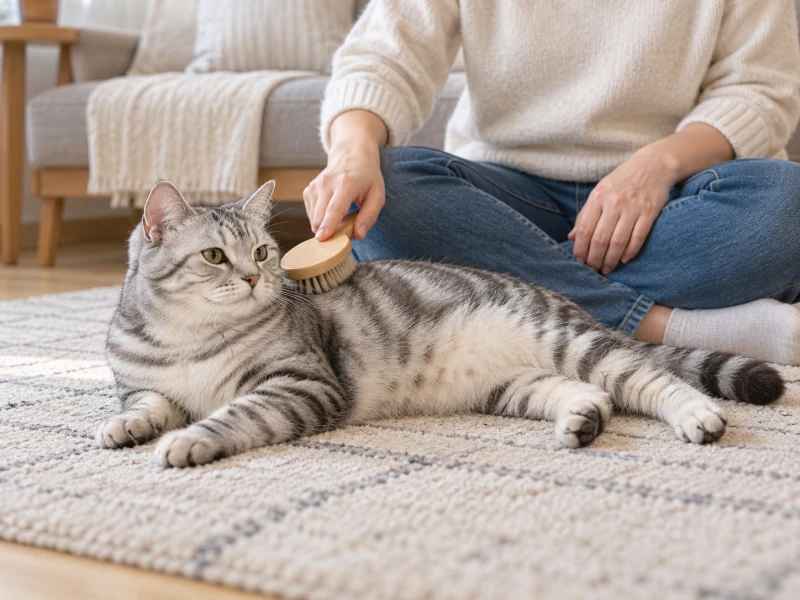
Introduce running sound separately from tool contact, at a distance where the cat remains comfortable. Do not combine the first motor sound with a complete brushing or clipping session. A cat that prefers to leave should be allowed to do so.
Only consider a brief contact trial when the cat already accepts the equipment and the particular attachment is appropriate. Follow the maker’s instructions and obtain a cat-experienced professional’s demonstration when unsure. Progress is conditional; there is no fixed number of sessions that guarantees acceptance.
Cats Protection recommends building grooming gradually with as little restraint as possible. Previous frightening experiences may need a qualified behavior professional’s desensitization and counter-conditioning plan. Do not improvise stronger holding, scruffing or an immobilizing wrap to finish optional powered grooming.
Give each attachment a defined job
The P2 Pro user guide includes dogs and cats in its deshedding-tool section and warns about pressure and skin scratching. Species wording is an entry check, not individual coat approval.
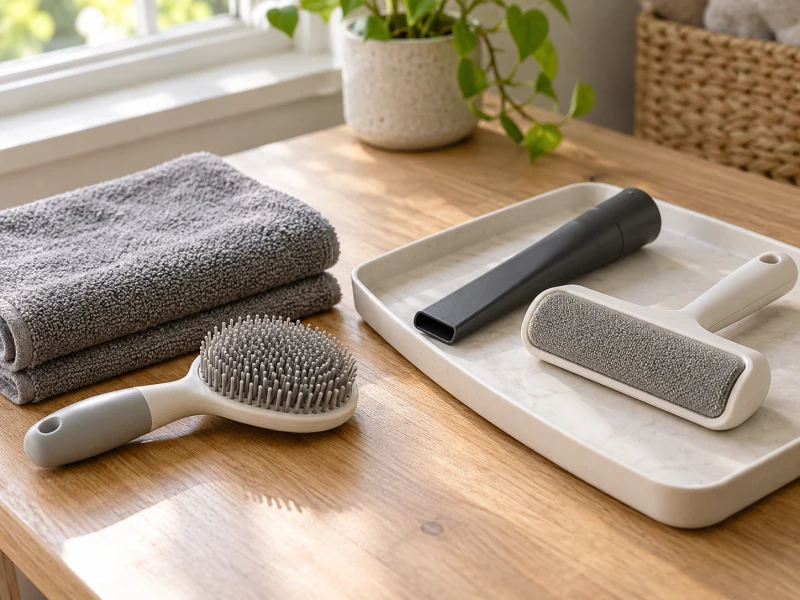
The kit’s grooming brush, deshedding tool and electric clipper have different working surfaces. The cleaning brush and crevice nozzle serve household cleanup roles. Do not place a household nozzle against the cat because it connects to the same hose.
Check pins, teeth, edges and release mechanisms away from the animal. An attachment that catches hair or prompts avoidance needs reassessment, rather than extra pressure or a stronger mode. Keep sensitive areas outside an unfamiliar home procedure.
The five clipper guards are additional length accessories, not five extra coat brushes. Their listed sizes of 3, 6, 12, 18 and 24 mm do not establish an appropriate haircut or safe technique for a cat. Suction collects clippings without supplying the skill needed to use the blade.
Assess the P2 Pro as a conditional cat grooming vacuum
The specified product is the Neakasa P2 Pro Pet Grooming Vacuum Kit, ASIN B0BD4WRWXY. Its manufacturer page lists a 2 L dust cup, a 1.5 m hose and five main tools. The guide shows Eco, Standard and Boost controls.
Three settings offer adjustment; they do not establish that one setting suits all cats. Confirm a manageable location for the base, hose and lead without putting them across the cat’s route. The hose length is a planning dimension rather than a recommended handling distance.
Neakasa advertises 52 dB in Eco mode, while the user guide lists maximum noise of 74 dBA. Those different published figures are not an independent comparison under matched conditions. Neither predicts whether an individual cat will find the sound comfortable.
The brand’s 99% hair-collection and 99.97% filtration statements remain manufacturer claims. They do not establish allergy relief, prevention of hairballs or a stress-free session. The collected amount also does not measure whether brushing was appropriate.
Confirm the US version, plug and the actual machine’s rating label before purchase. The guide requires the voltage specified on the unit; its specifications do not give a numerical US voltage. A regional selector or familiar model name cannot replace the delivered electrical label.
Consider the P2 Pro only when a particular manufacturer-supported grooming attachment suits the coat, the cat accepts its use without force and the household can maintain the appliance. Keep a suitable manual routine when powered collection adds worry, awkward positioning or unnecessary upkeep.
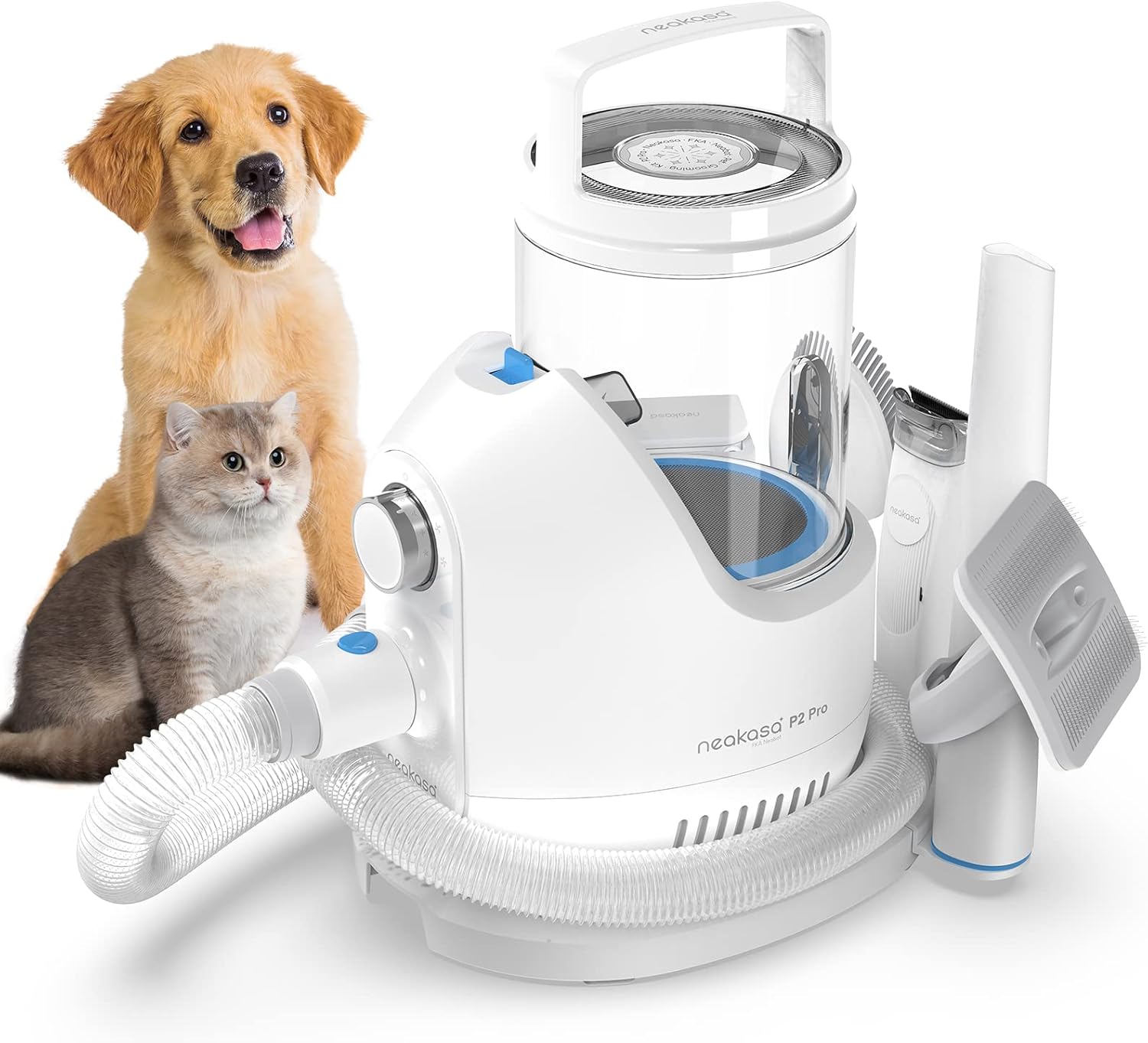
PRODUCT MENTIONED
Neakasa P2 Pro — Pet Grooming Vacuum Kit
Amazon · Details on the retailer’s website
Keep coat and health changes outside an equipment solution
Cat Friendly Homes’ abnormal-grooming advice recommends reporting changes in grooming behavior to the veterinarian. Increased grooming, reduced grooming, missing fur or a newly unkempt coat can have different causes.
Avoid diagnosing the cause from hair entering the bin. A painful response to a body area, sores or close matting deserves assessment before another grooming attempt. The suitable plan may involve changes to care, handling or medical support.
Do not use the rake or clipper to force a compacted mat apart. Do not insert scissors beneath a comb as though its teeth provide a safe cutting boundary. Cat skin can be difficult to see beneath a mat, and appliance convenience does not resolve that uncertainty.
Keep routine care modest while you seek advice. A cat-experienced groomer or veterinary team can help identify an appropriate tool and demonstrate comfortable handling. Choosing professional help is a valid grooming decision, rather than an instruction to buy another attachment first.
Plan dry setup and filter downtime
Use the P2 Pro indoors in a dry location, as its guide directs. Keep wet surfaces and liquids away from powered equipment, and disconnect the plug before maintenance. It is not a wet-grooming or bathing appliance.
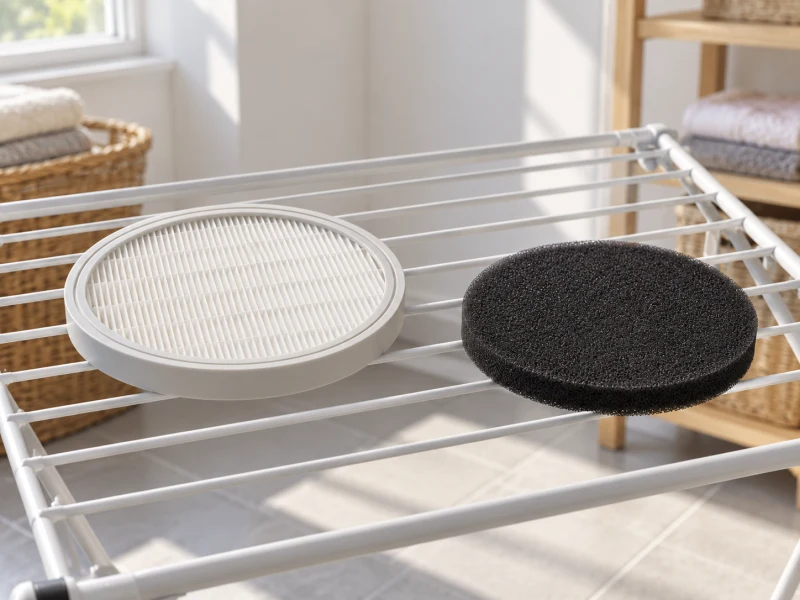
The guide permits washing the removed HEPA and sponge filters under their component instructions. It calls for at least 24 hours in a well-ventilated place and complete drying before correct reinstallation. The minimum time does not make a still-damp filter ready to use.
Empty and inspect the cup, keep the airflow path clear and follow the actual cleaning directions. Permission to wash specified removed filters does not permit rinsing the motor body, entire electric clipper or hose. Do not run the machine with a required filter missing.
Identify compatible replacement filters and maintain the particular clipper blade only as directed. Include drying space and storage in the purchase decision. If simple manual brushing fits the cat and household better, keeping it avoids this additional maintenance job.
Cat grooming vacuum questions
Is staying still a sign that my cat likes the machine?
Not by itself. Read tension, ears, tail, attempts to leave and the rest of the response together. Pause when the interaction becomes uncomfortable.
Does a cat-friendly description approve every attachment?
No. Confirm the specific tool’s job and individual coat fit. Household-cleanup attachments remain separate from coat-contact tools.
Should powered collection replace a comfortable brush?
Only if it solves a useful collection problem without making care harder for the cat. A suitable manual routine can remain the better choice.
Choose the routine your cat can leave comfortably
A cat grooming vacuum earns a place when appropriate coat care is already manageable and collection adds useful convenience. Preserve the cat’s ability to move away, introduce changes separately and stop before finishing the coat becomes more important than the animal’s response.
If those conditions and the exact US unit fit, check the Neakasa P2 Pro kit on Amazon. The existing P2 Pro model article covers its broader tool and maintenance details; keep the cat’s acceptance as the deciding condition here.
Comments are reviewed before they appear publicly. Please keep questions and feedback relevant to this article.