
AI-created generic dental dog toys decision scene; not a named-model product photograph or a hands-on test.
Dental dog toys can offer textured chewing activity, but a dental label does not by itself establish a clinically effective tooth-care routine. Choose a toy for the dog’s mouth, chewing behavior and current dental condition, then keep veterinary care and brushing decisions separate.
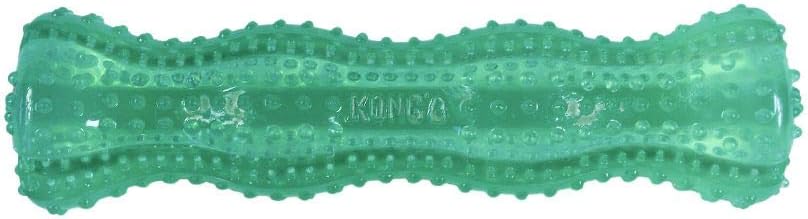
KONG Squeezz Dental Stick is model PST23E, Amazon ASIN B0858D3BNF. Assess its flexible texture and grooves against the dog’s mouth and chewing style. A new toy cannot replace veterinary assessment of a dental concern.
Dental dog toys: distinguish design from clinical evidence
The manufacturer’s Squeezz Dental Stick page describes flexible material, textured nubs and grooves that can hold food. It also makes teeth-cleaning and dental-condition claims. Those are manufacturer claims; independent clinical or handling results have not been verified for this model.
A textured surface is an observable design feature. Whether a particular toy measurably reduces plaque or treats a dental problem is a different question that requires relevant evidence. Do not collapse the two because both appear in the same product description.
| What you see or read | What it supports | What it does not establish |
|---|---|---|
| Flexible body and textured nubs | A particular chewing and handling design. | Clinical effectiveness or suitability for damaged teeth. |
| Food grooves | A place for an appropriate optional food addition. | A necessary ingredient, diet fit or dental treatment. |
| Dental wording | The manufacturer’s intended positioning. | Independent acceptance for plaque or tartar control. |
| Dog enjoys the toy | Interest during that observed activity. | Proof of healthier teeth or pain-free chewing. |
| Clean-looking visible teeth | A limited surface observation. | A complete assessment below the gumline. |
Check the exact Squeezz Dental Stick version
The selected retailer listing calls the toy Medium/Large and identifies PST23E. The current manufacturer page labels its size Medium. Confirm the actual delivered product and dimensions rather than treating those two size labels as a universal weight chart.
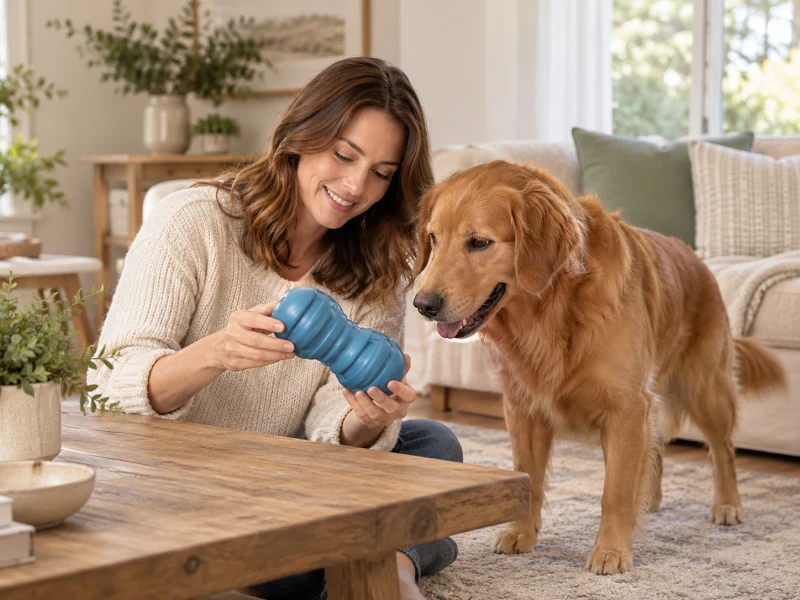
The original product photograph in the recommendation card shows the selected listing. The separate editorial scenes illustrate general textured-toy handling and dental-care preparation; they are not photographs of this exact model being tested.
Do not infer precise tooth contact, hardness or suitability from an online image. If the size or material is uncertain for your dog, obtain the actual specifications and veterinary guidance before introducing it.
Consider the selected KONG Squeezz Dental Stick for suitable, supervised textured-toy activity. Its physical design supports play use; it does not replace brushing, an examination or prescribed dental care.
PRODUCT MENTIONED
KONG Squeezz Dental Stick — PST23E
Amazon · Details on the retailer’s website
What the current VOHC list does and does not tell you
The Veterinary Oral Health Council’s accepted-products list is a useful place to check product-specific acceptance. The dog table dated August 2026, did not list KONG Squeezz Dental Stick.
The selected toy therefore has no verified VOHC acceptance in that table. It does not prove that the product is harmful or that no dog can benefit from using it. Absence from a list and evidence of ineffectiveness are different conclusions.
Check the exact product name and the purpose of any acceptance claim. A seal or result for another product from the same company cannot be transferred to this toy. Nor should a claim for plaque control automatically become a claim about every aspect of dental health.
Ask about the mouth before choosing a chew
The American Veterinary Medical Association’s dental-care guidance recommends regular veterinary dental checks and earlier assessment for concerning signs. These can include bad breath, broken or loose teeth, abnormal chewing, drooling, dropped food, reduced appetite, pain, bleeding or swelling.
If you notice a change, do not use a new textured toy to test whether the dog can still chew. A willingness to take an object does not diagnose the condition of a tooth. Contact the veterinarian and describe the observed signs.
Do not force open a painful mouth for a photograph or attempt a home dental procedure. Professional assessment and an appropriate care plan matter more than finding a toy described as cleaning hard-to-reach areas.
Introduce dental dog toys as supervised activity
Inspect the intact toy and remove packaging before offering it. Begin in a clear area where you can watch how the dog holds and uses it. The first goal is to assess comfortable handling and the actual play style, not to complete a target number of chewing minutes.

Pause if the dog works at an edge, pulls material away or becomes uncomfortable. A product sold for chewing still needs an appropriate match to the individual dog. No material description establishes that detached parts cannot occur.
Keep the session manageable and end it before you lose the ability to observe. Do not leave the toy accessible after the supervised activity if the dog may settle into destructive chewing while you are elsewhere.
Dental dog toys: choose fit before texture
The useful toy is one the dog can handle without the whole item disappearing into its mouth or the shape creating an awkward hold. A category such as Medium/Large is a starting reference, not a complete assessment.
Consider the dog’s existing dental history and how forcefully it normally works at toys. If those factors raise concern, ask the veterinarian about a suitable activity. A rougher texture is not automatically more effective or more appropriate.
Keep different dogs’ access separate where needed. A toy selected for one mouth and play style should not automatically pass to another dog simply because both are described as medium sized.
Food grooves in dental dog toys are optional
KONG describes stuffing the grooves with treats or kibble. That feature can make the object more interesting, but the ingredient, amount and feeding frequency still need to fit the individual dog’s diet.
If you use food, keep the dog’s diet, sensitivities and care plan in view. An appealing filling does not convert the toy into a clinically accepted dental product. It also adds a cleaning task that an unfilled toy may not create.
Use the current product instructions for care and remove residues as directed. Do not carry over washing temperatures, dishwasher permission or storage durations from another KONG product merely because the brand is the same.
Keep brushing and examinations in the routine
AVMA describes regular brushing as an effective home-care measure, with daily brushing preferred and several times weekly potentially helpful. Ask your veterinarian how to introduce a suitable routine for your dog’s current mouth and tolerance.
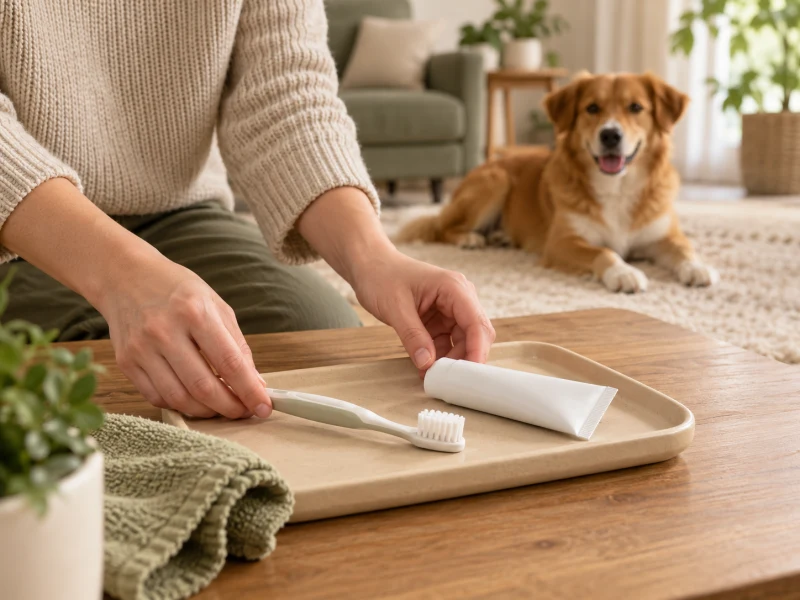
Use products and methods recommended for the individual dog. A generic editorial photograph of a brush and tube is a preparation illustration, not a prescription for a particular toothpaste or an instruction to begin brushing a painful mouth.
If brushing has become difficult, discuss the reason rather than assuming a toy can replace it. Pain, handling concerns and an unfamiliar routine call for different responses. A buying guide cannot determine which applies without an assessment.
Inspect dental dog toys after use
Check the surface, grooves and edges before returning the toy to storage. Remove it from access if material becomes loose or damaged. A clean appearance and a recognizable overall shape do not cancel a structural problem.
Follow the supplied cleaning instructions and inspect again before the next session. Do not cut away a damaged section or reshape an edge to keep using the toy. That would create a different object from the delivered product.
Track changes in the dog as well as the toy. Dropping food, chewing on one side or suddenly avoiding a previously accepted object deserves attention. These observations are more useful to share with a veterinarian than a guess that the dog simply needs a harder chew.
Keep a useful record for a dental conversation
Note what changed and when: a new reluctance to take food, a difference in chewing or a toy that the dog now avoids. Record the actual observation without guessing the cause. These details can help the veterinarian decide what to assess.
Bring the product name or label if you are asking about a particular texture. A precise model is more useful than saying the dog has a dental toy, because products in that category differ in material, shape and intended use.
Review the plan after an examination or treatment rather than assuming the previous toy collection is still appropriate. The right activity can change with the dog’s mouth and care instructions; keeping the same shopping habit is not a reason to overlook that change.
A practical buying decision for dental dog toys
The selected Squeezz Dental Stick may be relevant if the dog can comfortably handle its actual size, enjoys suitable textured activity and has no unresolved mouth concern. Skip it when the goal is to avoid an examination or obtain a guaranteed dental result.
Compare the delivered identity and care label with the selected KONG Squeezz Dental Stick on Amazon. Treat the toy as one supervised activity while keeping the dog’s dental-care plan grounded in veterinary advice.
Common questions
Does this toy replace brushing?
No. The toy has not been established as equivalent to brushing or professional dental care.
Is this exact model VOHC accepted?
It was not listed in the August 2026 dog table. Check the council’s current list rather than assuming acceptance from dental wording.
Should a dog with a sore mouth try a dental toy?
Ask a veterinarian first. Do not use a new toy as a test or treatment for pain.
Comments are reviewed before they appear publicly. Please keep questions and feedback relevant to this article.