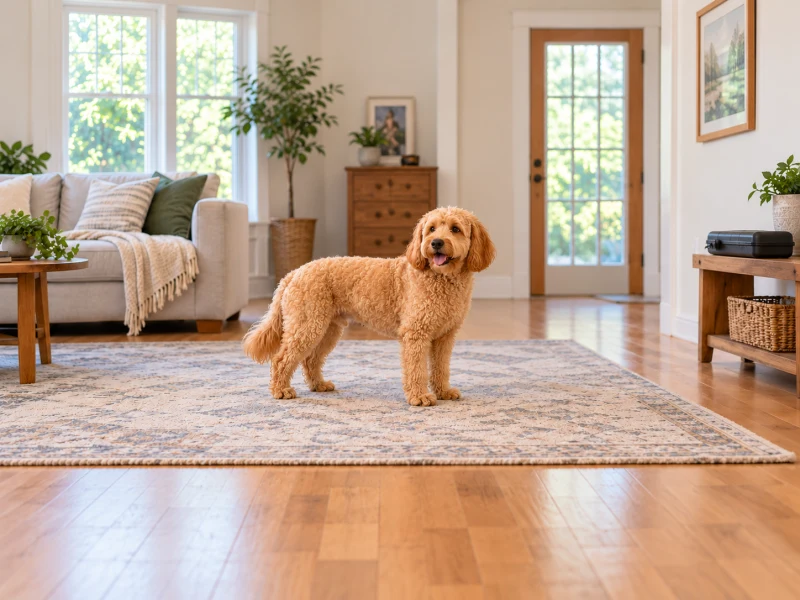
AI-created pre-care scene; not a completed haircut, coat assessment, breed certificate or evidence that this dog accepts clipping.
A dog haircut at home should begin with a decision about scope, not with switching on the clipper. Keep home cutting to a specific maintenance task that a qualified groomer has demonstrated for your dog, coat and tools. Leave an unfamiliar style, tight mats, hidden skin and sensitive-area work to appropriate professionals.
Owning scissors or clippers does not mean the next coat problem is yours to cut. Check comfort, visibility, coat condition and matched instructions first. If one of those is missing, a useful session may consist only of observation and arranging help.
Define the job before a dog haircut at home
Describe the intended result in one concrete sentence. “Maintain the small exterior area my groomer showed me” is different from “make the coat shorter” or “fix the uneven parts.” A vague goal tends to expand as you notice another section.
Separate routine brushing, limited demonstrated finishing and a full haircut. They require different skills. A dog that accepts a comb has not necessarily accepted cutting, and a short trim can still involve difficult anatomy or hidden skin.
Blue Cross’s grooming advice emphasizes the training involved in professional grooming and the possibility of injury from unqualified clipping. It recommends specific instruction for the dog’s coat rather than treating a set of clippers as a complete skill.
If the goal cannot be stated clearly, ask the groomer what can reasonably be maintained between appointments. Keep the answer specific enough that another caregiver can recognize where the task begins and ends.
Use a preflight decision table for a dog haircut at home
| Condition | Home decision | Next useful action |
|---|---|---|
| Loose exterior hair, clear view, comfortable dog and a demonstrated task | Consider only that agreed maintenance | Confirm the tool and stopping point |
| Routine loose hair without a need to shorten | Cutting may be unnecessary | Continue suitable gentle coat care |
| Tight mat or skin that cannot be seen | Do not cut underneath it | Ask a groomer or veterinary team to assess it |
| Redness, wound, unexplained lump or painful response | Postpone cosmetic work | Contact the veterinarian |
| Face, ear edge, paw-pad area, skin fold or sanitary work not individually taught | Keep outside a beginner trim | Arrange appropriate professional care |
| Tool pulls, attachment is uncertain or blade becomes too warm | Stop the cutting task | Inspect away from the dog and resolve the equipment issue |
| Dog withdraws, freezes, struggles or cannot settle | End the session | Reassess comfort and seek suitable help |
A table is a screening aid, not a certification that an area is safe. The actual dog, skin, coat and handler still govern the decision. When two conditions apply, do not use a reassuring one to cancel a stop condition.
Check the coat before a dog haircut at home
Use accepted gentle handling and good light to observe the proposed area. Can you see the relevant skin and separate loose hair without pulling? If not, the next step is assessment rather than choosing a shorter blade.
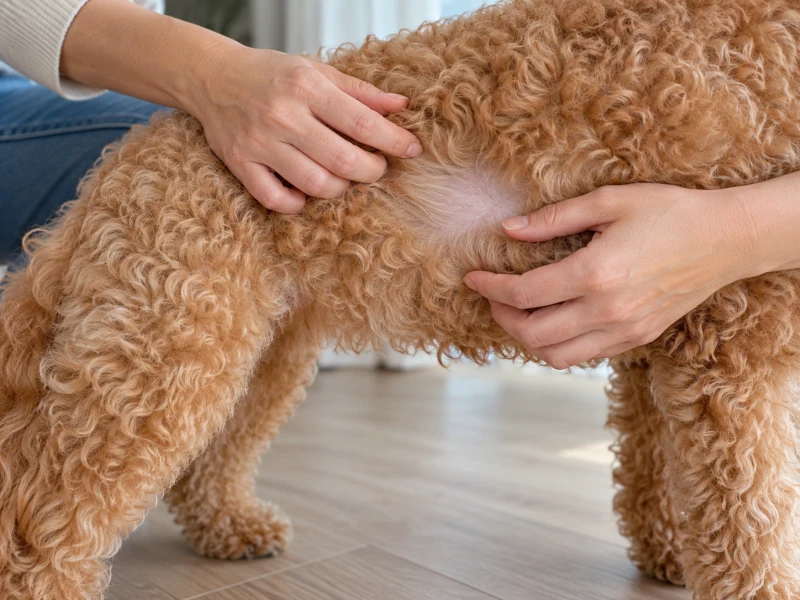
ASPCA’s matting advice directs owners to a groomer or veterinarian when a mat cannot be easily brushed out. It explicitly warns against cutting mats with scissors because an unexpected movement can cause serious injury.
Do not lift a knot away from the body and assume the gap contains no skin. Do not force a comb through it to create a cutting line. Keep ordinary loose-hair care separate from removal of a compacted or painful coat.
A long or dense coat is not automatically a reason to shave it. Ask for a coat-specific plan, including whether shortening is appropriate and how maintenance should be managed. A photograph of a short-haired example does not establish the right result for your dog.
Check whether the dog can participate comfortably
Dogs Trust’s handling guidance describes relaxed participation as a dog choosing to remain without facial or body tension. It advises stopping when handling becomes uncomfortable.
Assess touch, the work location and equipment separately. A dog that tolerates the switched-off clipper nearby may still be worried by its sound or contact. Do not combine all the difficult stages because bath day has already arrived.
Allow a stable stance and an easy pause. A second person should not become a way to pin down a struggling dog while you keep cutting. If precise work depends on stronger restraint, change the plan and involve appropriate help.
New pain or a sudden change in tolerance needs veterinary attention. Established fear or aggression also deserves individualized support. Do not add sedating products or improvise a restraint method to complete a cosmetic task.
Match your tool before a dog haircut at home
For the role and limits of a full-size tool, use the home dog-clipper comparison alongside the manual for your own machine.
Find the exact model and applicable instructions before using the clipper or scissors. Confirm the fitted blade, approved guard and maintenance directions. A brand name or a guard-length marking alone does not establish compatibility.
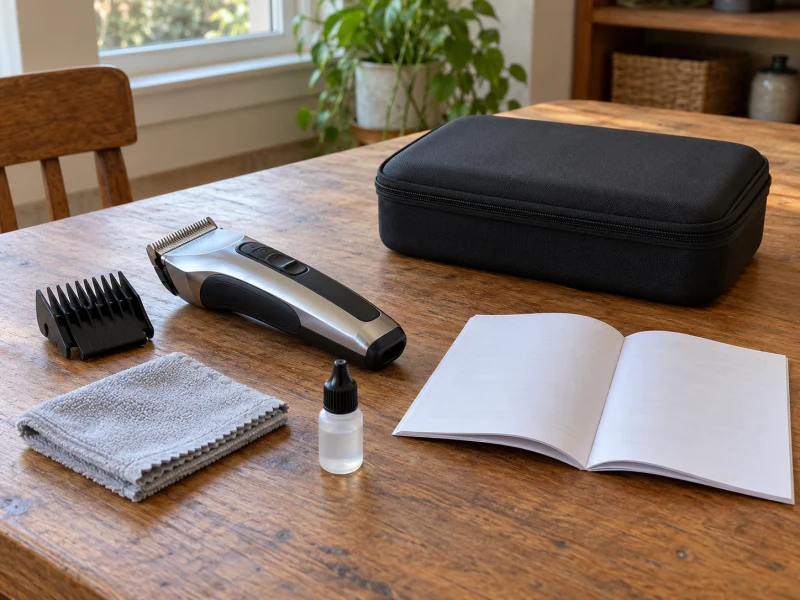
For example, the official PC18 manual identifies that model and separates guide-comb, cleaning and charging information. Its directions apply to its matched tool; they are not a universal removal sequence or power specification for another clipper.
Follow the applicable power-off and disconnection requirements before fitting parts or maintenance. An uncertain attachment, damaged cord, loose blade or mismatch with the drawing blocks use until it is resolved.
There is no universal beginner guard length, cutting angle or finished-coat measurement for all tools and coats. Have the exact arrangement demonstrated. Do not use a shorter guard to compensate for pulling, a hidden tangle or a surface that will not cut evenly.
Set a small endpoint for a dog haircut at home
Choose an endpoint that does not depend on finishing the whole dog. The agreed exterior area may be enough. You should be able to stop without creating a pressure to continue into unfamiliar parts merely because the outline looks uneven.
Keep tools not in use closed, secured and beyond reach. Prepare the workspace so you can put the switched-off tool down and attend to the dog immediately. Avoid balancing on slippery furniture or working where another pet or person can interrupt unexpectedly.
Monitor blade warmth, cutting response and comfort under the actual instructions. The PC18 manual, for instance, warns that blades can become hot during prolonged use. A cooler-running or quiet marketing claim does not remove those checks.
Pulling, repeated catching, an attachment shifting, lost visibility or a dog moving away ends the pass. Investigate equipment away from the animal. Do not press harder or repeatedly chase an uneven patch while deciding what went wrong.
Know which help the situation needs
A groomer can assess coat management, demonstrate permitted maintenance and explain when a style requires professional skill. Ask about experience with the coat, handling practices and how they respond when a dog becomes worried.
A veterinarian is the right contact for pain, a wound, persistent irritation, an unexplained lump or a significant change in the dog’s response. A grooming appointment should not be used to diagnose a skin problem or substitute for medical assessment.
AKC’s home-grooming guidance treats professional and home care as complementary and recommends veterinary attention for injuries and unusual skin conditions. It also notes that hair between toes may need professional trimming.
If an injury occurs, stop and seek appropriate veterinary advice. Do not keep cutting around it, hide it beneath a new style or apply an unverified grooming product. Explain what happened and which tool was involved.
Prepare a useful handoff after a dog haircut at home
Record what you observed rather than deciding on a diagnosis. Note the area, when the change began, whether touch was accepted and which parts of the intended job you left alone.
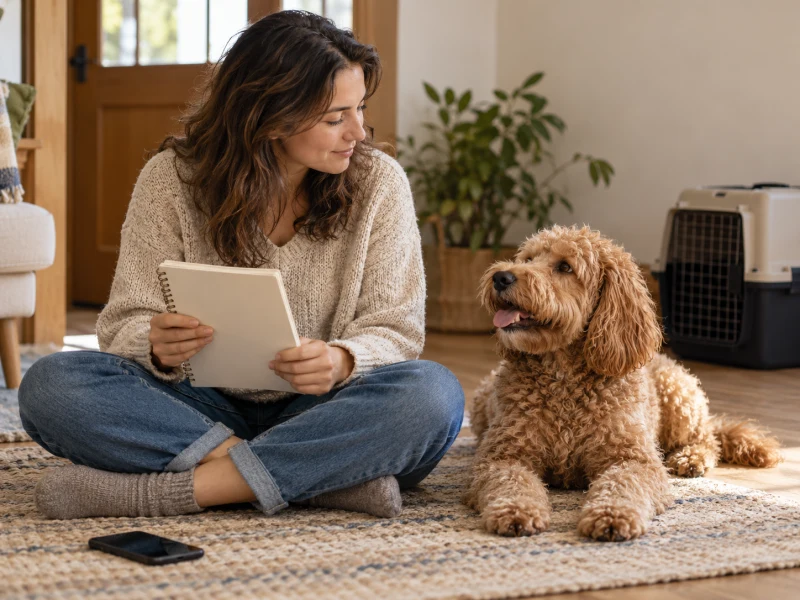
Tell the groomer or veterinary team which tool and attachment were used, what you actually did and why you stopped. A clear photograph can help show coat condition without repeatedly manipulating a painful or worried dog.
Useful details include the last professional groom, known care instructions, relevant health concerns and any pulling, warmth or unusual sound from the equipment. Separate what you saw from what you suspect caused it.
Ask for an updated maintenance boundary: which area, which actual tool arrangement, what preparation, and which response means stop. Keep that note with the matched instructions so the next session does not expand by guesswork.
Compare time and cost without assuming home cutting saves money
Home work includes preparation, comfortable handling practice, tool care and cleanup. It may also require demonstration and continuing professional appointments. An already-owned kit does not make an unsuitable task economical.
Consider the cost of replacing incompatible parts, postponing needed coat care or trying to repair an uneven result. No universal dollar saving or appointment interval follows from owning a clipper.
A practical division can be simple: maintain the coat as instructed between appointments and let the professional perform the haircut. That still makes home care valuable, even when no hair is cut during the household routine.
Questions before a dog haircut at home
Can rounded scissors make sensitive areas a beginner task?
No. Rounded tips do not remove the cutting edges or the possibility of movement. Keep unfamiliar work around eyes, ears, paw pads, folds and sanitary areas with an appropriate professional.
Should I shorten a mat a little before the appointment?
Do not cut into or underneath it. ASPCA advises professional assessment when a mat cannot be easily brushed out. Tell the care team about discomfort or skin concerns and leave the area alone.
Must I finish if most of the coat is already done?
No. The stopping conditions remain the same. An unfinished outline is a reason to arrange help, not to ignore movement, pulling, heat or hidden skin.
Let the agreed scope decide the haircut
A dog haircut at home belongs within a demonstrated task, a comfortable dog, visible coat and matched equipment instructions. When any of those changes, pause and pass on clear observations to the right professional.
There is no additional tool purchase to make that judgment for you. Keep the job small, leave unfamiliar cutting alone and use the next appointment to improve the maintenance plan.
Comments are reviewed before they appear publicly. Please keep questions and feedback relevant to this article.