
AI-created preparation scene; not the LovinPup product, nail contact, a restraint method or a demonstrated grooming result.
A manual dog nail filer can be useful for a small rough edge when the nail is otherwise suitable for ordinary maintenance and the dog accepts paw handling. Choose it for controllable contact and a comfortable grip, rather than expecting a silent tool to make every nail-care task easy.
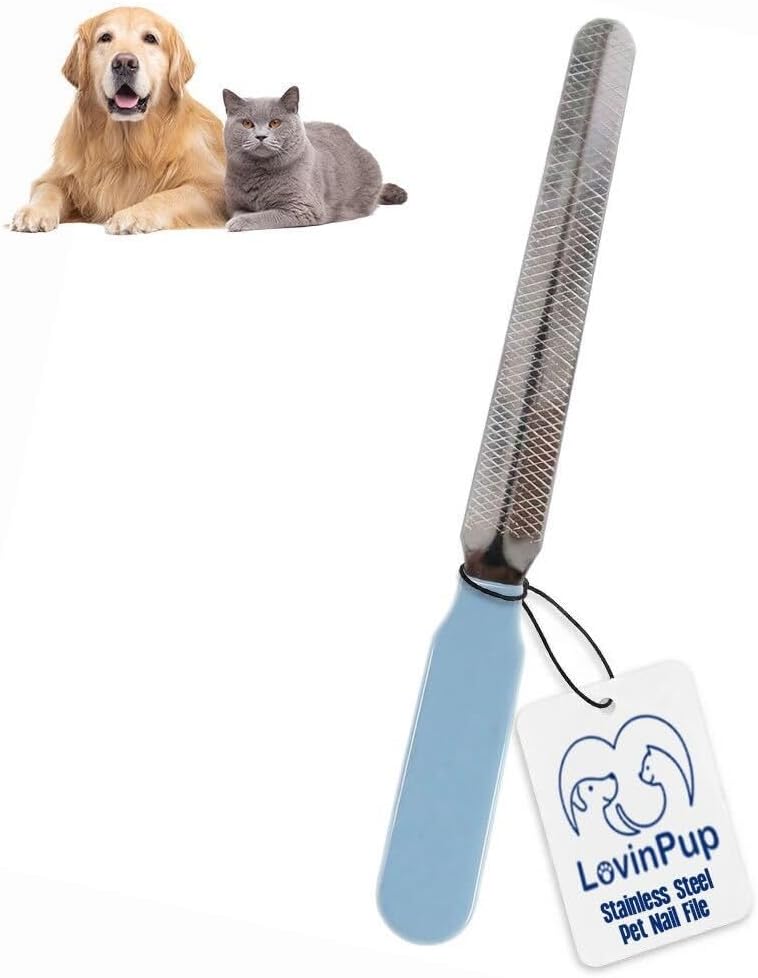
The selected example is the LovinPup LVP-DI412, ASIN B08ZHSRXMN: a blue-handled, six-inch manual stainless-steel pet nail file. The listing describes a flat design and fine grit, but gives no numerical grit grade. It has no motor or charging routine and should not be confused with a rotary grinder.
Choose a dog nail filer by its mechanism
Searches for nail filers bring together hand files, powered grinders and scratch boards. Those formats make contact in different ways. Start with the task a veterinarian, veterinary nurse or suitably qualified groomer has shown you, then choose the mechanism you can control.
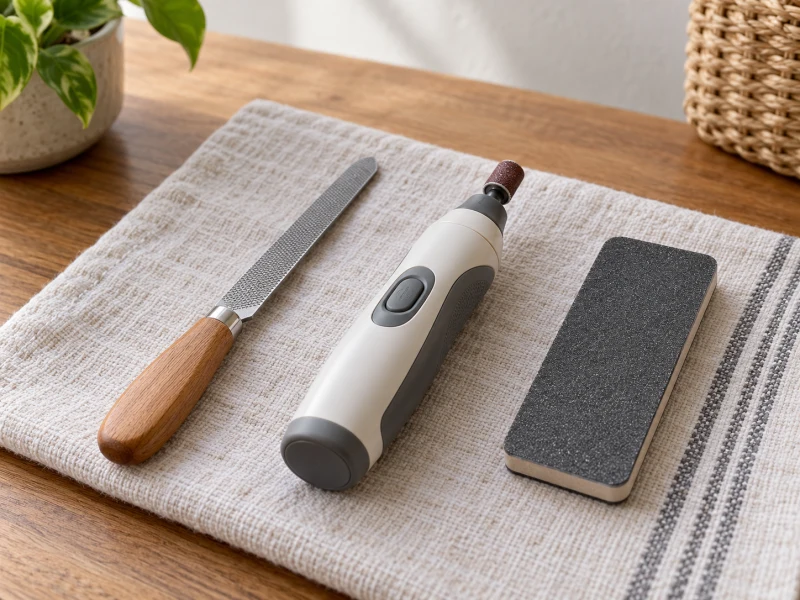
| Format | How contact happens | What to check | Limit |
|---|---|---|---|
| Handheld manual file | The person guides a fixed filing surface | Handle, surface shape, visibility and comfortable paw contact | No automatic quick detection or finished-length control |
| Powered grinder | A motor rotates an abrasive | Pet-approved accessory, sound, heat and exact manual | A different operating and maintenance task |
| Scratch board | The dog performs a trained scratching action | Appropriate training and which nails actually contact it | Does not prove all nails receive suitable maintenance |
A manual file may remove the motor sound and spinning accessory from the decision. It can still make scraping sounds and create unfamiliar sensations. A dog that dislikes its paws being held does not become ready simply because a tool has no battery.
Do not buy one of each format to cover uncertainty. Establish the actual need and a workable routine first. Different mechanisms are alternatives for defined tasks, not a requirement to assemble a full nail-care collection.
Decide whether the nail needs edge finishing
Dogs Trust’s veterinary-reviewed nail advice says many dogs never need regular clipping and that hearing nails on the floor does not, by itself, establish that they are too long. Ask your vet what maintenance your dog actually needs.
A small snagging edge after appropriate routine care is different from a split, painful, embedded or severely overgrown nail. A file should not be used to investigate an unexplained defect or disguise an injury. Get professional assessment when the nail or paw is abnormal.
The quick contains blood vessels and nerves. Gradual removal with a hand file does not make that tissue disappear or establish how much nail can be taken away. Dark nails and uncertain visibility remain reasons for help.
Ask for a demonstration on your dog’s actual nails with the intended tool. Keep the job to the edge or area shown rather than turning a finishing task into an attempt to shorten every nail to the same appearance.
Check the LovinPup LVP-DI412 dog nail filer
The current selected listing identifies manufacturer LovinPup, model LVP-DI412 and the single dog nail filer size. Its title states six inches and stainless steel. The original image shows a long metal filing section, blue handle and a LovinPup tag.
Six inches describes the advertised overall product length, not a verified usable abrasive length. The package dimensions are separate again. Neither figure establishes how the file fits a particular hand or how much working surface is available around one nail.
The retailer describes fine grit and a flat design. No numeric grade, measured removal rate, abrasive composition beyond the stainless-steel description or independent wear test was verified. Do not relabel it as a specific grit or assume it performs like a particular sandpaper band.
Claims about healthy nails, fewer accidents, non-bending performance and suitability for every pet are marketing statements. They do not establish an injury-proof tool, a dental-style health treatment or a comfortable response from your dog.
Consider the LVP-DI412 for a limited, professionally demonstrated edge-finishing task when its flat surface and handle suit your grip and the dog accepts the contact. It is a poor answer to painful nails, a large overdue shortening or a handling problem. Confirm the supplied directions and care requirements before use.
PRODUCT MENTIONED
LovinPup 6-Inch Stainless Steel Pet Nail File, LVP-DI412
Amazon · Details on the retailer’s website
Match the file surface and handle to your control
Look at whether the file is flat, curved or supplied with replaceable abrasive material. Those are useful design distinctions, but the surface shape alone does not determine a correct filing motion. Get the handling method for the actual tool demonstrated.
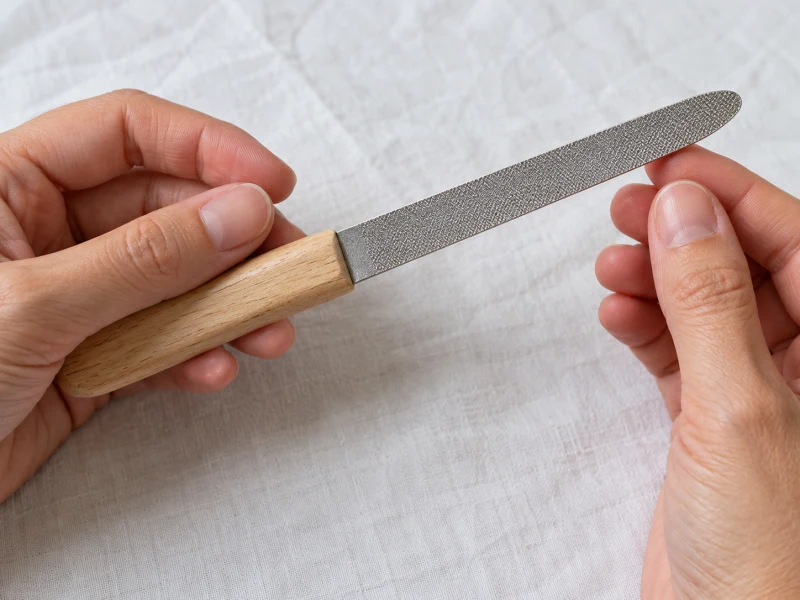
Check the delivered file away from the dog. The handle should be secure, the metal section straight and undamaged, and the filing surface free of unexpected rough defects or loose material. Stop if it feels unstable or catches unpredictably during an appropriate inspection.
Consider visibility as part of grip. Your hand should not hide the area you are meant to assess, and the tool should not require you to hold the paw in an awkward position. A slim handle can feel different in different hands; an ergonomic label cannot settle the fit.
If you cannot maintain light, controlled contact within the demonstrated task, change the plan. Do not compensate by pressing harder, bending the tool or continuing because the package calls it professional.
Introduce a dog nail filer without forcing a session
Dogs Trust’s handling guidance recommends short, gradual, positive experiences and stopping when the dog becomes uncomfortable. The ability to remain relaxed during ordinary paw contact comes before adding the file.
Let the tool be present without filing. Keep the setting quiet, provide stable footing and allow the dog to move away. Follow a suitable professional’s plan for adding the sight, movement and eventual sensation of the file in manageable stages.
Avoid using a treat to hold a frightened dog in place while doing work it is trying to avoid. Tension, withdrawal, a flinch or a change in breathing deserves a pause. Stillness alone is not proof of comfort.
Do not set a deadline for reaching nail contact. One calm preparation step can be enough. Established fear, aggression or possible pain needs veterinary and qualified behavioral support rather than a quieter product promise.
Keep manual edge work limited and observable
Have good light, the demonstrated task and a clear stopping point ready before starting. Use only the small amount of contact appropriate to that specific nail. There is no universal stroke count, angle, pressure or millimeter allowance for this file.
Pause to inspect the edge and the dog’s response rather than working until the nail looks uniformly rounded. A cosmetic target is not a reliable anatomical boundary. If the dog moves or you lose a clear view, withdraw the tool and stop.
Keep the file away from skin, paw pads and surrounding hair that obscures the work. A damaged nail, unexpected bleeding, persistent pain or a sudden change in tolerance ends the task and calls for appropriate veterinary advice.
Manual action is slower than a single clip and different from motorized grinding. That can suit a small finishing job, but it does not establish that prolonged repeated filing is appropriate. A large correction belongs in an individualized professional plan.

Check care instructions before storing the dog nail filer
A detailed manufacturer cleaning sheet for the selected LVP-DI412 was not verified. Confirm the supplied directions or ask the seller or manufacturer about permitted cleaning and drying. Stainless steel does not automatically mean the whole assembled file tolerates soaking, a dishwasher or any disinfectant.
Inspect the surface after use for trapped debris, damage or a change in performance. If normal instructed care does not resolve a problem, stop using it. Do not sharpen, bend or recoat it with household abrasive material to recreate the original surface.
Store the clean, appropriately dried file protected from damage and out of reach of animals and children. Keep its identity and care directions with it so another caregiver does not mistake it for a workshop file.
No fixed lifespan or replacement schedule was established. Reassess condition and function rather than counting an assumed number of sessions. A low-cost tool is useful only if it remains suitable for the limited task.
Questions about a manual dog nail filer
Is it safer than a grinder?
It removes a motor and rotating accessory from the setup, but no comparative injury result was verified for this product. Comfort, visibility, nail condition and controlled contact still matter. Choose by the actual demonstrated task.
What numerical grit is the LovinPup file?
The listing says fine grit without providing a number. Do not substitute a sandpaper grade or infer one from the image. Ask for additional specification if a particular surface grade is important to the care plan.
Can it replace a vet visit for a damaged nail?
No. A split, painful, embedded or otherwise abnormal nail needs assessment. Filing a rough-looking area does not identify its cause or establish that ordinary cosmetic maintenance is appropriate.
Choose a dog nail filer for a small, defined job
The LovinPup LVP-DI412 is a specified manual option for suitable edge finishing when the dog accepts the handling and its surface and grip fit the task. Keep its unnumbered fine-grit description, unverified cleaning detail and absence of comparative performance evidence in view.
Confirm the delivered identity and instructions, learn the limited technique and stop when visibility, comfort or nail condition changes. A careful short routine is more useful than trying to finish every nail because a new tool is available.
View LovinPup 6-Inch Stainless Steel Pet Nail File, LVP-DI412 on Amazon.
Comments are reviewed before they appear publicly. Please keep questions and feedback relevant to this article.