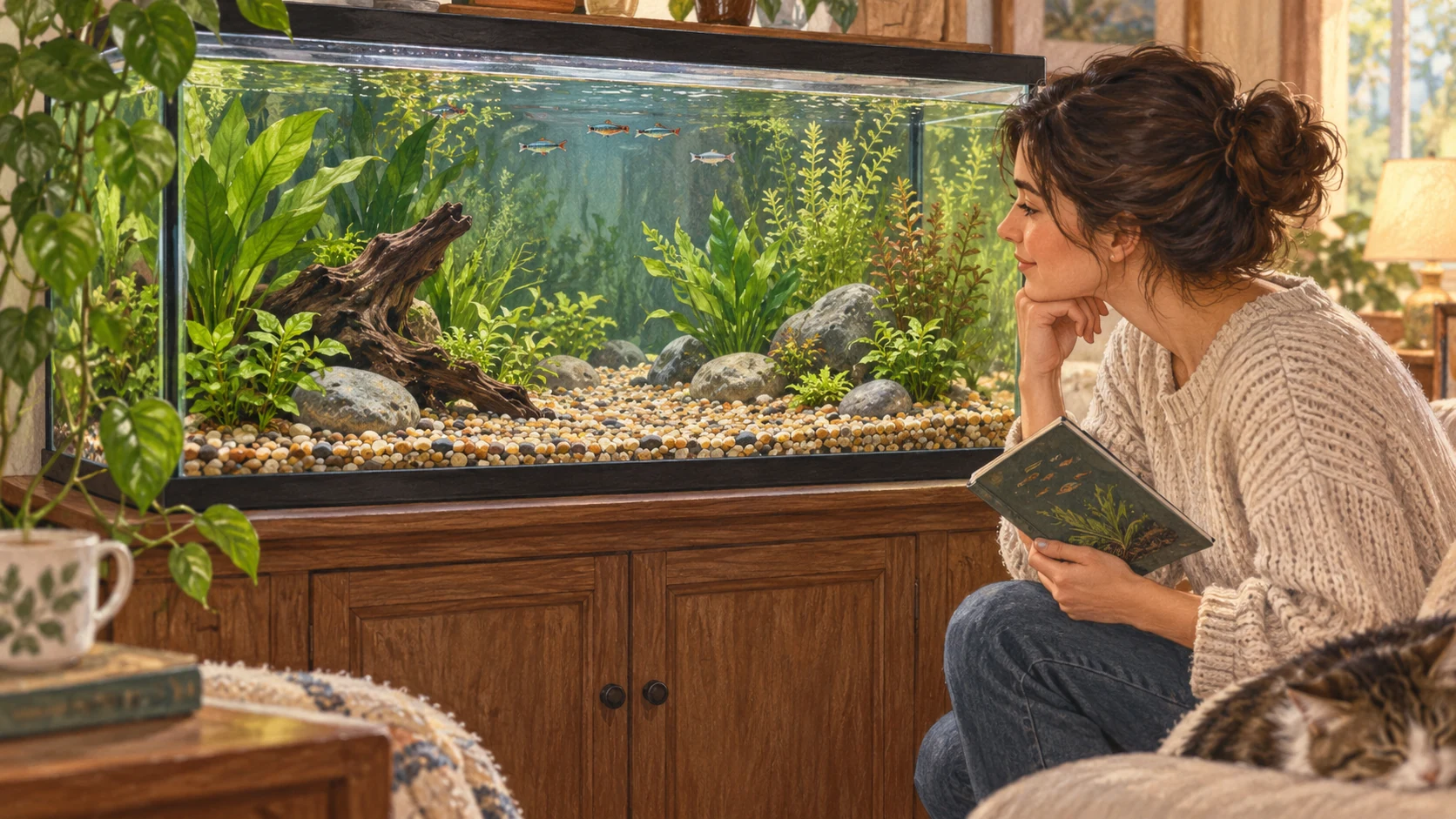
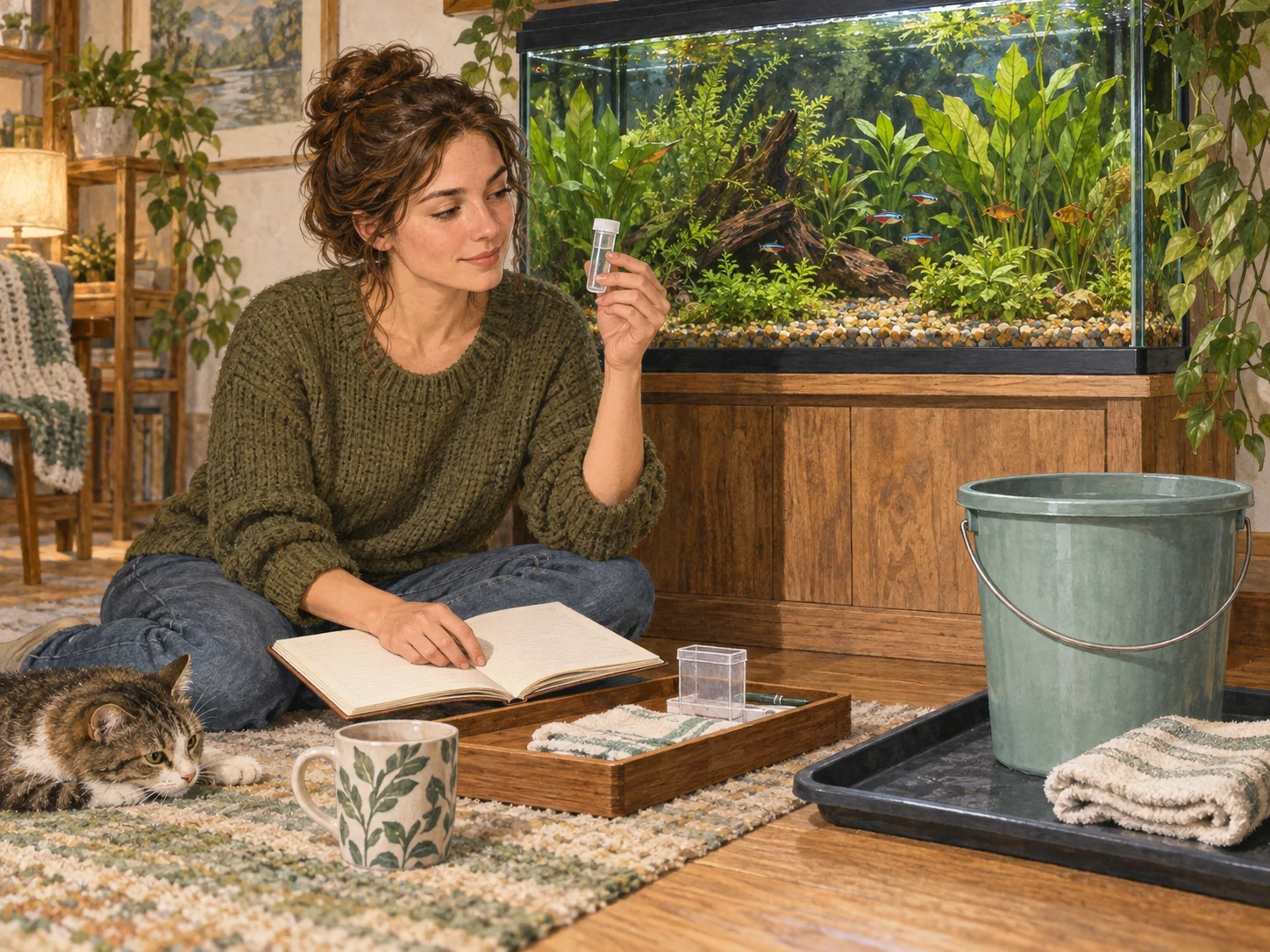
AI-created editorial scene: assess gravel, depth and the working route before selecting equipment; not a ProVAC photo, operating setup or cleaning-efficiency test.
The Fluval ProVAC powered aquarium gravel cleaner is a candidate for removing debris from suitable gravel without making every cleaning session a water change. Check the substrate, tank depth, electrical setup and access first. Fluval specifically does not recommend this appliance for sand or fine gravel.
That restriction is the first buying decision, not a minor detail to work around after purchase. If your aquarium’s bottom, inhabitants or layout cannot accommodate the intended nozzle movement, a powered gravel cleaner may add difficulty rather than solve it.
Match the Fluval ProVAC to the actual substrate
Model 11077 is a plug-in cleaner with a debris-catching cartridge, two speed settings and a pause function. The US ProVAC product page identifies use in aquariums at least 10 inches, or 25 centimeters, deep. The matched manual specifies freshwater or saltwater use, while excluding a recommendation for sand and fine gravel.
Do not decide by the word “gravel” on a bag alone. Check the actual substrate and whether it meets the product’s intended use. Fine particles can behave differently from the larger pieces shown in a gravel-cleaning demonstration. A gravel guard does not establish compatibility with every particle size.
Also consider access between rocks, plants and decorations. The cleaner needs room to reach the area without being forced into a narrow gap. A protected animal habitat is not improved by repeatedly moving its structure merely to accommodate a tool.
| Before buying | Suitable condition | Reason to pause |
|---|---|---|
| Substrate | Gravel matching the intended use | Sand or fine gravel; manufacturer does not recommend it |
| Depth | Tank meets the 10-inch / 25-cm depth description | Shallow tank or unclear operating-water level |
| Access | Nozzle can reach without forcing the layout | Animals or delicate structures occupy the working route |
| Power | Correct supplied transformer and dry connection | Damaged lead, unknown input rating or wet electrical parts |
Tank depth and the device’s required operating water level are different checks. Use the complete manual and the actual product markings to establish placement. A nominally deep aquarium does not justify running the impeller above water.
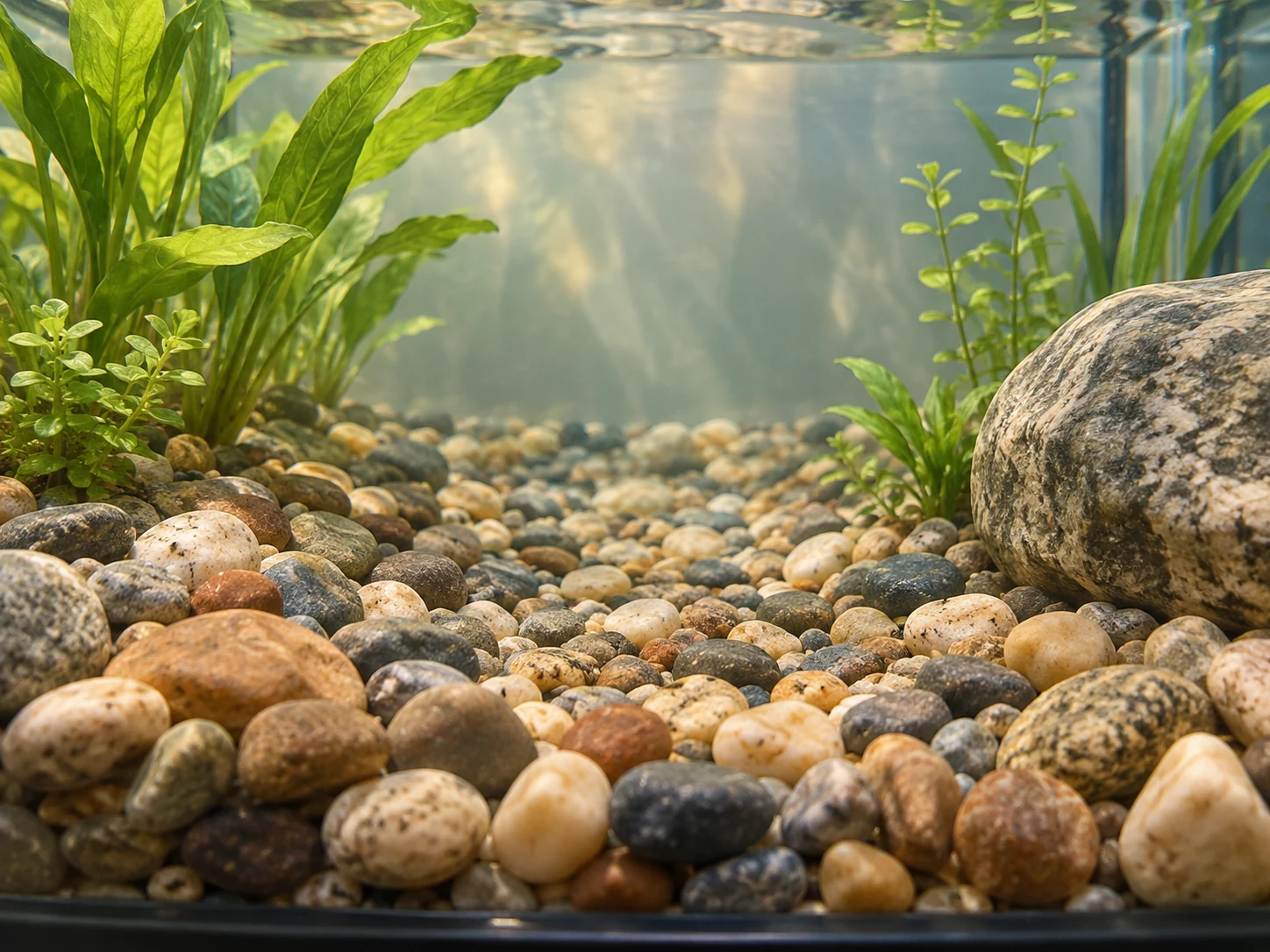
What model 11077 adds to the routine
The ProVAC’s useful distinction is powered suction with debris retained in a removable dual-density filter pad. That can make a targeted gravel-cleaning session easier to organize when you want to collect visible material separately from deciding how much water to replace.
For a matching gravel aquarium, check the Fluval 11077 ProVAC Powered Aquarium Gravel Cleaner on Amazon. Confirm the actual package, correct local power-input rating and original transformer before ordering. The low-voltage marking on the cleaner is not proof that every regional mains adapter is interchangeable.
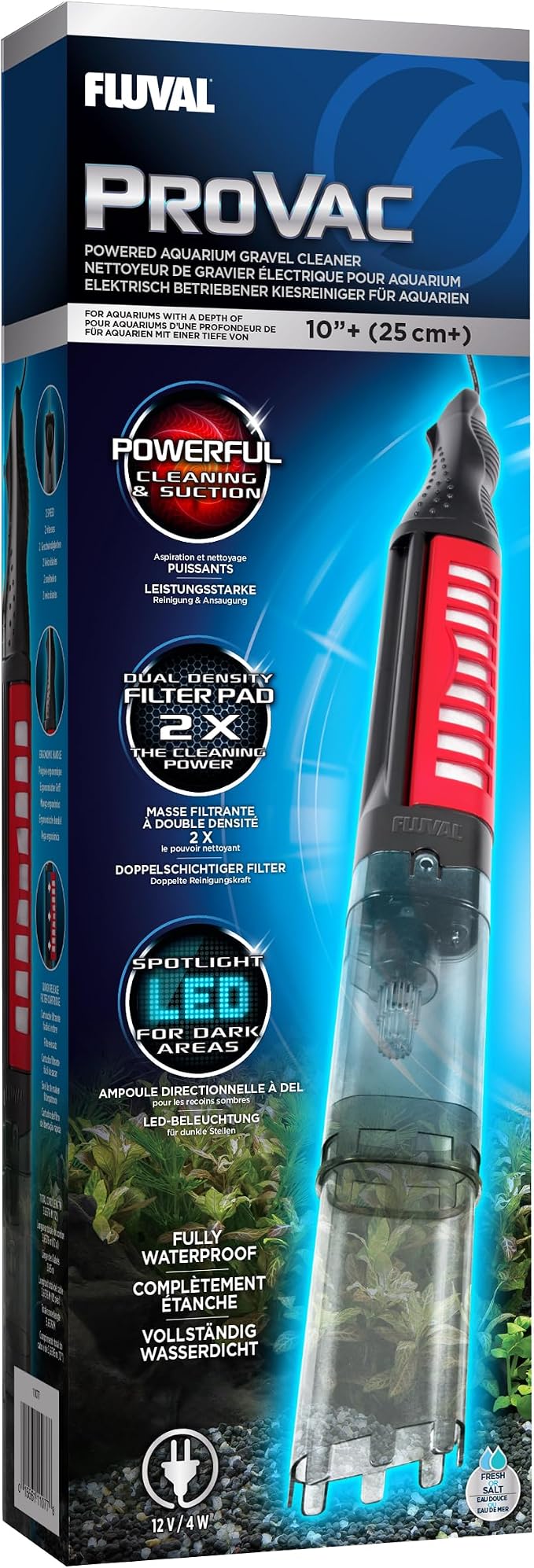
PRODUCT MENTIONED
Fluval 11077 ProVac Powered Aquarium Gravel Cleaner
Amazon · Details on the retailer’s website
The manufacturer lists an LED spotlight, an extension nozzle for deeper tanks, a quick-release cartridge and a water-change adapter. The hose for water changes is sold separately. A package photo or the presence of an adapter should not be read as an all-accessories-included promise.
Its compromises include electrical setup beside an aquarium, replacement filter pads, limited access in a crowded layout and the stated substrate restriction. Debris-removal speed, noise and cleaning efficiency have not been independently verified for this unit. Marketing claims about powerful or fast cleaning do not establish a better result for every aquarium.
An ordinary gravel-cleaning method that already works may remain adequate. Choose the powered option for a specific handling or routine benefit, rather than assuming that plugging in a motor makes every maintenance job more thorough.
Prepare a cleaning session without rushing the electrical checks
Read the complete ProVAC instruction sheet before the first session. It covers electrical precautions, normal use, cartridge care and the separate water-change attachment. Keep the transformer and connection where they will remain dry, with the prescribed drip-loop arrangement.
The manual directs users to disconnect appliances already in the aquarium before placing hands in the water. It also requires unplugging the ProVAC before putting on or taking off parts and before cleaning. A pause setting is a suction control, not a substitute for electrical isolation when handling the cartridge or servicing the device.
- Inspect the cable, plug, transformer and housing for damage before use.
- Match the supplied power equipment and its input label to the local supply; do not improvise a replacement adapter.
- Choose the nozzle arrangement for the aquarium depth before operating.
- Check that the cartridge is correctly assembled and accessible for later removal.
- Plan a controlled work area where the cord will not be pulled or tripped over.
If an electrical component or receptacle becomes wet, follow the manual’s specific safety response. Do not reach toward a wet powered connection or try to repair a damaged cord at the aquarium. A fault interrupts the job; it is not a reason to work faster to finish cleaning.
Use the suction and pause functions for their intended jobs
The instruction sheet describes moving the tube along the gravel so material is lifted and gravel returns to the bottom, then moving to another area as the water in the tube clears. Use the appropriate speed for the actual working conditions. It does not prescribe the fastest setting for every tank.
If gravel becomes trapped in the tube, the manual directs holding the power button to pause suction and release it. Do not pull on a jammed tube or reach into the mechanism while it is powered. If the expected release does not occur, stop and follow the unplugging and inspection instructions before handling parts.
Operate the unit under water as directed so the impeller does not run dry. Keep the working area visible, check the route before moving the nozzle and pause when an animal enters that area. A powered cleaner should remain an attended tool, not something left running while you work elsewhere.
Some loosened particles can temporarily cloud the water. The manual describes this as possible during cleaning, but that does not establish that every cloudiness problem is harmless or has the same cause. Stop if operation produces an unexpected result, and check the aquarium’s condition rather than continuing blindly.
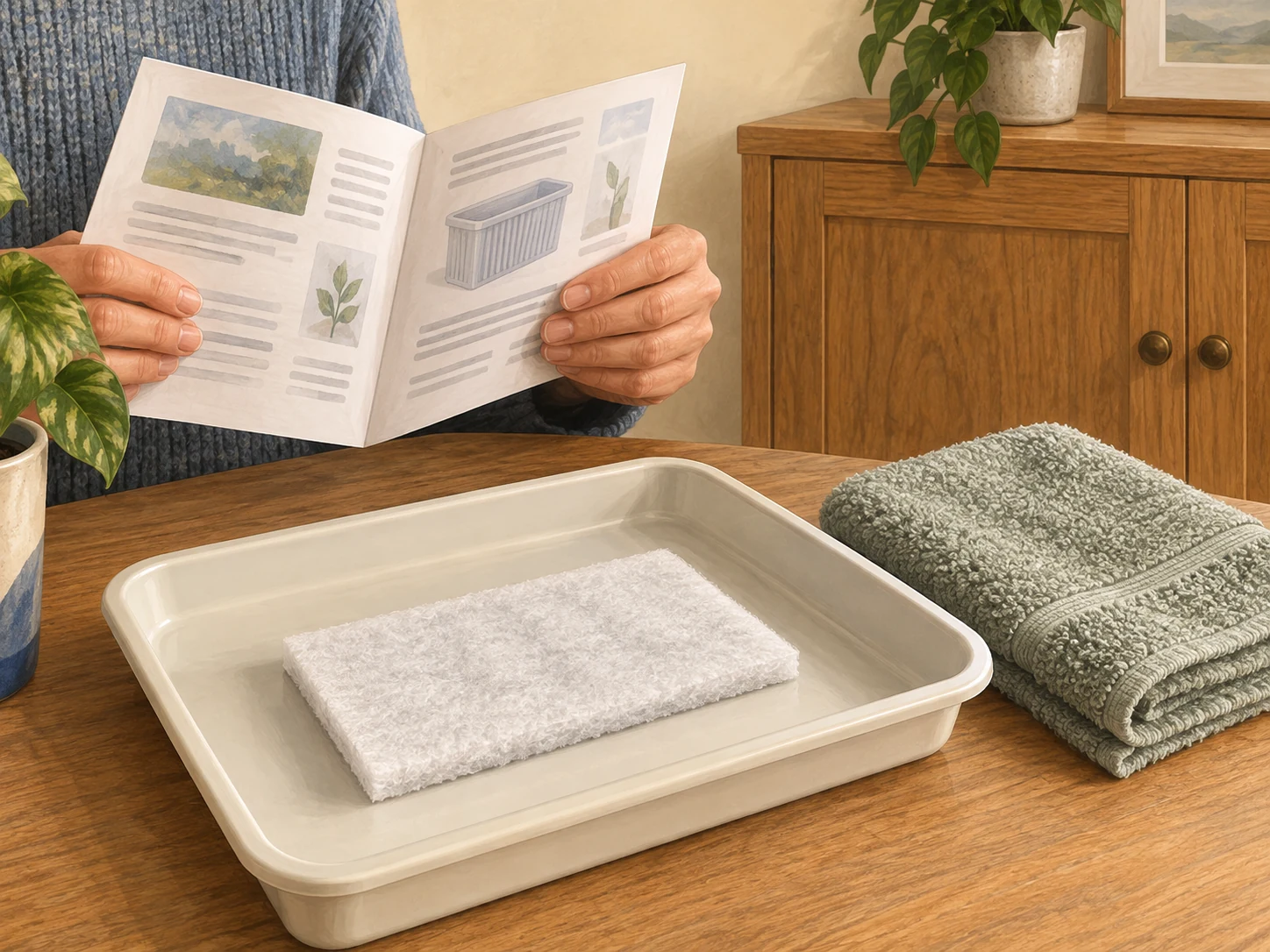
Keep the cartridge and pad in the plan
Collected debris has to leave the system during cartridge maintenance. A pad full of material is not a permanent destination for waste, and the motor cannot make a neglected cartridge clean itself.
Fluval identifies replacement pad 11078 on its ProVAC dual-density filter-pad page, expressly matching cleaner 11077. This is a compatibility reference for future maintenance, not a recommendation to buy a different cleaner or an unverified pad.
The manual’s cartridge procedure is to remove the cartridge, open its cap, slide out the inner sleeve and install the folded pad as illustrated before reassembly. Unplug first. Check the actual orientation and full seating against the pictures instead of forcing the cartridge to close around an incorrectly arranged pad.
The product FAQ suggests replacement after about two cleanings, while expressly saying frequency varies greatly with the aquarium setup. Treat that as the manufacturer’s starting advice rather than a guaranteed life. Check the cartridge and the amount of debris collected, and keep the matched instructions with your supplies.
Record which pad belongs to the cleaner so future orders do not depend on visual similarity alone. The cost and availability of that recurring consumable belong in the purchase decision even when you do not calculate an unsupported annual spending figure.
Debris removal is different from a water change
In its ordinary debris-cleaning role, the ProVAC is intended to operate without the bucket-and-hose arrangement used for draining water. That can be convenient, but cleaning visible gravel does not by itself specify the aquarium’s replacement-water needs.
For water changes, use the separate adapter arrangement in the manual, with a compatible hose and a controlled destination. The hose is not included in the listed cleaner package. Confirm the required hose connection with the manufacturer rather than forcing a hose that appears close in size.
Choose the amount and timing of water replacement from the actual aquarium’s condition and care requirements. The instruction sheet gives general routine advice; it is not a universal schedule for every stocking level, species, filtration arrangement and measured water result.
After a session, confirm that equipment isolated during the work is restored appropriately, inspect for leaks or displaced parts and check the animals and water condition. Finishing the floor of the aquarium is only one part of finishing its maintenance.
Frequently asked questions
Can I use the ProVAC on sand?
Fluval does not recommend this appliance for sand or fine gravel. Do not treat the guard or a lower speed as permission to ignore that condition. Match the cleaning method to the actual substrate instead of trying to make an unsuitable powered cleaner work.
Does it need batteries?
No. The specified model is plug-in powered with a transformer. Check the supplied electrical equipment and local input rating rather than assuming that a battery-free product is suitable for any outlet or that its adapter can be submerged.
Does removing gravel debris replace water changes?
No. Collecting particles and deciding how much water needs replacing are separate maintenance questions. The ProVAC has a separate water-change adapter, with the hose sold separately. Use the matched instructions and the aquarium’s actual water and livestock needs for that job.
Choose the cleaner for a defined job
The Fluval ProVAC powered aquarium gravel cleaner is most useful when suitable gravel, sufficient depth and a manageable working route match its intended design. Check those conditions before considering the convenience of the motor, light or quick-release cartridge.
Then plan the electrical setup and ongoing pad care as carefully as the cleaning itself. Confirm the exact 11077 package and original transformer, keep powered connections dry, isolate equipment as instructed and use the matched 11078 pad for maintenance. If your substrate is sand, your tank is too shallow or the nozzle cannot be used without disturbing the animals and layout, choose a better-matched method instead of forcing this one.
View Fluval 11077 ProVac Powered Aquarium Gravel Cleaner on Amazon.
Comments are reviewed before they appear publicly. Please keep questions and feedback relevant to this article.