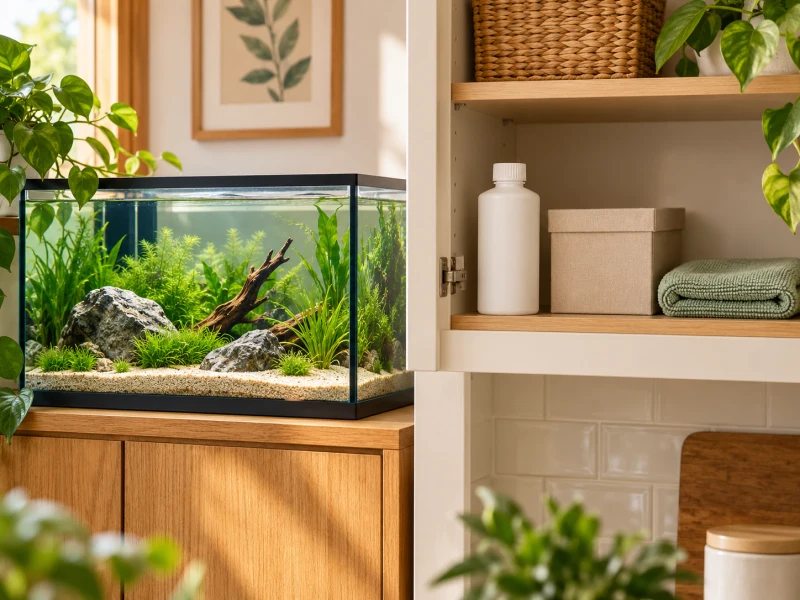
AI-created water-preparation concept; not AquaPlus packaging, a measured dose or treated-water evidence.
Choose Fluval water conditioner for a defined source-water treatment task. AquaPlus A8343 is the 8.4 fl oz / 250 mL bottle identified by the current manufacturer page. Its purpose is different from establishing a biological filter or diagnosing a sick fish.
Start with the water you use, the product label and the aquarium’s needs. A bottle described as a conditioner is not a universal remedy for cloudy water, ammonia concerns, disease or an unsuitable stocking plan.
Identify the Fluval water conditioner bottle first
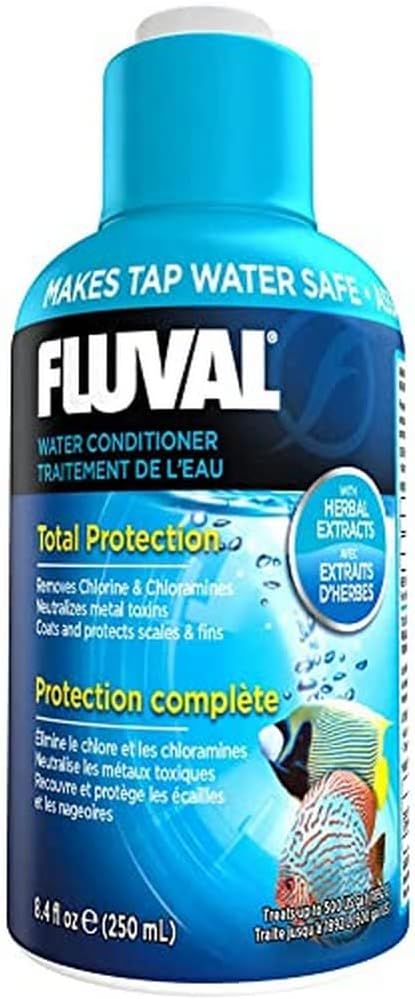
The current AquaPlus product page identifies item A8343 and UPC 015561183437 for 250 mL. The selected retailer item uses the same model and UPC, although its title shortens the name to Fluval Water Conditioner.
Keep model, volume and selected option together when ordering. A familiar blue bottle or a family heading is not enough to establish the quantity. The manufacturer also lists other bottle sizes, so a parent-page image may not identify the option in the basket.
| Field | Selected product | Why it matters |
|---|---|---|
| Manufacturer reference | A8343 | Distinguishes the selected bottle from other water-care products. |
| UPC | 015561183437 | Additional package-identity check. |
| Volume | 8.4 fl oz / 250 mL | Bottle size, not a single aquarium dose. |
| Retailer ASIN | B00FPIZ930 | Selected item identity; still check the actual option and contents. |
Inspect the delivered label before use. Resolve a different reference, unreadable directions, damaged seal or uncertain contents with the seller. Do not apply instructions remembered from another conditioner simply because the packaging looks similar.
Match Fluval water conditioner to the source water
Fluval describes AquaPlus as neutralizing chlorine, chloramine and undesirable metals in tap water. Treat that as the manufacturer’s stated application, not a complete analysis of every household water supply or every aquarium problem.
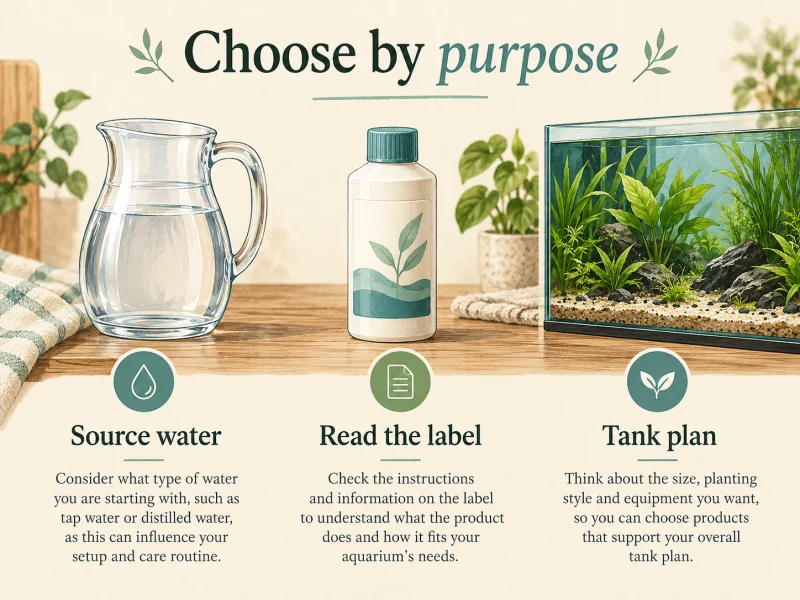
The EPA’s chloramine information explains that chloramines provide longer-lasting disinfection in drinking-water systems. Ask the water supplier what treatment is used rather than assuming that water left standing is suitable for every aquarium.
A household drinking-water standard and an aquarium’s requirements answer different questions. Check the needs of the inhabitants and the relevant source-water information. A clear glass of water does not reveal every condition that matters.
Keep a simple source record: where the water comes from, any household treatment equipment and whether the supply has changed. That information helps clarify what a conditioner is intended to address and what still needs separate testing or advice.
When AquaPlus A8343 is a sensible purchase
Consider Fluval AquaPlus A8343 when you need a conditioner labeled for chlorine, chloramine and undesirable metals in tap water and can follow the supplied instructions for your aquarium. The selected bottle is 8.4 fl oz / 250 mL, ASIN B00FPIZ930. Pass if the actual problem is an unestablished biological filter, unexplained illness or another condition the label does not address.
PRODUCT MENTIONED
Fluval AquaPlus Water Conditioner A8343, 250 mL
Amazon · Details on the retailer’s website
The manufacturer identifies freshwater and saltwater aquarium use. That statement does not establish every preparation step, combination with another additive or suitability for an unusual system. Use the actual bottle’s instructions and ask for advice when the intended use is outside them.
Check what is already in the cupboard before buying another bottle. A clearly identified suitable supply may make a duplicate unnecessary. Conversely, an old unidentified liquid is not a reliable substitute just because its color resembles a current product photograph.
Include the practical cost of correct measuring and storage alongside the bottle price. A larger quantity is not automatically better value when instructions are unclear or the product will be difficult to keep identified. Buy an amount that fits a documented routine rather than the largest treatment headline.
Keep bottle capacity separate from treatment instructions
A label’s total treatment-capacity statement is not the amount to add to one aquarium at one time. It describes a bottle-level claim under the stated directions. Do not translate it into a guessed capful or a universal dose.
Read the supplied directions for the intended water-change or setup task. Confirm the relevant volume basis and measuring units before opening the bottle. If the label is ambiguous for your arrangement, get a manufacturer answer rather than combining numbers from several websites.
Nominal tank capacity and actual water volume are different. Substrate, decoration and the operating water line affect the space occupied by water. The 29-gallon aquarium planning discussion separates the tank label from the complete installed setup.
A water change and preparation of an entirely new aquarium are also different situations. Follow the correct label task rather than treating one remembered procedure as universal. Do not improvise mixtures, stronger concentrations or combinations with other chemicals.
Fluval water conditioner does not establish a biological filter
Conditioning incoming water and establishing biological filtration are separate jobs. Buying a conditioner does not verify that the aquarium can process the planned waste load or that it is ready for fish.
RSPCA’s water-quality advice explains the importance of a functioning biological system and testing. Clear-looking water can still have unsuitable chemistry. Complete an appropriate fishless preparation plan and check conditions before stocking.
Keep the filter, its established media and routine care in the plan. A chemical bottle does not create service access or correct a damaged connection. Compare aquarium filtration layouts if equipment care is the unresolved issue.
Do not remove working biological media because another product promises a cleaner-looking aquarium. Equally, do not treat the conditioner as permission to overstock, skip observations or continue an unsuitable maintenance routine.
Separate water conditioning from polishing and treatment
Suspended debris, source-water disinfectants and fish-health concerns are different problems. A product intended for one should not be credited with solving all three merely because they involve the same aquarium.
The Quick-Clear polishing-pad discussion concerns mechanical particle collection in compatible filters. A pad and a tap-water conditioner have different jobs. Neither appearance nor a product name establishes that every relevant water reading is suitable.
Do not interpret marketing about stress, scales or minor abrasions as a diagnosis or a healing guarantee. A fish behaving abnormally needs prompt investigation and appropriate aquatics or veterinary advice. Do not delay because a conditioner has been added.
Record what changed: new water, new animals, equipment work, feeding or other additives. Accurate timing is more useful than buying several products at once and losing track of which condition each was meant to address.
Read the Fluval water conditioner quantity fields carefully
Fluid volume and item weight answer different questions. The selected listing identifies 8.4 fluid ounces of liquid while also showing an item weight in ounces. Do not use a weight field as a dosing volume or assume that every ounce on a marketplace page means the same thing.
Check the order quantity separately from the bottle volume. Seller offers can impose a minimum quantity or use a multipack, and those terms can change. Read the actual basket before paying rather than interpreting a single-bottle photograph as a guarantee of a one-bottle order.
For a small aquarium or a household with infrequent water preparation, compare the intended routine with the amount you will actually store. There is no useful saving in purchasing more liquid than you can keep clearly identified under its instructions. For a larger routine, calculate cost only after confirming the exact product and correct label use.
Do not turn a retailer’s popularity, star count or current price into proof of treatment performance. Those fields do not establish that the selected bottle addresses the measured conditions in your water. The practical buying decision still begins with the label purpose and ends with appropriate observation and testing.
Keep the Fluval water conditioner routine readable
Retain the original labeled bottle and its directions. Store it under the actual label’s conditions, separate from food and household chemicals and beyond access by children and pets. A blank household container makes later identification unnecessarily difficult.
Keep aquarium-use measuring equipment identifiable and clean under its own directions. Do not borrow a utensil that may carry household cleaner or return a chemical-measuring item to food use. Readability and separation reduce avoidable confusion during routine maintenance.
Before each use, check the product identity and label condition. Seek manufacturer advice about uncertain storage, age or visible changes rather than assuming that every bottle remains suitable indefinitely. No universal opened-bottle lifetime follows from its volume.
Questions about Fluval water conditioner
Is AquaPlus the same as every Fluval water-care bottle?
No. Use A8343, its volume and its stated purpose to identify this product. A bacterial product, cleaner or other additive has a separate label and role. Shared branding does not make their instructions interchangeable.
Does one bottle make a new aquarium ready for fish?
No. Source-water conditioning does not establish biological capacity or verify suitable chemistry. Keep fishless preparation, testing, appropriate equipment and the animal plan separate from the bottle purchase.
Can the cap be treated as a universal measuring unit?
No. Use the actual label’s units and a suitable measuring method. Do not guess from a cap photograph, a different product or a total bottle-capacity claim.
Choose Fluval water conditioner for its defined purpose
AquaPlus A8343 is worth considering for its documented tap-water treatment role when the label fits the task and you can measure and store it correctly. Keep the exact 250 mL identity attached to the purchase.
When the problem is uncertain, establish what needs attention before buying another additive. A useful aquarium routine keeps source-water treatment, biological filtration, testing and animal care connected without pretending that one bottle replaces them all.
View Fluval AquaPlus Water Conditioner A8343, 250 mL on Amazon.
Comments are reviewed before they appear publicly. Please keep questions and feedback relevant to this article.