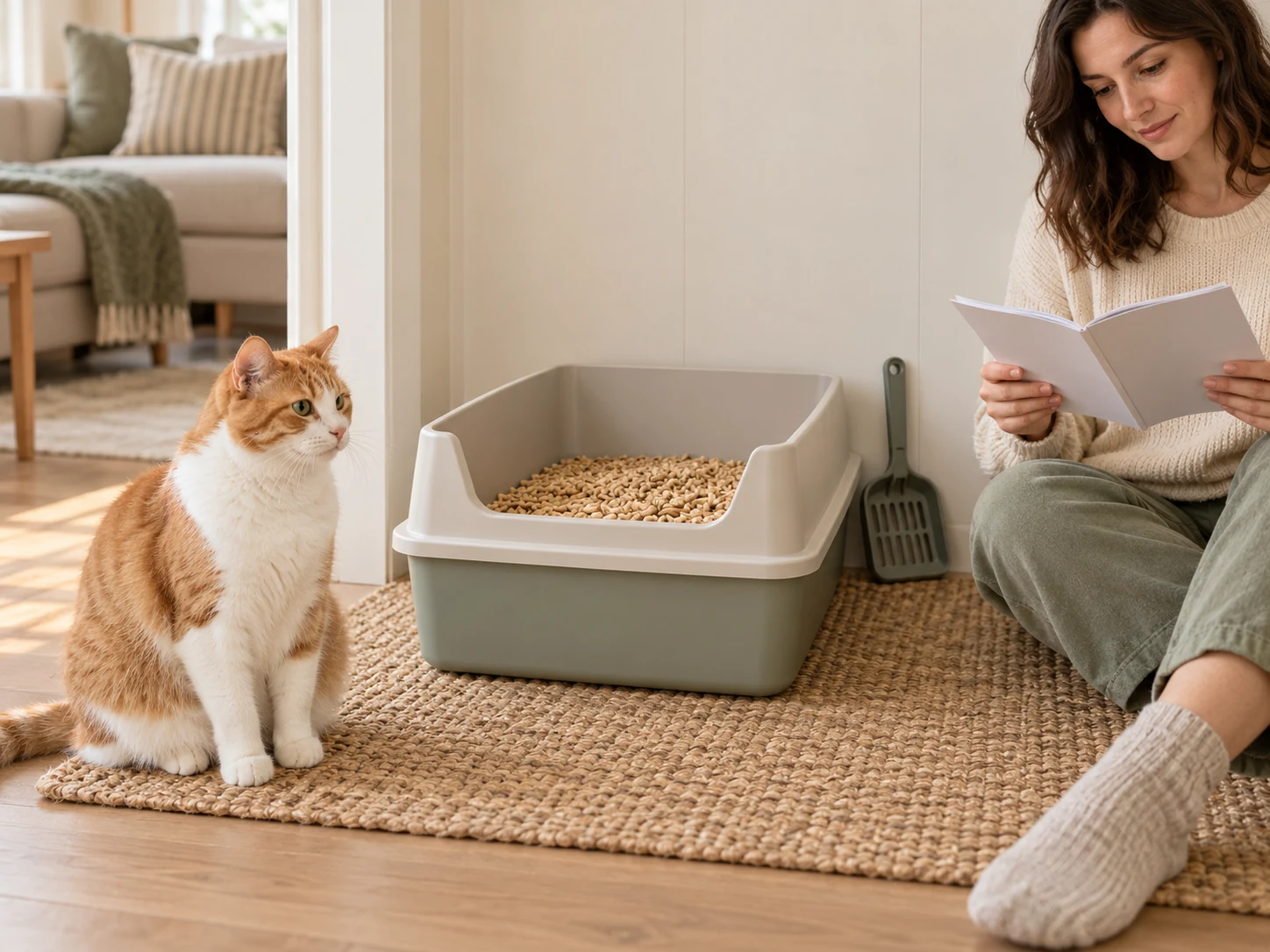
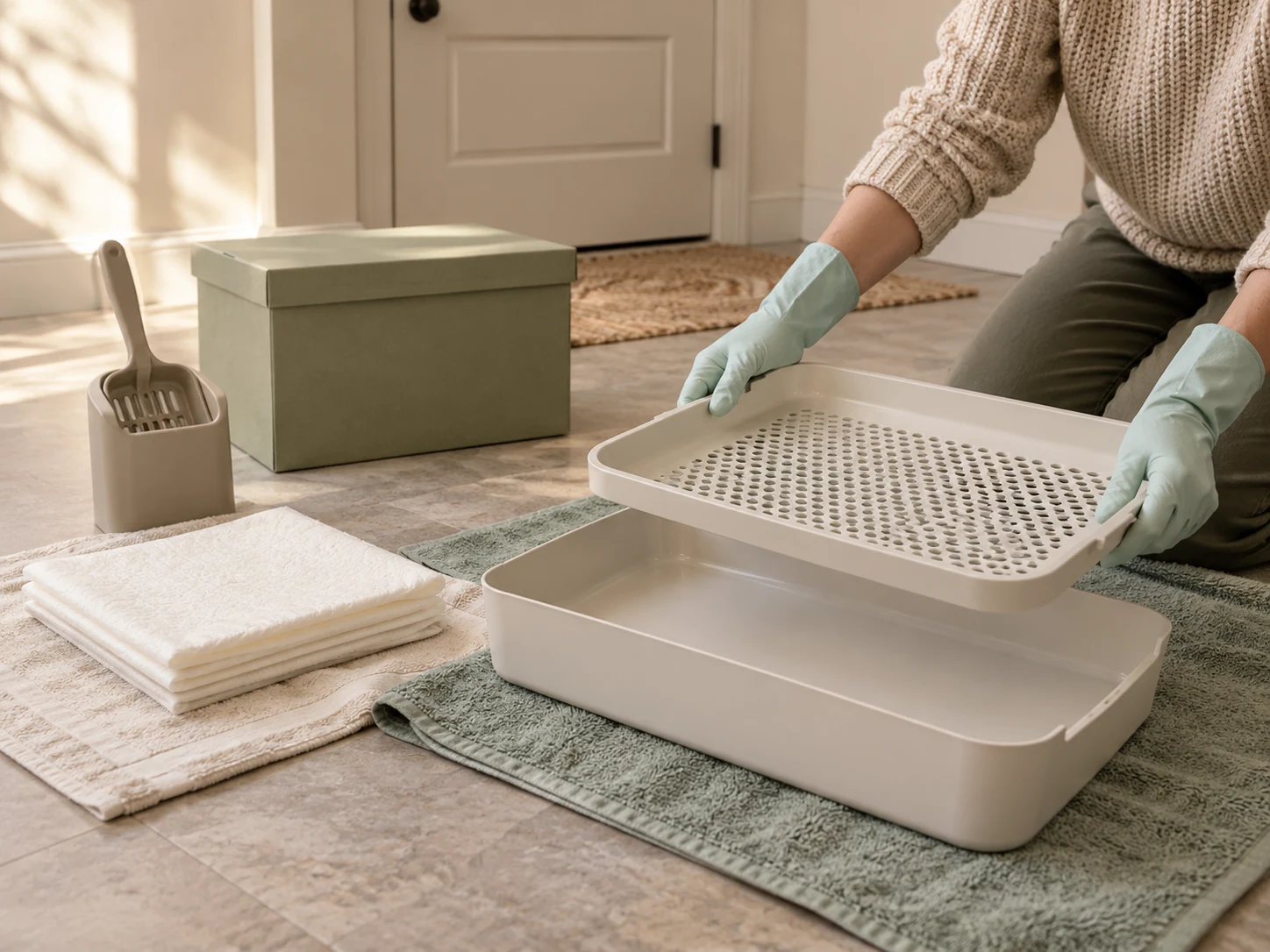
AI-created editorial scene. Match the actual screen and collection routine to the maker's approved litter; acceptance and performance are not demonstrated.
A sifting litter box needs to match the litter it is designed to separate. A system for pine pellets that break down into finer material is not automatically suitable for clumping clay, and a tray that lifts out clumps may not work properly with intact pellets.
Choose the litter-and-box combination before choosing the easiest-looking cleaning video. The useful question is what should remain above the screen and what should pass through it. If the manufacturer does not explain that relationship for your litter, do not assume that the word “sifting” establishes compatibility.
Understand what a sifting litter box separates
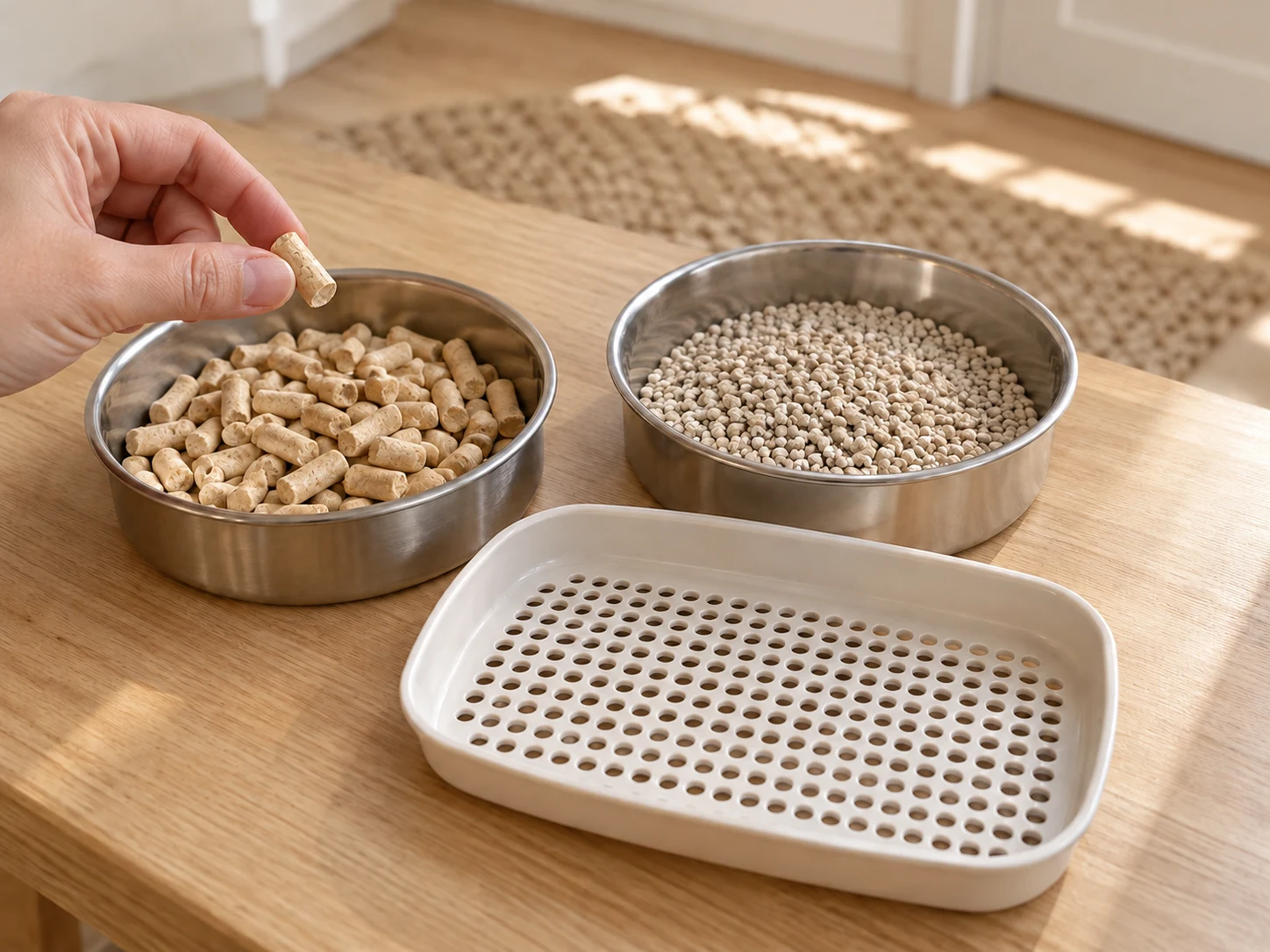
Sifting is a mechanical sorting step, not a universal cleaning method. The openings, litter particle size, waste behavior, and collection tray all affect the result. Two products called sifting boxes can use a screen for different jobs.
In a system designed for disintegrating pine pellets, intact pellets can stay above the screen while smaller used material moves into a collection area. The Small Pet Select pine-pellet page describes its pellets absorbing moisture and turning into sawdust. That is a material behavior relevant to the separation process, not evidence that every pellet or every screen works the same way.
In a design intended to retain formed clumps, the desired separation is different: clean smaller granules pass through while larger waste remains for removal. Confirm the specific pan’s approved litter and method. Do not put clumping litter into a pellet-drainage system simply because both products contain a perforated tray.
| Question | Pellet-oriented setup | Clump-oriented setup |
|---|---|---|
| What changes after use? | Some approved pellets break down into smaller material | The approved litter forms larger removable clumps |
| What is the screen meant to do? | Separate intact pellets from finer used material | Separate suitable smaller granules from retained waste |
| What must be confirmed? | Approved pellet type, openings, drainage, and collection method | Approved litter, clump size, and the pan’s instructions |
| What remains manual? | Solid-waste removal, collection-area care, and washing | Waste disposal, checking stuck material, and washing |
Choose a cleaning routine you will actually maintain
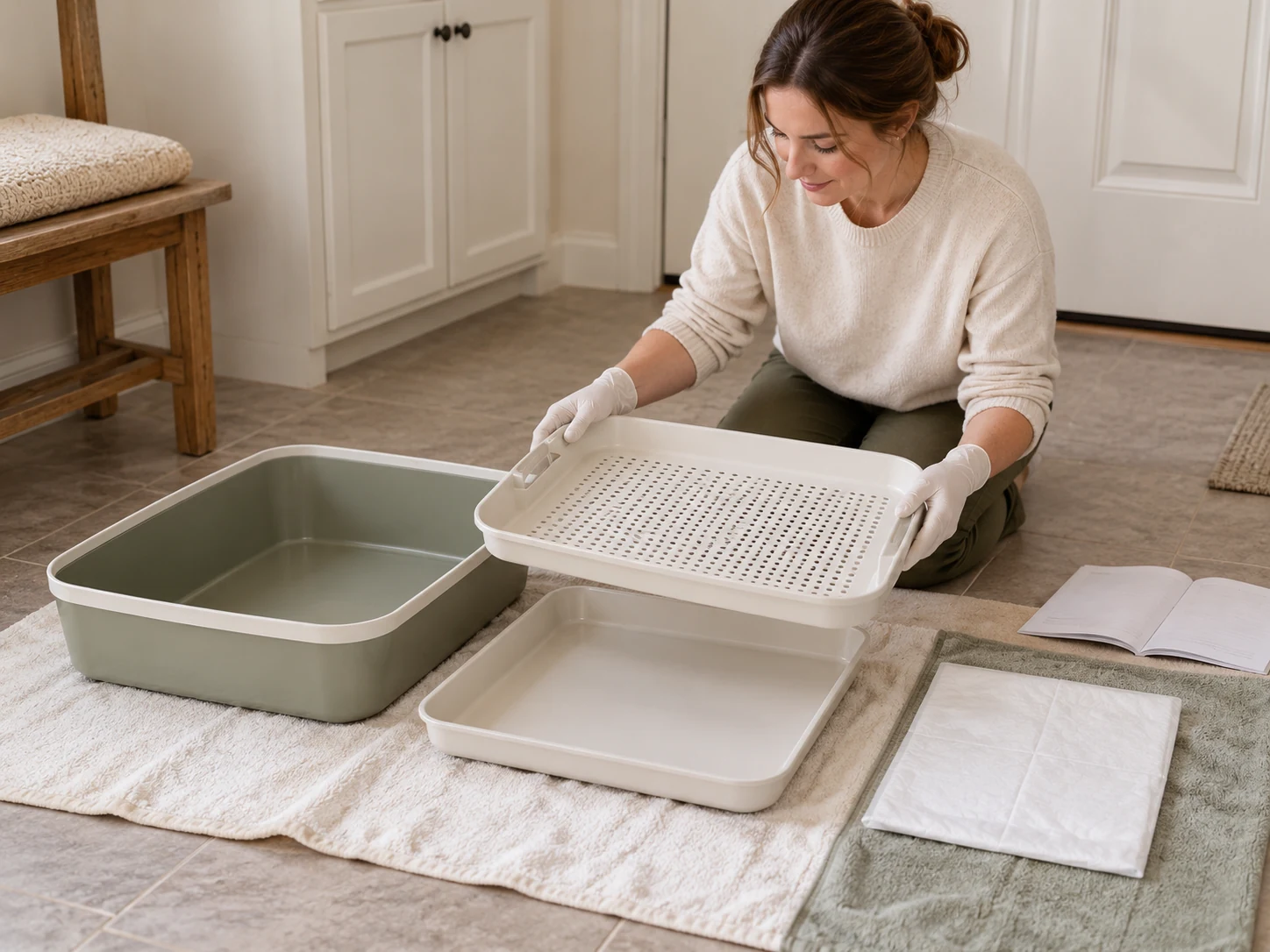
A sifting litter box can change the steps you perform, but it does not remove the need to inspect the box. Think through the whole routine: removing solid waste, separating material, emptying the collection area, replacing any liner or pad, and washing the permitted parts.
Consider how you will lift or slide each piece when it contains litter and waste. Check where you can set a used component down without contaminating a food-preparation surface or dropping material through the holes. A system that looks compact when assembled can need more temporary working space during cleaning.
Before taking the system apart, prepare a place for the clean pieces and a separate place for used parts. Keep pets away from the open collection area while you empty it, then reassemble the box securely before making it available again.
Also check whether the lower area is easy to inspect. A tidy upper surface can hide accumulated wet material underneath. Follow the manufacturer’s routine and adjust attention to actual use rather than treating a generic pad-change suggestion as a guarantee for every cat.
For an existing box that is working well, first improve the cleaning arrangement you already have. Keep a suitable waste container nearby, make the scoop accessible, and remove waste promptly. Buying a sifting system is useful only if its process and litter compatibility solve a real problem.
A pellet-specific option: Small Pet Select Sifting Box
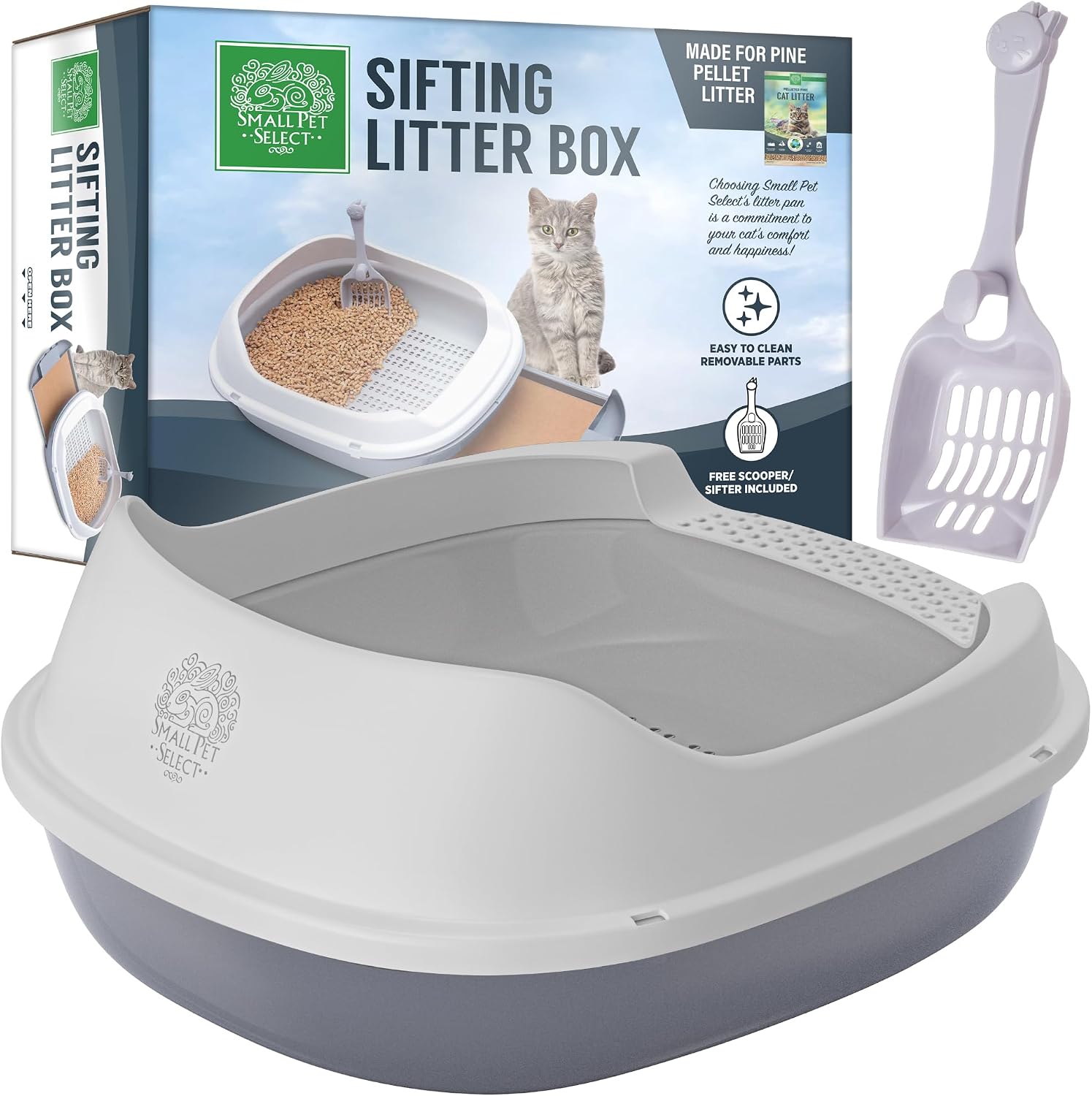
The selected product is the Small Pet Select Sifting Cat Litter Box with Scoop and 5 Pee Pads, model BOX-SIFTINGLTR, ASIN B0CNV3MJHH. The selected Amazon variant is the box without litter pellets; it should not be mistaken for a bundle supplying the litter itself.
The manufacturer’s product page states that this box is tailored specifically for pine-pellet litter and lists included pads and a sifting scoop. The Amazon description calls it a four-piece system with a side panel, draining middle pan, and a lower collection arrangement with a removable drawer. Check the supplied assembly and cleaning directions before putting it into service.
This is a candidate for a household already using an appropriate pine-pellet routine, or carefully evaluating that change with its cat. Skip it if you want to keep clumping clay. The selected brand page does not establish clumping-clay compatibility.
| Purchase point | What is established | What needs your check |
|---|---|---|
| Identity | BOX-SIFTINGLTR; ASIN B0CNV3MJHH | Match the exact box package and variant |
| Intended litter | Manufacturer specifies pine-pellet litter | Confirm the actual pellet product and current instructions |
| Included supplies | Selected Amazon title lists a scoop and five pee pads | Pellets are not included in the selected variant |
| Cleaning | Removable parts and a lower collection arrangement | Inspect both the upper pan and collection area |
| Dimensions | Current retailer and manufacturer measurements differ | Request the current usable floor and assembled measurements |
The dimension discrepancy deserves attention before purchase. The manufacturer currently lists 21.5 inches long, 17 inches wide, and 5 inches high, while Amazon supplies 23-, 18-, and 8-inch figures with inconsistent axis labeling. It remains unresolved whether the difference reflects a version, packaging or listing error. Neither set establishes a verified interior floor measurement.
If size or entry height is close to your cat’s limit, wait for clarification from the seller or manufacturer. A known ASIN does not make conflicting measurements reliable. Cleaning speed, odor control and litter savings have not been independently verified for the system.
View the Small Pet Select BOX-SIFTINGLTR box on Amazon.
PRODUCT MENTIONED
Small Pet Select Sifting Cat Litter Box, with Scoop & 5 Pee Pads
Amazon · Details on the retailer’s website
Check cat comfort before making a litter change
The easier cleaning method for you still needs to be acceptable to the cat. Texture, scent, depth, entry, and available space can all change when you move to a pellet system. Keep a familiar usable box available during a gradual trial rather than removing the current option immediately.
Cat Friendly Homes’ litter-box guidance, from the Feline Veterinary Medical Association, notes that many cats prefer soft, unscented clumping litter and that scent or a hard texture can be unwelcome. That does not mean no cat can use pellets. It means a manufacturer’s “for all cats” wording is not proof that your individual cat will accept a new surface.
Watch for comfortable entry, turning, digging, and elimination. Do not force the cat onto a screen or place them repeatedly into the new box. If the material feels different underfoot or the entry changes, give the cat a choice and observe rather than assuming they will adapt on your schedule.
Ask your veterinarian about toileting changes or signs of discomfort. A cat avoiding a new system may be responding to its setup, but persistent or new problems can also have medical causes. A different litter is not a diagnosis or a treatment.
Confirm these details before buying a sifting litter box
Use a short checklist to compare the actual system with your current litter. If an answer is missing, resolve it before ordering instead of filling the gap from a photograph or a similarly named pan.
- Approved litter. Find the maker’s explicit material guidance. “Pellet” can describe materials with different sizes and wet behavior.
- Usable floor and entry. Ask for measurements that describe where the cat stands, turns, and steps in, rather than the shipping carton.
- Collection method. Confirm what reaches the lower tray or drawer and how you remove it.
- Consumables. Identify whether pads, liners, or other items are required, optional, or included only as a starter supply.
- Cleaning procedure. Check how the pieces separate and which washing methods are allowed.
- Transition plan. Keep a familiar option and introduce the new setup without changing every variable together.
Include the ongoing supplies in the decision, but do not calculate a precise monthly saving without current prices and your actual usage. A package of five pads says what starts in the box, not how long the system will last in your home. Cat count, use, and cleaning attention change that calculation.
Avoid common sifting and disposal mistakes
Do not shake the system aggressively just to make every particle pass through. Follow its directions, keep the task controlled, and stop if the litter is bridging or the lower area is overfilled. Forcing the separation can spread material without solving a compatibility problem.
Remove solid waste separately as required; fine-particle separation does not make feces disappear. Check the corners and any screen openings for remaining material during routine cleaning. Keep contaminated parts and waste away from food and water areas, and wash your hands after handling the box.
Do not infer flushability from “pine,” “natural,” or “biodegradable.” Those descriptions do not establish that the litter, pads, or pet waste belong in a toilet. Follow the product’s disposal guidance and local waste rules. Keep used supplies contained and inaccessible to pets.
If the current box works for your cat and the sifting routine would require a litter they will not use, keep the suitable box. A faster-looking tool does not create a reason to disrupt a successful toileting arrangement.
Frequently asked questions
Can any sifting litter box use clumping clay?
No. Check the exact product’s approved litter and separation method. Some screens are designed to retain larger clumps while suitable clean granules pass through; a pellet system can be designed for a different process. The Small Pet Select box is specified for pine pellets, not established as clumping-clay compatible.
Does a pellet box eliminate scooping?
No. It may separate some used material from intact pellets, but solid waste and the lower collection area still need attention. Follow the exact routine and inspect the system. A clean-looking top layer is not proof that the drawer, tray, or pad underneath is ready for another day.
Are the Small Pet Select dimensions confirmed?
The current sources conflict. The brand lists 21.5 × 17 × 5 inches, while Amazon provides 23-, 18-, and 8-inch figures with inconsistent axis labels. Ask for current assembled and usable-floor measurements if fit matters. Neither set establishes verified interior space.
Should I replace all my cat’s boxes at once?
No. Keep a familiar suitable option while introducing a new box or litter gradually. Changing the texture, scent, location, and box design together makes problems harder to interpret. Observe normal use without forcing the cat, and get veterinary advice for new or persistent toileting difficulty.
Choose the system and litter as a pair
A sifting litter box is useful when its separation method, cleaning steps, and working space fit the litter and the cat. Decide what the screen should keep and what should pass through before comparing convenience claims. Keep daily inspection and waste removal in the plan, even if the system changes how you perform them.
The Small Pet Select BOX-SIFTINGLTR is a pine-pellet-specific candidate, with a defined Amazon package and a real unresolved measurement discrepancy. Confirm its current dimensions and instructions before purchase; choose another appropriate approach if you need to keep clumping litter. The right result is a usable, maintained box that your cat accepts, rather than a sifting mechanism bought for its own sake.
View Small Pet Select Sifting Cat Litter Box, with Scoop & 5 Pee Pads on Amazon.
Comments are reviewed before they appear publicly. Please keep questions and feedback relevant to this article.