
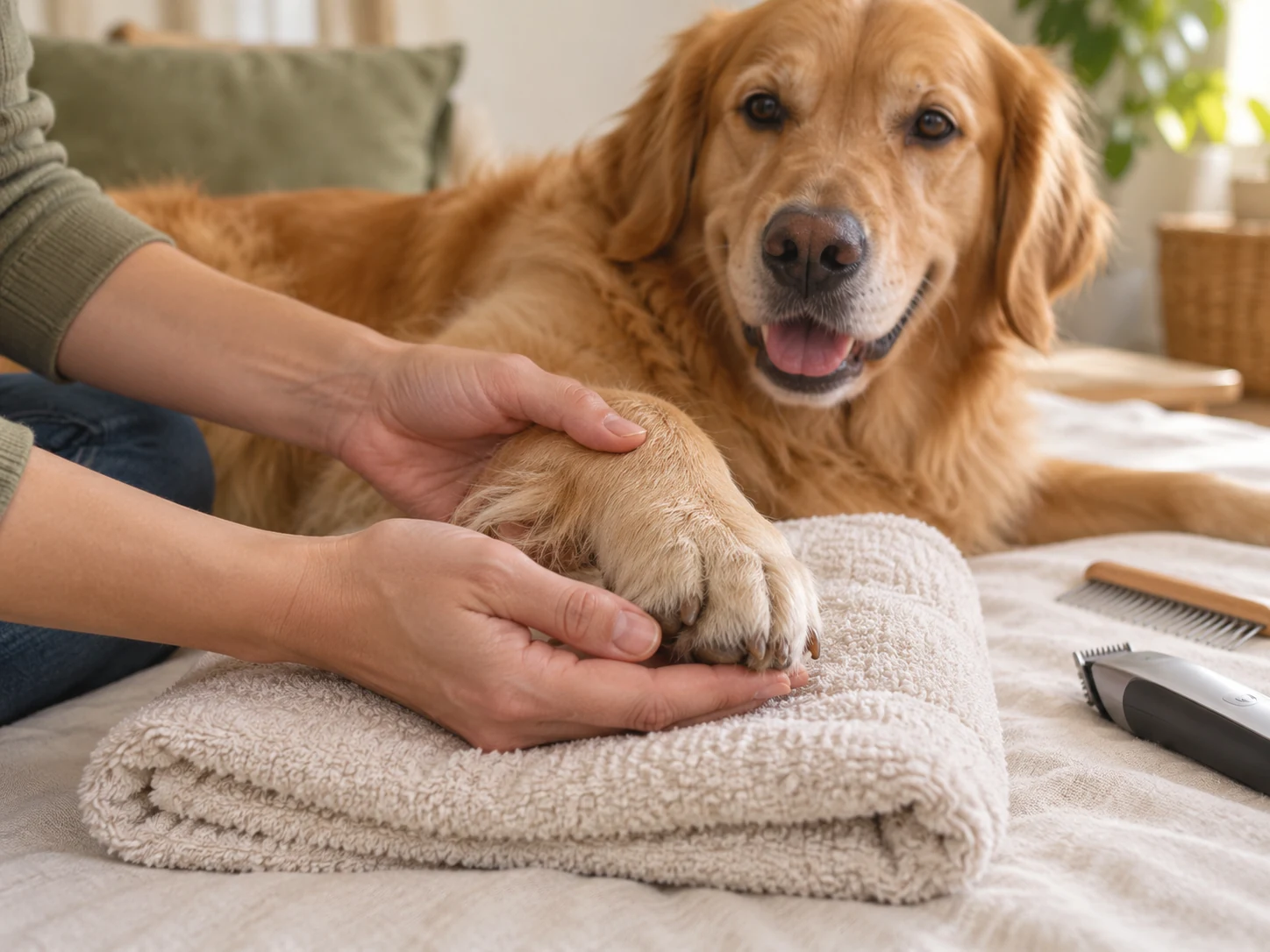
AI-created editorial planning scene. It does not show a cutting depth, nail care or a named trimmer.
A dog paw trimmer is worth considering only for a small, visible hair-maintenance task a professional has shown you how to manage. Choose by blade access, control and your dog’s handling tolerance, not by an LED or a low-noise label alone. A painful paw, hidden skin or a dog pulling away is a reason to postpone cutting, not buy a more powerful tool.
The specified oneisall YP-7015L is a cordless detail trimmer with an LED and a listed 20 mm blade. Consider it for an appropriate maintenance task, rather than a complete haircut, deep work between pads or treatment for licking and irritated feet.
| Check | Useful evidence | What it cannot prove |
|---|---|---|
| Blade size | YP-7015L listing states 20 mm / 0.8 inch | That it fits every paw or sensitive area |
| LED | Built-in light is specified | A clear view when hair or anatomy blocks the area |
| Cordless handling | Fewer cord movements during the task | That the dog will accept the sound or vibration |
| Maintenance | Matched manual, cleaning and blade-care requirements | That another oneisall model has the same procedure |
Check the paw before choosing a trimmer
First decide whether hair is actually the issue. The ASPCA’s paw-care guidance recommends checking feet for wounds, infections and trapped material. A trimmer cannot establish why a dog is licking, limping or protecting a paw.
Look at the accessible surface in good light without forcing the toes apart. If you find swelling, damaged skin, a painful area or material you cannot remove safely, pause grooming and seek veterinary advice. Do not trim around an unexplained problem simply to improve the appearance.
For routine hair maintenance, ask a groomer to show what needs removing and what should remain. The boundary is especially important around pads, nails and skin folds. A model marketed for sensitive areas is not evidence that every owner should work in every crevice.
Keep paw-hair trimming separate from nail care. They use different tools and have different hazards. Use a detail clipper only for its intended hair-maintenance task. Do not use its blade on nails or extend the session into unfamiliar grooming jobs.
Dog paw trimmer fit: blade, light and control
Judge fit by visibility and control, not a speed claim. A wider blade covers more surface but may give you less room around a small target. Check whether you can guide the actual blade through the demonstrated area while keeping its working edge visible and clear of skin.
Handle shape matters as well. Check whether you can hold the unit steadily without squeezing hard or changing grip during the task. A compact trimmer can still be awkward for a particular hand, and a strong grip does not solve a moving paw.
Reserve the purchase for a defined job. If tight mats cover the foot or the dog cannot tolerate gentle handling, ask a professional to assess the problem before adding equipment. A new blade size does not resolve hidden skin or discomfort.
Where the oneisall YP-7015L fits
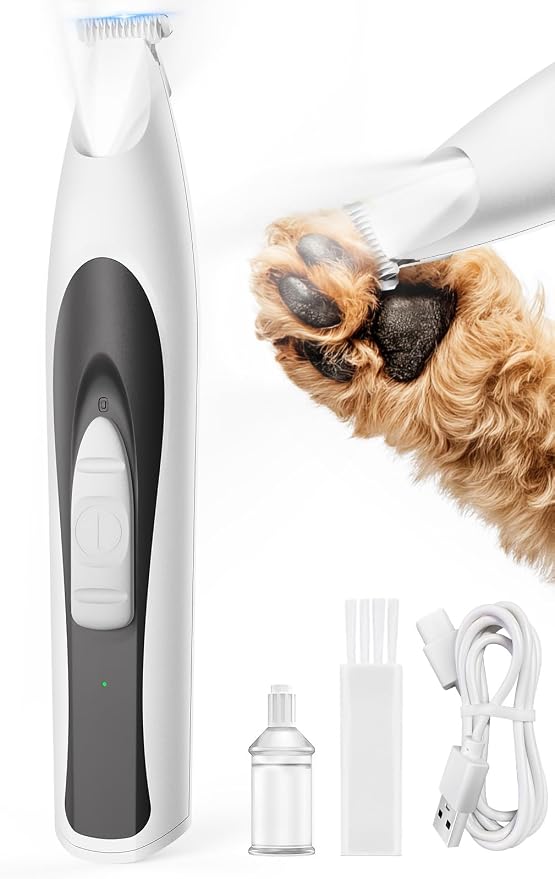
The selected product is the oneisall Low-Noise Dog Paw Trimmer with LED Light, ASIN B0DP2RRQK1, whose current item-model field identifies YP-7015L. The listing includes a USB charging cord, cleaning brush, oil bottle and user manual. Confirm that the supplied unit and instructions match that identity.
For an appropriate demonstrated detail task, check the oneisall YP-7015L paw trimmer with LED on Amazon. Consider it for controlled, limited maintenance rather than as a promise of faster or risk-free grooming.
PRODUCT MENTIONED
oneisall Low-Noise Dog Paw Trimmer with LED Light
Amazon · Details on the retailer’s website
The light and cordless arrangement are the practical features to assess. The seller also makes a low-noise claim, but sound, vibration, trimming speed and an individual dog’s response have not been independently verified for this trimmer. A decibel figure cannot guarantee a relaxed pet, and an LED is not a blade guard.
Confirm the paw trimmer’s power and parts
Its limitations include the fixed blade width, the need for battery and blade care, and uncertainty about how the dog responds to the actual unit. The retailer’s generic battery metadata is inconsistent with the charging-kit description, so do not infer a replaceable battery type or charging procedure from that field. Follow the supplied YP-7015L instructions and ask the seller to clarify any mismatch.
| Check | Model-specific answer needed | Do not substitute |
|---|---|---|
| Identity and contents | YP-7015L label plus the actual supplied cord, brush, oil and instructions. | A listing for another oneisall trimmer or a generic brand reply. |
| Charging | The unit’s required input, compatible charging equipment and supplied charging directions. | An inferred battery type or an unrelated model’s charging time. |
| Replacement blade | The approved blade reference and attachment method for YP-7015L. | A similar-width blade described only as fitting oneisall. |
| Cleaning | Which parts may be removed, how each is cleaned and the specified blade-care method. | A whole-body waterproof or chemical-soaking claim with no matching instructions. |
Keep the matched document with the trimmer for future parts orders. If the seller cannot confirm the model, power or care information, postpone the purchase rather than treating a similar photograph as proof.
A oneisall N5 clipper is a different product. Do not use an N5 manual, runtime or accessory list as instructions for this paw trimmer. Buy an extra charging adapter or replacement blade only with an exact compatibility record.
Choose a dog paw trimmer around comfortable handling
A dog paw trimmer is useful only when the dog accepts the handling. Introduce paw touch separately from cutting, then let the dog become comfortable with the motor sound and vibration. Progress in small stages rather than combining all of them in the first session.
Dogs Trust’s handling advice recommends gradual, positive introductions and short sessions in a comfortable setting. Stop if the dog becomes worried, then return to an easier stage rather than holding the dog in place to finish.
Let the dog be comfortable with the switched-off tool nearby, then follow the matched introduction and professional guidance for sound and touch. The goal is willing cooperation, not a dog frozen in position. A reward can support the routine, but should not distract you from movement or tension.
If the dog shows established handling fear, aggression or apparent pain, involve your veterinarian and appropriate qualified support. Quiet marketing and a small housing do not resolve those problems. A professional may need to perform the grooming while your care team addresses the underlying difficulty.
Prepare your dog paw trimmer for a visible task
Use a quiet, well-lit location with secure footing. Remove loose tools and keep the charging lead away from the working area. Choose a clear stopping point. Postpone the session if you need to rush out or the dog cannot settle.
Follow the exact manual for charging, cleaning and lubrication. The current retail description directs blade oiling, but it does not justify inventing an oil quantity, electrical rating or maintenance interval. Do not operate a mismatched unit merely because it looks similar to the picture.
Ask the groomer to demonstrate the actual blade position and the visible hair boundary on your dog. No single cutting depth suits every paw, and the blade should not be pushed between pads on a guess. If you cannot see that boundary clearly, leave the cutting to the professional.
- Check that the blade is intact and attached as instructed.
- Confirm the paw is comfortable to handle and the intended hair is accessible.
- Keep the blade’s working area visible throughout the demonstrated task.
- Pause immediately when the dog moves or the hair catches.
- Do not repeat passes simply to reach an imagined perfectly bare finish.
Keep the paw trimmer within the task your groomer demonstrated. Marketing that lists paws, face, ears and rump does not establish that each area is an appropriate beginner task. A successful small paw tidy is not training for sensitive facial grooming.
Dog paw trimmer care: know when to stop
Stop for pulling, unexpected heat, a damaged blade, a unit that behaves differently from its instructions or any loss of visibility. Turn the tool off before examining it and follow the manual before removing or cleaning parts.
Do not keep passing over an area that has become red or uncomfortable. Do not assume that persistent licking after a trim means you should remove more hair. A change in comfort or skin condition needs appropriate assessment.
Blue Cross warns about untrained DIY clipping and recommends specific instruction for the dog’s coat and task. Use professional help when the job exceeds your control, rather than switching to a stronger tool or using more restraint.
After a comfortable short session, check the paw and follow the dog paw trimmer’s cleaning directions. Store it safely away from pets and children. Record any handling difficulty so the next session can be simpler, not automatically longer.
Frequently asked questions
Does an LED make paw trimming safe?
It can help illuminate the area, but it cannot reveal skin hidden by a mat or prevent a dog moving into the blade. Clear visibility, suitable instructions and comfortable handling remain necessary. Stop if the light does not give you a complete view of the intended work.
Is the quietest advertised model best for a nervous dog?
Not necessarily. Sound, vibration, handling and previous experience can all matter, and the advertised figure is not a test of your dog’s response. Introduce equipment gradually and seek help for established fear. Do not use a noise claim as a reason to override discomfort.
Can I use the paw trimmer to clear mats between pads?
Do not work a paw trimmer into tight mats or over hidden skin. Have the paw assessed and the grooming demonstrated by a qualified professional. The product’s small size and sensitive-area marketing do not establish a safe cutting depth.
Choose control over a bigger feature list
Choose a dog paw trimmer for a visible task you can control comfortably. First rule out a painful or irritated paw, then ask a professional to demonstrate the exact maintenance task. Treat the blade, light and battery arrangement as practical checks rather than safety guarantees.
If you also plan whole-coat grooming, the Neakasa P2 Pro guide separates hair collection, brushing and clipping. Those larger coat-care tasks do not establish a method for working between paw pads.
The specified oneisall YP-7015L is one option for that limited role. Confirm the real model and supplied instructions, keep the work within what you have learned and stop when the dog or tool requires a break. Use professional help whenever you cannot see or handle the area comfortably.
View oneisall Low-Noise Dog Paw Trimmer with LED Light on Amazon.
Comments are reviewed before they appear publicly. Please keep questions and feedback relevant to this article.