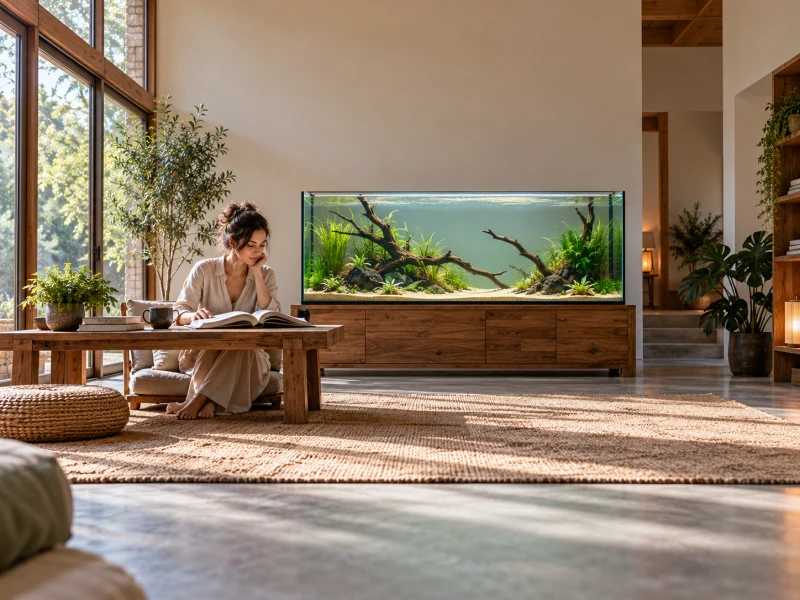
AI-created planning scene, not a documented natural biotope, a named aquarium product or proof that this layout is ready for fish.
Biotope aquariums begin with a defined habitat, rather than a general natural-looking style. Choose a location, a waterbody and a defensible group of observations before selecting animals, plants and materials. Then check whether the resulting care requirements can be met in the aquarium you can maintain.
Wood, sand and subdued lighting can suggest a habitat without establishing an accurate representation. Geographic resemblance and suitable husbandry are separate tests. A display can be attractive while its species list, chemistry or maintenance plan remains unresolved.
Define the claim behind biotope aquariums
Decide how precise the project is meant to be. A broad regional inspiration, a model of one stream margin and a reconstruction of a documented collecting site make different claims. Use a description that matches the evidence available.
The Biotope Aquarium Project separates Biotopes in Nature, or BIN records, from Biotope Aquarium Models, or BAM entries. Its citizen-science framework connects aquarium models to records of real places and collecting events.
That distinction is useful when looking at photographs. An aquarium model is not itself a field observation, and a field photograph is not a complete care plan. Check what kind of record you are reading before carrying its details into a home setup.
If the information supports only a habitat-inspired layout, describe it that way. There is no need to invent a precise locality or claim that every decorative piece reproduces the original environment.
Choose a location and microhabitat you can describe
A continent or river basin is a starting point, not a sufficiently precise stocking list. Narrow the idea to a named waterbody and the part being represented: a sheltered margin, a shallow riffle, a deeper pool or another documented setting.
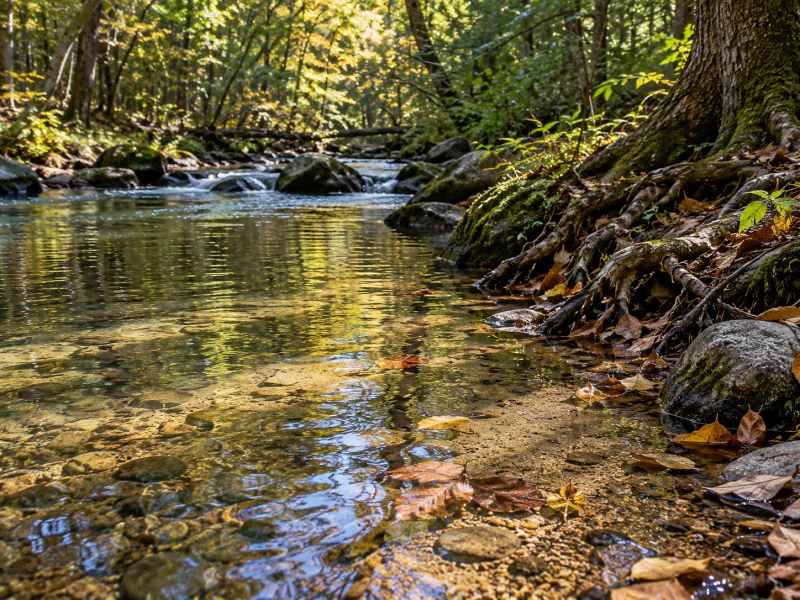
Record the date and context of the observation. A single visit does not establish the full annual range. A photograph also may not show water depth, nighttime conditions, the reach outside the frame or the places animals move between.
Use field reports, museum or scientific records where available, and trace secondary summaries back to their evidence. Keep the observer, location, date and method together. A later retelling can omit qualifications that matter to the aquarium plan.
Unknown information should remain unknown. Do not fill an empty chemistry field with a value for another stream, an interpolated map point or a nearby aquarium model simply to complete a checklist.
Read a field record without turning it into a stocking recipe
The project’s Cabin John Creek entry, attributed to Ryan Wright, gives a collecting date of 7 July 2026. It describes slower sections, rooted margins and shallow riffles within a Maryland tributary of the Potomac River.
Those descriptions show why microhabitat matters. Animals recorded around roots, deeper open water and shallow rocky areas are not automatically using one identical space. A broad list for a creek is not evidence that every listed species belongs together in one home tank.
The entry’s chemistry panel also leaves pH blank and presents some values without complete units. Treat it as a report with useful observations and remaining gaps, rather than a complete set of verified aquarium targets.
Do not copy its species list as a shopping list. Check current identification, adult size, social requirements, feeding, temperature and compatibility through appropriate species-care sources. A field record can establish a research lead without establishing that you can keep the animal well.
Build an evidence table for biotope aquariums
| Decision | Evidence to record | Question before buying |
|---|---|---|
| Habitat scope | Named site, waterbody and microhabitat | Is the description more precise than the evidence? |
| Time and conditions | Observation date, season and method | Is this a snapshot or a supported range? |
| Animals and plants | Identity and locality records | Is co-occurrence established at the relevant scale? |
| Water information | Measured variables with units and context | Which requirements remain unknown? |
| Physical space | Adult behavior, swimming and refuge needs | Does the usable aquarium layout provide enough room? |
| Materials and equipment | Known source, intended function and maker directions | Could they alter the planned conditions? |
| Ongoing care | Testing, feeding and maintenance arrangement | Can the household sustain the complete routine? |
Keep a source alongside each factual entry. Separate a directly observed feature from an interpretation or an aquarium adaptation. If two accounts disagree, retain that disagreement until you can resolve the part relevant to animal care.
An absence in a short species list is not proof that a species never occurs there. Conversely, a basin-wide distribution record does not establish shared use of one small area. Avoid turning either kind of gap into certainty.
Match water requirements in biotope aquariums
Start with the actual source water and the needs of the intended animals. Record the variables needed for that species plan instead of chasing a natural-looking water color. Clear or brown water cannot supply a chemistry result.
The USGS explanation of pH describes acidity on a logarithmic scale. Small numerical differences should not be treated as a simple percentage adjustment, and a general regional description cannot establish the value in a specific aquarium.
Its dissolved-oxygen overview also explains why temperature, water movement and decomposing organic material matter. A leaf-covered scene does not justify copying an unknown amount of decaying material into a closed system.
Keep measurements with their units and methods. Do not treat conductivity, hardness, pH and dissolved oxygen as interchangeable indicators. Obtain suitable aquatics advice if the intended conditions cannot be maintained with the water and equipment available.
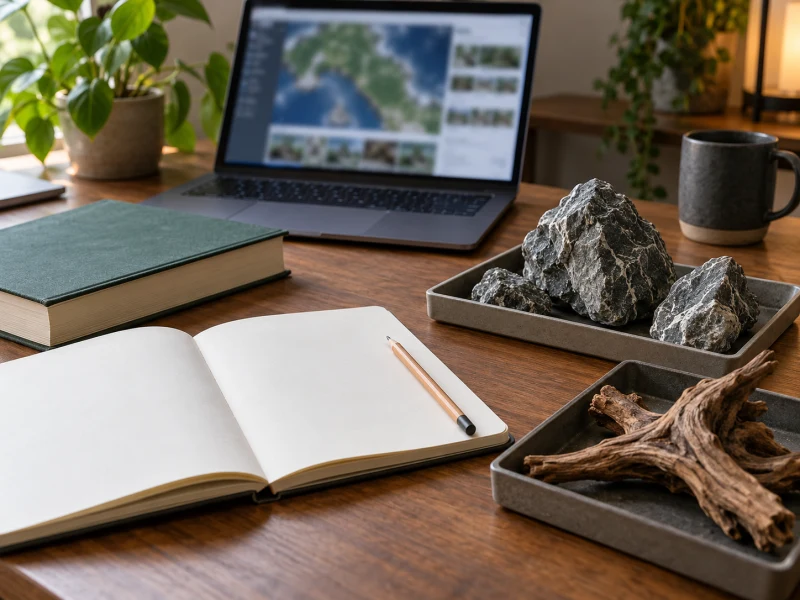
For wood, stone and substrate, establish the actual material and its intended aquarium use. Follow its specific preparation and care instructions. Appearance alone does not show whether it will affect water conditions or whether its source is appropriate.
Plan space and flow in biotope aquariums
Choose the aquarium footprint from the animals’ adult behavior and care requirements. Decorative depth and a convincing riverbank outline cannot compensate for insufficient swimming space, inadequate refuges or incompatible occupants.
Match flow to the intended species and the actual layout. A strong-flow field description does not translate directly into one pump rating. Equipment placement, obstructions and the available sheltered areas affect the arrangement you must assess.
Keep intakes, heater protection where required and access for routine care in the design. Follow the exact equipment’s electrical, operating-water-level and maintenance directions. Concealing a device should not make it impossible to inspect or service properly.
Decide how you will reach the substrate, remove waste, inspect the filter and make suitable water changes without dismantling the entire display. Include the time and cost of replacement parts, testing and ongoing supplies before choosing more decorative material.
Prepare biological filtration for biotope aquariums
RSPCA Australia’s water-quality advice explains the role of biological filtration in processing aquarium waste. Wood, leaves and a natural-looking substrate do not demonstrate that this function is established.
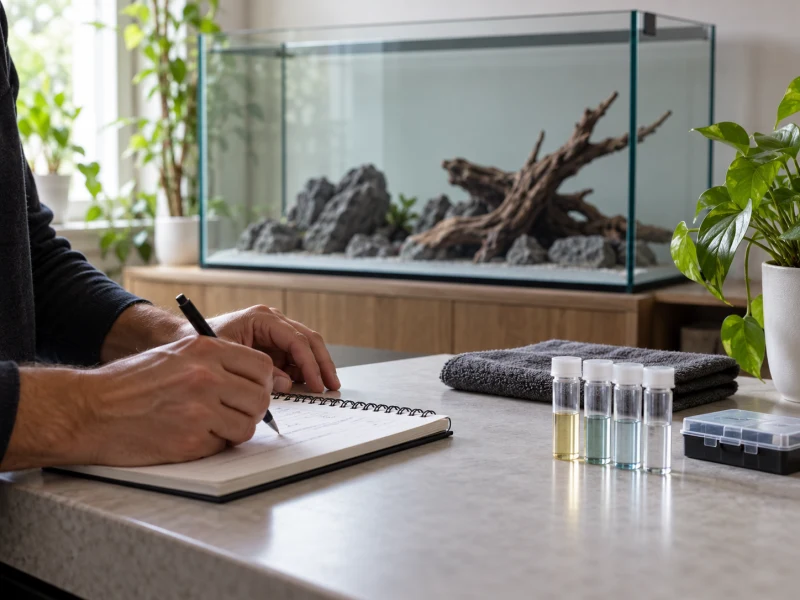
Arrange a suitable cycling and testing plan before introducing fish. Use actual results and appropriate species requirements, rather than a fixed delivery date or the moment the water becomes clear. Obtain experienced aquatics or fish-veterinary help when preparation is uncertain.
Maintain the filter under its own directions and preserve its biological function during care. Do not add livestock simply because the layout is finished, or treat a favorable photograph as evidence that ammonia, nitrite and other relevant conditions have been checked.
Review the operating aquarium after stocking as well as during planning. Changes in behavior, water readings, feeding or equipment performance need attention even when the display continues to look convincingly natural.
Keep habitat interest compatible with conservation
Use traceable, appropriate sources for animals, plants and materials. A locality reference does not grant permission to collect from it, and a photograph cannot establish the identity or suitability of an unfamiliar item.
Plan responsible rehoming if you can no longer care for the animals. The U.S. Fish and Wildlife Service’s aquarium-fish warning explains that releasing fish into local waterways can harm wild communities. An animal’s connection to a natural habitat is not a reason to release a captive individual.
Keep the educational claim modest and specific. Explain the habitat feature being represented and any practical adaptation. A careful description is more informative than a broad claim of a perfect ecosystem replica.
Biotope aquariums questions
Does a natural-looking layout qualify automatically?
No. Define the place and evidence behind the representation. Use habitat-inspired wording when exact geography, species or conditions remain unresolved.
Can a whole river’s species list become one community?
Not without further checks. Distribution, shared microhabitat and suitable captive care are different questions. Assess the actual animals and available space.
Should wild extremes become aquarium targets?
Do not assume so. A field snapshot is not automatically a sustainable captive-care prescription. Verify species requirements and the conditions you can maintain before making adjustments.
Finish the habitat plan before the shopping list
Successful planning for biotope aquariums connects a limited habitat claim to usable evidence, then tests it against animal care and household maintenance. Resolve the location, species and water questions first, and choose equipment only for a defined role.
No single product follows from an unspecified habitat. A clear source table, realistic care plan and honest statement of remaining gaps are the useful next steps before adding animals or buying materials to complete a particular look.
Comments are reviewed before they appear publicly. Please keep questions and feedback relevant to this article.