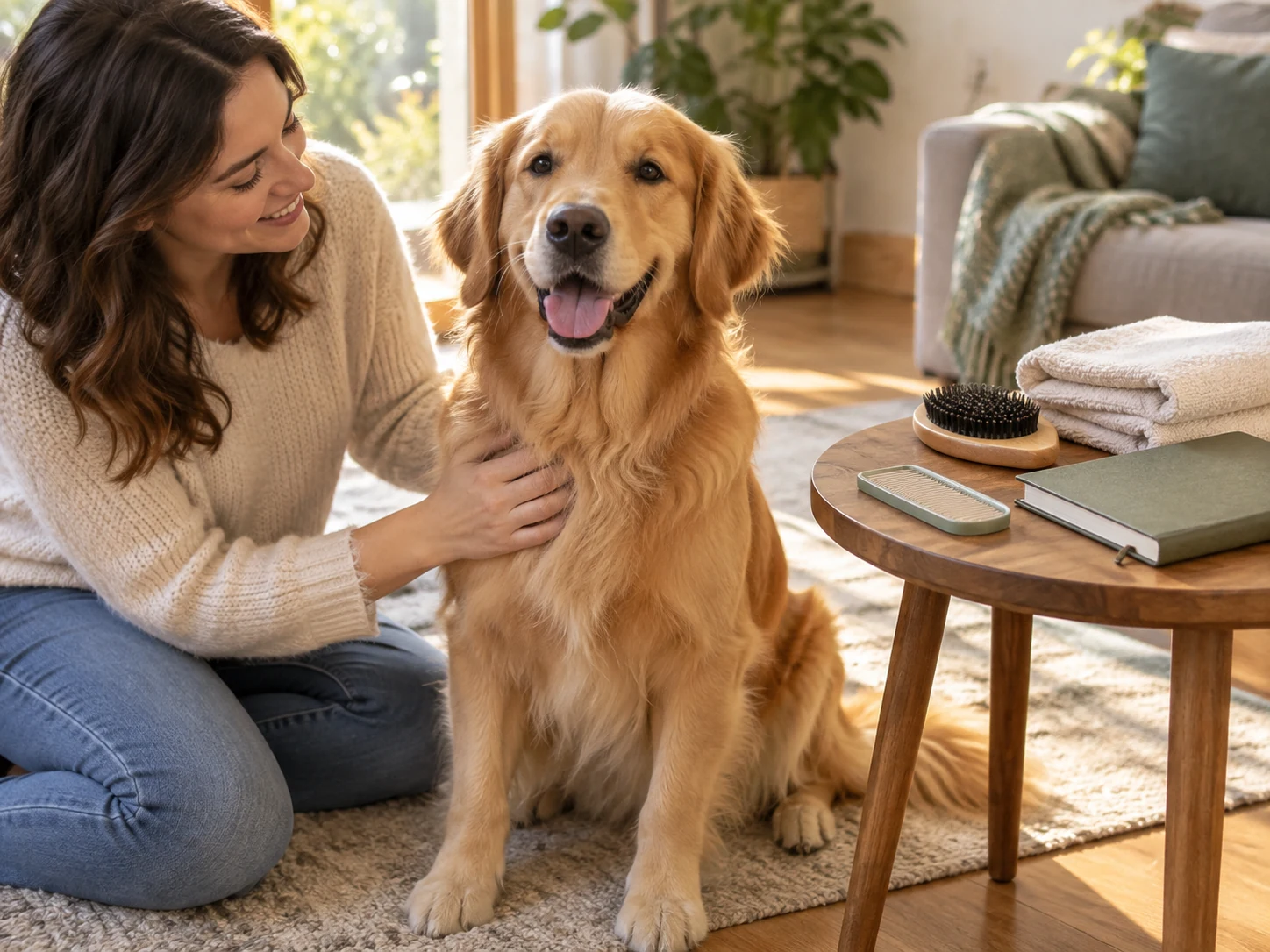
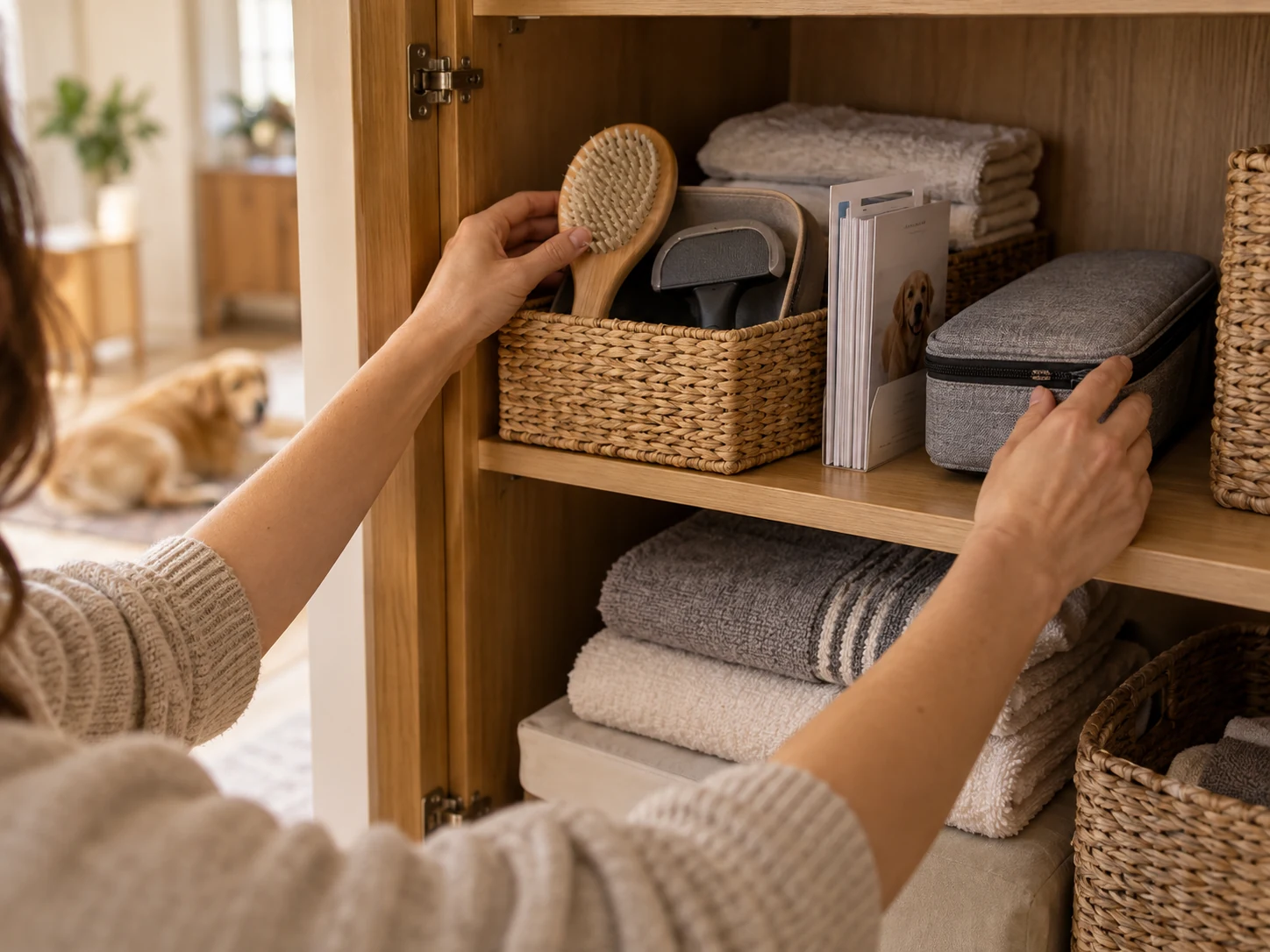
AI-created editorial scene: build a modest kit around actual tasks and comfortable handling; not product photos, a complete-kit endorsement or grooming test.
Dog grooming essentials are the tools and routines needed for your dog’s actual coat, nails and basic hygiene. A useful home kit starts with the work you can perform comfortably and safely, then adds equipment only when a specific task requires it.
You do not need to buy a full collection of brushes, clippers and electrical tools at once. Start with coat inspection, a suitable basic grooming tool, comfortable handling and a cleaning plan. Leave unfamiliar cutting, tight mats and painful areas to appropriate professional help.
Start dog grooming essentials with a task audit
Look at what already happens in a normal week. Does the dog need loose-hair grooming, help with a longer coat, occasional bathing or professional clipping? Are nails maintained by an established routine, or do you need a demonstration before handling them?
Separate the dog’s needs from the equipment you happen to own. A brush that worked on a previous dog may not suit the current coat. A clipper included in a gift set does not establish that clipping is part of the right care plan.
Blue Cross grooming guidance explains that different coats need different tools and encourages gentle brushing. Identify coat texture and the area to be groomed before choosing a bristle brush, flexible finger-style tool, comb, slicker or rake.
Also review the dog rather than the coat alone. New sensitivity, a sore patch, a tightly matted area or a change in handling tolerance can change the immediate task. Buying another brush does not explain pain or make hidden skin safe to work around.
Map each grooming task to a tool
| Task | What may be needed | What can wait | When to get help |
|---|---|---|---|
| Routine coat inspection | Good light and comfortable access | A powered grooming device | Pain, sores, bald patches or a sudden change |
| Loose-hair grooming | One suitable brush or coat-specific tool | Several tools with overlapping roles | Uncertain coat type or repeated resistance |
| Bathing when appropriate | Suitable dog product, rinse access and towels | A dedicated bathing accessory | Skin disease, toxic exposure or an unsuitable setup |
| Nail maintenance | Assessment, comfortable handling and a demonstrated method | Buying both clippers and a grinder | Unclear quick, damaged nails or handling difficulty |
| Hair trimming | A clear professional plan for a specific task | A whole clipping set without training | Tight mats, hidden skin or sensitive areas |
| Tool care | Matched instructions and dry, secure storage | A universal chemical-cleaning routine | Damaged, incompatible or electrically faulty tools |
Make comfortable handling part of the kit
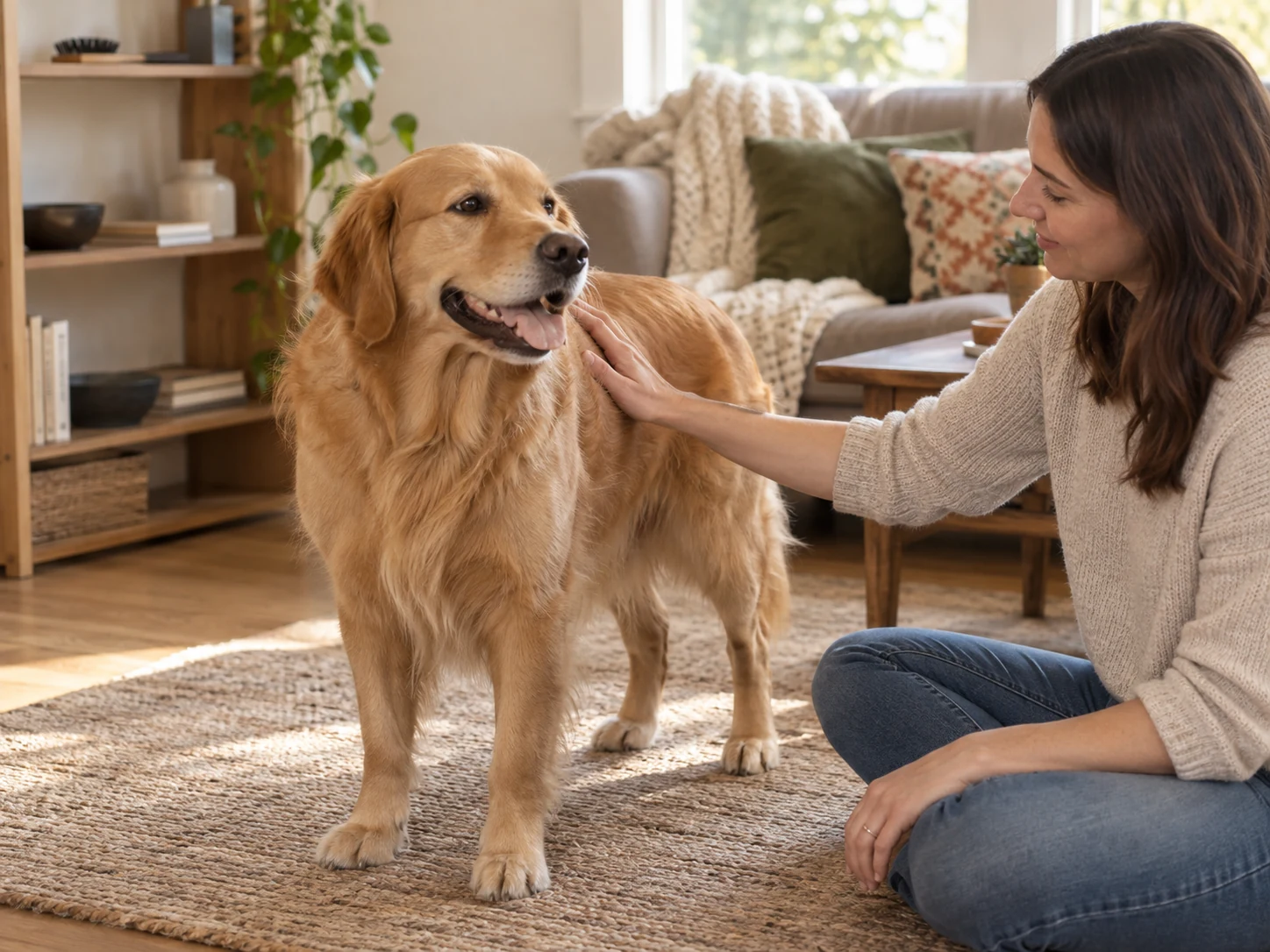
Dogs Trust’s handling guidance recommends building positive experiences gradually and stopping when the dog shows worry. Treat that preparation as part of grooming, rather than something a more expensive tool can replace.
Choose a calm, stable place where you can see the coat and keep the dog comfortable. Introduce touch and the sight of a tool separately before combining them. A dog that accepts a brush lying nearby may not yet accept contact over the whole body.
Keep the task small enough to stop. A comfortable brief check is useful even if it does not complete the coat. Do not respond to avoidance by increasing restraint or racing through the remaining work.
Plan rewards that suit the dog’s diet and situation. Keep them accessible without leaving scissors, electrical leads or other equipment within reach. When established fear or apparent pain prevents necessary care, involve your veterinarian and appropriate qualified support.
Choose dog grooming essentials for the actual coat
A smooth short coat, a dense double coat and a long coat create different tasks. Loose surface hair, undercoat and tangles are not the same problem. Ask a groomer to show the suitable tool and contact for the actual coat when you are unsure.
Begin with the least complicated tool that performs the needed task comfortably. A soft brush or flexible finger-style tool may suit a limited loose-hair role. A longer coat may need a suitable comb or another coat-specific approach. Do not assume one category replaces all the others.
Inspect the tool before each use. Look for damaged teeth, rough surfaces, trapped debris or a moving part that no longer works normally. A tool that feels questionable in your hand should stay off the coat until you resolve the problem.
Stop at resistance. Do not repeatedly drag a brush through the same difficult area to make it pass. A tight mat or skin you cannot see changes the task from routine brushing to a problem needing professional assessment.
A conditional basic-brush example: ZoomGroom ZG2
The specified example is KONG ZoomGroom Dog Brush for Grooming and Shampooing, Blue, Large, model ZG2, ASIN B0002AR19Q. It is one possible basic tool for a suitable dog, rather than a complete grooming kit.
KONG’s current ZG2 page describes dry brushing and use during shampooing, with gentle circular contact. Its SKU and species identify the dog Large model. The selected Amazon listing says Blue, while the current manufacturer’s commerce color field says Boysenberry; check the actual delivered variant.
For a dog whose coat and comfortable handling suit this limited loose-hair role, check the KONG ZoomGroom ZG2 Blue Large dog brush on Amazon. Choose it for a confirmed task rather than because every home kit is supposed to contain the same brush.
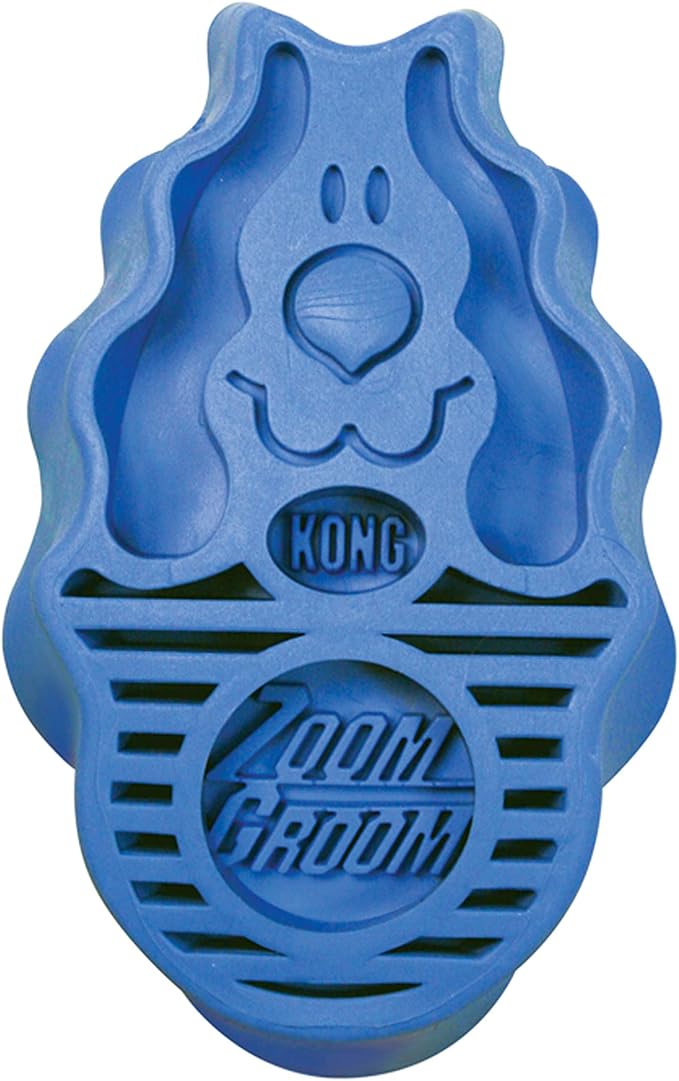
PRODUCT MENTIONED
KONG – ZoomGroom – Dog Brush for Grooming and Shampooing – Blue Brush for Large Dogs
Amazon · Details on the retailer’s website
The current manufacturer specification lists TPE, while the product descriptions also use rubber language. Those descriptions do not establish natural rubber, an allergy guarantee or the exact formulation of every historical retail batch. Check the package and ask KONG about an important material requirement.
Shedding reduction, massage response and cleaning performance have not been independently verified for this brush. Manufacturer skin-and-coat claims do not establish a treatment for irritation or excessive shedding. This tool also has no verified role as a tight-mat remover.
Dog grooming essentials for a bathing routine
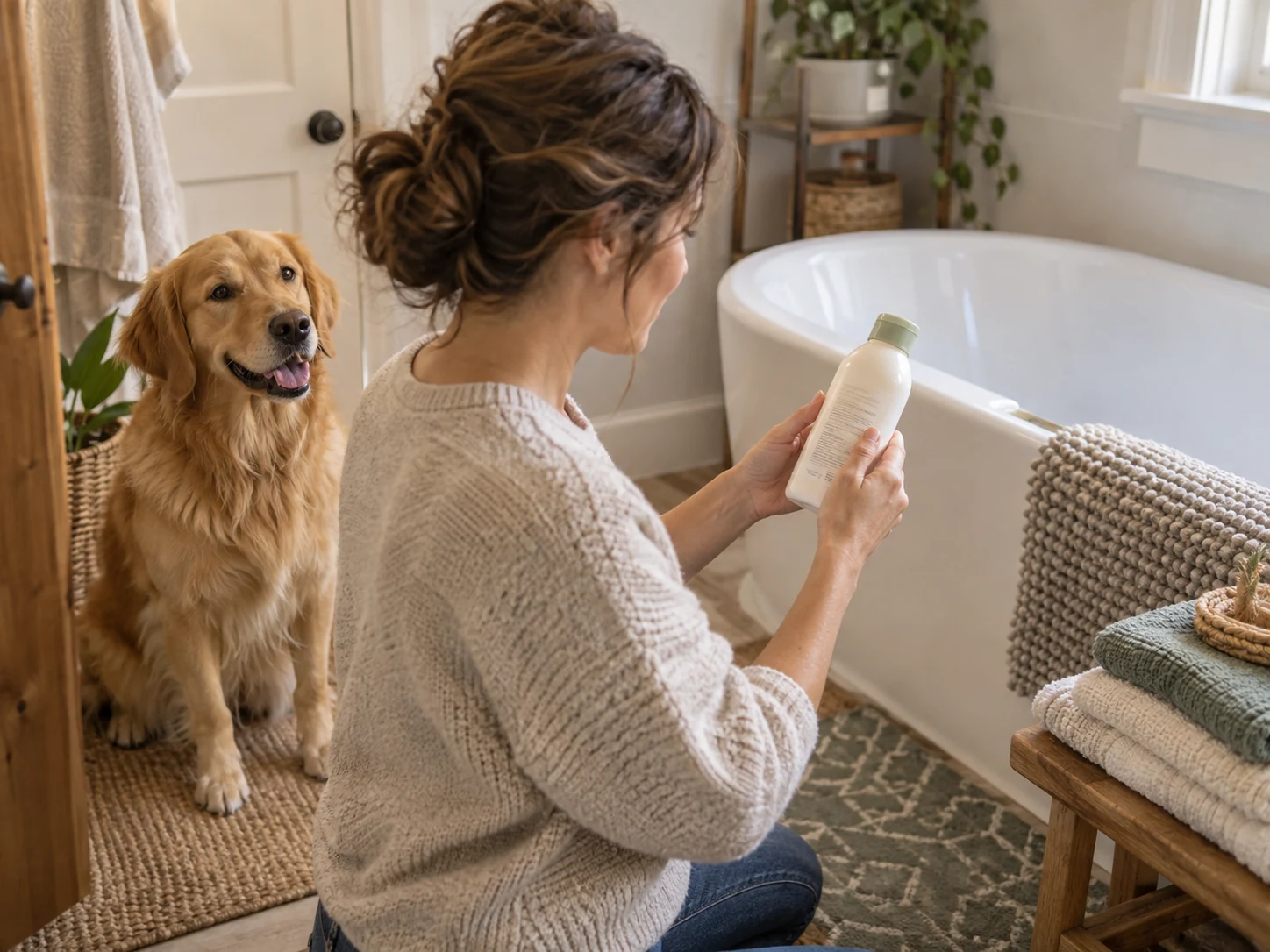
Your dog grooming essentials for bathing depend on the actual coat, skin and care plan. Do not choose a fixed schedule from the number of shampoo bottles in a set. Consider the coat, actual dirt, skin condition and whether you can rinse and dry the animal comfortably.
The ASPCA dog-grooming guidance covers brushing, bathing, coat and skin checks. It recommends dog-appropriate bathing products and attention to irritation or other abnormal changes. A medicated or special-purpose product needs its own suitable instructions and, where appropriate, veterinary advice.
Have towels and a way to maintain comfortable footing ready before wetting the dog. Keep product labels accessible and use the actual rinse directions. Do not make an unverified mixture of shampoos, household cleaners or essential oils to solve a skin problem.
A bathing brush is optional when your hands and an established routine already do the job comfortably. If you use the selected ZoomGroom for bathing, follow its directions for gentle movement through wet hair. The tool does not determine how much shampoo to apply or which skin treatment is appropriate.
Choose nail equipment for a usable home routine
Before adding nail tools to your dog grooming essentials, check whether maintenance is needed and whether you can see and control the intended task. Nail clippers and a grinder are different tools with different handling demands. Buying both does not remove the need to learn the chosen method on your dog’s nails.
Ask a veterinarian, veterinary nurse or appropriately qualified groomer to demonstrate the task. Keep the quick, nail color, discomfort and the dog’s handling response in the decision. A stop bar, light or plastic guard does not identify the quick automatically.
A grinder adds motor sound, vibration, rotating parts and charging or power requirements. A manual clipper still requires a suitable blade, controlled movement and a dog that accepts the handling. Choose one approach only when its complete requirements fit the situation.
Do not begin with a fixed amount to remove from every nail. Stop for a damaged or painful nail, unclear visibility or a dog that cannot remain comfortable. Have an experienced professional demonstrate the appropriate cutting or grinding procedure and help set a trim interval for the individual dog.
Treat hair cutting as a separate skill
Scissors and clippers belong in a kit only when you have a defined task and know how to perform it. A rounded scissor tip does not protect skin from the cutting blades. A clipper guard does not make hidden skin or a tight mat safe.
Ask a professional to identify which maintenance, if any, is appropriate between appointments. Keep the tool, coat preparation and work area within that demonstration. Do not expand a small hair-maintenance task into cutting around eyes, skin folds or another unfamiliar sensitive area.
Professional grooming remains a useful part of dog grooming essentials when coat type or the task exceeds your experience. Its cost should be included in the care plan rather than treated as a failure to buy enough equipment.
If you are considering powered hair collection for an established home routine, the Neakasa P2 Pro guide separates brushing, clipping and vacuum collection. Collection convenience does not establish the correct coat tool or replace clipping skills and comfortable handling.
Maintain dog grooming essentials by tool type
Keep each tool’s instructions with the kit. Remove collected hair and debris as directed, inspect working surfaces and store equipment dry and secure. A cleaning method suitable for a simple hand brush may damage a motorized tool.
Disconnect powered equipment before the cleaning or maintenance that its manual requires. Keep adapters and electrical connections dry. Do not assume “waterproof,” “washable blade” or “detachable head” permits immersing the complete tool.
Use only the compatible oil, charger, blade or accessory that the actual model permits. A similar-looking connection does not establish compatibility. If a required part cannot be identified, postpone that task rather than improvise a replacement.
Do not create a universal disinfection recipe for the entire kit. Follow the relevant manufacturer directions and ask your veterinary or grooming professional when a skin problem affects shared-tool hygiene. Remove a damaged item from use instead of smoothing it into a different shape.
Budget for dog grooming essentials and ongoing care
Budget for the upkeep of your dog grooming essentials before adding another tool: cleaning time, permitted replacement parts, bathing products, charging and professional appointments. The cheapest initial collection may become inconvenient if its tools are difficult to maintain or do not suit the coat.
Consider the person who will actually do the work. Can they hold the tool comfortably, see the target area and stop without rushing? Can another caregiver find the correct instructions and understand which tasks remain professional-only?
Keep a short task note with the kit: the tool’s role, its care directions and any limits set by your veterinarian or groomer. This is more useful than storing several overlapping tools without knowing which one to pick up.
Review the kit when the dog’s coat, health or tolerance changes. New difficulty should prompt assessment rather than an automatic purchase. The right routine can become simpler as you learn which tasks are needed and which are better handled elsewhere.
Frequently asked questions
What are the minimum dog grooming essentials?
Begin with comfortable handling, coat and skin inspection, one suitable basic tool and the means to maintain it. Add bathing, nail or cutting equipment only for a defined task you can perform properly. There is no universal tool count for every dog.
Do I need a grooming vacuum?
It is optional hair-collection equipment. Choose a suitable brushing or clipping method first, then decide whether powered collection fits the dog’s tolerance and the household’s routine. A quieter manual setup may already meet the need.
Can a home kit replace every groomer visit?
No such result is established. Coat type, skill, handling comfort and health can make professional help necessary. Keep tight mats, painful areas and unfamiliar cutting outside an ordinary home-maintenance session.
Build the kit around work you can maintain
Dog grooming essentials should make a suitable routine easier to follow. Identify the real tasks, choose a basic coat tool and develop comfortable handling before adding specialized equipment.
The selected ZoomGroom ZG2 is a conditional example for one brushing role. It does not turn a collection of tools into a complete care plan. Keep the kit small enough to understand, maintain and use well, with professional help available whenever the coat, skin, nails or handling situation needs it.
View KONG – ZoomGroom – Dog Brush for Grooming and Shampooing – Blue Brush for Large Dogs on Amazon.
Comments are reviewed before they appear publicly. Please keep questions and feedback relevant to this article.