
AI-created generic dog toys made in usa decision scene; not a named-model product photograph or a hands-on test.
Dog toys made in USA are best checked at the exact product level. A brand’s American address, a US seller or a flag in a photograph does not answer where every toy in that brand’s range is made. Read the full origin statement, including any explanation about materials.
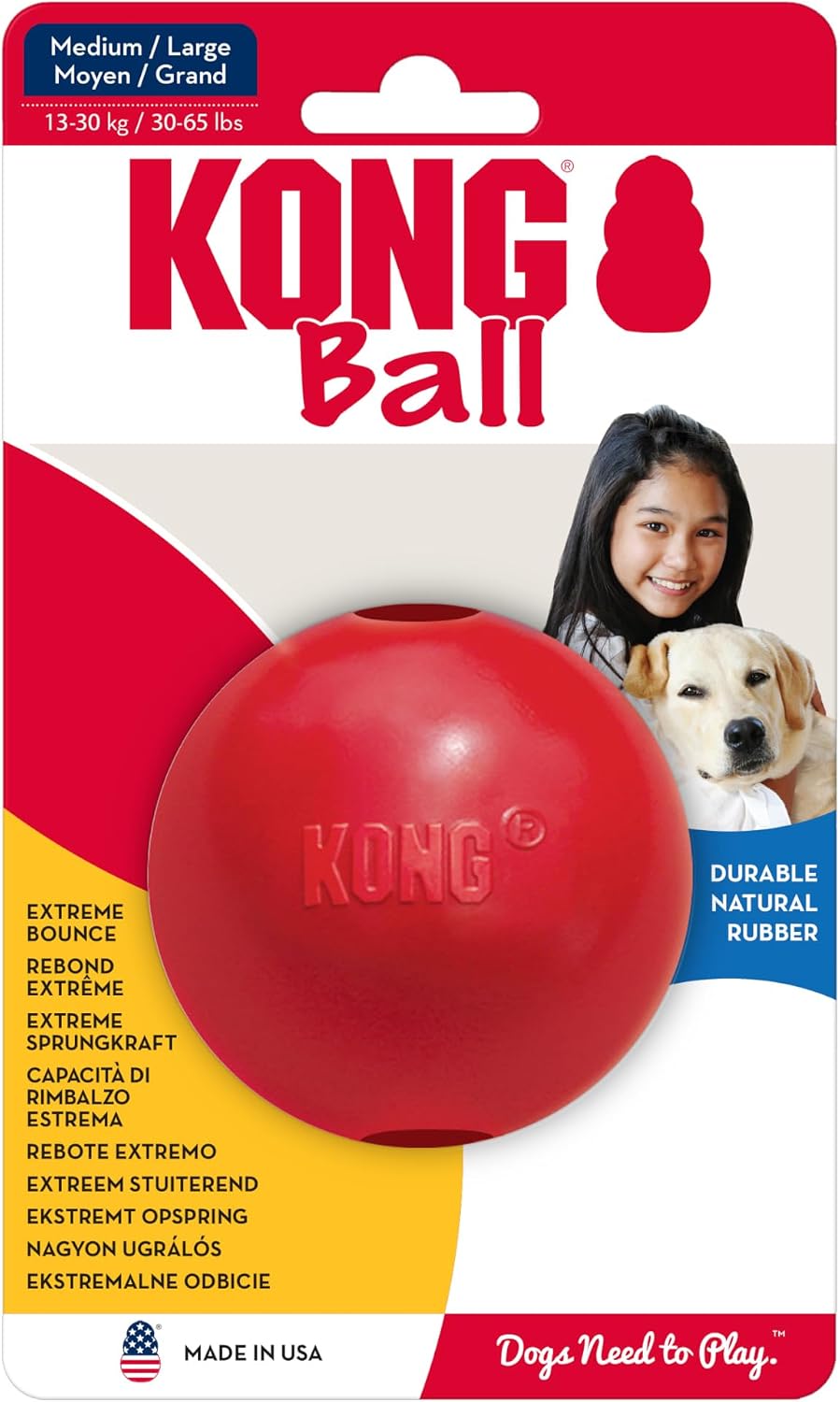
The red KONG Ball with Hole is model KB1E, Amazon ASIN B0002DHOJA. The current manufacturer describes it as made in the USA with globally sourced materials. Do not shorten that wording into a claim that every ingredient and production stage is American.
Dog toys made in USA: identify the exact product first
Start with the product name, model, size and selected listing. The item is the red Ball with Hole, approximately 3 inches across, sold as Medium/Large. It is not every KONG ball, every size of this product or every KONG toy.
The manufacturer’s current Ball with Hole page supplies the product-specific origin statement. The selected retailer listing also identifies the model and carries origin wording. These sources support a limited statement about this item, not a factory audit conducted by this site.
If the delivered package differs from the selected listing, stop and resolve the identity. A correct brand name alone is not enough when size, model, materials or production details can differ across products.
Read the whole origin claim, not just the headline
KONG’s description includes globally sourced materials. Preserve that qualification when comparing this product with other options. It tells the reader more than an isolated made-in-USA phrase.

The reviewed original package image shows a USA-origin presentation for the selected Medium/Large ball. A package image is useful supporting material, but it does not reveal the complete origin of every component or establish that future batches will carry identical information.
The AI-created generic editorial scenes illustrate checking a label, observing fit and maintaining a toy. They contain no readable origin certification and are not evidence that an unnamed prop was manufactured in a particular country.
Dog toys made in USA claims can have qualifications
The Federal Trade Commission’s Made in USA guidance distinguishes an unqualified claim from one that explains the extent or type of domestic content or processing. Its standard for an unqualified claim is that the product is all or virtually all made in the United States.
For a shopper, the practical point is to retain the explanation attached to a claim. Wording about imported parts, globally sourced materials or a specific US process can change what the statement communicates.
The manufacturer’s origin wording is not an independent supply-chain audit or a finding that its labeling satisfies every legal requirement.
| Wording or detail | What to check | What not to infer |
|---|---|---|
| Made in USA | The complete claim and any qualification. | That omitted wording is irrelevant. |
| Made in USA with globally sourced materials | The exact product carrying that statement. | That all materials are domestic. |
| Designed in USA | The process actually being described. | That manufacturing occurred there. |
| A US company address | Whether a separate product-origin statement exists. | That headquarters determines factory location. |
| A US retailer or shipping warehouse | The manufacturer information for the selected item. | That the seller’s location establishes manufacturing origin. |
Keep a shortlist of exact dog toys made in USA claims
For each item, record the current product page, model and wording you actually found. Include the size or variant when it affects identification. A short product-specific note is more useful than a brand-wide yes-or-no column.
Do not fill missing information from a similar-looking toy. If a manufacturer page is vague, ask about the exact model and the current delivered version. Leave the answer open until an appropriate source responds.
Use retailer descriptions as a comparison source rather than allowing a shortened title to override a fuller manufacturer statement. If two sources conflict, preserve the discrepancy and verify before buying for an origin requirement.
Where the selected KONG ball fits
The selected ball is a conditional option for a dog that can comfortably handle its actual size during supervised ball play. Its current origin statement is relevant to an origin-focused shortlist, while the dog’s needs remain a separate decision.
The original selected package identifies Medium/Large, 30–65 lb, and the retailer gives approximately 3 inches across. Current size labels and manufacturer charts should be checked against the actual delivered product rather than merged into a universal recommendation.
Consider the selected red KONG Ball with Hole, KB1E, Medium/Large approximately 3 inches, if its actual mouth fit and supervised ball-play role suit the dog. The current product-level statement is made in the USA with globally sourced materials; it does not establish an entirely domestic supply chain.
PRODUCT MENTIONED
KONG Ball with Hole — Red, Medium/Large, 3 Inch
Amazon · Details on the retailer’s website
Origin does not replace a mouth-fit check
PDSA’s ball-selection guidance emphasizes choosing a ball that cannot disappear wholly into the dog’s mouth while remaining comfortable to carry. That general advice is not an independent endorsement of the selected KONG model.
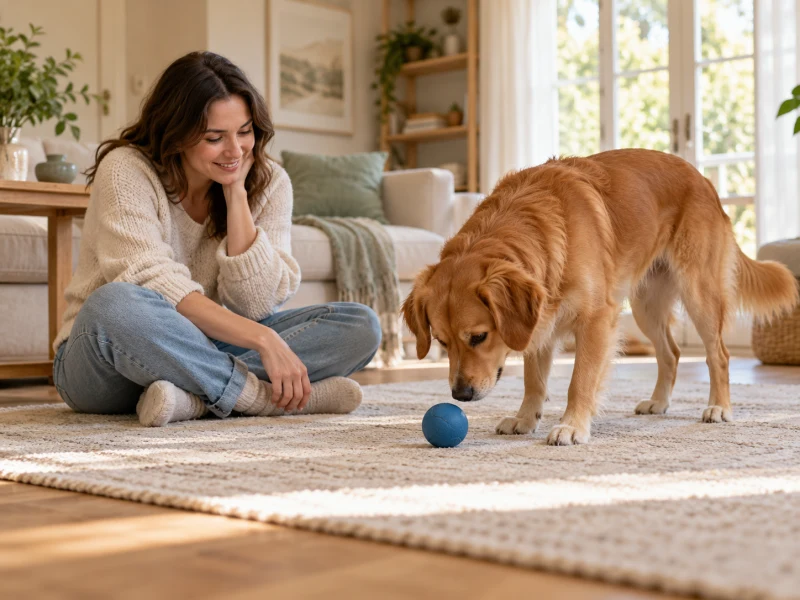
A country-of-origin statement supplies no individual fit assessment. Check the actual dog’s mouth, play style and the delivered ball. Do not use a weight category as the only reason to continue with an uncertain fit.
The center hole is a physical design feature, not proof that choking or every other hazard is impossible. If size or suitability is unclear, ask for appropriate guidance rather than interpreting one visible feature as a complete safety guarantee.
Dog toys made in USA still need ordinary care
Inspect the toy before and after supervised use. Remove damaged or loose material from access, and follow the actual supplied cleaning instructions. The origin claim does not change those everyday responsibilities.
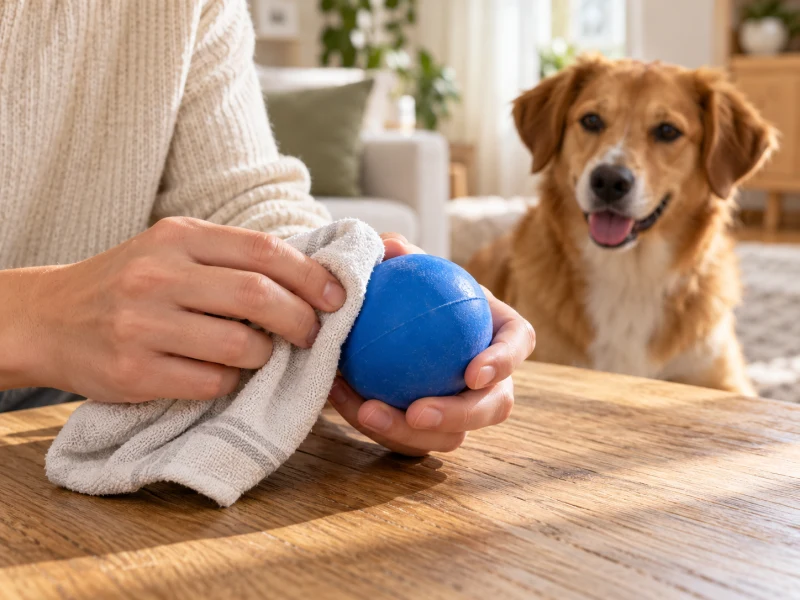
Keep public claims about durability limited to what the evidence supports. A lifespan for your dog, indestructibility or a measured risk reduction from domestic production has not been independently verified for this ball.
If the dog repeatedly works at the ball destructively, reconsider the activity. Choosing a product for its origin does not make every chewing style appropriate, and continuing with a damaged item is not a useful way to test brand promises.
Ask questions that can receive a specific answer
When contacting a maker, include the exact model, size and package details. Ask what the current origin statement means for that item and whether the supplied product matches the page you are reading.
A useful question might identify the selected 3-inch KB1E ball and ask the company to confirm the current wording for it. A broad question about whether a whole brand is American can produce an answer that misses the model you intend to purchase.
Keep a copy of the response with the product reference. Do not present a customer-service answer about one item as proof for a whole collection or for a later version that has not been checked.
Keep an origin record that stays useful
Save a dated reference to the exact page and note which part of the statement comes from the manufacturer. If a package arrives with different information, photograph that label before discarding the packaging and ask the seller or maker to clarify the discrepancy.
Keep observations separate from conclusions. For example, finding a US address is an observation; deciding that the factory must be in the United States is an unsupported next step. Reading a product-specific qualified origin statement supports a more limited and useful note.
This habit also helps when replacing a worn toy later. Check the current version again instead of assuming a new order is covered by the old research. A model-level record makes that comparison possible without reconstructing a whole brand’s history.
Compare other priorities separately
Manufacturing origin, material composition, suitability, care and environmental impact are different attributes. A domestic origin claim does not by itself calculate shipping emissions, recycled content or whether a return program is practical.
Decide which requirements matter to your purchase and mark the ones with missing evidence. This avoids choosing a product because it answered one visible question while important fit or care details remained unresolved.
Cost and access matter too. A product that satisfies an origin preference but does not suit the dog or cannot be obtained in the correct version is not automatically the best choice. There is no need to force a recommendation merely to complete a country-based list.
Recheck dog toys made in USA before ordering
Review the selected version, current manufacturer statement and actual package information. Product descriptions and manufacturing arrangements can change, so an old screenshot is not a permanent guarantee.
Keep the globally-sourced-materials qualification attached to the red KONG Ball with Hole. Its product-level statement does not certify the origin of the brand’s wider range or establish a ranking of domestic toys.
If that exact item meets the dog’s fit and activity needs, view the selected red Medium/Large KONG Ball with Hole on Amazon. Keep the complete origin wording attached to the product when comparing it with another choice.
Common questions
Does a US brand address prove a toy is made there?
No. Find a product-specific manufacturing statement rather than inferring origin from the company’s address.
Does globally sourced materials mean all-American ingredients?
No. The globally sourced materials wording does not establish a wholly domestic material supply.
Does the Ball with Hole’s origin statement cover every KONG toy?
No. The reviewed statement belongs to the specific Ball with Hole product.
View KONG Ball with Hole — Red, Medium/Large, 3 Inch on Amazon.
Comments are reviewed before they appear publicly. Please keep questions and feedback relevant to this article.