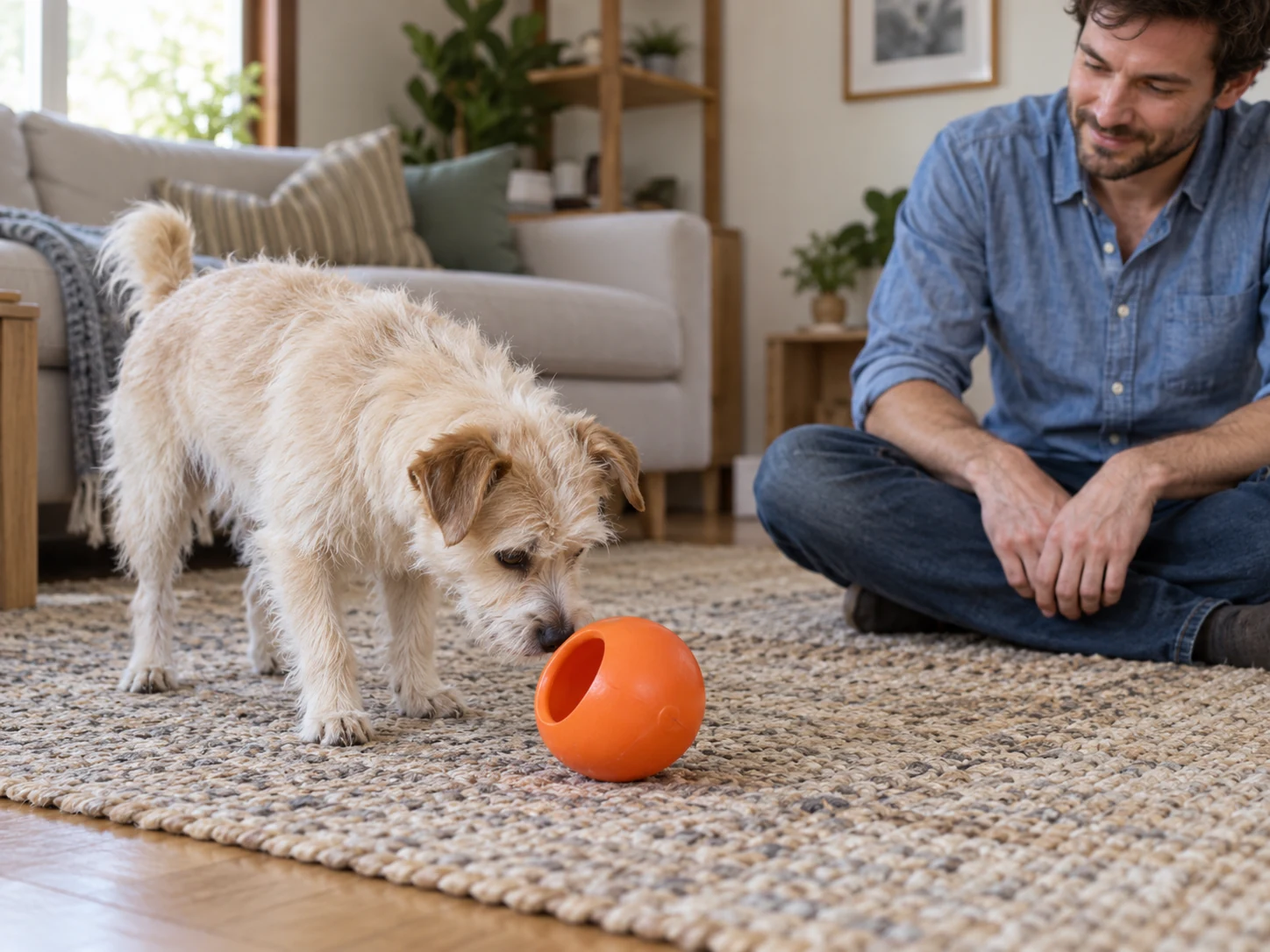
AI-created editorial scene: choose an activity and toy fit for the individual small dog. Generic toy, not a Classic Small product photo or test.
Dog toys for small dogs should match the mouth, chewing style and activity, rather than simply carry a small-breed label. A lightweight toy can still be too small, too difficult or too easy to tear apart for a particular dog.
The specified red KONG Classic Small is one stuffable rubber option for an appropriate average chewer. Assess it as part of a supervised play routine, not an indestructible toy or a promise to solve every barking, chewing or boredom problem.
Choose dog toys for small dogs by play style
Watch the dog before choosing a category. Does the dog enjoy carrying something, finding food, chasing a short roll or gently chewing while you remain nearby? Those are different activities, and one toy does not need to perform all of them.
Blue Cross’s play guidance explains that personality, age and breed type can influence play. It recommends suitable toy size, regular inspection and supervision when a dog might swallow parts. A small body does not establish a gentle chewing style.
Separate a quiet food-retrieval activity from active chase. A stuffable rubber toy can offer food engagement and an unpredictable bounce, but its appeal still depends on the dog. The amount of time a product advertises does not tell you whether your dog finds the task enjoyable.
| Observed preference | Useful toy feature | Check before choosing |
|---|---|---|
| Working for familiar food | A suitable stuffable opening | The food is accessible and the dog stays comfortable |
| Short chase and retrieve | A toy the dog can approach and carry appropriately | Secure footing and manageable movement |
| Average rubber chewing | A matched rubber strength and size | No tearing, missing pieces or forceful destruction |
| Powerful chewing despite small size | A separately assessed strength and activity | Do not assume the selected Classic is suitable |
| Reluctance or frustration | An easier, more appealing activity | Do not force participation or increase difficulty automatically |
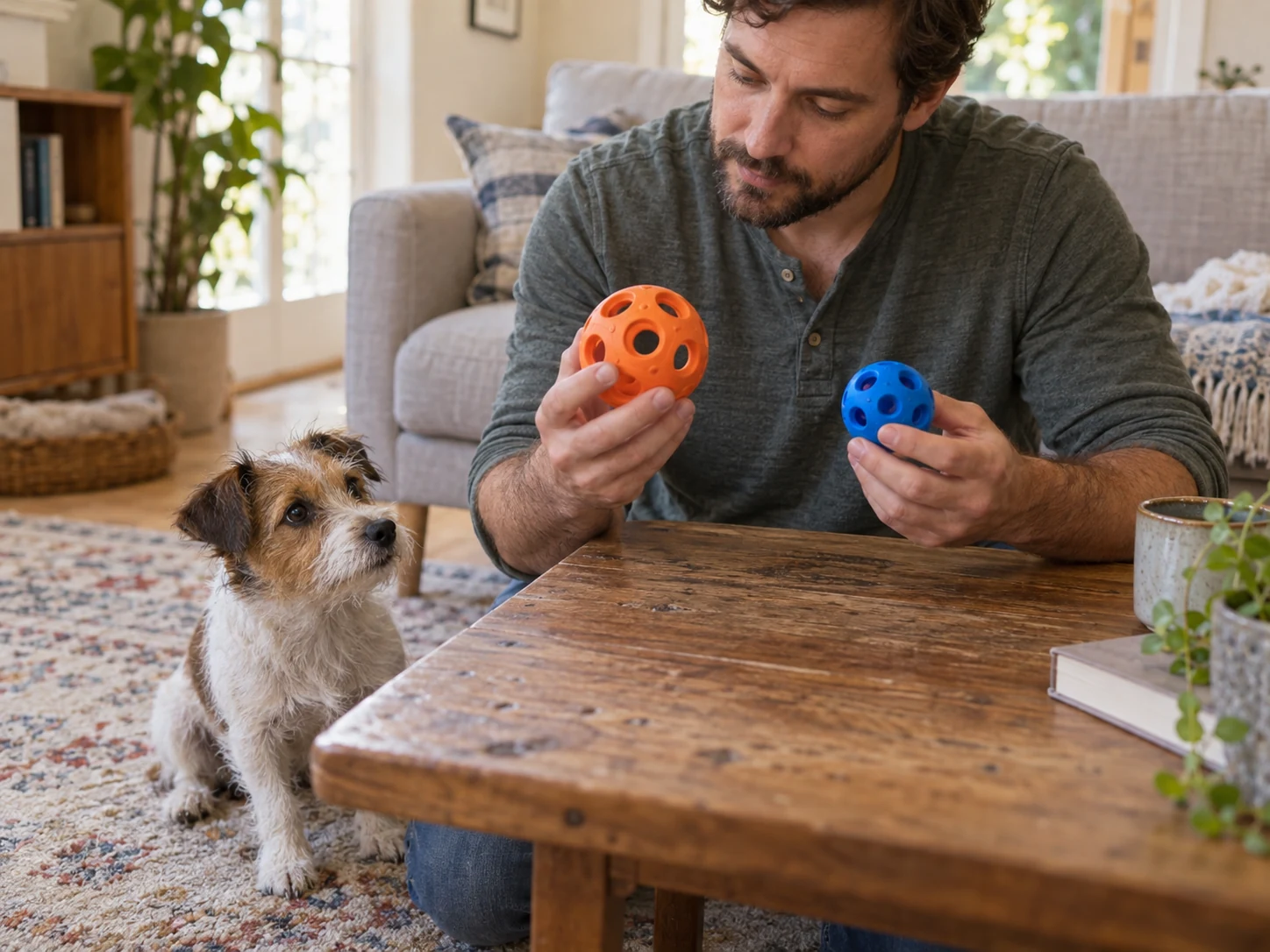
Size dog toys for small dogs by the mouth
Weight charts are a starting reference, not a complete fit test. KONG’s current selection guidance also considers head and mouth size, says the largest ring should exceed the back of the mouth and advises sizing up when between sizes or uncertain.
The brand lists Small as up to 20 pounds. That does not mean every dog below that weight should receive this exact toy. Consider the actual mouth, chewing behavior and whether any larger dog can reach it.
KONG advises sizing household toys for the largest dog as a precaution. A Small toy therefore is not an appropriate shared choice merely because one small dog lives there. Review access and separate supervised activities before choosing the selected size.
Do not test a questionable size by pushing the toy farther into a dog’s mouth. Use the manufacturer’s selection guidance and ask for professional advice when fit is uncertain. A tempting price or the dog carrying a toy briefly does not resolve a swallowing concern.
A defined rubber option: KONG Classic Small
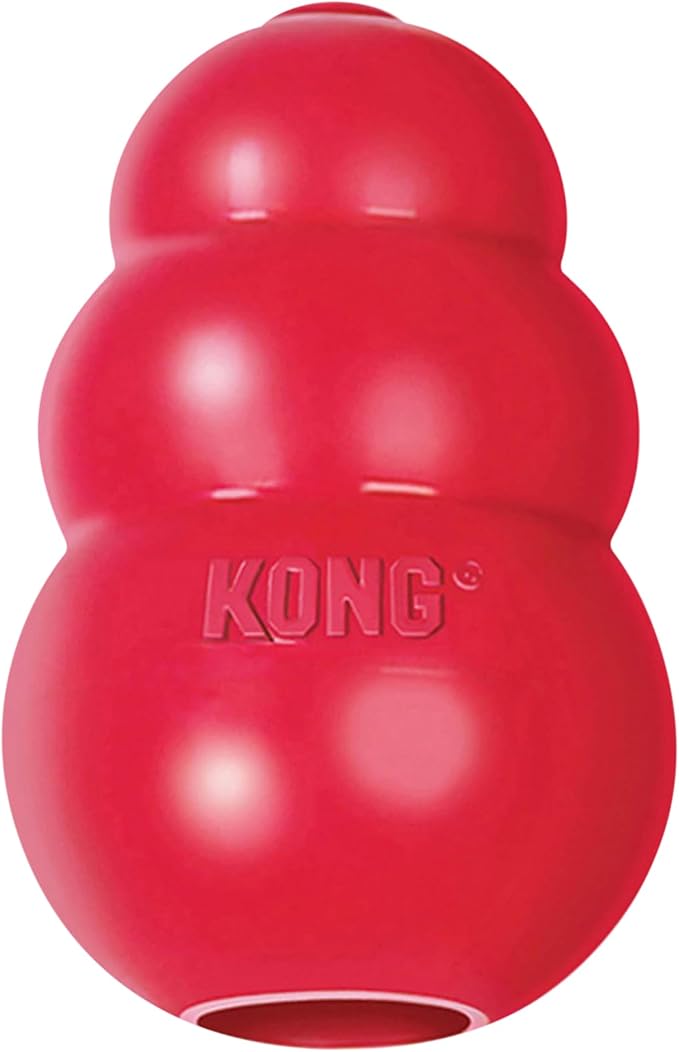
The selected product is the red KONG Classic Small, item model T3E, ASIN B0002AR15U. The current Amazon selection is Small, pack of one. Keep that identity distinct from other sizes and rubber ranges.
The KONG Classic product page identifies natural rubber, an erratic bounce and a stuffable cavity. It describes the red Classic formula for average chewers. Those are the relevant features for considering this option, rather than a claim that every small dog needs one.
For an appropriate dog and supervised activity, check the KONG Classic Small red rubber toy, ASIN B0002AR15U, on Amazon. Confirm the selected size, formula and actual package before offering it.
PRODUCT MENTIONED
KONG Classic Stuffable Dog Toy, Natural Rubber Chew, for Small Dogs
Amazon · Details on the retailer’s website
Check the delivered size and rubber condition against the order before adding food. Resolve a missing size label, damaged item or package mismatch before offering the toy to the dog.
Its practical attraction is one rubber shape with room for food-based engagement as well as carrying or short, controlled play. The trade-offs include cleaning the cavity, judging size and monitoring the rubber for damage. It offers no automatic control of the dog’s chewing force or food intake.
Match rubber strength separately from size
A Small label describes a size, not a chewing rating. KONG’s selection page distinguishes its red average-chewer formula from other life-stage and strength ranges. Do not treat a small powerful chewer as an average chewer because the animal is light.
Bite resistance, playtime and durability have not been independently verified for this toy. Manufacturer language about enrichment and common behavior problems does not establish treatment for anxiety, persistent barking or destructive behavior. Ask for qualified support when those problems need assessment.
Keep the first activity easy to understand
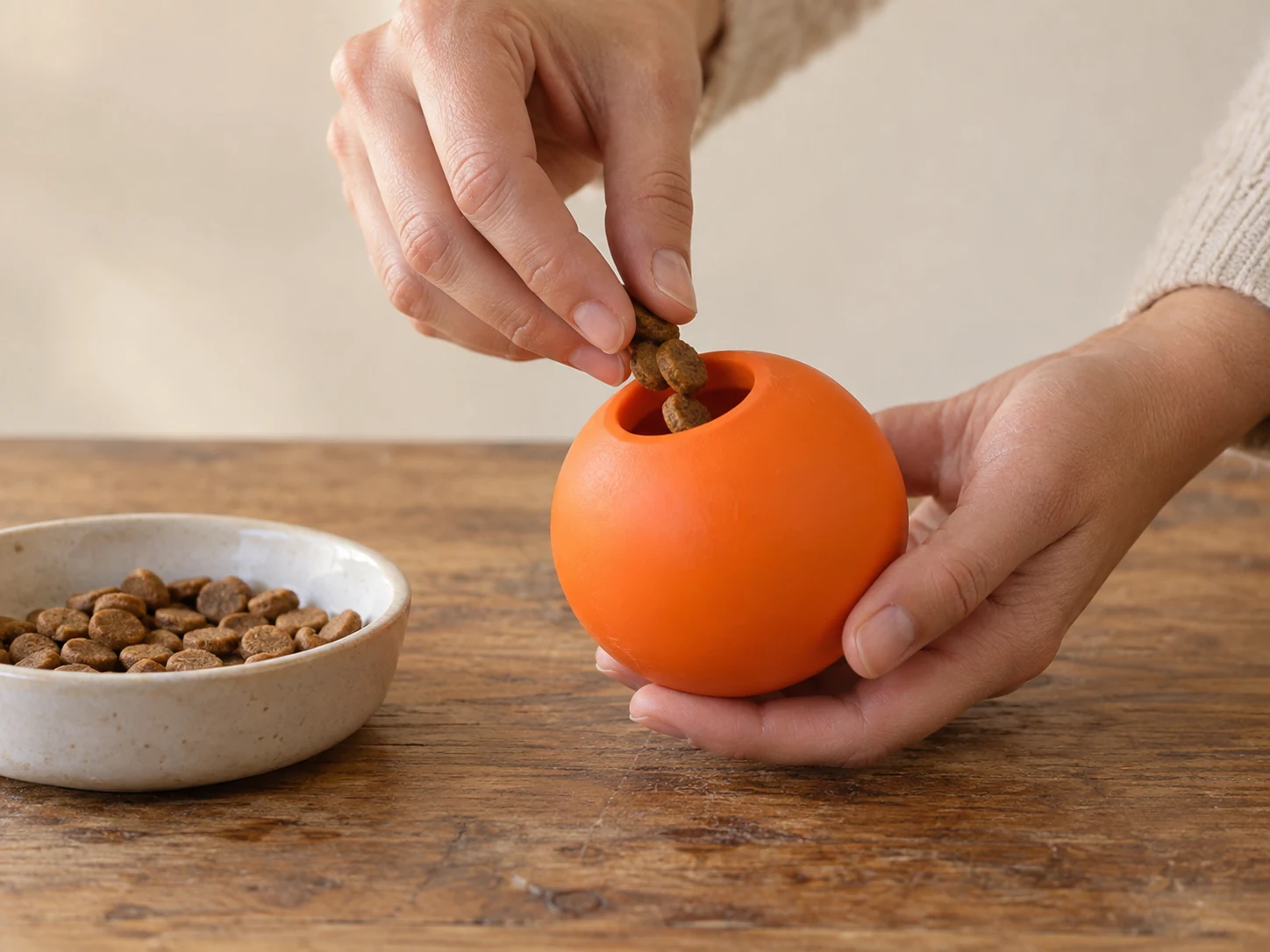
Introduce the clean, intact toy in a place where you can observe comfortably. Let the dog investigate rather than expecting instant interest. Use a manageable activity and stop if the dog becomes worried or repeatedly fails to engage.
Dogs Trust’s enrichment guidance recommends matching activities to health, ability and preference, then watching for enjoyment or frustration. Make a task easier when needed instead of assuming a more difficult puzzle provides more benefit.
For food-based use, begin with a small accessible amount of food the dog already eats and can have. Account for it within the day’s feeding plan. A small toy does not make extra ingredients automatically appropriate, and the cavity does not define a ration.
The KONG stuffing guide covers ingredient checks, easy filling and gradual difficulty. Use that separate food decision after size and rubber fit, rather than filling a questionable toy to make the dog accept it.
Do not make the first activity a tightly packed challenge. If the dog tears at the rubber instead of retrieving food comfortably, stop and inspect both the toy choice and task. More filling or freezing is not an appropriate response to damage.
Keep movement controlled during active play
The Classic’s uneven shape can bounce unpredictably. Use a clear, secure space and an activity that suits the dog. Avoid slippery floors, obstacles and a route that sends the dog toward furniture or another animal.
Blue Cross advises against throwing toys upward because awkward landings can injure dogs. Its guidance also cautions about repetitive fetch with abrupt turns and stops. A small dog still needs an activity appropriate to its body and health.
Short rolls or letting the toy come to rest can create a different activity from a high throw. Choose what the dog can manage comfortably and allow breaks. Do not keep throwing simply because the dog continues to chase.
If pain, unusual movement or exercise restrictions are a concern, ask the veterinarian about a suitable activity. A toy’s ability to bounce does not establish that chasing it is appropriate for every dog.
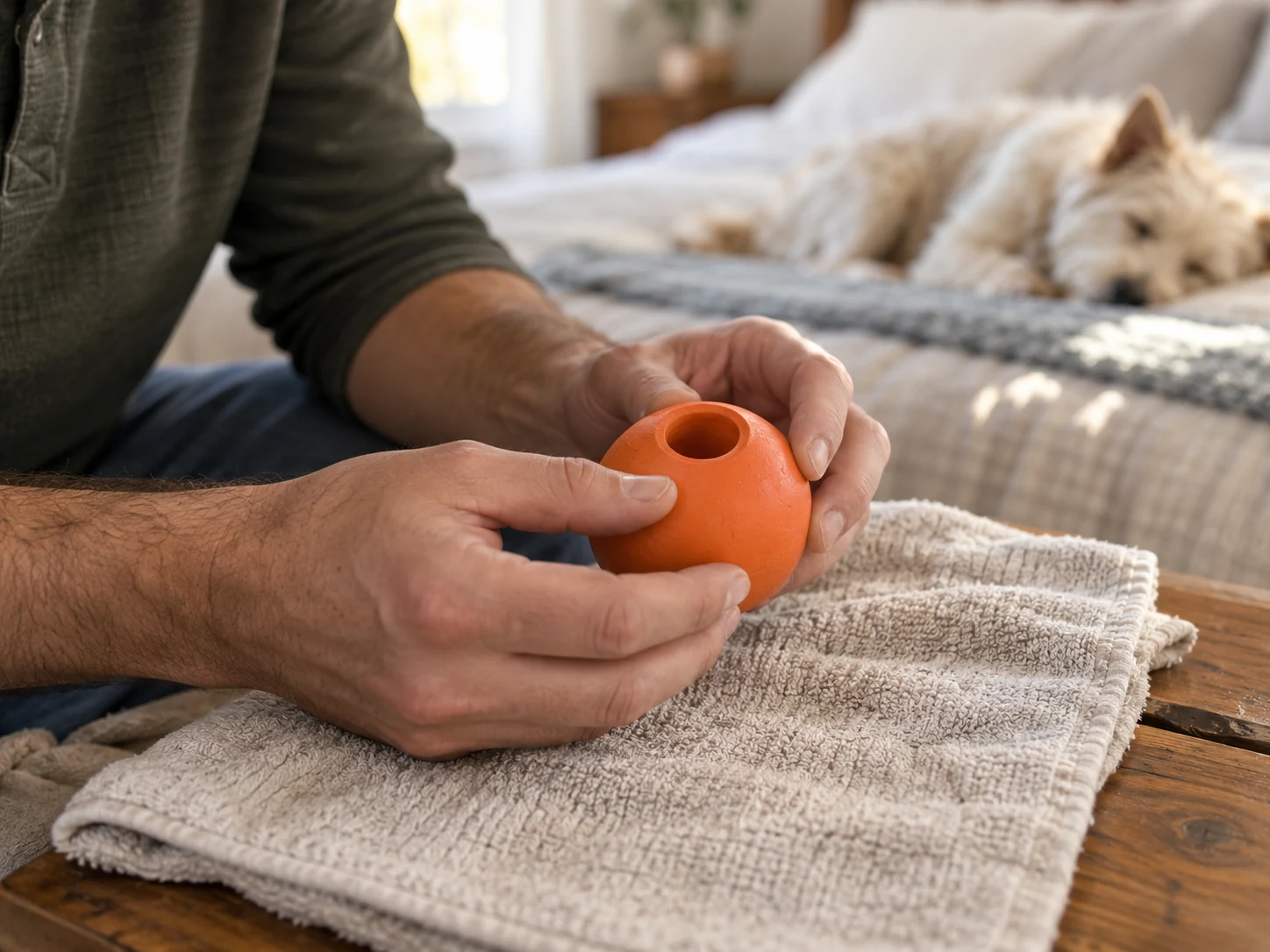
Dog toys for small dogs need regular inspection
Inspect before offering the toy, during play and after taking it away. Look for tears, loose material, a missing piece or a change in the openings. End the activity when damage changes the toy rather than waiting for it to break apart completely.
Supervision means watching how the dog uses it, not simply being somewhere in the house. If the dog starts removing pieces, stop access and reassess the toy and activity. Seek veterinary advice promptly if you suspect the dog swallowed material.
Keep food residue from accumulating in the cavity. Follow the selected package’s cleaning directions, clear the openings and let the toy dry appropriately before storage. The retailer identifies dishwasher-safe use, but that does not establish an arbitrary heat or sanitizing method for every rubber product.
Store small toys where larger animals cannot accidentally pick them up. Recheck fit as a puppy grows or the household changes. A size decision that once worked should not become a permanent assumption.
Choose a small collection with distinct jobs
More toys do not automatically create better play. A useful collection covers activities the dog enjoys and that you can supervise: perhaps a food-retrieval task, a suitable carrying or chase game and another comfortable activity.
Keep worn items out of rotation and choose the activity from the dog’s response. When a familiar toy loses appeal, change the game or review its condition before buying a pile of similar products. Rest belongs in the routine too.
The selected Classic can fill one role when size, rubber strength and handling fit. It does not replace every tug, chase or enrichment activity, and it is not a reason to retire a simpler toy the dog already uses comfortably.
Frequently asked questions
Can dog toys for small dogs suit strong chewers?
Some small dogs chew powerfully, so size and rubber strength need separate checks. The selected red Classic targets average chewers. Do not assume this exact toy fits a stronger chewing style, and stop if the dog damages the rubber.
Does the Small KONG fit every dog under 20 pounds?
No. That is the brand’s weight guideline, while mouth size, chewing and access by larger dogs still matter. KONG advises sizing up when uncertain or between sizes. Use those checks before choosing the selected Small option.
Can I leave it out because it is durable rubber?
Durability does not establish a safe unsupervised activity. Observe use, inspect for damage and account for food if you fill it. A dog that tears off pieces needs a different plan, not confidence based on the material label.
Choose fit before adding more toys
Dog toys for small dogs work best when they suit the individual mouth, chewing style and game. Use the weight chart as one check, keep activities manageable and inspect the actual toy throughout use.
The KONG Classic Small is one defined option for an appropriate average chewer. Keep its red formula and Small identity clear, introduce an easy activity and maintain a supervised routine. A useful toy is one the dog can enjoy comfortably, not one expected to withstand every possible use.
View KONG Classic Stuffable Dog Toy, Natural Rubber Chew, for Small Dogs on Amazon.
Comments are reviewed before they appear publicly. Please keep questions and feedback relevant to this article.