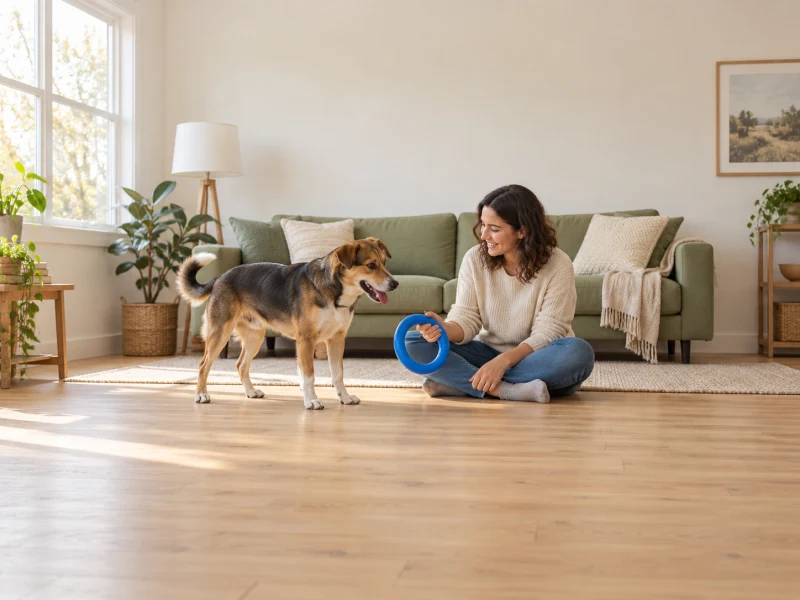
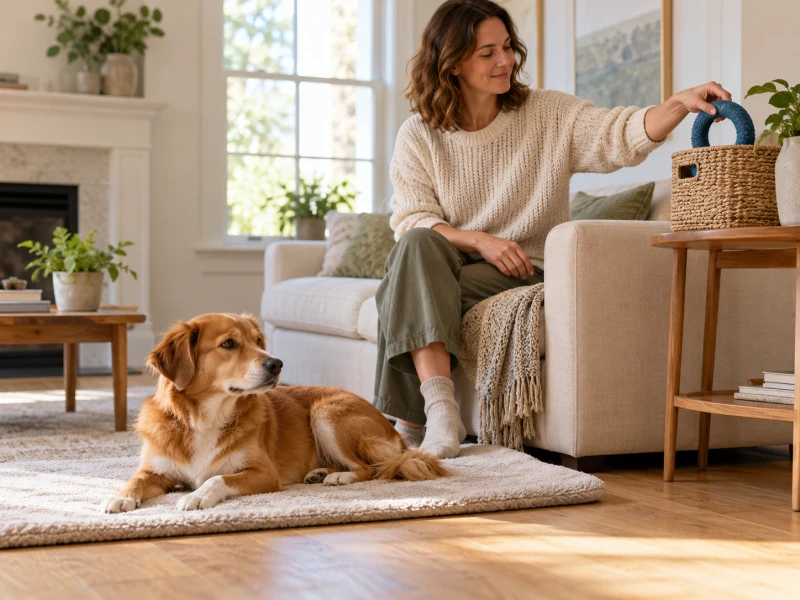
AI-created illustrative training scene with generic toys; not a KONG product photograph or a documented training result.
Dog training toys work as rewards when the dog wants the game and the handler can offer it promptly, pause comfortably and recover the toy without a struggle. Start with an intact toy your dog already enjoys. Buying a more elaborate toy will not make an unclear cue or an uncomfortable game rewarding.
For everyday practice, compare the space for your hand, the dog’s grip and how easily play ends. The red KONG Tug, selected retail model KG1E, is one option for a shared tug reward. Its usefulness depends on those handling checks; rubber construction does not give the toy an independent training effect.
Choose dog training toys around a reward your dog wants
Try a familiar, suitable toy before adding another purchase. A dog that brings a soft toy to a person may enjoy a short shared game, while a dog that walks away from a moving ball may find that format uninteresting. Watch the actual response in the place where you plan to practise.
Dogs Trust’s reward-training advice includes toys, food and attention as possible rewards. It recommends choosing something the individual dog values and teaching a comfortable release when using fetch or tug. A toy preferred at home may be less useful around outside distractions.
Match the reward to the behaviour, too. An energetic game can suit an active response, such as coming back to you in a secure practice area. Quiet attention may suit settling more comfortably than immediately starting a vigorous game. Choose the reward that supports the next part of the session.
A reward toy is therefore part of an interaction. The handler still needs clear timing, an achievable request and an environment the dog can manage. If the dog cannot respond, reduce distractions or simplify the task before increasing the excitement of the reward.
Compare dog training toys for grip and recovery
The most useful format leaves room between your fingers and the dog’s mouth and allows a clear pause. Check the real toy, including the area each participant holds. Overall length can be misleading when a bulky centre, short handle or curved section reduces usable grip space.
| Reward format | Handling advantage to check | Reason to choose a different reward |
|---|---|---|
| Shared tug | Separate comfortable grips and enough room for a low, controlled game. | The dog repeatedly targets hands or you cannot release your grip easily. |
| Short retrieve | The dog returns willingly and the area allows a comfortable approach. | The dog runs off to chew, guards the toy or needs a risky chase. |
| Soft carry toy | The dog enjoys carrying it and its seams remain intact. | The dog removes fabric or exposes small internal parts. |
| Food or quiet attention | A brief reward can be delivered without starting an active game. | The reward is unsuitable for the dog’s diet or the dog does not value it. |
Carrying matters when the toy is used outside. Check whether it fits a clean storage bag and can be taken out without catching on clothing. Do not compromise the dog’s mouth fit just to make a toy fit a pocket. Keep toys away from loose cords and other items that could become part of the game.
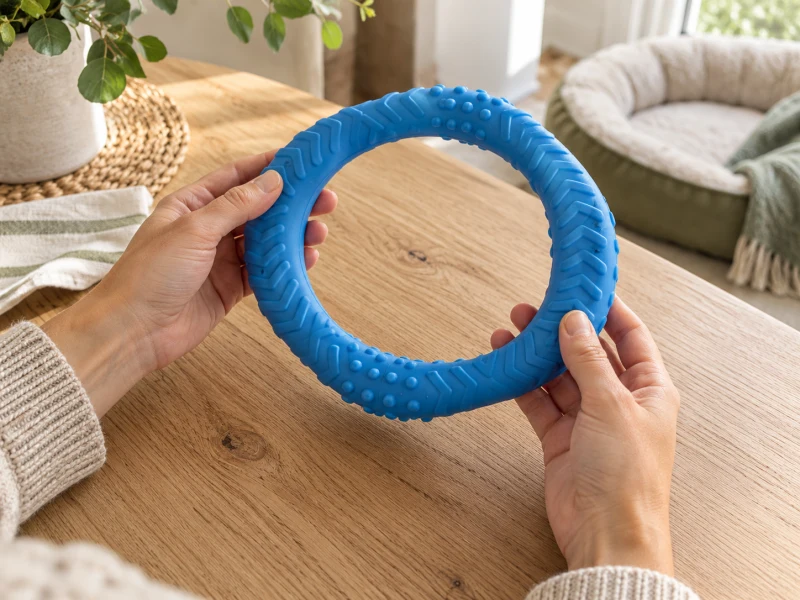
For puppy training toys, inspect the age and size guidance for the exact product. An adult rubber toy is not automatically an appropriate puppy choice. A small puppy may need a different material or shape, and a dog that swallows pieces needs a different activity rather than a smaller reward toy.
Where KONG Tug KG1E fits the reward routine
The KONG Tug product page describes natural rubber, comfortable grips and interactive tug play. Those features give a person and dog defined areas to hold. They do not establish a safe maximum pulling force or prove how long an individual toy will withstand chewing.
The selected Amazon listing identifies KG1E and calls it Medium/Large. KONG’s current product page calls its Tug size Medium and shows a 15–35 lb guide range. Those labels do not establish an expanded fit range for every large dog. Check the delivered label and actual grip, and ask KONG to clarify sizing if the descriptions affect your decision.
KONG’s rubber and size guidance also makes head and mouth size relevant to selection. Its broader Classic size chart should not be transferred wholesale to the Tug shape. The right fit for one KONG product does not establish the right fit for another.
Consider KONG Tug KG1E when the delivered size gives both participants a separate comfortable grip and your dog already enjoys a shared tug reward. Choose another reward if the dog grabs hands, guards the object or tries to dismantle it during every pause.
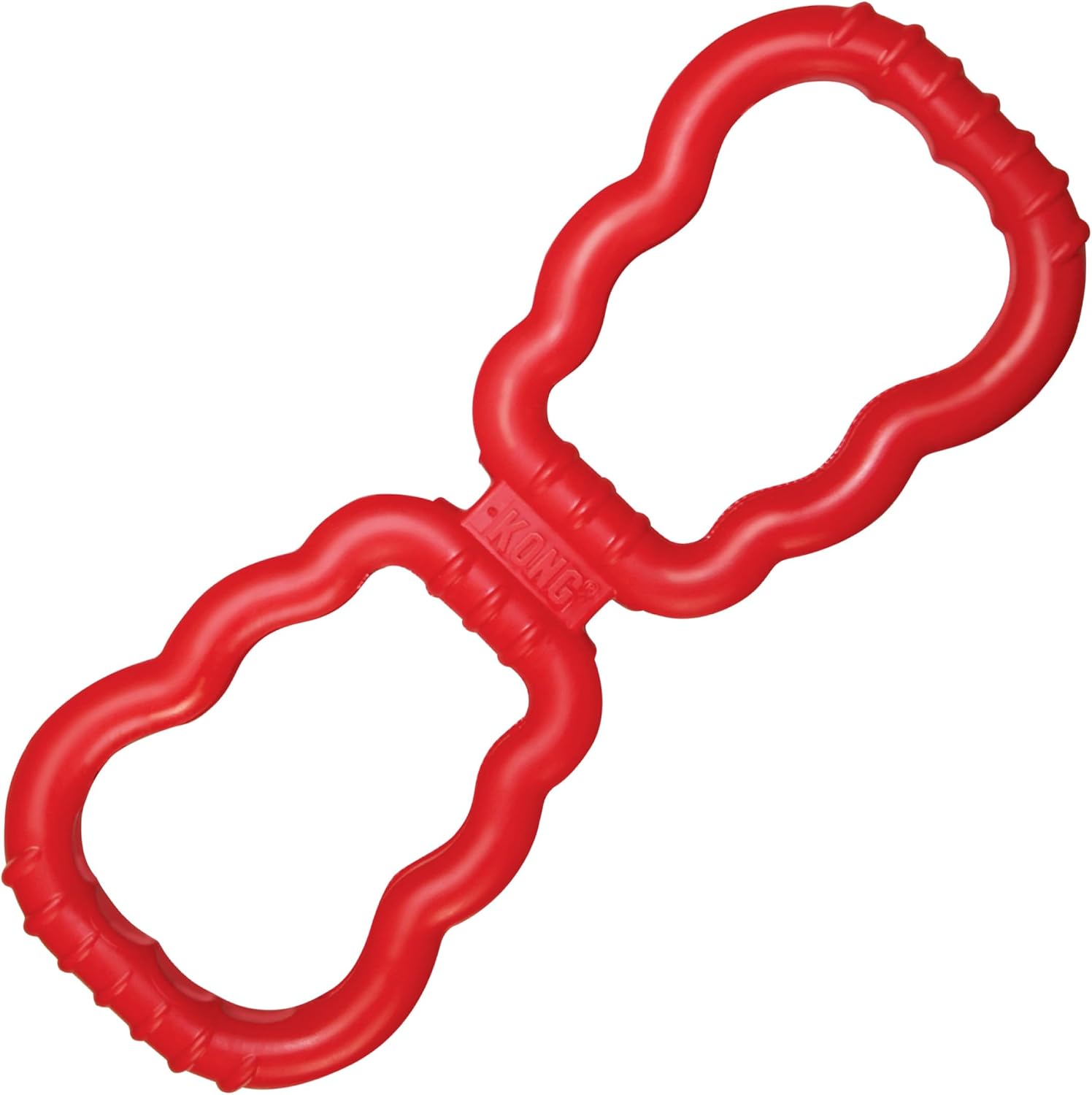
PRODUCT MENTIONED
KONG Tug KG1E — Red Rubber Interactive Toy
Amazon · Details on the retailer’s website
Dog training toys: keep rewards close to the response
Have the toy ready before asking for an easy, familiar behaviour. A reward that requires a long search through a bag makes the connection harder to keep clear. Prepare the space and your own grip while the dog is calm, rather than waving the toy to create excitement and then trying to regain attention.
Dogs Trust recommends a consistent marker, such as a chosen word, to identify the response being rewarded. The marker should be followed by the promised reward. If you already use a marker with a qualified trainer, keep that meaning consistent when adding a toy.
Begin with a manageable request and a brief game. Notice whether the dog can return attention after the reward. If the next repetition becomes harder because the dog is fixated on the toy, reduce the intensity or use a calmer reward. More excitement is not automatically more effective practice.
Keep an honest note of what happened: which toy the dog chose, whether your hand position was comfortable and whether the dog could pause. That record can identify a handling problem without assuming the dog needs a stronger toy or more demanding training.
Practise a voluntary exchange before busy sessions
A comfortable exchange is worth practising separately from a difficult training task. Offer an appropriate alternative of equal or greater value before trying to take the held object. Give the dog room to leave one item and approach the other; avoid chasing, prising the mouth open or pulling against resistance.
Dogs Trust’s exchange advice recommends presenting the alternative first and, when practical, returning the original item afterward. That can help distinguish a routine exchange from repeatedly losing something valuable. A potentially dangerous swallowed object needs veterinary advice, not a training experiment.
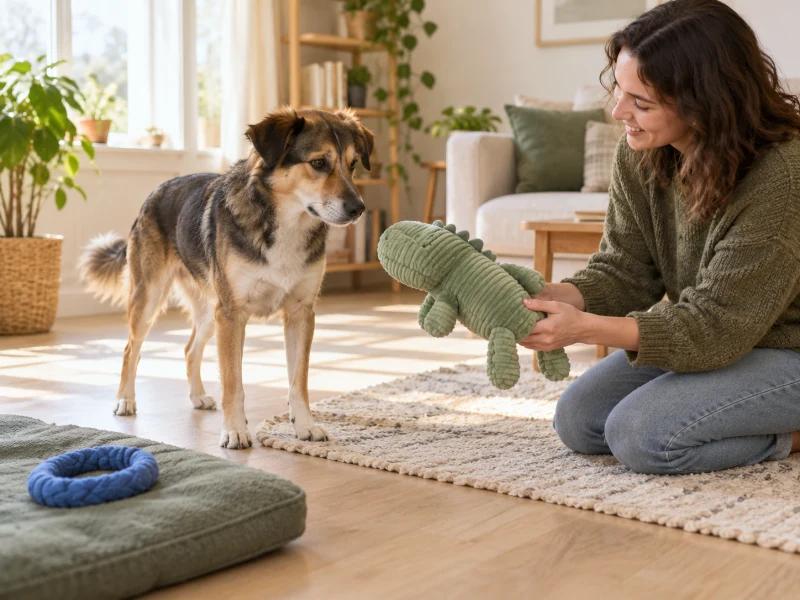
Use a consistent start signal only when you are ready to play. At the end, pause, invite the practised exchange and put the toy away once it is safely released. The exact cue words matter less than keeping their meaning predictable. A new word cannot replace the gradual practice needed for a comfortable release.
If the dog freezes, guards the object, threatens to bite or repeatedly grabs skin, stop trying to recover the toy by force. Create safe space and seek help from a qualified reward-based trainer or behaviour professional. Consult a veterinarian when pain or a sudden change in behaviour may be involved.
Check dog training toys before and after play
Stop when grip becomes uncomfortable, the dog appears overwhelmed or the toy starts to break. KONG’s selected listing advises supervision and removing damaged toys. Inspect both ends and the joining section before and after use; a small tear can provide a new place for the dog to pull material away.
Dogs Trust’s mouthing advice links difficult mouthing with several possible causes, including excitement, frustration and pain. It advises avoiding punishment and using safe separation when needed. Do not assume biting during a game is a request for harder tug or proof that the toy is too weak.
After the session, follow the exact product’s care directions and store the toy beyond unsupervised access. Do not borrow a dishwasher or disinfectant instruction from another KONG product. A toy kept for shared rewards should not silently become a prolonged solo chew when the person leaves.
For a separate food activity between sessions, suitable KONG stuffing ideas can help plan preparation and cleanup. Check the toy fit and the dog’s diet first. A food-filled toy is a different activity from delivering a brief, precisely timed training reward.
Questions about toy rewards
Does a training toy teach a behaviour on its own?
No. A toy can reward a response when the dog enjoys the interaction, but the handler still needs clear timing and an achievable request. Start with a familiar reward and manageable distractions. If the dog cannot respond comfortably, simplify the practice or obtain qualified help.
Must every dog use tug as a reward?
No. Dogs differ in what they value, and preferences can change with the setting. A short retrieve, suitable food reward or calm attention may work better. Choose what the dog actually enjoys and can finish comfortably instead of trying to create interest through stronger pulling.
Is KG1E suitable for every medium or large dog?
The retailer’s Medium/Large wording is not a universal fit guarantee. KONG’s current Tug page uses Medium with a 15–35 lb guide range. Confirm the delivered label, mouth fit and separate hand space. Resolve a sizing concern with the manufacturer before using that particular toy.
Should the toy stay available after training?
Store an interactive reward toy when supervision ends, especially if the dog begins dismantling it during pauses. Inspect its condition before the next game. Follow its own care instructions and replace a damaged item; cleaning does not restore torn rubber or make missing pieces harmless.
Choose the next practice session before another toy
Begin with one easy response, a suitable reward your dog already wants and a clear place to pause. Check whether the toy leaves enough grip space and whether a voluntary exchange works. Those observations tell you more about useful dog training toys than a large collection of unused reward formats.
KONG Tug KG1E is a conditional choice for a dog whose actual fit and shared play style suit it. Resolve the sizing labels, keep the game manageable and retire damaged rubber. If play regularly becomes difficult to stop, change the session and obtain appropriate help before making another purchase.
If those checks fit your dog, check the selected KONG Tug KG1E on Amazon.
Comments are reviewed before they appear publicly. Please keep questions and feedback relevant to this article.