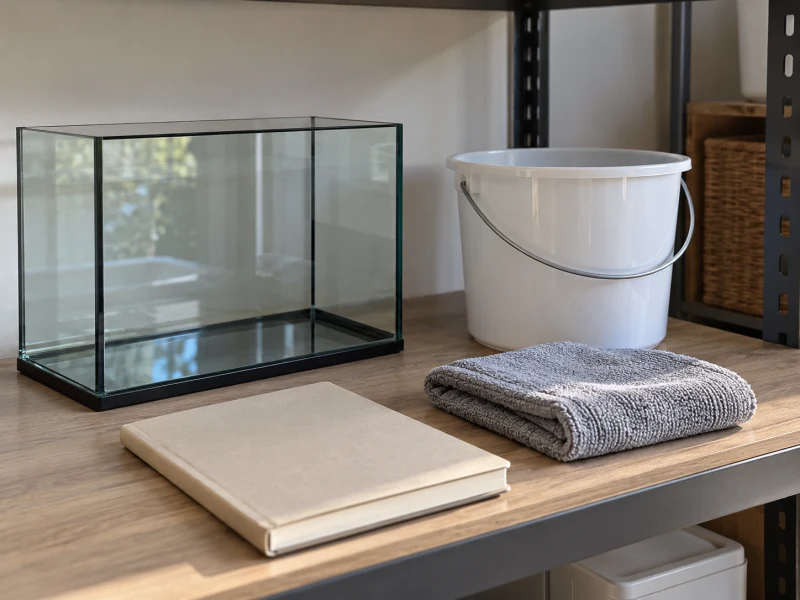
AI-created decorative scene; not a Chi product photo, a measured five-gallon tank or a livestock recommendation.
Fluval Chi combines a top-mounted filter and fountain cube with ambient lighting. The compact appearance comes with a specific maintenance tradeoff: you need access above the aquarium, an appropriate operating water level and regular care of the pads and pump.
The selected Chi II is model 10505, UPC 015561105057 and ASIN B00FSQCXF6, described as a five US gallon kit. That small volume is not a universal fish habitat. Decide on the animals’ adult needs before buying; an unstocked decorative display is different from a suitable home for a chosen species.
Confirm the exact Fluval Chi II package
The selected retailer listing identifies the complete Chi II kit rather than a replacement cube. It gives approximate tank dimensions of 10 × 10 × 14.4 inches. Other retailer dimension fields differ, so confirm the actual package and assembled tank before sizing the location.
The current US Chi page describes the top fountain LED, 17 downward-facing LEDs, 7600K lighting, filter pad, foam pad and removable cover. It does not provide a complete regional electrical label or make every item in a promotional picture part of the box.
| Decision | Established information | Check separately |
|---|---|---|
| Selected kit | Chi II 10505, five US gallons | Actual delivered label and contents |
| Water route | Top-mounted filter/fountain cube | Mount, operating marks and removal access |
| Media | Filter pad and foam pad | Matched replacement references |
| Lighting | Ambient top and downward LEDs | Not a demanding live-plant light |
| Support | Separate level, suitable load-bearing surface needed | Actual filled load and support instructions |
| Livestock | No universal suitability follows from five gallons | Adult space, behavior and water requirements |
Keep Chi I, Chi II, replacement components and other small Fluval kits separate when comparing listings. An attractive cube-shaped aquarium in a search result does not establish that its parts or instructions belong to 10505.
Fluval Chi lighting has an important limit
The current Chi FAQ says the ambient lighting is not optimal for live-plant growth and recommends its decorative or synthetic planting options. Do not choose this kit around a demanding living aquascape because the light’s color temperature resembles daylight.
Color temperature is not a plant-growth trial or a measurement at every leaf. The product photograph’s plants do not establish what will grow under the supplied light. If growing live plants is central to the purchase, choose equipment around those plants’ actual requirements.
The manual distinguishes the upward fountain light from the downward LEDs controlled by the rear lever. A viewing-light control should not be assumed to switch off filtration or make the equipment safe to handle. Use the required electrical disconnection for maintenance.
Consider Chi II 10505 for its compact decorative water-display design only when you accept the top-cube maintenance and ambient-light limits. Do not choose it first and then force a fish or demanding live-plant plan into five gallons. Where the intended animals need more space, choose their habitat instead.
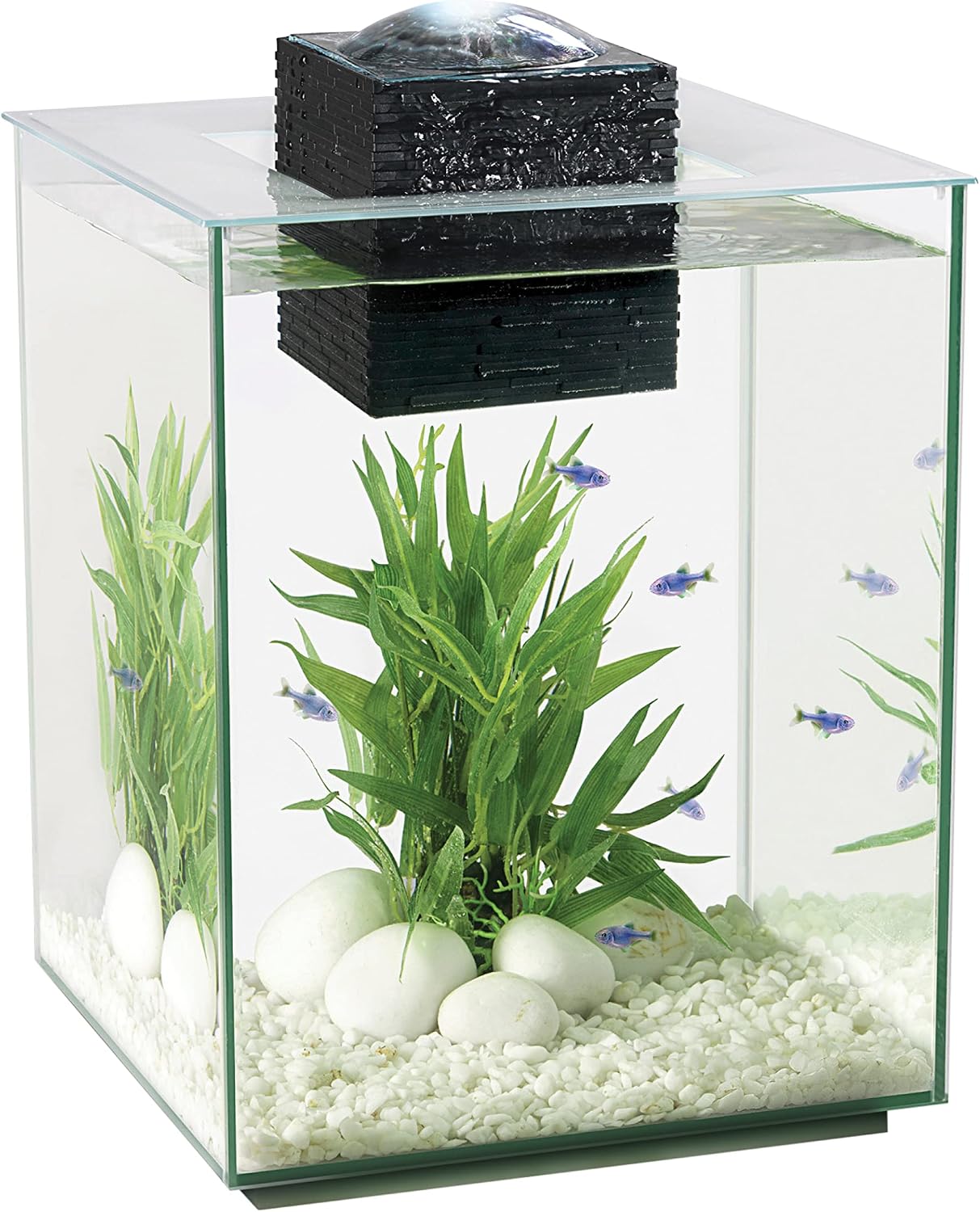
PRODUCT MENTIONED
Fluval Chi II 5 US Gallon Aquarium Kit, 10505
Amazon · Details on the retailer’s website
Plan the Fluval Chi support and top access
The manufacturer’s 10505 Chi guide warns that a decorated, filled aquarium can exceed 23 kg, or 51 lb. The empty kit weight does not establish the installed load.
Use a stable, level support appropriate for the actual aquarium and contents. A shelf that accepts the footprint is not automatically suitable for sustained weight. Resolve the location before filling; the guide says not to move the aquarium with water inside.
Leave enough space above the cube to remove the cover, access the pads and handle the module as instructed. A position under a low shelf can make the aquarium difficult to maintain even though the glass body fits.
Keep the electrical and water-handling routes accessible and protected. The compact footprint does not include room for hands, a dedicated container and the movement required to service the top equipment.
Use the Fluval Chi operating water marks
The manual directs owners to the water-level markings on the filter rim adapter. The current FAQ also identifies the correct water level as a first check for weak pump output. Use those real marks and the supplied instructions, not an estimated gap copied from another aquarium.
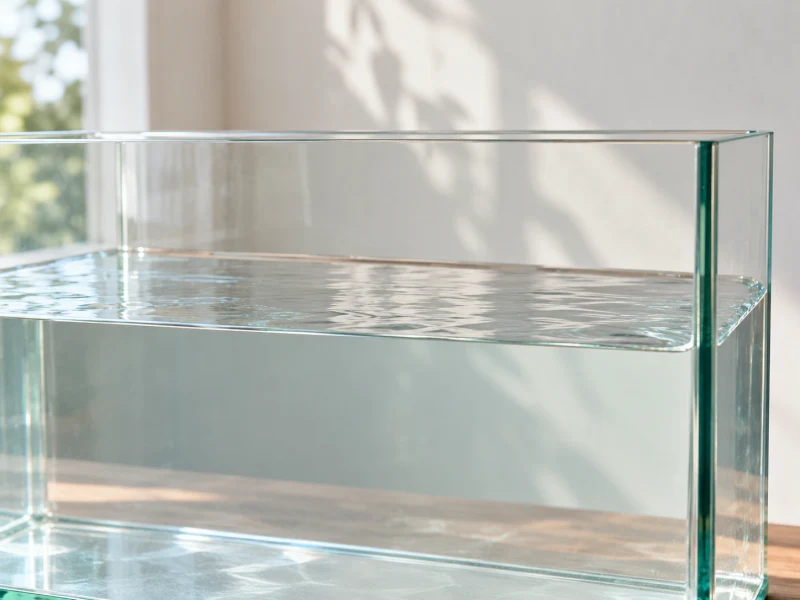
Evaporation changes the relationship between the water and the pump. Observe the actual level regularly and prepare replacement water appropriately for the setup. Adding water back does not remove accumulated waste and is not the same job as a water change.
The pump must not run dry. Follow the exact startup and air-release directions for the delivered unit. The manual’s initial priming rotation and its separate pad-access rotation are different operations; do not combine them into an improvised twist-and-run routine.
A reduced cascade can have more than one cause. Check permitted water-level, media and impeller steps with the power precautions in place. Do not assume that weak flow requires a stronger pump or a different cube.
Keep Fluval Chi pad care separate from a complete reset
The filter pad and foam pad have different roles and positions. The manual places the filter pad above the foam pad, with its specified polyester side facing upward. Follow the actual matched parts and instructions rather than copying a generic sponge stack.
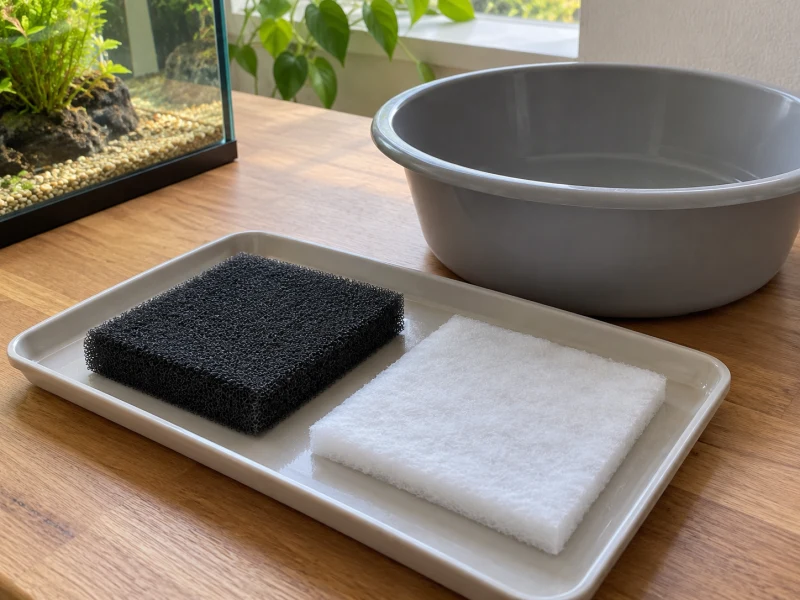
For established media, the guide directs rinsing in aquarium water, no soap or detergents and staggered replacement. Initial rinsing of new equipment is a different task from washing a mature biological medium under untreated tap water.
Do not discard all media because a small tank looks untidy. A clear-looking display can still have unsuitable chemistry, and replacing every pad together can disrupt established filtration. Inspect the components and preserve the biological function under the care guidance.
Keep cleaning tools aquarium-only and free of household chemical residues. A convenient kitchen sponge or reused cleaning bucket is not established as suitable merely because it has been rinsed.
Prepare for Fluval Chi cube and impeller maintenance
The guide requires disconnecting aquarium appliances before hands enter the water. It gives separate instructions for pad access and for removing the cube, grille and impeller during permitted owner maintenance.
Read the full relevant sequence before taking parts out. Keep track of the pads, cover and small components and provide a clean place to work. Do not pry into a sealed motor body or use a photo from another Chi generation as a repair diagram.
The manual’s North American section identifies a regional adapter reference; verify the actual supplied label and correct replacement with Fluval. The retailer text does not establish universal input compatibility, and similar-looking plugs do not make another adapter appropriate.
Keep dry electrical connections and the required drip-loop arrangement. The cube’s intended water exposure does not extend to the transformer or socket. For damage, leakage or an electrical fault, follow the prescribed safe response and obtain suitable service.
Five gallons needs a separate habitat decision
RSPCA’s general aquarium advice favors larger water volumes for stability and recommends a tank above approximately 40 litres in its general setup guidance. The Chi’s nominal five US gallons is smaller than that general recommendation.
That comparison is a reason to reassess a pet-fish purchase, not to invent a universal list of animals for the small cube. Adult swimming space, social needs, compatibility, temperature and water chemistry still need species-specific consideration.
The older Chi guide’s broad species examples and fish-length formula do not establish a suitable population for your household. Do not recreate a promotional group of fish or assume that an ornamental fountain makes a small volume low maintenance.
Prepare a fishless biological system and appropriate testing before introducing any confirmed suitable animals. If no appropriate habitat plan is established, keep the display unstocked or choose a more suitable aquarium. The current Chi FAQ also says it is not recommended for saltwater use.
Budget for ongoing Chi care
Include matched pads, permitted pump care, testing where animals are kept, appropriate water preparation and time for routine access. Small containers still need consistent attention.
Record water-level changes, cleaning and any altered sound or flow. The manual’s maintenance reminders do not diagnose every symptom or make a fixed chemical treatment appropriate for every cloudy display.
Where animals show abnormal behavior, assess water conditions and seek appropriate aquatics or veterinary advice promptly. Avoid guessing a treatment from appearance or delaying investigation because the fountain still runs.
Questions before buying Fluval Chi
Is it a low-maintenance live-planted kit?
No such outcome is established. The manufacturer specifically limits expectations for live-plant growth under its ambient light, and the filtration still needs regular care.
Can I fill to a line guessed from a photograph?
No. Use the actual filter-adapter water marks and the supplied instructions. The operating level matters to pump function.
Does the five-gallon label establish a fish count?
No. It is a nominal volume. Resolve the animals’ actual habitat needs first, including whether a larger aquarium is required.
Choose the Chi design only with its care limits
Fluval Chi II 10505 offers a particular compact decorative appearance and top-water feature. Buy only when its access, supplied equipment and ongoing upkeep fit the intended use.
For a pet-fish or live-plant goal that exceeds those limits, choose the habitat and equipment that goal needs. The display’s appearance should follow the care decision.
View Fluval Chi II 5 US Gallon Aquarium Kit, 10505 on Amazon.
Comments are reviewed before they appear publicly. Please keep questions and feedback relevant to this article.