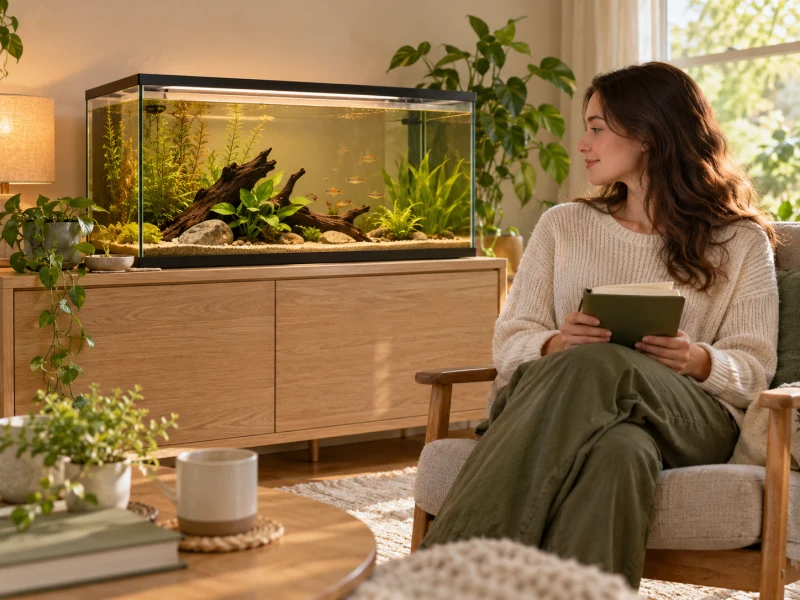
AI-created generic freshwater parameter planning scene; not a named-model product photograph or a hands-on test.
Fluval peat granules are a freshwater filter medium intended for a planned soft, acidic-water setup. The useful starting point is the water you have and the requirements of the animals you intend to keep. An amber appearance or a lower-looking pH target is not enough to decide that peat belongs in the filter.
Amazon ASIN B00025642Q is the 500 g, 17.6 oz package. Its original package identifies aquatic peat compressed granules. Keep that product separate from biological ceramic rings, aquarium soil and chemical media intended for a different purpose.
Fluval peat granules: establish the purpose first
The manufacturer’s media instructions describe peat granules for fish that prefer soft, acidic water and specify freshwater use only. That is a conditional purpose, not a recommendation to lower the pH in every aquarium.
| Before using peat | What to establish | Why it matters |
|---|---|---|
| Inhabitants and habitat | The actual species’ water and adult habitat requirements. | Different fish do not share one ideal pH. |
| Starting water | Relevant pH and hardness tests for the aquarium and replacement water. | The same material does not imply the same result in every supply. |
| Water type | A planned freshwater application. | The media manual excludes marine use. |
| Filter arrangement | The permitted chamber and bag requirements. | Loose material should not obstruct the intended path. |
| Monitoring | A way to follow the change over time. | Color alone does not establish water chemistry. |
Do not use a short species example in a product description as a complete care sheet. Adult space, temperature, social needs and the water requirements of the exact species still need researching. Peat is one possible part of a habitat plan, not the plan itself.
Consider this 500 g peat format only when a planned freshwater habitat calls for softer, more acidic conditions and you can monitor the change. Skip it for marine use, for an aquarium whose inhabitants need different conditions or as an unmeasured way to chase a single pH number.
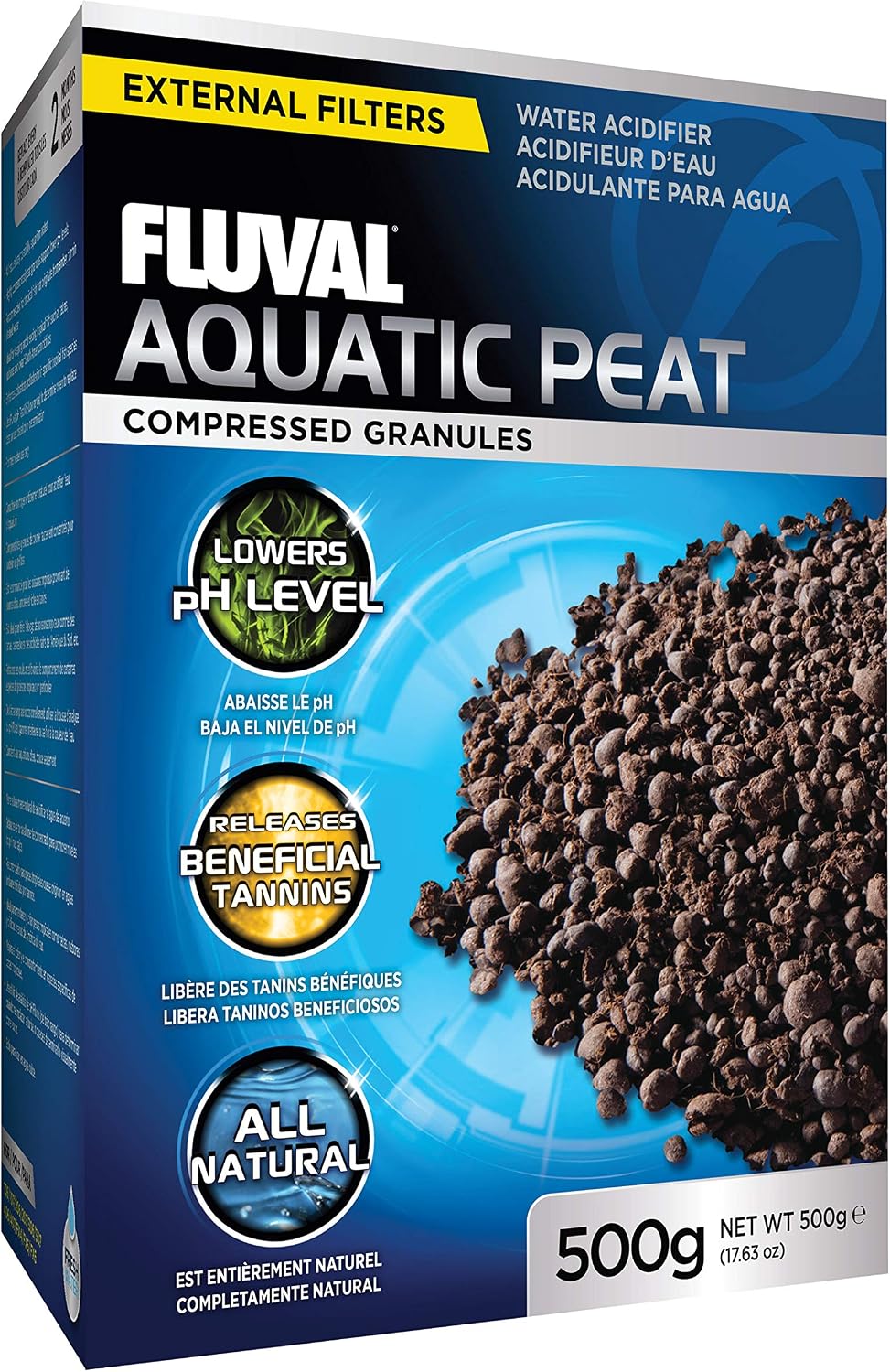
PRODUCT MENTIONED
Fluval Aquatic Peat Granules — 500 g / 17.6 oz
Amazon · Details on the retailer’s website
Test before adding Fluval peat granules
Record the aquarium’s existing conditions before changing media. Also understand the replacement-water supply, because regular water changes are part of the system. If the intended goal conflicts with the needs of current inhabitants, resolve that conflict before adding anything.
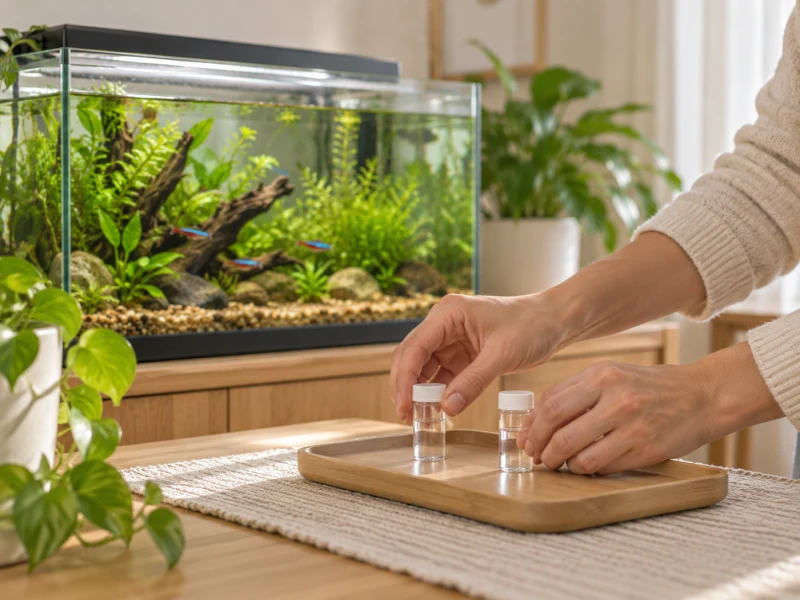
OATA’s freshwater testing guidance discusses pH, hardness and the importance of checking water rather than judging it by appearance. Carbonate hardness and pH are related but are not interchangeable test results. Keep the actual readings and units in your notes.
Do not copy another aquarist’s quantity or reported final pH without understanding their starting water and aquarium. No controlled dose-response result has been verified for this package; a universal grams-per-gallon recipe is not established.
Prepare and contain the selected granules
The manufacturer instructs owners to rinse peat granules before use to remove handling dust. It describes placement in the chamber or a nylon filter bag and specifically requires a nylon bag when the material is used in Fluval canister filters. Follow the current supplied directions and the actual filter’s arrangement.
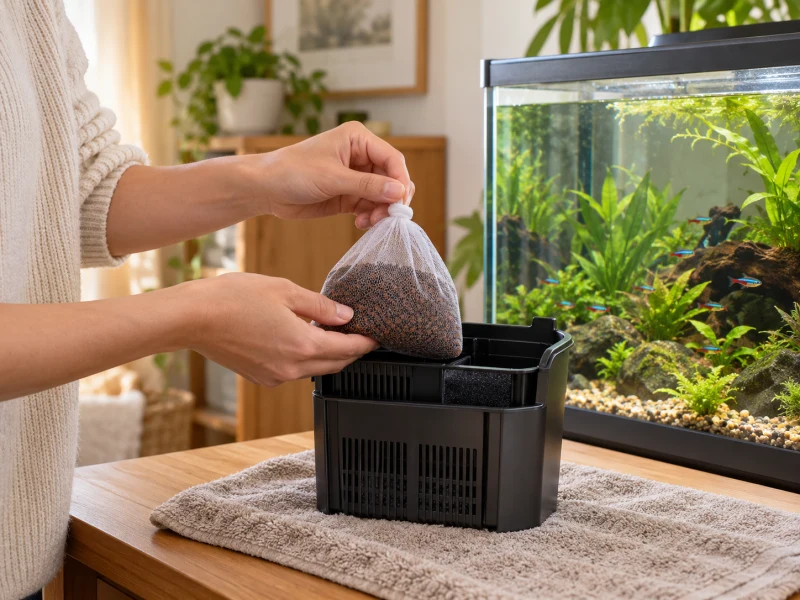
Keep the material contained as required, with water able to follow the intended route. Do not force a basket closed or let loose material enter a moving mechanism. A package being 500 g does not mean every aquarium should receive the full amount.
Disconnect equipment as its servicing instructions require before handling filter parts. Avoid soap and household chemicals on aquarium components. If the package does not clearly establish quantity or compatibility for your setup, obtain manufacturer or appropriate aquatics advice rather than improvising.
Fluval peat granules can change appearance as well as chemistry
The selected package describes tannin release, and peat is associated with a change in water color. Decide whether that appearance fits the planned aquarium, but keep the visual effect separate from a measured result.
Light amber water does not tell you the pH or hardness, and clear water does not prove that no chemical change has occurred. Use the relevant tests and the needs of the inhabitants. A photograph cannot establish a particular water parameter.
Other chemical media can also have their own effects and purposes. Do not add or remove several materials at once just to achieve a preferred tint. Record what changed so the result can be interpreted, and check any proposed combination against the actual product and filter instructions.
Monitor effectiveness instead of following color alone
The peat section of Fluval’s media manual says effectiveness diminishes over time and recommends regular pH and KH testing to verify conditions. That is a reason to keep a record, not to assume a fixed useful life for every bag in every aquarium.
The retail description mentions a four-week change, while the manual emphasizes testing. Check the current supplied label and seek clarification for the actual setup if the instructions leave a replacement question unresolved. Do not make repeated changes solely because the water has become less tinted.
Continue observing the animals and the wider water-quality picture. Peat does not establish that ammonia and nitrite are suitable or that filtration is mature. If behavior or readings become concerning, assess the whole aquarium and obtain appropriate advice.
Keep replacement water and stability in the plan
A recurring water-change routine needs to work with the habitat you are maintaining. Know how replacement water is prepared and checked, rather than allowing each change to become a large unmeasured adjustment. Sudden parameter changes can create problems even when the intended final number looks attractive.
Do not stop ordinary care because peat has been installed. Suitable water changes, observation, testing and filter maintenance remain necessary. Biological media also has a separate role and should not be discarded just to make room for an optional water-modifying material.
If the desired conditions require an increasingly complicated sequence of corrections, reconsider the plan with a knowledgeable aquatics specialist. Choosing inhabitants suited to a manageable water supply can be more practical than maintaining a system dependent on frequent improvisation.
When peat is the wrong purchase
Skip it when the aquarium is marine, when the animals do not need the intended conditions or when the goal is simply to reach a number copied from a general guide. It is also not a substitute for identifying an unexplained problem or a treatment for a sick fish.
A brown tint alone is not a water-quality objective. Equally, a product being natural does not establish that every amount or use is appropriate. The relevant decision is whether the material fits a measured, species-specific freshwater plan that you can maintain consistently.
Before buying the 500 g package
Have the species plan, starting water tests and actual filter instructions ready. Confirm the selected peat format and how it will be contained, then establish a monitoring and replacement approach from the supplied directions and appropriate advice.
If those conditions are met, check the Fluval peat granules 500 g package on Amazon. Judge suitability by the planned water conditions rather than a generic promise of better fish color.
Common questions
Are Fluval peat granules suitable for every freshwater aquarium?
No. The documented purpose is for appropriate soft, acidic-water plans. Establish the needs of the actual inhabitants first.
Can I use them in a marine aquarium?
The checked media instructions specify freshwater only. Do not transfer the product into a saltwater plan.
Does amber water prove the target pH has been reached?
No. Color and measured chemistry are different observations. Use relevant tests and keep records.
How much peat should I add?
No universal dose has been established for every aquarium. Use the current package instructions, starting-water information and model-specific aquatics advice.
View Fluval Aquatic Peat Granules — 500 g / 17.6 oz on Amazon.
Comments are reviewed before they appear publicly. Please keep questions and feedback relevant to this article.