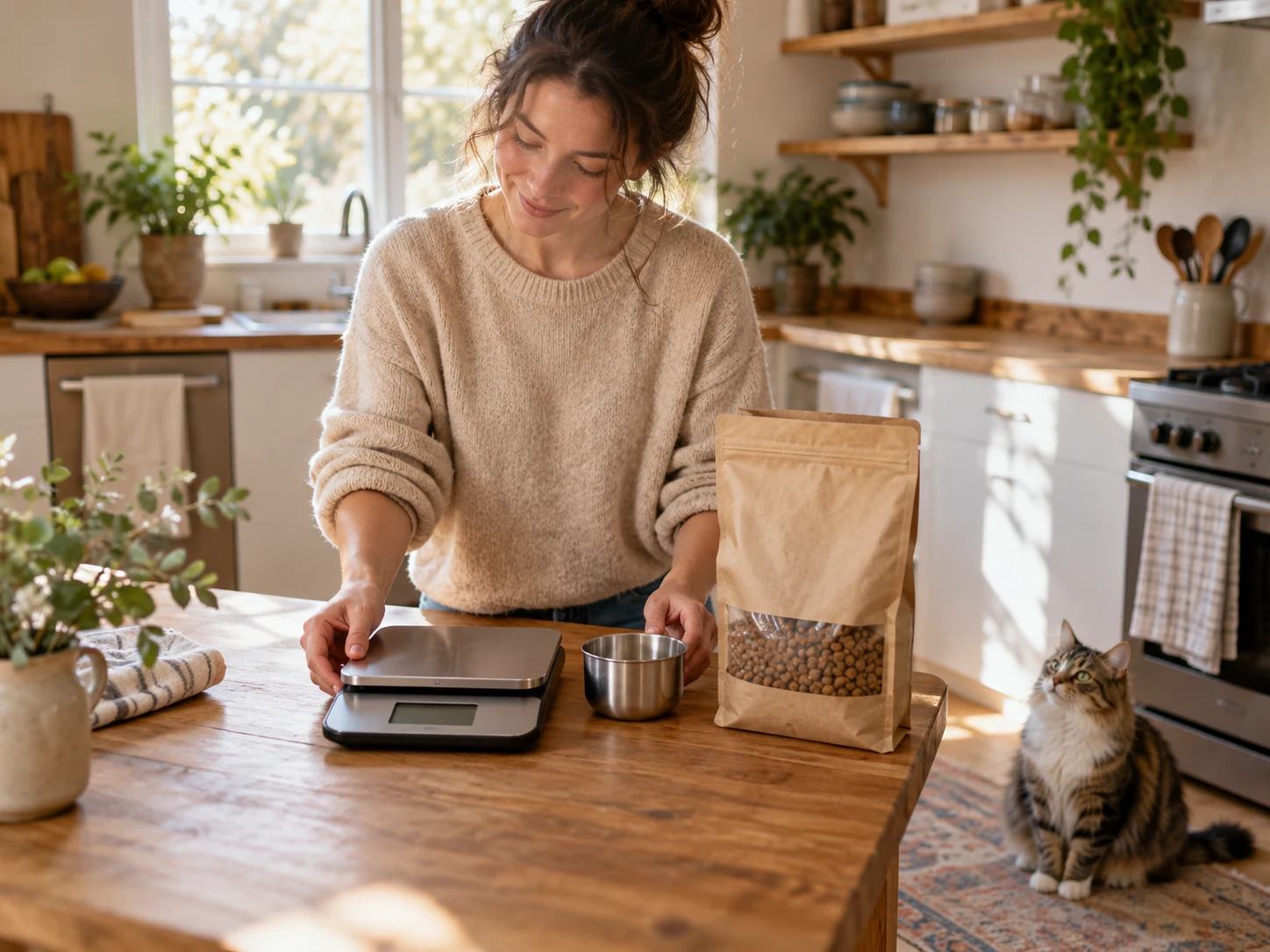
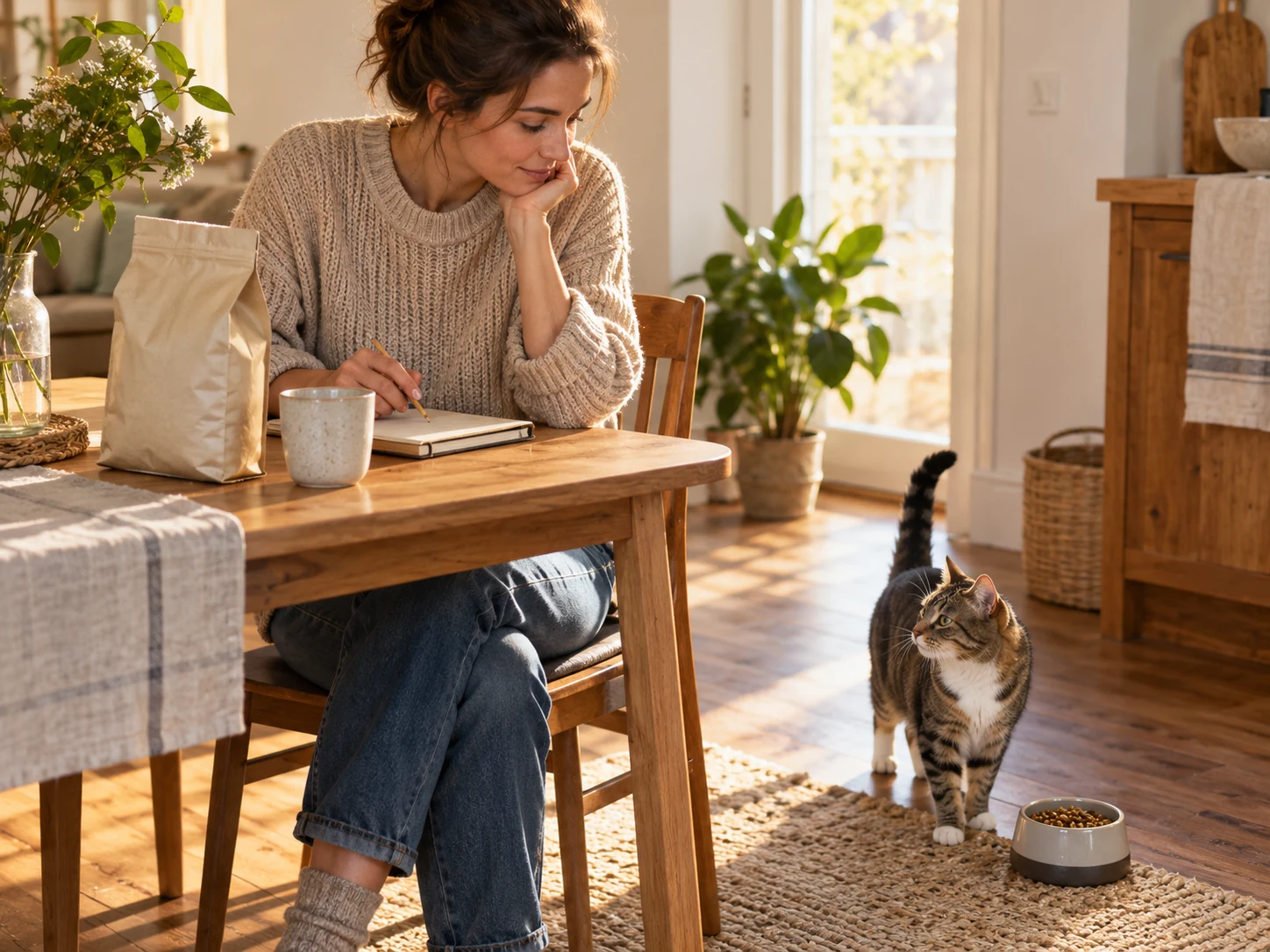
AI-created editorial scene: measure actual kibble output separately from choosing the cat's diet. Generic tools, not an EK6015 photograph or feeding-accuracy test.
PETLIBRO automatic cat feeder portion size is a volume-based setting, not a fixed number of grams for every food. Check the exact feeder model, then weigh repeated dispenses of the actual kibble to estimate how its settings relate to your cat’s feeding plan.
Instead of choosing a daily ration from the feeder’s largest setting or a generic conversion online, start with the food guidance and individual feeding plan you already have, with veterinary advice when needed. Dry-food dispenser measurements describe the amount delivered, not the diet a pet needs. Refrigerated wet-food trays require their own setup and food-handling instructions.
PETLIBRO automatic cat feeder portion size by model
PETLIBRO’s official portion reference defines a portion by food volume associated with a rotor rotation. It notes that actual output can vary with the food’s size, shape, freshness, and thickness. Its approximate volumes differ across models.
| Model group in PETLIBRO’s reference | Approximate volume per portion |
|---|---|
| PLAF001 / PLAF101 Essential | 12.5 mL |
| PLAF002 / PLAF102 Essential | 18.8 mL |
| PLAF003 / PLAF004 Easy | 15 mL |
| PLAF005 / PLAF006 / PLAF103 / PLAF203 Granary | 20 mL |
| PLAF107 Space | 20 mL |
| PLAF008 / PLAF108 Air | 10.4 mL |
| PLAF301 One RFID | 20 mL |
First, use the label on your device to find the appropriate row. Do not extend this table to another generation because its product name looks similar. These are approximate reference volumes, not measured gram outputs from your unit.
Milliliters describe volume; grams describe mass. Because two foods can have different densities, the same volume can weigh differently. A cup conversion does not remove that difference, so there is no universal “one PETLIBRO portion equals this many grams” answer.
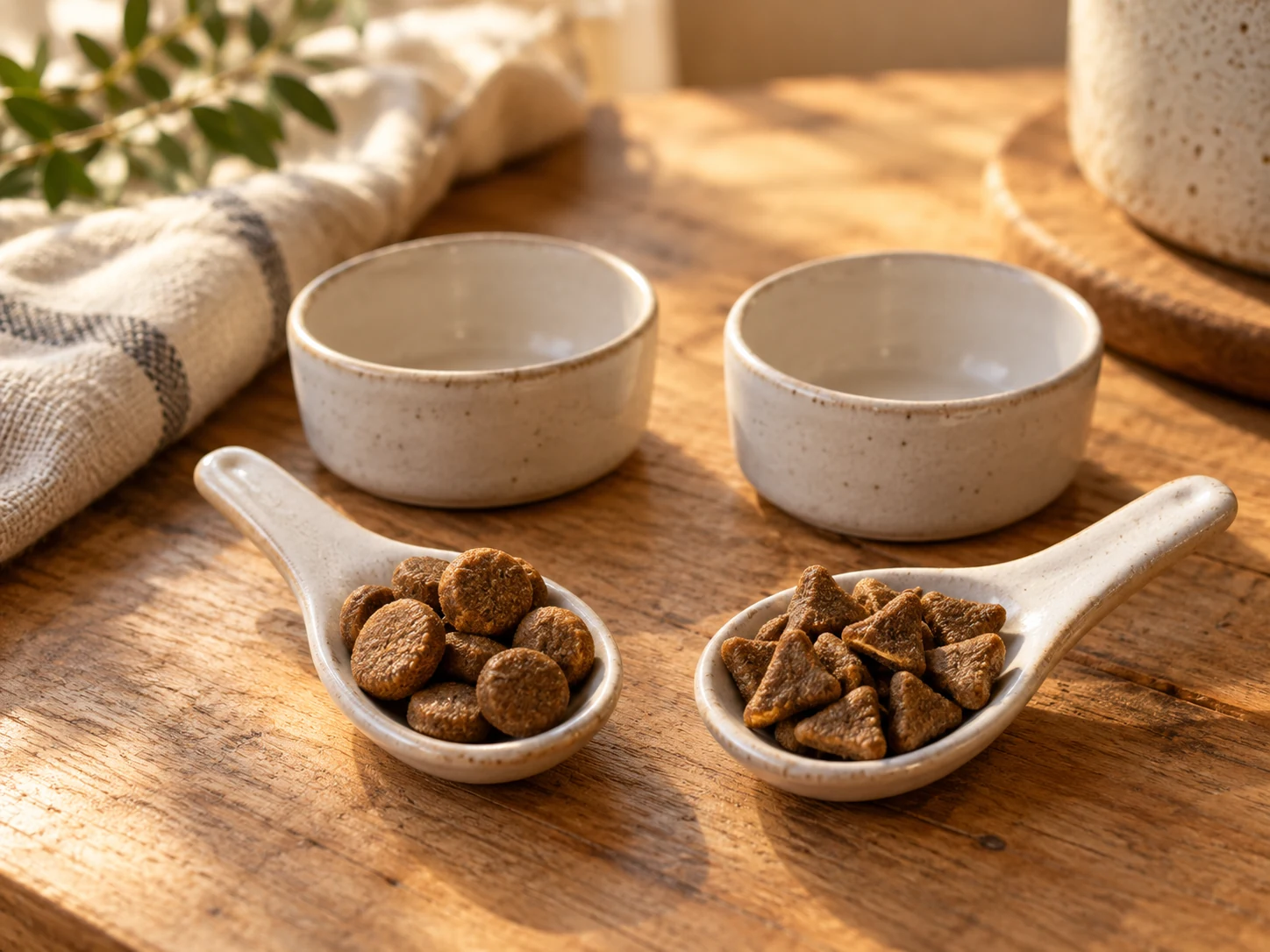
Measure PETLIBRO automatic cat feeder portion size in grams
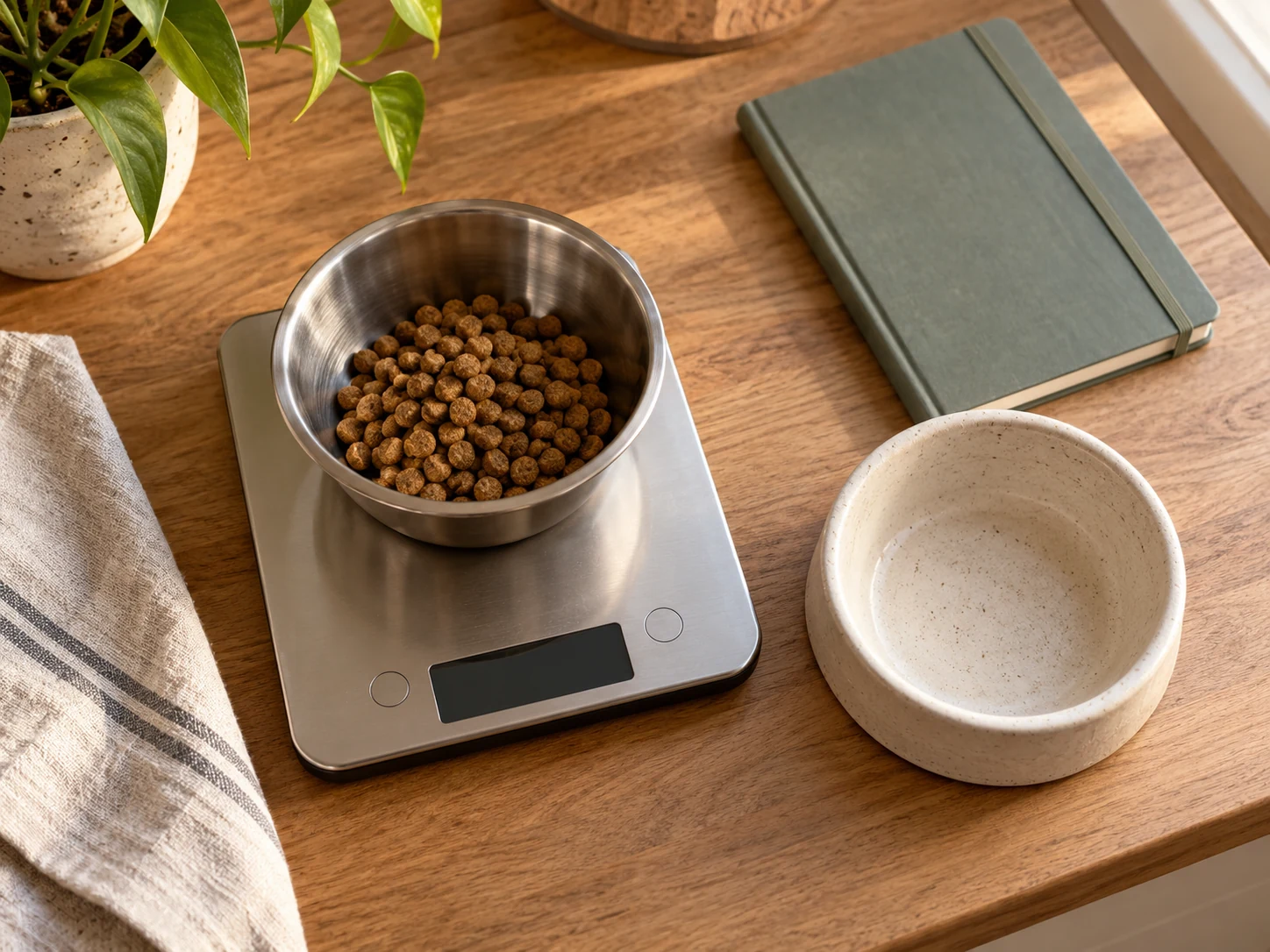
Use a suitable scale you already own if it can measure the batch clearly. Work on a stable, level surface with the feeder assembled as directed and the permitted kibble in the hopper. Keep cats away from the test bowls so that food is not eaten before it is weighed.
- Select grams. Use the scale’s mass setting, rather than a fluid-ounce or milliliter mode.
- Tare the empty container. Put the collection bowl on the scale and zero it according to the scale’s instructions.
- Collect a known number of portions. Use the feeder’s permitted manual-feed or test procedure. Record the setting and number of dispenses.
- Weigh the combined food. Wait for a stable reading and record the net mass.
- Calculate the average. Divide total grams by the number of portions collected.
- Repeat and compare. Check more than one batch and investigate large differences before relying on the schedule.
Measuring a batch can make a small output easier to read, but averaging does not turn an ordinary kitchen scale into a laboratory instrument. Note its display increment and limitations. Check again after changing food and when output appears different.
PETLIBRO automatic cat feeder portion size: an example
For example, suppose five portions of a particular kibble weigh 40 grams in a supervised check. The estimated average is 40 ÷ 5 = 8 grams per portion. That is a hypothetical example, not a measurement of a PETLIBRO model or a ration recommendation for your cat.
If an already agreed feeding plan called for 60 grams daily, that example would give 60 ÷ 8 = 7.5 portions across the day. If your model permits only whole portions, do not silently round the diet upward or downward. Review how to combine an appropriate schedule with any measured manual food or an adjusted plan.
Add all scheduled meals when checking the daily total, including manual dispenses and other food. In a multi-cat home, dispensed food is not necessarily consumed by the intended cat. The Feline Veterinary Medical Association’s feeding guidance recommends separate stations and veterinary advice for concerns about over- or undereating.
A scale option if your current tool is unsuitable
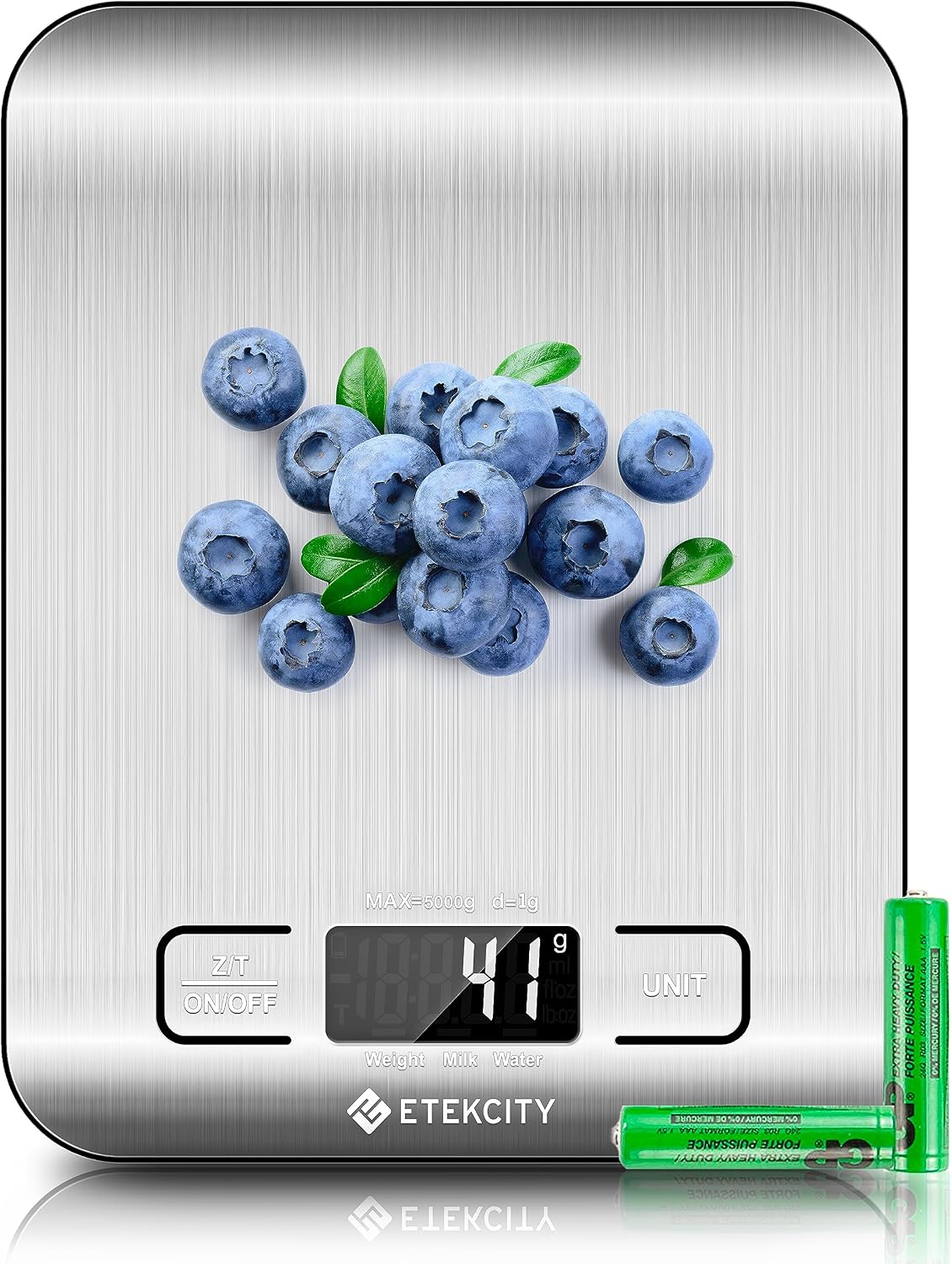
The selected Etekcity Food Kitchen Scale is model EK6015, ASIN B0113UZJE2. The listing specifies a 5-kilogram / 11-pound capacity, a 1-gram display increment, tare function, and two AAA batteries. The Etekcity product page confirms the model, capacity, gram mode, and battery type.
For checking PETLIBRO automatic cat feeder portion size, this is an ordinary kitchen-scale option for a visible batch of kibble. It is not a precision medical-dosing device. A 1-gram display increment is not a certification of plus-or-minus-1-gram accuracy in every circumstance. Include the collection container when checking the maximum load, and follow the scale’s instructions.
However, an appropriate existing scale may already be sufficient; reuse it rather than buying another solely for this check. Calibration and comparative accuracy have not been independently verified for the EK6015. Keep the surface clean and dry and do not treat its steel platform as permission to immerse the electronic body.
View the Etekcity EK6015 kitchen scale on Amazon.
PRODUCT MENTIONED
Etekcity Food Kitchen Scale
Amazon · Details on the retailer’s website
Recheck portion size when food or output changes
If food fails to dispense, the amount changes unexpectedly, or pieces jam, troubleshoot the correct feeder model before increasing the portion setting. Review food compatibility, assembly, permitted cleaning, and any error indication. A larger setting cannot explain an unresolved mechanical problem.
After making an adjustment, check the saved schedule and observe programmed meals while you are home. Keep a manual feeding option available. If your concern is a cat’s reduced intake or weight change, seek veterinary advice rather than assuming a recalculated setting explains it.
For a different food format, the PETLIBRO wet-food feeder guide covers cooling and tray maintenance. The dry-portion reference above should not be applied to that system.
Frequently asked questions
Is one portion the same on every PETLIBRO feeder?
No. The manufacturer’s reference lists different approximate volumes across model groups. Read your device label and current instructions before using a conversion. Even a matching reference volume does not establish the mass of your particular kibble.
Can I convert milliliters directly to grams?
Not with a universal dry-food conversion. Volume and mass are different, and foods vary in density and shape. Weigh the actual output instead. Do not use a scale’s water-volume mode as a substitute for measuring kibble mass in grams.
Should I recheck after changing food?
Yes. A different size, shape, or density can change the amount dispensed. Repeat supervised measurements, check compatibility, and compare the entire daily schedule with the feeding plan. Do not assume the old portion setting delivers the same grams.
Use the model reference, then verify the food
PETLIBRO automatic cat feeder portion size starts with the exact model, but the useful gram estimate comes from the kibble you actually dispense. Use the manufacturer’s approximate volume table to understand the setting, tare a suitable scale, measure repeated batches, and check the full daily total.
Keep the calculation separate from choosing a diet. An appropriate existing scale may be all you need; the Etekcity EK6015 is an optional defined tool, not a requirement. Observe scheduled meals, recheck after food changes, and resolve inconsistent output before relying on automation.
Comments are reviewed before they appear publicly. Please keep questions and feedback relevant to this article.