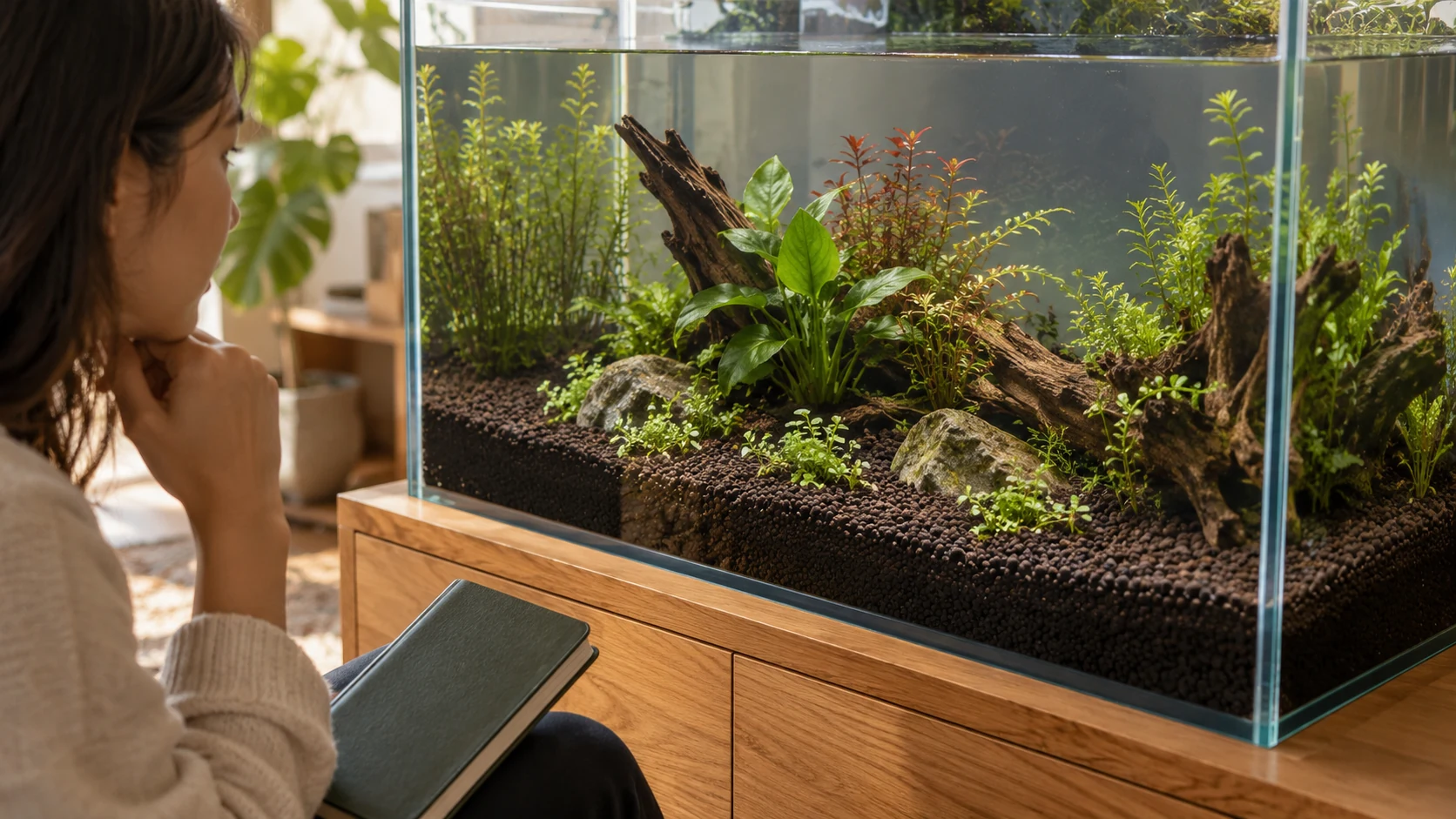
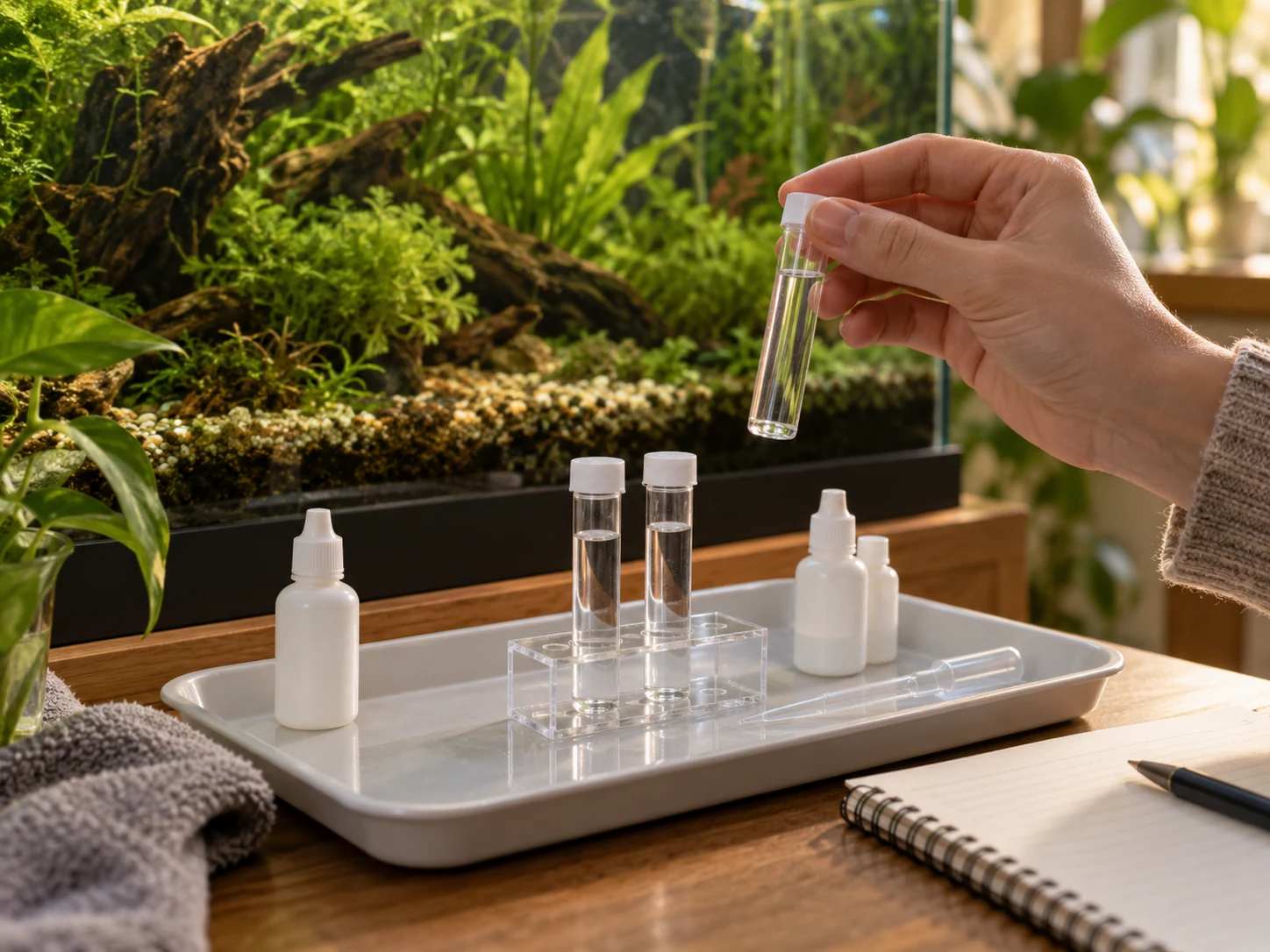
AI-created editorial scene: plan a planted layout around substrate and water requirements; not a Stratum bag photo, plant-growth or completed-cycling result.
Fluval Stratum is a volcanic-soil substrate intended for planted freshwater aquariums and freshwater shrimp setups. Choose it for a planned substrate and water-chemistry role, rather than as a decorative gravel that can be added without checking the tank’s requirements.
The specified 17.6-pound bag is original Stratum, item 12695. It is different from Bio-Stratum and Betta Stratum. Confirm that identity before applying instructions about grain size, added bacteria or setup.
Match Fluval Stratum to the aquarium plan
Start with the intended plants and animals, the source water and the existing aquarium. A substrate that helps soften water is not automatically appropriate for every freshwater species or every water supply. Match the complete plan before choosing a bag by its planted-tank photograph.
Fluval’s Stratum series comparison says the substrates support neutral to slightly acidic conditions and can reduce carbonate hardness. It specifically recommends regular KH testing. Treat that chemistry effect as a decision variable, not a universal advantage.
Check the requirements of the actual fish, shrimp and plants you intend to keep. Do not assume every species sold for freshwater aquariums benefits from the same pH or hardness. If the existing system has a different requirement, review the substrate choice before changing the bottom.
A new aquarium and a stocked established aquarium also need different planning. Adding soil to an existing tank can disturb the layout and water conditions. Rebuilding an occupied aquarium needs a separate plan for the animals, filtration and water conditions.
| Decision | What to establish | Limit |
|---|---|---|
| Freshwater use | Exact species and planted-tank plan | Not a saltwater substrate recommendation |
| Water chemistry | Source water, aquarium pH and KH | No guaranteed final pH for every supply |
| Planting role | Root system and planned substrate depth | Soil does not replace the complete lighting and care plan |
| Product identity | Original Stratum 12695, 17.6 pounds | Not the bacteria-infused Bio-Stratum product |
| Setup state | New tank or a planned change to an established system | A porous substrate does not prove completed cycling |
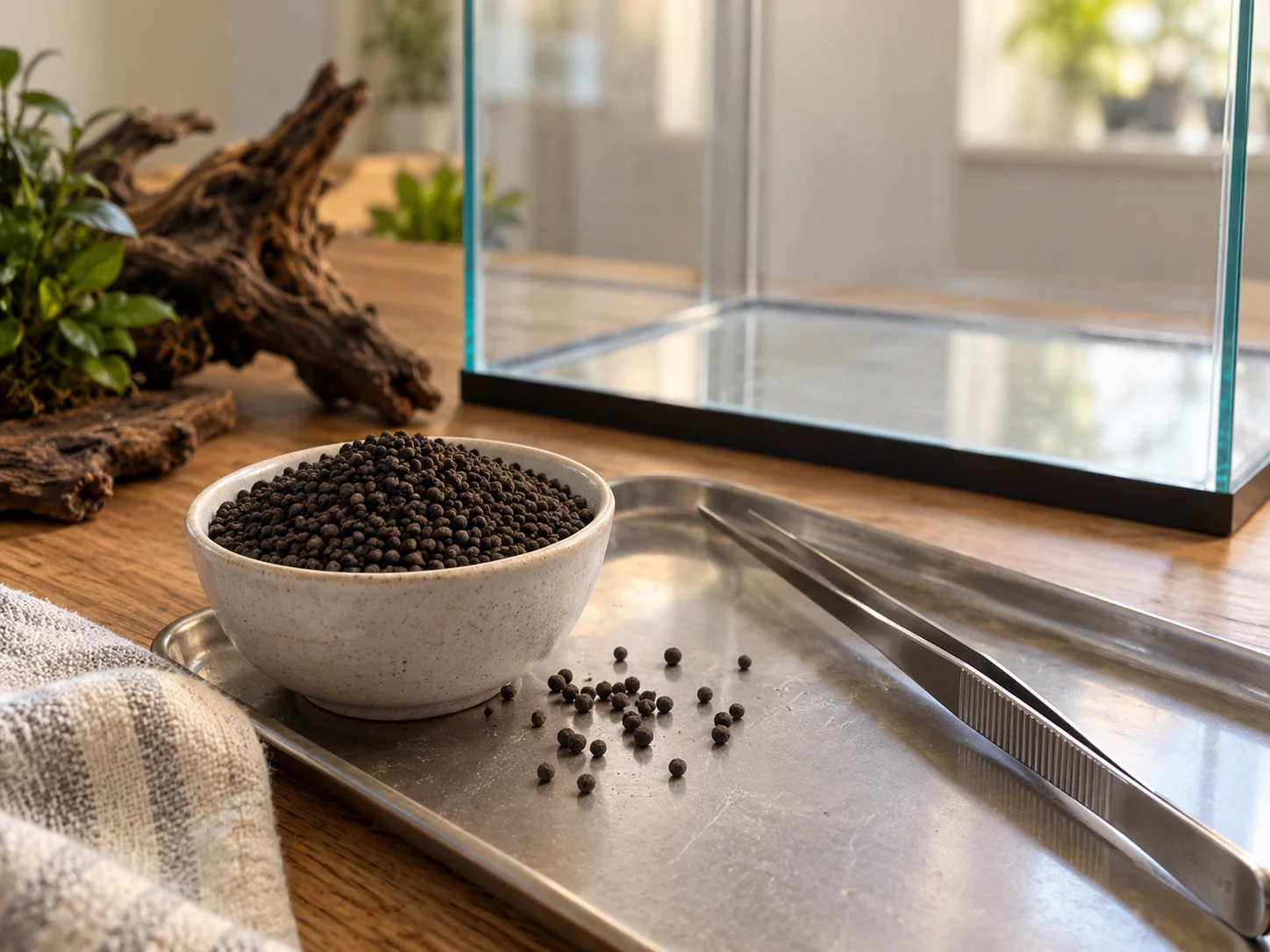
The selected bag: original Stratum 12695
The selected Amazon product is Fluval 12695 Plant and Shrimp Stratum for Freshwater Fish Tanks, 17.6 pounds, ASIN B00JMA9S52. The manufacturer’s corresponding size is 8 kilograms. Match the item and weight, rather than the approximate shipping weight of a packaged bag.
Fluval’s original Stratum product page describes soil collected from the Mount Aso area in Japan, a porous structure and support for plant-root penetration. It lists 4.4-, 8.8- and 17.6-pound formats. The specified 8-kilogram selection is the largest of those bags.
For a compatible planted freshwater plan where that format suits the required quantity, check the Fluval Stratum 12695, 17.6-pound / 8-kilogram bag, on Amazon. Confirm the actual bag and instructions before planning the layout.
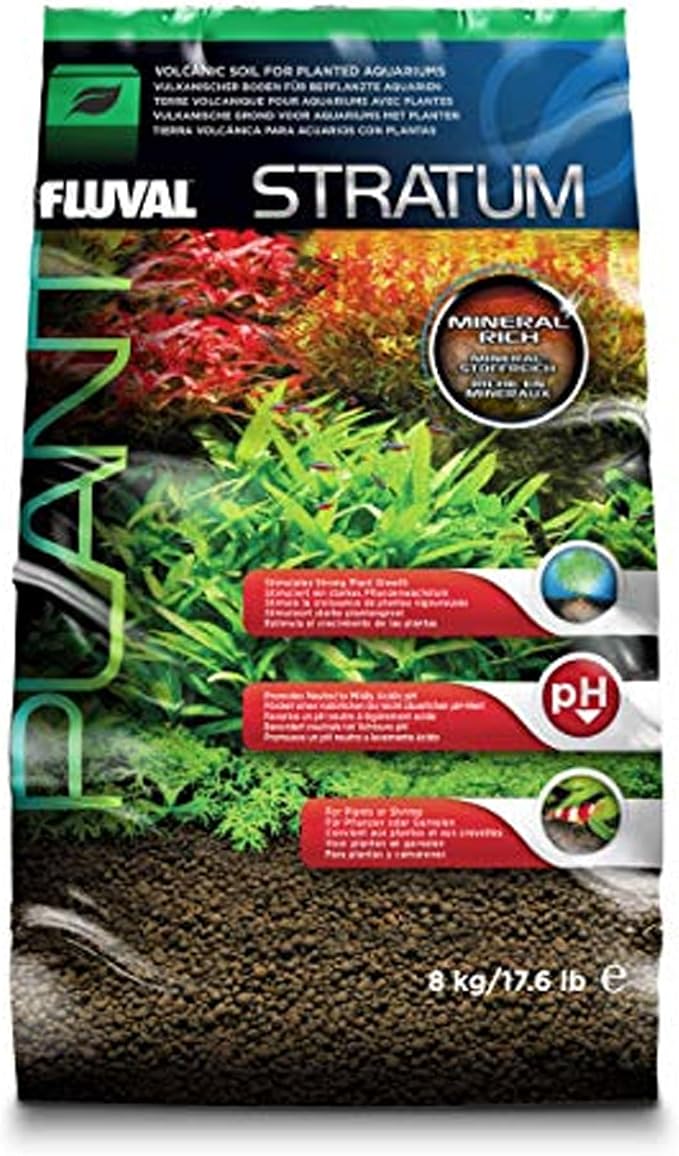
PRODUCT MENTIONED
Fluval 12695 Plant and Shrimp Stratum for Freshwater Fish Tanks, 17.6 lbs.
Amazon · Details on the retailer’s website
The practical features to assess are the lightweight, non-compacting granules, nutrient-bearing substrate role and the manufacturer’s water-softening description. The trade-offs include chemistry monitoring, careful handling of the granules and the need to plan the aquarium separately from the purchase.
Controlled comparative results for nutrient release, pH change, shrimp survival and plant growth have not been independently verified for this substrate. Manufacturer claims about vigorous growth and beneficial colonization describe the product’s intended role, not results established for your aquarium.
Do not borrow Bio-Stratum’s added-bacteria claims
The current series page identifies original Stratum granules as approximately 3–5 millimeters, while Bio-Stratum and Betta Stratum use approximately 1–3-millimeter granules. These are manufacturer reference ranges, not an exact measurement of every grain in the selected bag.
More significantly, the comparison marks Bio-Stratum and Betta Stratum as infused with beneficial bacteria. It does not mark original Stratum that way. Original Stratum’s porous surface can provide a place for colonization without being the same bacteria-infused formulation.
Do not call item 12695 an instant-cycle substrate or carry over a Bio-Stratum ammonia-reduction claim. Similar branding, a dark granule appearance and the word Stratum do not establish identical composition or startup behavior.
The series also describes original Stratum for extensive root development and as a main substrate or bottom layer in a suitable planted layout. That is not a universal layering recipe. Plan the actual plants and setup instead of assuming every aquarium needs a cap or the same depth.
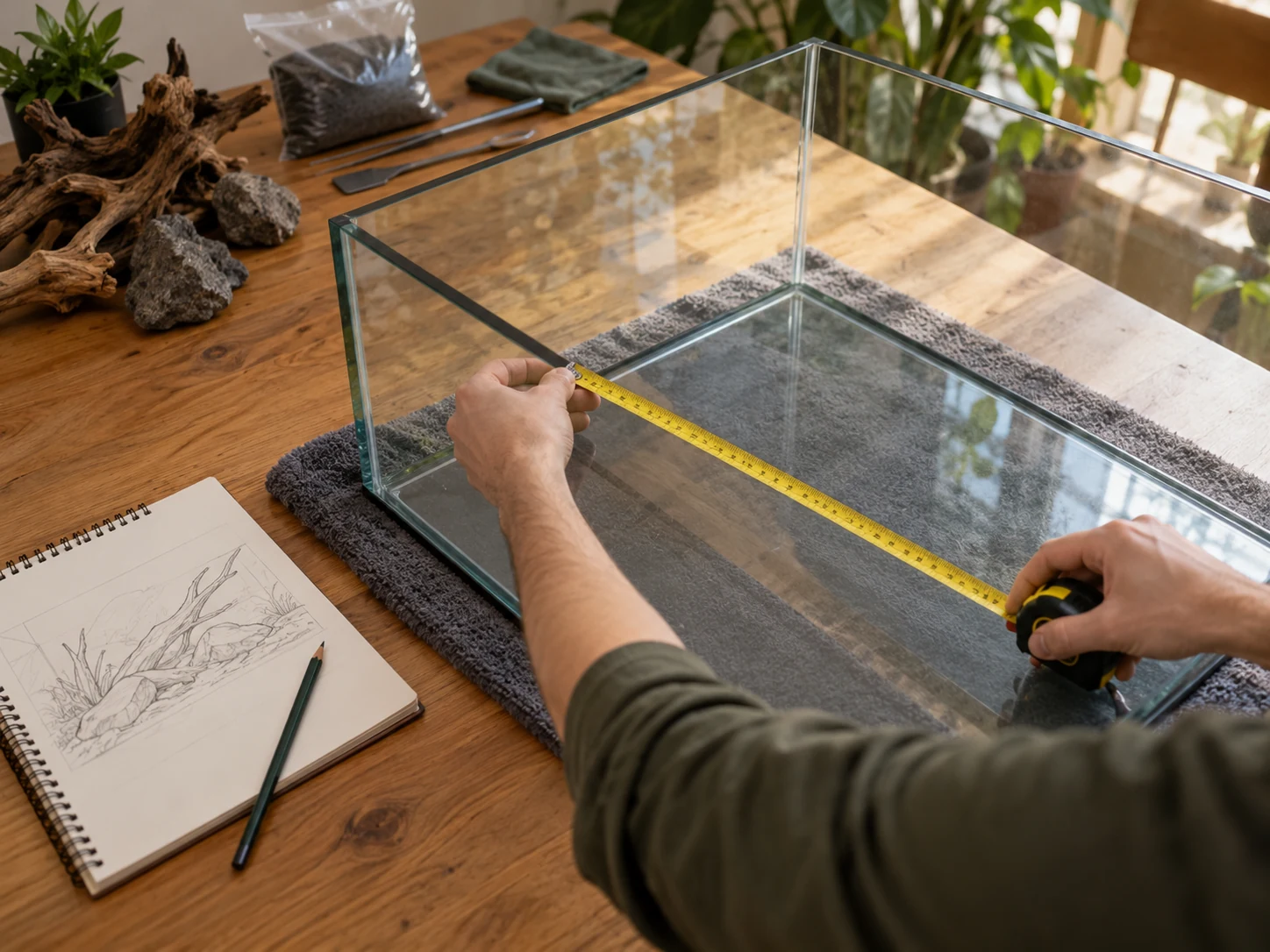
Plan quantity from the footprint and layout
Tank length and width matter because the substrate covers the bottom. Tank volume alone cannot tell you how much soil a layout needs. Planned slopes, planted areas and the intended depth also affect the quantity.
Measure the actual usable footprint and decide the layout before ordering. Check the manufacturer’s quantity guidance for the intended format, with enough clarity about whether it represents volume or mass. A kilogram number and a liter number are not interchangeable without a material-density assumption.
One 8-kilogram bag cannot be assumed to cover every aquarium of a given gallon size; the footprint and intended depth determine quantity. Resolve an uncertain quantity with the manufacturer or an experienced aquascaping specialist before buying multiple bags.
Include the time and supplies needed for setup, testing and ongoing care in the purchase decision. The bag is one part of the aquarium plan. An attractive substrate photograph does not establish that the required maintenance will fit your routine.
Handle Fluval Stratum gently during setup
The current product FAQ recommends gently rinsing Stratum in a large colander or similar device to remove fine dust, without agitating the substrate. Follow the supplied directions for the actual product rather than applying a vigorous gravel-washing routine.
That instruction matters because “rinse” can describe very different actions. The manufacturer says gentle handling and no agitation; it does not authorize scrubbing or repeatedly crushing the granules until every particle disappears.
Keep the material identity visible when comparing advice. A method described for inert sand, another active soil or a different Stratum formulation does not automatically apply to this original bag. Ask Fluval if the delivered label and current web FAQ appear to differ.
During filling and planting, avoid treating the granules as an indestructible surface. Plan the work so you do not need to repeatedly move the entire bed. The source pages do not establish a maximum number of replants or a guaranteed substrate lifespan.
Check pH, KH and ammonia rather than guessing
The manufacturer describes a tendency toward neutral to slightly acidic water and lower carbonate hardness. It does not give a final pH that every source water will reach. Test the actual aquarium and review whether its conditions suit the livestock plan.
The original product FAQ also says adding this natural soil has the potential to slightly increase ammonia. Although it expects an established aquarium to handle that addition, it recommends ammonia testing. Do not turn that expectation into a guarantee for every stocked system.
A change in substrate deserves observation and testing even when the water looks clear. Visible clarity does not measure pH, KH or ammonia. Keep those checks separate rather than using the appearance of the water as a single pass/fail signal.
If results or animal behavior are concerning, review the aquarium with qualified aquatic support. Do not keep adding soil to chase a pH number or add livestock because the package mentions shrimp. Obtain advice for the actual water results before applying an emergency treatment or dose.
Plan an established-tank change separately
If the aquarium already contains animals, record the current substrate, water results and livestock requirements before deciding on a change. A bag chosen for a future planted layout does not establish a safe way to remove the existing bed around its occupants.
Ask for a suitable transition plan before starting work when you cannot preserve acceptable conditions throughout the change. Keep the manufacturer’s ammonia-testing qualification in that discussion. Do not schedule the job around delivery day alone, or assume a clear-looking tank has returned to its previous chemistry. Product selection and the actual transition are separate decisions.
Keep cycling separate from substrate selection
Fluval’s aquarium-startup guidance describes cycling as establishing a living population of beneficial bacteria before adding fish. Buying a porous substrate is not evidence that this process has finished.
Plan a suitable cycling and testing routine for the whole aquarium. A fixed number of days cannot establish that the tank is ready. Filter operation, water conditions and the system’s actual progress remain part of that separate assessment.
Likewise, the manufacturer’s description of a refuge for newborn shrimp is a substrate-feature claim. It does not guarantee that predators cannot reach them, that every shrimp species is compatible or that the water is ready for immediate introduction.
Frequently asked questions
Is Fluval Stratum 12695 the same as Bio-Stratum?
No. The current manufacturer comparison separates the products by granule range and bacteria infusion. The specified 12695 bag is original Stratum, 17.6 pounds or 8 kilograms. Do not apply Bio-Stratum’s added-bacteria claim to it.
Will it always set a particular pH?
No exact final pH is established. Fluval describes support for neutral to slightly acidic conditions and water-softening effects, with regular KH testing. Match and measure the actual aquarium rather than promise a fixed endpoint.
Should it be washed like ordinary gravel?
The current FAQ recommends a gentle rinse in a large colander or similar device without agitation. Use that product-specific direction and check the delivered instructions. Do not substitute aggressive gravel scrubbing or assume advice for another soil applies.
Choose the substrate as part of the system
Fluval Stratum makes sense to assess when its original-soil format and water-chemistry role fit a planted freshwater plan. Confirm item 12695, calculate the required quantity carefully and keep it separate from the Bio-Stratum family claims.
The selected 17.6-pound bag does not remove testing, cycling or ongoing aquarium care. Handle the substrate gently, track the relevant water conditions and decide on livestock only through the complete setup plan. Those checks make the bag’s intended benefits useful without turning them into guarantees the evidence does not provide.
View Fluval 12695 Plant and Shrimp Stratum for Freshwater Fish Tanks, 17.6 lbs. on Amazon.
Comments are reviewed before they appear publicly. Please keep questions and feedback relevant to this article.