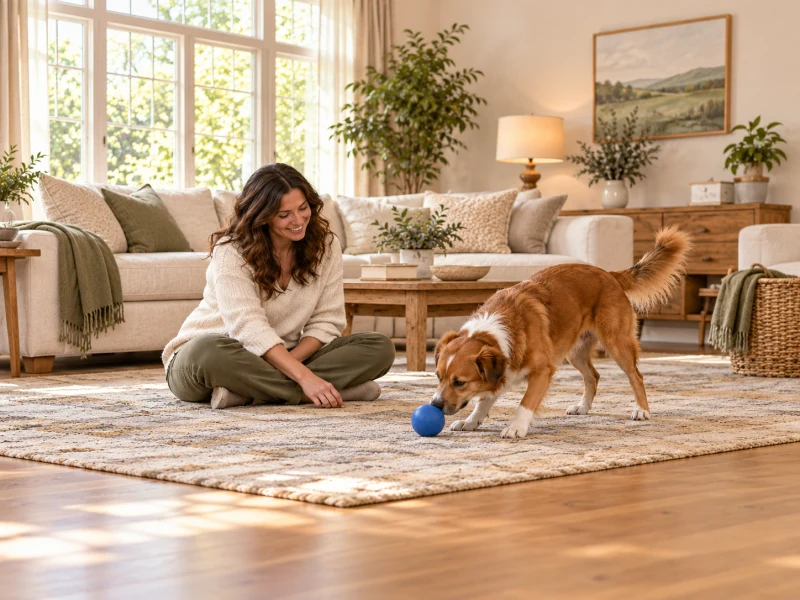
AI-created generic dog balls decision scene; not a named-model product photograph or a hands-on test.
Choose dog balls by mouth fit before comparing bounce, color or durability claims. A ball should be large enough not to disappear wholly into the dog’s mouth while remaining comfortable to carry. A product label such as Medium/Large cannot establish that fit for every dog in a weight category.
The red KONG Ball with Hole is model KB1E, Amazon ASIN B0002DHOJA. The selected listing gives approximately 3 inches across, and the current original package says Medium/Large, 30–65 lb. Those are product references to check against the actual dog, not a universal safety guarantee.
Dog balls: establish the actual size first
PDSA’s ball-choice guidance recommends a ball the dog cannot fit completely into its mouth but can carry comfortably. That practical check comes before choosing a color or a highly rated listing.
Different dogs of similar weight can have different head shapes and carrying habits. Check the delivered ball and the dog’s behavior under supervision. If the fit is doubtful, obtain appropriate advice rather than relying on the weight printed on the package alone.
| Purchase check | What to establish | What not to assume |
|---|---|---|
| Diameter | The actual selected size and mouth fit. | Medium/Large suits every medium or large dog. |
| Material | The exact product and permitted activity. | All rubber balls have identical hardness or durability. |
| Opening | The ball’s structure and intact condition. | A hole makes choking impossible. |
| Surface | Where the ball will roll and be picked up. | A high bounce is appropriate in every setting. |
| Condition | Cracks, missing material and the dog’s chewing behavior. | A puncture-resistance claim means indestructible. |
| Care | The exact cleaning and storage instructions. | Another toy’s washing or floating claim applies. |
Dog balls with a central hole: know the limits
The selected KONG product has a hole through the ball, visible in its original package photograph. PDSA discusses open-hole designs as one consideration in safer ball selection. That does not make an incorrectly sized ball safe or remove the need for supervision.
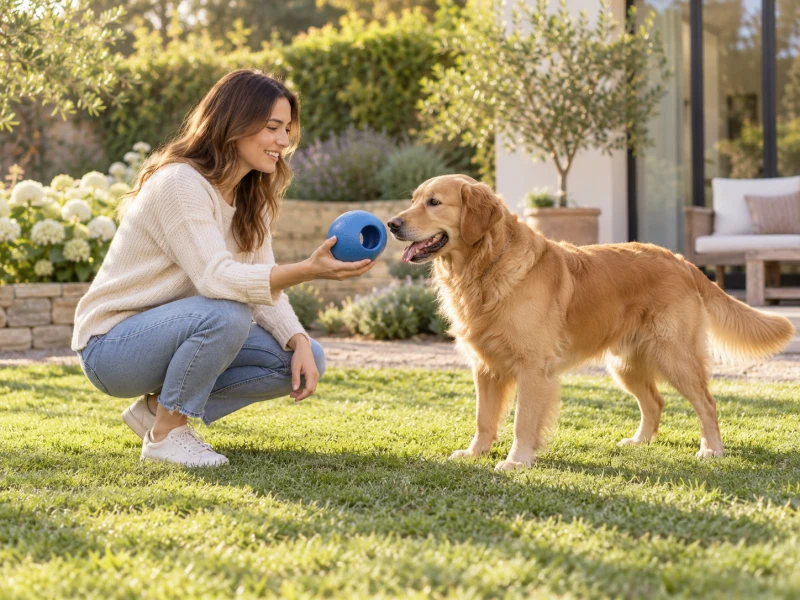
Inspect the opening and surrounding material as well as the outside surface. Do not plug it, alter it or assume a damaged opening remains suitable because air can still pass through part of it.
The hole also does not establish a particular food-filling or cleaning procedure. Use the current product instructions for its intended uses. A structural feature should not be turned into an unsupported promise about breathing, dental care or prolonged unattended chewing.
Where the selected KONG Ball with Hole fits
The manufacturer’s current Ball page describes natural Classic rubber and fetching use. It calls the ball puncture resistant and states that it is made in the USA with globally sourced materials. Those are manufacturer product statements, not independently verified performance results.
The selected retail package is the red Medium/Large version. The current manufacturer page presents several size labels, so use the delivered package and actual diameter rather than transferring a different size category’s weight range to this selected item.
This is a conditional option for a suitable dog and a controlled retrieve activity. It should not be chosen solely because another KONG product worked well previously; shapes, sizes and intended uses can differ within one brand.
Consider the selected red KONG Ball with Hole when its approximately 3-inch Medium/Large format suits the dog’s actual mouth and a supervised retrieve routine. Skip it if the whole ball can fit in the mouth, the dog damages this rubber or the required activity is an unattended chew.
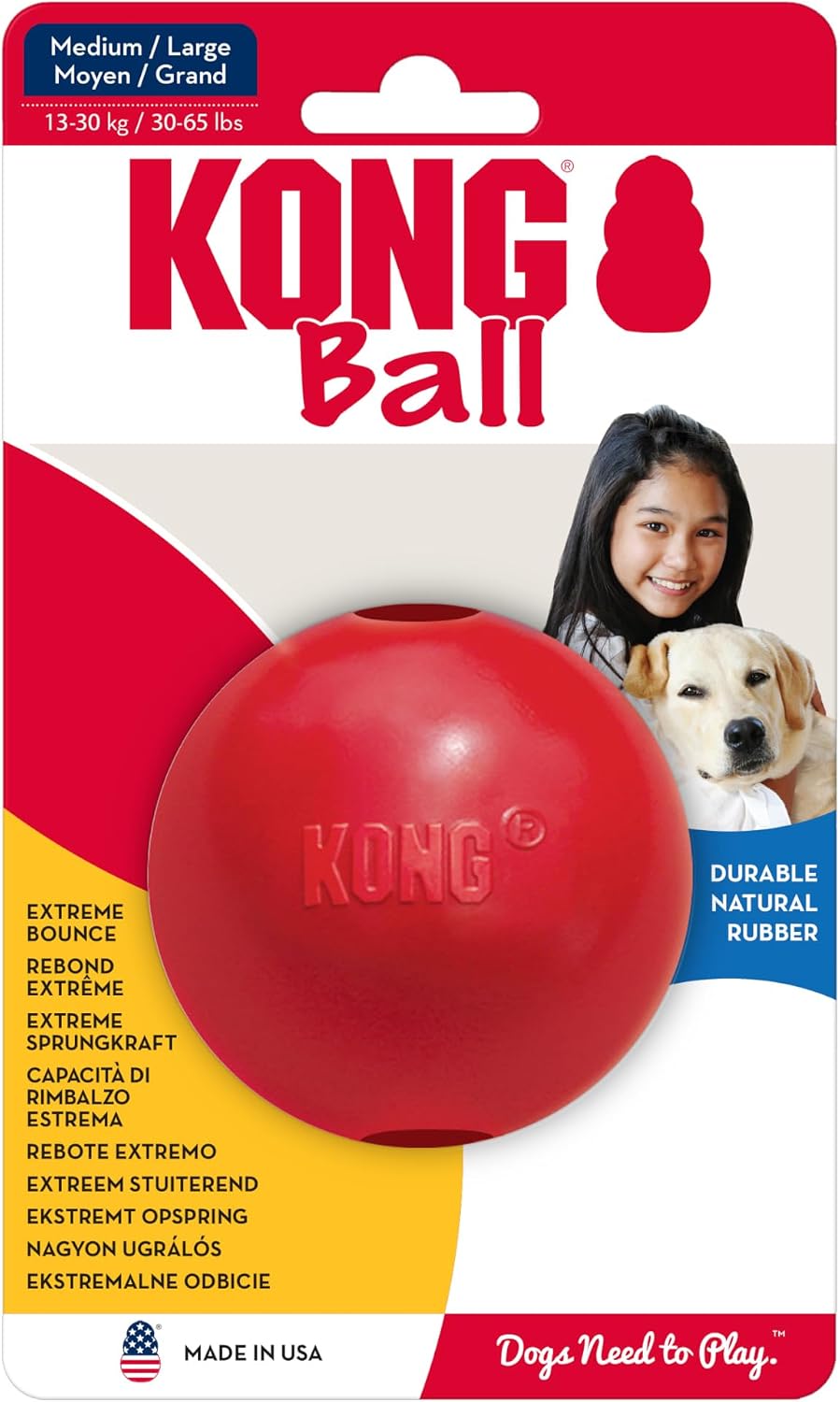
PRODUCT MENTIONED
KONG Ball with Hole — Red, Medium/Large, 3 Inch
Amazon · Details on the retailer’s website
Match dog balls to the actual chewing style
A dog that carries a ball back is doing something different from a dog that lies down and works at removing rubber. Observe the activity rather than treating all interest in the toy as the same kind of play.
The selected listing itself says no dog toy is indestructible and advises removal when damaged. Do not let broader promotional wording about all-day play or worry-free use override that limitation.
If the dog repeatedly damages the selected ball, stop and reassess the product and activity. Continuing to offer a damaged ball while waiting for a replacement is not a useful test of durability. Ask the manufacturer or an appropriate professional about fit and use when uncertain.
Choose the surface before choosing a bounce
A ball’s movement depends on the surface and the way it is used. A clear level area offers a different game from a hard enclosed corridor or a cluttered room. Consider where the ball may travel and how the dog returns with it.
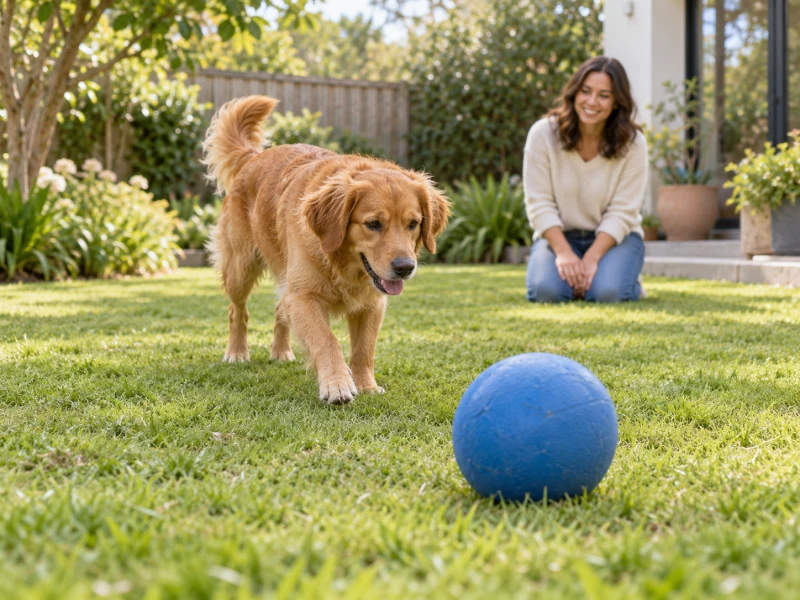
Start with a manageable low roll or short ground game rather than making a high catch the goal. PDSA’s safe-play guidance recommends controlled activity, keeping toys low and allowing breaks.
Do not assume stronger bounce means better exercise. Abrupt turns, collisions and repeated jumping are not made suitable by the ball being sold for dogs. The owner’s choice of game and location remains part of the decision.
Color helps observation but does not guarantee recovery
The selected ball is red. A visible color may help an owner keep track of a toy in a particular setting, but it cannot guarantee the ball will never be lost in grass, under furniture or near water.
Keep the actual play area controlled and stop if the ball moves somewhere unsafe to retrieve. Do not send a dog into an unsuitable space simply because the toy can still be seen.
Nor does a color or rubber construction establish that this ball floats. The current manufacturer page does not provide that feature for the selected ball. A floating claim for another toy in the same brand should not be transferred to it.
Breaks matter even when the dog still wants the ball
Some enthusiastic dogs continue chasing when a pause is appropriate. PDSA highlights tiredness, repetitive activity and weather as considerations in ball games. The fact that the dog brings the ball back again does not establish an unlimited exercise allowance.
Build a clear finish into the routine and switch to a calmer activity when appropriate. If there are health concerns, a change in movement or uncertainty about suitable exercise, obtain veterinary advice rather than selecting a more stimulating ball to push the session further.
A toy’s advertised purpose does not replace an individual activity plan. Walking, sniffing, social interaction and rest remain separate needs; ball play does not have to become the entire routine.
Inspect dog balls before returning them to storage
Look for splits, missing material and changes around the opening before and after play. Remove a damaged toy from the accessible collection. A missing piece is not proof that it was harmlessly swallowed.
If the dog may have swallowed material or shows concerning signs, contact a veterinarian promptly. Do not keep the toy in use while trying to judge the missing piece’s effect from the remaining ball alone.
For households with multiple dogs, manage access to sizes and individual play sessions. A ball appropriate for one dog’s mouth should not automatically be available to a larger dog who can take it away.
Clean the actual ball, not the whole brand category
Check the delivered product guidance for cleaning and use a method appropriate to that exact item. A cleaning permission for a different rubber toy, electronic ball or fabric product is not enough to establish the same treatment for this item.
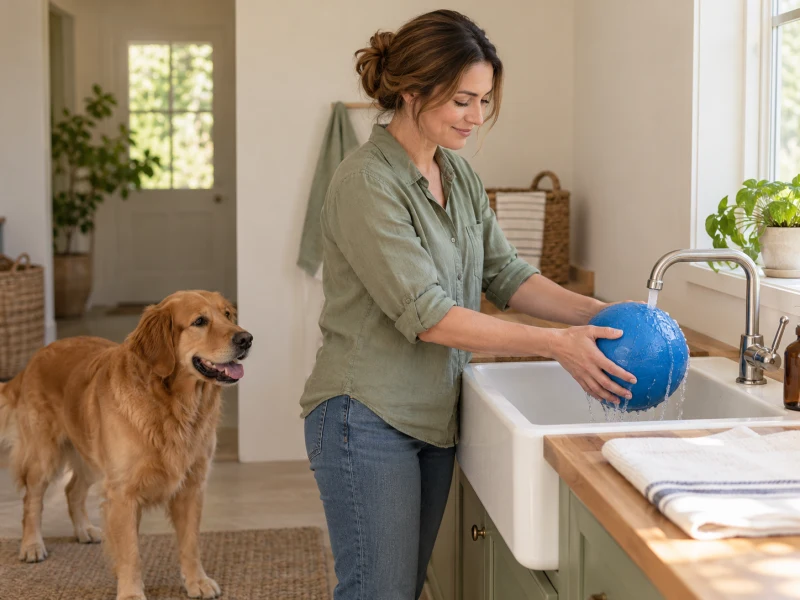
Inspect the inside of the opening as well as the exterior during permitted cleaning. Let the toy dry appropriately before storage. Do not hide damaged material under a residue or assume a rinse repairs the structure.
Keep an intact dry ball where the owner can inspect it before the next session. If the dog turns retrieval toys into sustained chews after play, consider controlled storage rather than leaving the ball available indefinitely.
Decide whether a ball is the activity you need
If the existing ball is intact, correctly sized and used comfortably, buying another may be unnecessary. Identify a practical reason for replacement, such as damage, unsuitable size or a different controlled play requirement.
If the real task is food retrieval from a stuffable toy, that is a different purchase and preparation decision. The KONG stuffing guide addresses filling and cleanup separately. A central hole in a ball does not make every food-stuffing method transferable.
Similarly, a dog that prefers carrying an elongated object may need a different shape rather than a larger collection of round toys. Choose the activity and fit, not a quota of toy types.
Before buying the selected red Medium/Large ball
Confirm KB1E, approximately 3 inches, and the actual Medium/Large package. Check mouth fit, chewing behavior, the intended surface and a supervision and maintenance routine. Keep puncture resistance separate from an indestructibility claim.
If that format suits the dog, view the selected red KONG Ball with Hole on Amazon. Recheck the delivered size; neither a hole nor a weight category removes the need for an actual fit assessment.
Common questions
Is Medium/Large a guarantee of fit?
No. Check the actual diameter, mouth size and comfortable carrying, not body weight alone.
Does the hole make choking impossible?
No. It does not make an unsuitable size or damaged toy safe.
Is puncture resistant the same as indestructible?
No. Inspect the actual item and remove it when damaged.
Can I assume this ball floats?
No floating feature was established from the current manufacturer page reviewed for this selected ball.
View KONG Ball with Hole — Red, Medium/Large, 3 Inch on Amazon.
Comments are reviewed before they appear publicly. Please keep questions and feedback relevant to this article.