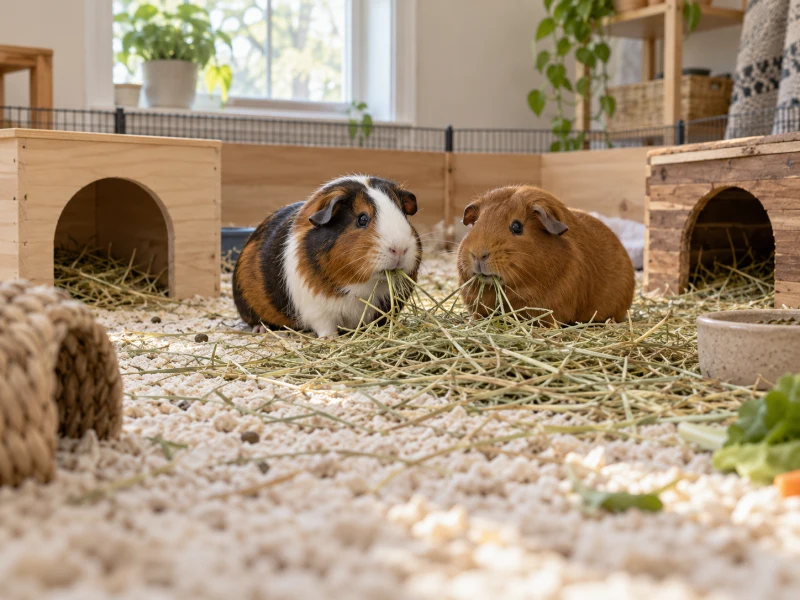
AI-created guinea-pig scene; the animals are not housed with a hamster. No enclosure size, compatibility assessment or complete habitat is established.
Guinea pigs and hamsters need different care plans, even though shops often display their supplies together. The clearest starting point is companionship: guinea pigs need compatible guinea-pig company, while a pet hamster should not be given a companion simply because a person worries it looks lonely.
Neither is a low-maintenance choice for a child to manage alone. Before choosing, compare the space you can provide, the hours when the animal is awake, the food and cleaning work, and your access to a vet experienced with that species. A small animal still creates a substantial daily responsibility.
Guinea pigs and hamsters: the main care differences
| Decision | Guinea pigs | Hamsters |
|---|---|---|
| Company | Compatible guinea-pig companions, normally at least a pair | Species-specific; Syrian and Chinese hamsters live alone |
| Daily rhythm | Activity and short rests spread through day and night | Usually evening and night activity with daytime sleep |
| Housing priorities | Usable floor space, accessible shelters and group resources | Continuous floor space, deep stable burrowing substrate and secure shelter |
| Diet | Constant suitable hay, guinea-pig feeding plan and vitamin C | Hamster-specific omnivorous diet and opportunities to forage and hoard |
| Family interaction | Quiet, gentle contact without assuming tolerance of lifting | Observe when naturally awake; many do not enjoy being picked up |
| Commitment | RSPCA gives a typical lifespan of five to six years, sometimes longer | Blue Cross gives roughly two to three years |
These are planning distinctions, not a complete husbandry prescription. Individual health, age, temperament and the actual hamster species affect what the household needs to provide. A shorter typical lifespan does not remove the need for veterinary care or daily attention.
Identify the animal before choosing supplies
Guinea pigs, also called cavies, are not large hamsters. Coat varieties within guinea pigs are also different from the species distinctions among pet hamsters. A long coat can change grooming work without changing a guinea pig’s need for appropriate company.
Blue Cross’s hamster-care advice distinguishes Syrian, winter white, Campbell’s, Chinese and Roborovski hamsters. A shop label such as dwarf does not give you every detail needed for housing, handling or equipment fit.
Ask the rescue or responsible supplier to identify the animal, its age where known and its existing care and housing arrangements. Resolve uncertain sex or pregnancy concerns with appropriately experienced help. Do not obtain a second animal to solve an identity question after bringing the first home.
If those details remain uncertain, pause the acquisition. It is easier to plan suitable accommodation before an animal arrives than to correct an unsuitable shared cage or poorly matched food later.
Company is the biggest difference between guinea pigs and hamsters
RSPCA’s guinea-pig guidance describes them as highly social and says they should not be kept alone. Plan for friendly, compatible guinea pigs, with expert advice on an appropriate grouping rather than casually introducing unfamiliar animals.
A hamster is not a replacement guinea-pig companion. Sharing a room, enjoying the same vegetable or appearing calm in a photograph does not establish that different species should share housing or meet for play.
RSPCA’s hamster-company guidance says Syrian and Chinese hamsters should live on their own. It discusses limited circumstances in which some dwarf species may live in stable pairs or trios, while stressing that they do not need company to be happy and can later fall out.
Blue Cross similarly says hamsters do not need company and notes serious fighting risks even in Roborovski sibling pairs. Do not read a conditional exception as a recommendation to buy two. Obtain species-specific advice; separate accommodation and resources may be necessary.
Hamster fighting is not harmless play. The welfare sources advise permanent separation after fighting rather than repeated attempts to make the animals get along. Injuries need veterinary attention, not another cage accessory.
Match the animal’s waking hours to your household
RSPCA describes guinea pigs as active for much of the day with short periods of sleep. That can make ordinary daytime observation possible, but it does not mean they should be constantly handled or denied undisturbed hiding places.
Hamsters are generally active in the evening and at night. Blue Cross warns that disturbing daytime sleep can alarm them and that most do not enjoy being picked up. A child who wants an animal to play with immediately after school may find that schedule disappointing.
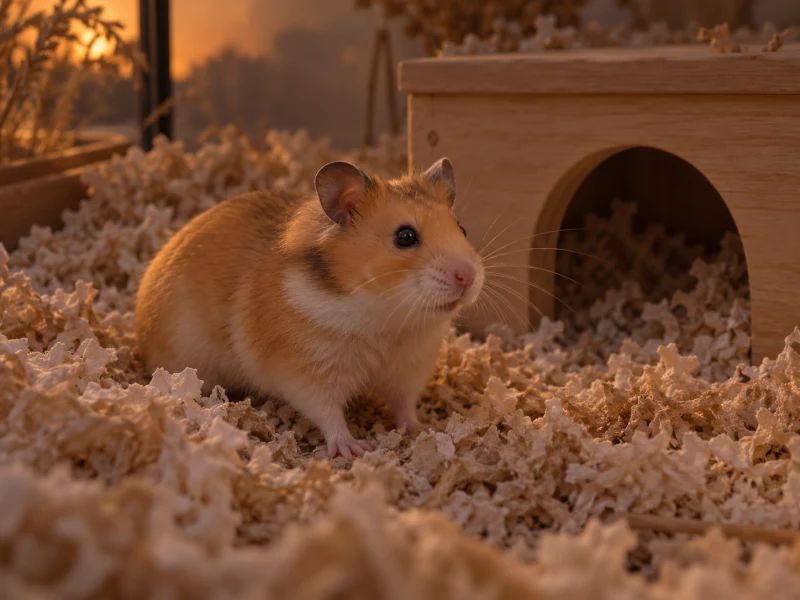
Do not wake a hamster to make it fit a family timetable. Choose a quiet location where its rest can be protected, and consider whether night-time activity and wheel sounds will disturb anyone sleeping nearby.
Before committing, describe an ordinary weekday and a busy weekend. Who can check food, water and condition? Who will observe the animal when it is awake? Choosing around those real hours is more useful than assuming every small pet will become a daytime lap companion.
Plan distinct housing for guinea pigs and hamsters
RSPCA’s guinea-pig housing advice emphasizes secure exercise space, solid flooring, accessible shelters and protection from temperature extremes, draughts and perceived threats. Resources need to work for the group, with routes that do not trap one animal behind another.
Hamster housing must accommodate burrowing as well as surface movement. Deep suitable bedding, an enclosed resting place, appropriate foraging opportunities and a correctly fitted solid-surface wheel create different demands from a guinea-pig floor layout.
Compare the actual usable interior, not a photograph beside a child’s hand. A shelf does not replace continuous floor area, and a tall container with a shallow base may fail to retain useful digging substrate. Follow current species-specific housing guidance before selecting an enclosure.
Both plans need ventilation, security and access for maintenance. Keep cats, dogs and other animals from reaching or frightening the occupants. A shared product photograph is not evidence for a shared habitat, and a carrier is temporary transport equipment rather than a permanent home.
Food is not interchangeable between guinea pigs and hamsters
RSPCA’s guinea-pig diet advice calls for good-quality hay to remain available at all times, alongside an appropriate guinea-pig food plan and suitable fresh foods. Guinea pigs require dietary vitamin C; their needs are not met by assuming any small-animal mix is equivalent.
Blue Cross describes hamsters as omnivorous and recommends a hamster-specific commercial food basis with suitable additions. Their foraging and food-hoarding behavior affects how food is offered and how spoiled material is removed.
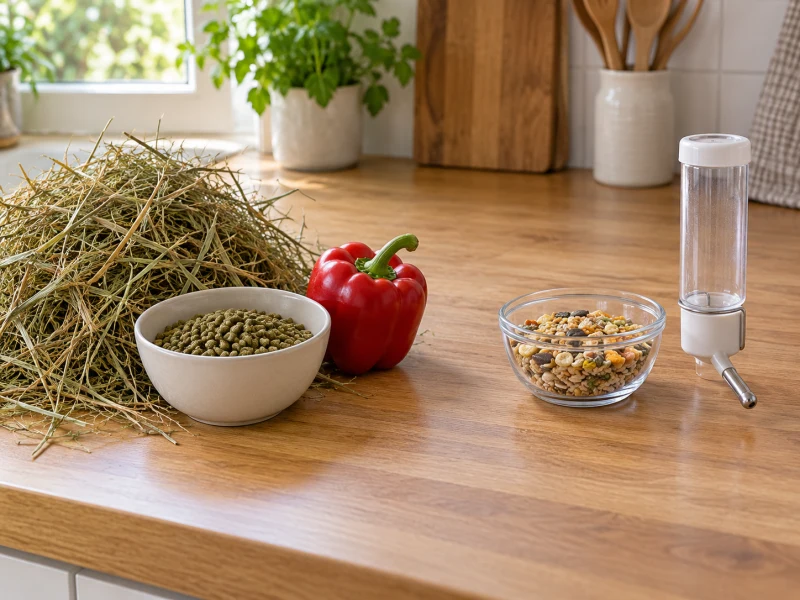
Read the intended species, freshness and feeding directions on each food. Do not use hamster mix as guinea-pig pellets or treat a shared ingredient as proof of nutritional interchangeability. An appealing selection of seeds is not a complete guinea-pig diet.
Ask a suitably experienced vet about individual quantities, condition or supplementation concerns. Do not add a generic vitamin dose to water because the two animals sit in the same store aisle. For either species, check actual drinking access and equipment operation rather than judging by a full bottle alone.
Cleaning routines need different priorities
Guinea-pig group housing needs regular removal of wet and soiled material, fresh resources and clear access for every animal. RSPCA describes daily spot cleaning and a broader routine adjusted to the enclosure and number of guinea pigs.
With hamsters, inspect moisture and spoiled food while respecting the burrow and food-storage system. Blue Cross advises retaining some familiar unsoiled bedding during an appropriate larger clean. That means dry clean material, not keeping urine-soaked bedding or rotting food to preserve scent.
A single calendar copied onto both habitats misses those differences. Work from species guidance, actual conditions and veterinary advice where necessary. Follow equipment and cleaning-product instructions, and provide secure temporary accommodation when required.
Include storage and disposal in the plan. Substrate, hay, spare water equipment and transport items occupy space outside the enclosure too. The cheapest initial cage can become expensive if essential parts need replacing or the daily work proves impractical.
Make adult responsibility and ongoing costs explicit
An adult should take responsibility for daily care, arranging veterinary help and checking that children’s involvement suits the animals. Calm observation can be rewarding without making frequent lifting the goal.

List startup equipment separately from recurring food, bedding, cleaning materials and veterinary costs. Guinea-pig companionship also affects the space and resources required. No fixed dollar total applies to every household or guarantees enough money for illness.
Find a practice that treats the chosen species before an urgent problem arises. Keep transport arrangements and contact details ready. Changes in appetite, drinking, droppings, breathing or behavior merit appropriate veterinary advice rather than waiting for a new toy to help.
Arrange competent holiday cover as part of the decision. Leave written food, housing and health instructions and confirm that the carer can perform them. Neither species becomes independent because its enclosure contains extra food.
Questions about guinea pigs and hamsters
No. Plan separate species-specific accommodation. A hamster is not a suitable substitute for compatible guinea-pig company, and shared housing ignores their different social, food and environmental needs.
Which is better for a young child?
Neither should be chosen on the assumption that a child will provide all care or that the animal will enjoy constant handling. Compare the child’s schedule with the animal’s behavior and an adult’s willingness to take responsibility.
Does a hamster need a friend like a guinea pig does?
No. Syrian and Chinese hamsters should live alone. Other hamster species still need careful individual advice; conditional group-housing guidance does not make buying a pair necessary or free from conflict.
Choose the care plan your home can sustain
Choose between guinea pigs and hamsters by matching companionship, waking hours, housing and daily work to your household. Confirm the species, prepare the full environment and arrange veterinary and holiday support before bringing an animal home.
No particular product purchase resolves that decision. If the space, time or ongoing care does not fit, postponing ownership is a responsible choice. A thoughtful plan matters more than a starter-kit label.
Comments are reviewed before they appear publicly. Please keep questions and feedback relevant to this article.