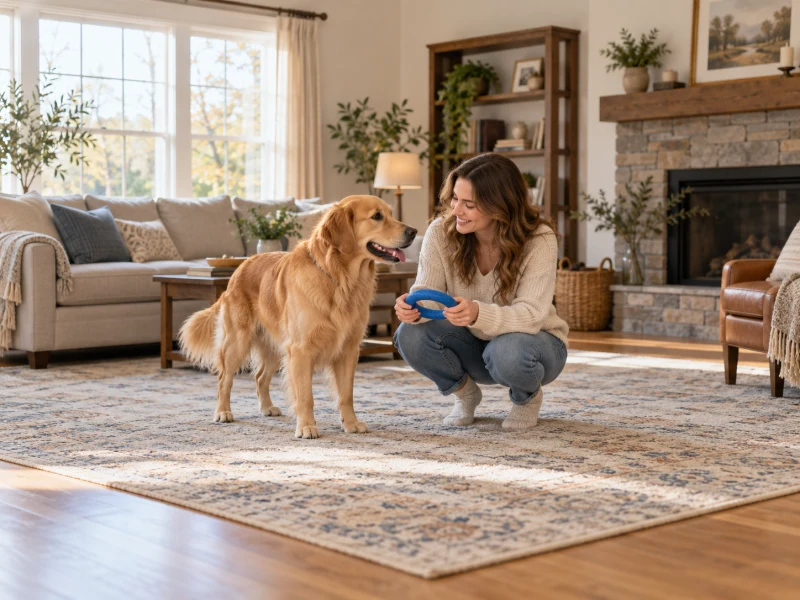
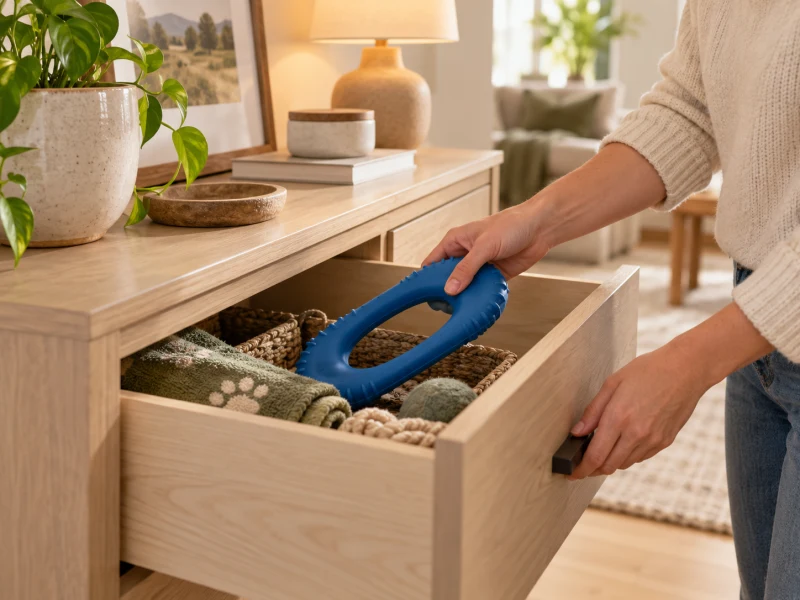
AI-created illustrative tug-toy scene; the blue single-opening ring is not the selected red KONG Tug or evidence of testing.
A KONG tug toy can mean the named red rubber Tug or a different KONG toy used for tugging. For the two-ended rubber version, look for KONG Tug, model KG1E, ASIN B000FEN1NO. Its flexible body and open grips are different from Wubba’s fabric tails or a knotted rope.
The useful buying decision is whether that particular grip layout works for you and your dog. Rubber that stretches and recoils is a product feature, not a promise of unlimited pulling force. Comfortable hand clearance, the dog’s bite position and a way to finish play matter more than the brand name alone.
Identify the KONG Tug toy by its handles
The current KONG Tug product page describes natural KONG rubber, comfortable grips and interactive tug sessions. The red selected product has an opening at each end with a narrower connecting section. Use the actual product photograph to recognise that structure before choosing the listing.
The retail model field is KG1E. Confirm that identifier with the complete product name and selected variant. A listing title that mentions tugging is not enough to establish the rubber Tug: other KONG shapes also support games between a person and a dog.
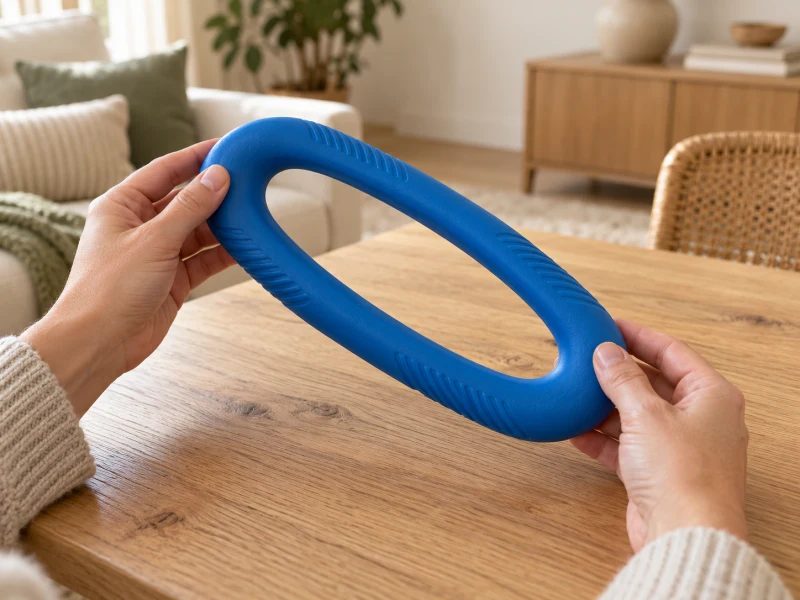
For example, KONG’s Wubba has a reinforced nylon exterior, ball shapes and long floppy tails. Those tails create a different gripping surface from the Tug’s open rubber ends. Wubba’s fabric construction, squeaker and care requirements do not become features of KG1E.
A ball on a rope introduces another structure: the rope and its attachment to the ball need their own inspection. Do not carry a material, length or washing assumption from one type into another. Identify the object first, then assess its particular grip and condition.
| Structure | What to identify | What cannot be assumed |
|---|---|---|
| KONG Tug KG1E | Red natural-rubber body with two open end grips | Unlimited stretch, a maximum safe load or universal mouth fit |
| Wubba | Fabric-covered ball shapes with floppy tails | The same grip spacing or care as an all-rubber Tug |
| Ball and rope | Separate ball, rope and attachment points | The Tug’s model identity, dimensions or material specification |
| Unclear product title | Full model name, selected variant and original photo | That the word tug identifies a single construction |
Read the KONG Tug toy size fields carefully
The manufacturer’s current page lists Medium with a 15–35-lb guide range. The selected retailer title says Medium/Large, while its modern size field says Medium. These are not identical size descriptions. Confirm the actual KG1E product instead of using a familiar size word as a guarantee.
The retail dimension fields also disagree. One details section lists 12.7 × 4.5 × 0.9 inches, while another table shows 6 × 6 × 6 inches. They do not establish one consistent measured length or usable hand clearance. If a minimum grip opening is essential, obtain that specific measurement before ordering.
Weight guidance helps narrow a search but cannot tell you where a dog will place its teeth. Two dogs of similar weight may hold a handle differently. Your hand size also matters: space that works for another person may leave your fingers too close to the dog’s grip.
Check the delivered toy before offering it. Hold the intended human end from the outside and consider how much distinct space remains for the dog. Do not wrap the toy around a hand or use the opening as a restraint. An uncomfortable grip is a reason to choose another activity.
Check hand clearance before a KONG Tug toy game
Choose the red KONG Tug KG1E when its two-ended rubber structure gives both participants a comfortable grip, your hand can remain clear of the dog’s mouth and you want an interactive tug toy. Pass if the actual size crowds your fingers or the dog repeatedly leaves its end to bite near your hand.
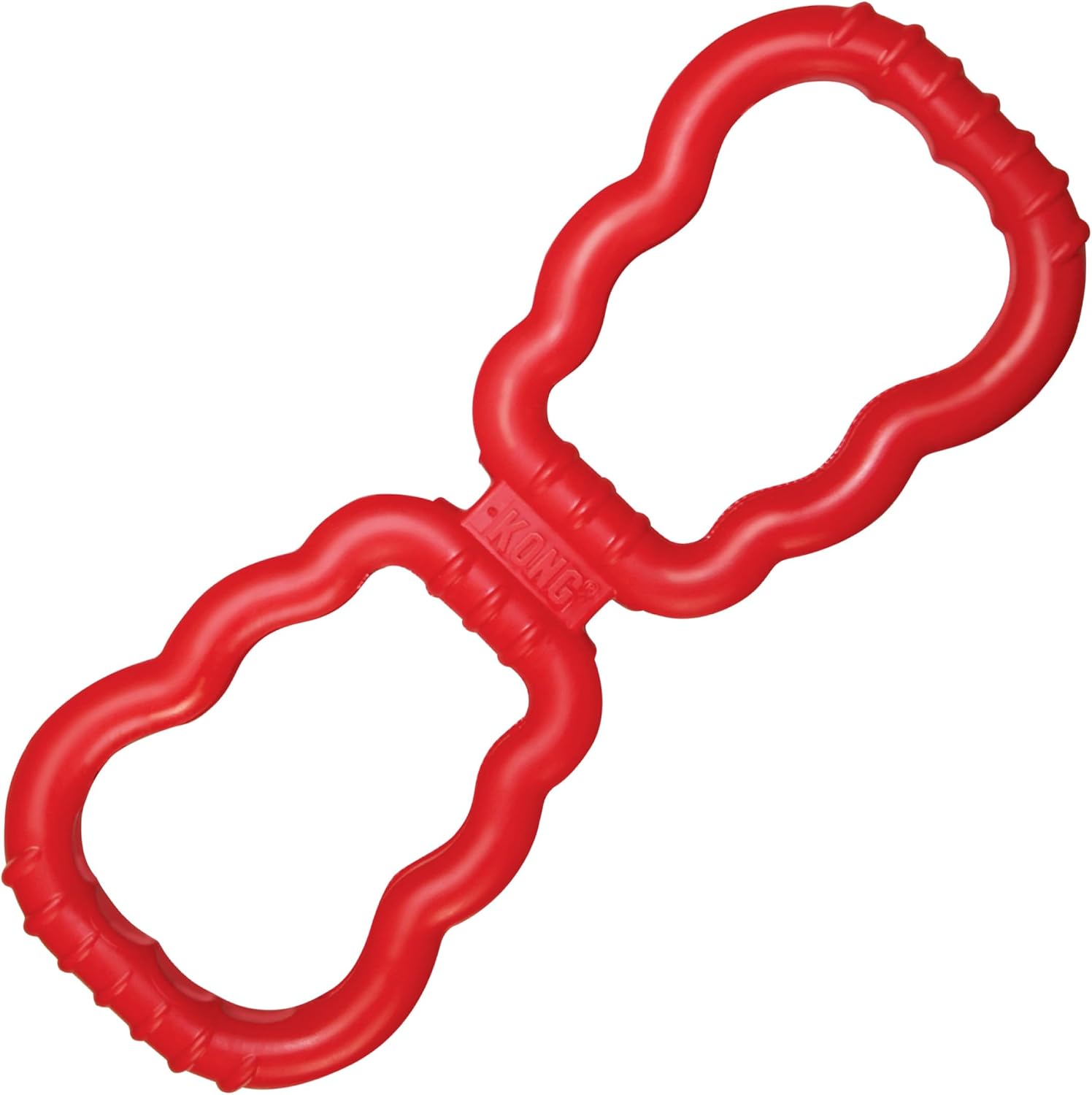
PRODUCT MENTIONED
KONG Tug KG1E — Red Rubber Tug Toy
Amazon · Details on the retailer’s website
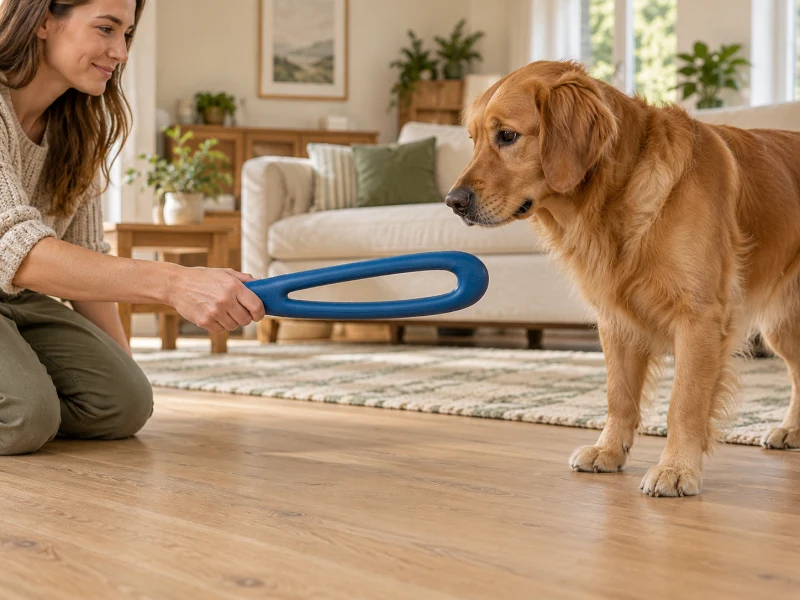
Offer a clear end rather than inviting the dog toward your fingers. Observe the first gentle interaction at a height that lets the dog keep its feet supported and its body comfortable. No manufacturer’s maximum stretch or pulling-load specification was established for the selected product, so there is no justified target for stretching it as far as possible.
If the dog moves its grip toward the hand, pause and reset rather than competing for a smaller shared area. A wider hand movement or stronger pull does not create more separation. Stop if you cannot maintain a comfortable, predictable grip.
Consider the person as well as the dog. Limited hand strength, balance or wrist comfort can change whether this layout is practical. Choose an activity you can control comfortably; a product designed for interactive play does not have to suit every household participant.
Understand the flexible rubber connection
KONG describes the natural rubber as stretching and recoiling during tugging. That is different from a rigid handle, a woven rope or a fabric tail. Inspect the narrow connecting region as well as the grips, because the whole body participates in the interaction.
Do not turn flexibility into an informal load test. There is no reason to hang a dog from the toy, lift it by its bite or pull through visible discomfort. Those actions are not necessary to decide whether the grip works.
The current retailer page contains a generic material-table entry that conflicts with the natural-rubber description in the product features and the manufacturer’s page. Treat the manufacturer’s specific rubber description as the basis for the material discussion, while checking the delivered packaging if the exact material is critical.
Rubber also does not remove the need to inspect for damage. Look for new splits, torn edges, missing material or an altered connecting section before and after play. Remove a damaged toy rather than trimming a weak area or attaching another handle through it.
Keep interactive play separate from unattended chewing
KONG presents this named Tug as an interactive tug toy. Make that shared activity the reason for choosing it. Do not assume that a dog can keep chewing the connecting section alone because the same object worked well in a brief game with you.
Blue Cross recommends suitable toy size, regular checks for small parts and supervision. Watch the dog’s behaviour and the toy’s condition together. Continued interest does not establish that damaged rubber or an uncomfortable grip is acceptable.
Keep an ordinary way to end the interaction, such as a practised release or an appropriate exchange. If the dog cannot disengage comfortably, stop choosing more intense tugging as the next step. A trainer can help with a play routine that repeatedly becomes difficult to manage.
Pain, reluctance to grip or a sudden change in mouth use needs a different response from a training problem. Stop the game and seek veterinary advice when the dog’s health or comfort is in question. Changing toy tension cannot resolve an unexplained painful mouth.
Clean the KONG Tug toy and store it after play
KONG’s rubber-toy care directions describe warm water and dish soap, brushing when needed and thorough rinsing. Inspect both grip openings and the connecting section rather than washing only the area you held.
The same general rubber guidance allows the dishwasher’s top rack while skipping the heated drying cycle. Follow the specific delivered label if it gives more detailed requirements. Fabric, rope, plush and electronic toys require their own care decisions.
Dry and inspect the toy before putting it away. Cleaning removes dirt; it does not restore torn rubber. Store it beyond the dog’s access when the interactive session ends, particularly if the dog is likely to resume chewing the narrow connection alone.
For a separate food activity, the beginner KONG stuffing ideas page addresses a different Classic format. Do not treat the Tug’s grip openings as a Classic filling cavity or add food merely because both products are rubber.
Questions about the red KONG Tug
Is every KONG tug toy the KG1E?
No. KG1E identifies the selected red rubber Tug. Wubba and ball-and-rope products can also be used in tugging activities but have different structures. Match the full name, model, selected variant and photograph.
Does Medium/Large settle the size question?
No. The manufacturer currently lists Medium with a weight guide, while the retailer uses differing size labels. Assess the actual grip opening, hand separation and dog’s hold. Ask for a measurement that matters before purchasing if it is not reliably specified.
How far should the rubber stretch?
No verified maximum stretch or pulling force was established. The stretch-and-recoil description is not a target to test. Keep play comfortable and controlled, inspect the connecting section and stop at damage or discomfort.
Can it stay with the dog after the game?
Choose it for the interactive role described by KONG and put it away when that supervision ends. A dog that chews through an edge or the connection needs a different activity, not unrestricted access to the damaged toy.
Choose the handle layout that stays comfortable
KONG Tug KG1E is a conditional choice for a household that wants a flexible, two-ended rubber tug and can maintain clear hand and mouth positions. Identify the named product, resolve any essential size question and inspect the actual delivered grips.
If your fingers feel crowded, the dog repeatedly changes grip toward your hand or the body becomes damaged, choose another activity. Comfortable shared play is a more useful buying standard than an unsupported durability or stretch promise.
If that structure fits your needs, check the selected red KONG Tug KG1E on Amazon.
Comments are reviewed before they appear publicly. Please keep questions and feedback relevant to this article.