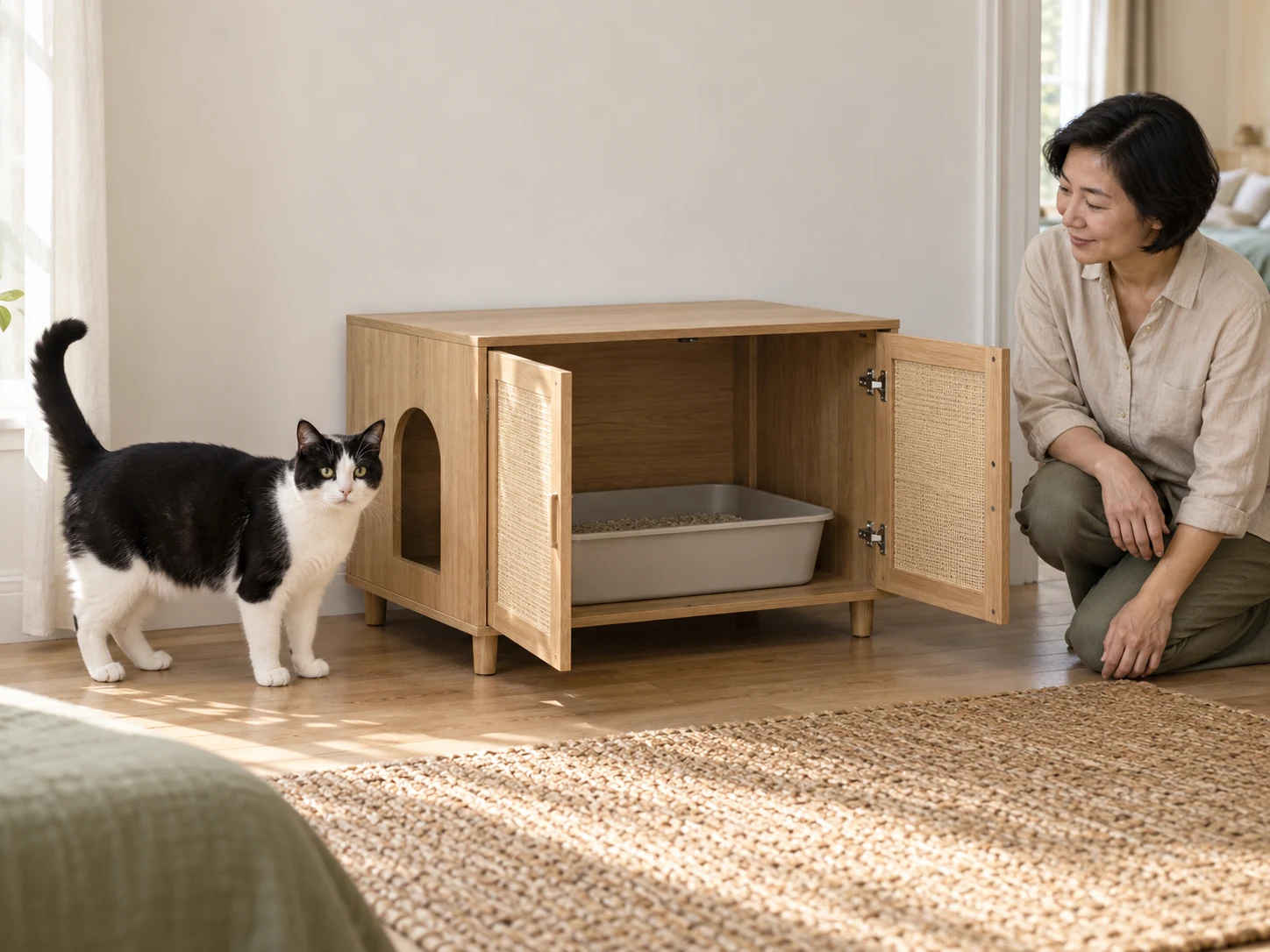
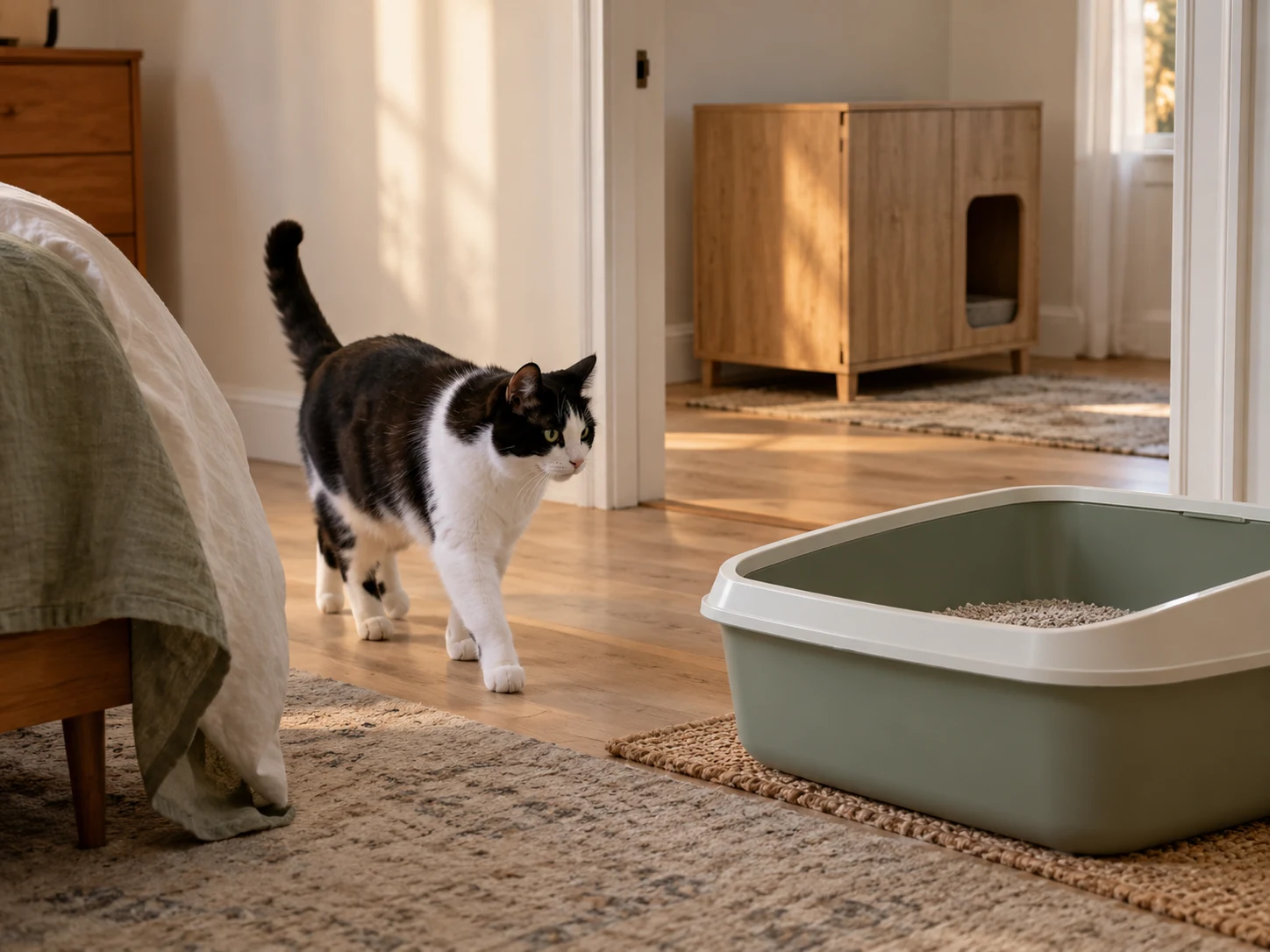
AI-created editorial scene. A cabinet must preserve the tray's usable space, the cat's route and cleaning access; the featured furniture is generic.
A litter box enclosure has to fit three things: the tray, the cat and the cleaning routine. Measuring only the furniture’s outside width misses the most important questions. Your cat still needs room to enter and turn, and you still need to reach the far corners or remove the tray without dismantling the cabinet.
Start with a litter box your cat uses comfortably, then assess whether enclosing it preserves that function. The Feandrea White + Gold cabinet, model UPCL007W01, is one option with a separate entry area and two cleaning doors. Its verified compartment dimensions are useful starting points, but they do not establish compatibility with every tray or automatic litter machine.
Measure the litter box enclosure from the inside
Furniture dimensions describe where the cabinet fits in the room. They do not describe the entire space available to the litter tray. Internal partitions, entry passages, hinges and door openings can all affect how a tray is positioned and removed.
| Measurement | What to compare | Why it matters |
|---|---|---|
| Tray footprint | The tray’s widest external points, including rim or handles | A nominal tray size may omit protruding parts. |
| Tray compartment | Clear internal floor dimensions | The cabinet’s full outside width is not available to the tray. |
| Interior height | The cat’s posture and any lid or machine movement | A tray fitting on the floor does not establish headroom. |
| Cleaning opening | Door clearance and the path for tray removal | Installation fit and maintenance access are different checks. |
| Cat route | Entrance, turns and unobstructed exit | The cat must use more than the tray compartment. |
Write down these measurements before comparing colors or finishes. If one necessary dimension is missing, ask the manufacturer rather than estimating it from a styled photograph.
Leave room for ordinary variation
Do not plan a fit that depends on two published measurements being identical to the last fraction of an inch. Check the assembled cabinet and actual tray before loading litter. The rim, a curved wall or hardware near the opening can matter even when the nominal floor measurements appear compatible.
Make a simple checklist for the seller: your tray’s widest footprint, overall height, removal direction and any lid that must lift. Ask which measurements describe clear usable space rather than exterior panels. This gives you a more useful answer than asking whether the cabinet fits a large litter box.
If the answers remain incomplete, keep the fit conditional. There is no benefit in calling a cabinet compatible before you can explain how the tray, cat and cleaning movement all fit inside it.
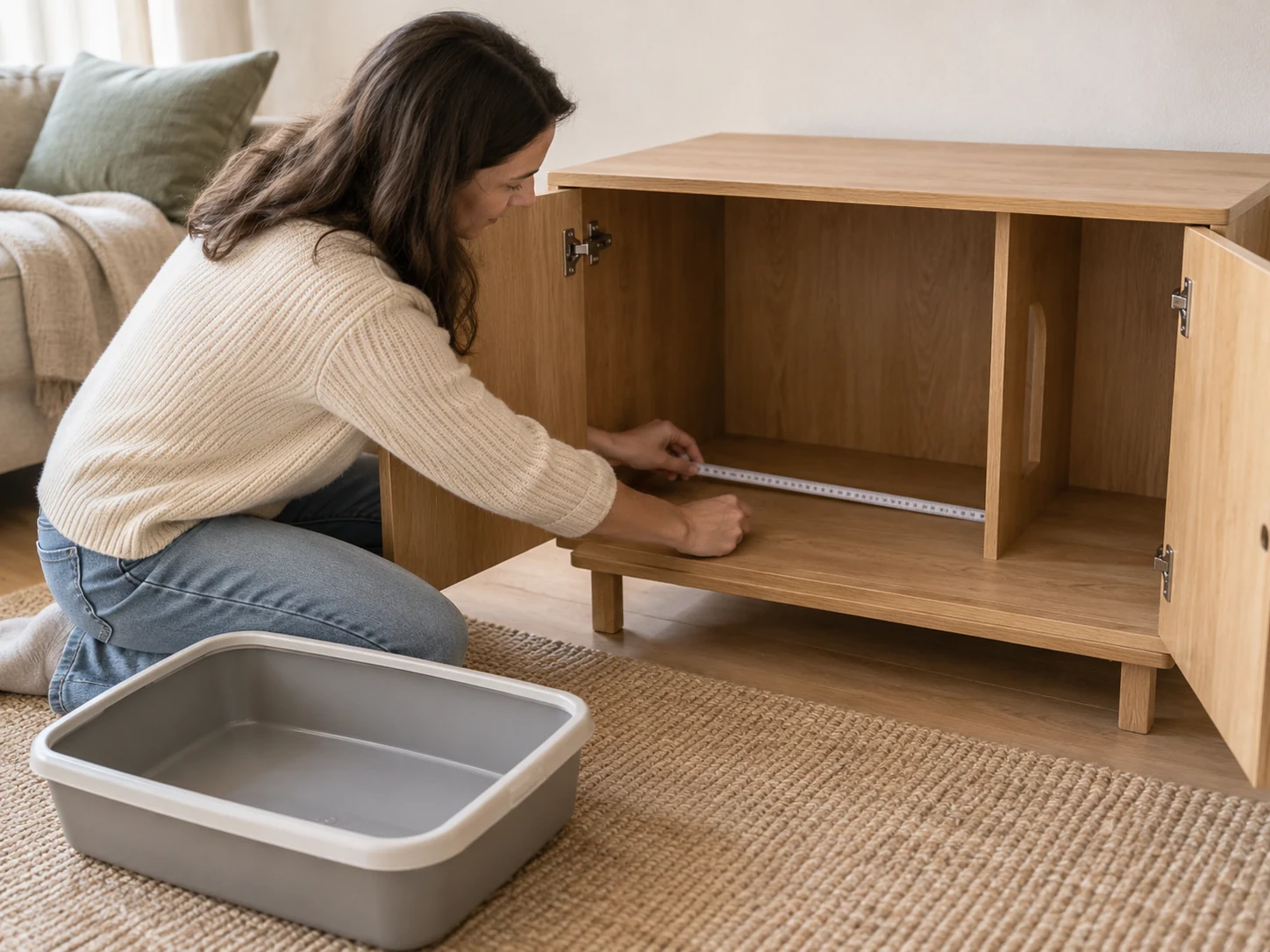
The tray can fit while the cat does not
A close-fitting tray can leave little room around its edge or above it. For the cat, the relevant space includes entering the furniture, reaching the tray, turning and adopting a normal toileting posture. A furniture compartment is not automatically a suitable toilet area because a plastic pan slides into it.
Cat Friendly Homes recommends a litter box around one and a half times a cat’s nose-to-tail-base length, with room to turn, scratch and eliminate. Its litter box guidance also notes that many cats dislike covers, although individual preferences vary. A cabinet adds another enclosing layer that deserves its own assessment.
Preserve the box that works
Avoid choosing a smaller tray solely to make an attractive cabinet fit. If your existing tray provides useful space, compare cabinets around that requirement. The sensible alternative to a poor fit may be leaving the suitable tray unenclosed.
If the cat needs a low entry, consider the whole route from the floor through the cabinet to the tray. The selected Feandrea has tall legs, but the verified information does not establish an entry-step height suitable for a particular cat. Do not assume that a raised furniture entrance is easy to negotiate.
Feandrea UPCL007W01: the exact cabinet
The selected litter box enclosure is the Feandrea White + Gold model UPCL007W01, ASIN B09ST9R2VT. Its current SONGMICS HOME product page identifies that SKU and color. Confirm the full code because other Feandrea cabinets have different dimensions and layouts.
| Verified feature | Selection implication |
|---|---|
| 31.5 × 19.7 × 21.7 inches overall | Check room footprint, access around the cabinet and door movement. |
| 20.5 × 19.7 × 16.5 inches for the litter compartment | Compare the tray and necessary headroom with this smaller space. |
| Particleboard and steel | Use the supplied care instructions; waterproof construction is not established. |
| Front entrance and entry area with scratching mat | Assess the cat’s route and whether the mat remains clean and usable. |
| Two doors and raised legs | Check real access for scooping, tray removal and cleaning underneath. |
| Enclosure, accessory kit and instructions listed | Do not assume a litter tray or litter is included. |
This is a conditional choice when an appropriate tray fits, the cat can use the route and you can maintain the entire space. It is a poor choice when the furniture requires a cramped tray, the entrance limits movement or frequent wet cleaning is incompatible with the supplied material instructions.
Check the Feandrea UPCL007W01 White + Gold litter box enclosure on Amazon
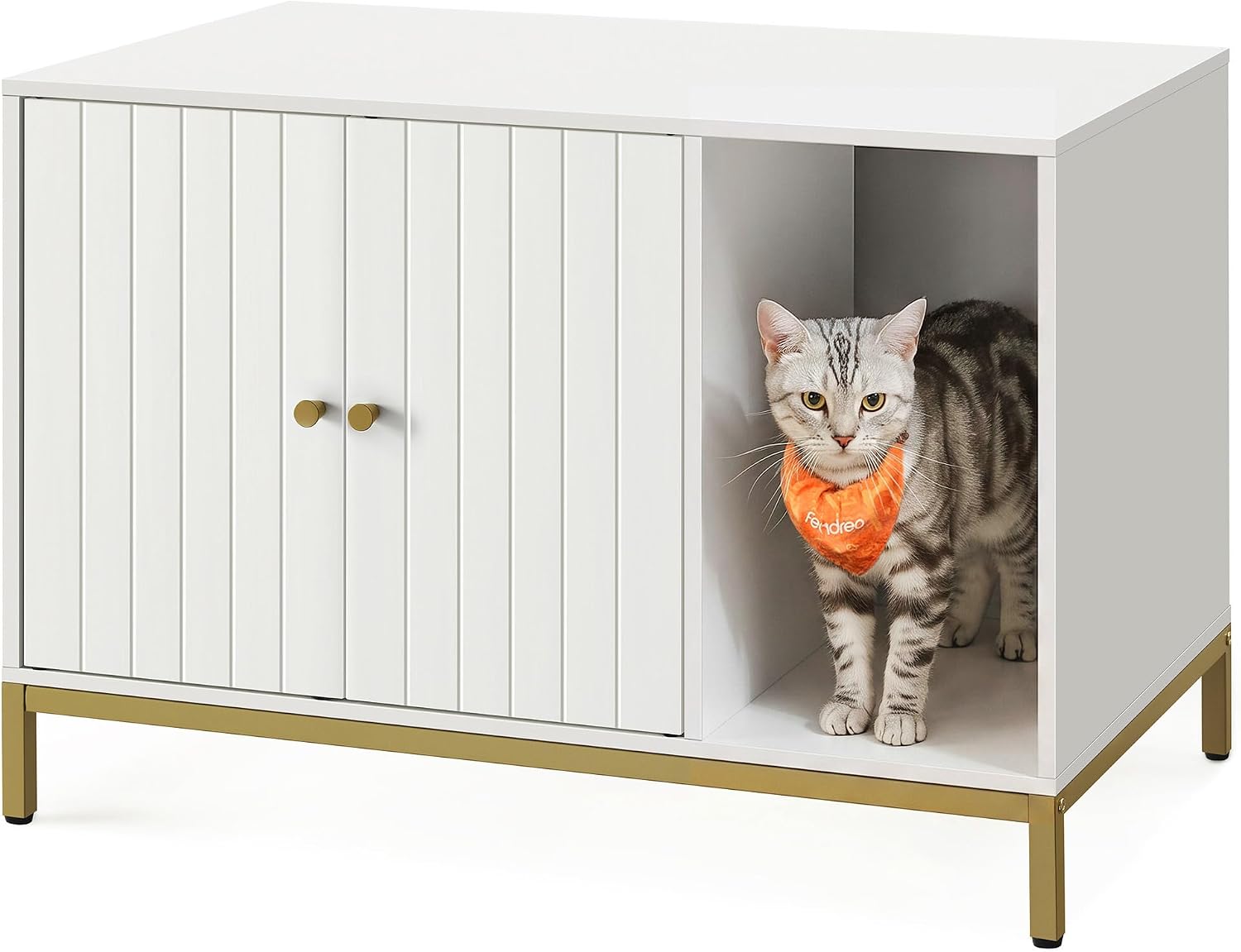
PRODUCT MENTIONED
Feandrea Cat Litter Box Enclosure, with Scratching Mat, Tall Legs
Amazon · Details on the retailer’s website
Test a complete cleaning cycle before committing
Imagine the cabinet assembled in its intended position. Open both doors, identify where the scoop and waste container will go, and trace how the tray comes out. You need clearance in front of the furniture as well as an internal compartment large enough to hold the tray.
A removable tray may need to tilt to pass through the doors. Do not assume that it can do so while full without spilling. Check the actual opening and removal path before relying on a close fit, especially if a high rim or handle is involved.
Plan to clean the entry passage, mat, corners beneath the tray and floor under the legs. Stray litter can collect outside the pan even when it is out of sight. A cabinet does not make those surfaces disappear from the routine.
Cat Friendly Homes recommends removing waste at least daily and periodically washing the litter box. Keep that schedule practical. If cleaning requires moving other furniture or lifting a heavy cabinet, reconsider the position or product before the inconvenience becomes part of everyday care.
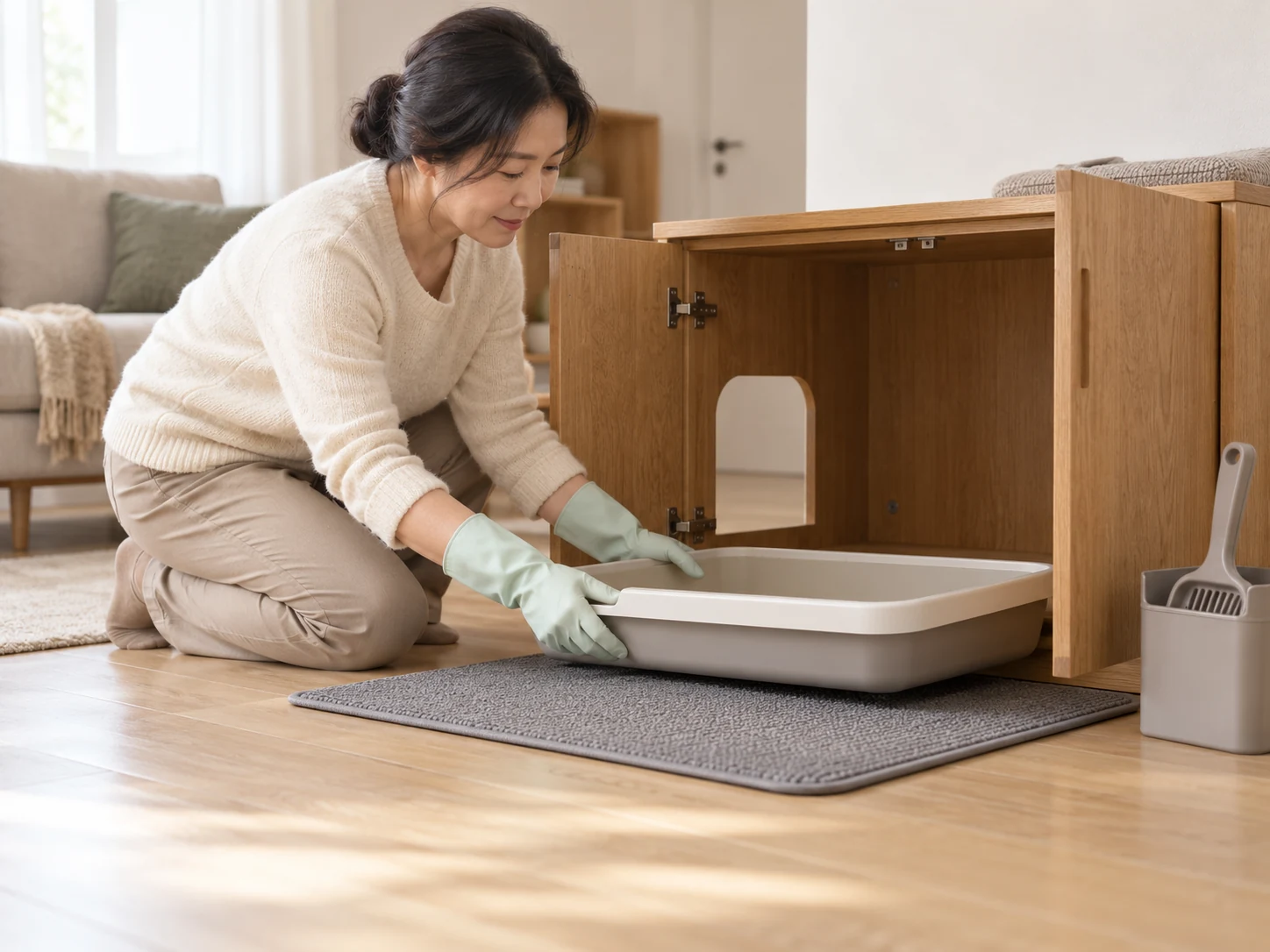
Materials and moisture need separate attention
The selected model uses particleboard and steel. The checked specification does not establish that the cabinet is waterproof, tolerates standing urine or can be washed like a plastic tray. Follow its own care instructions rather than applying the litter pan’s cleaning method to the furniture.
Check where spills or misses could collect and whether those areas remain visible and reachable. Clean them promptly using a method compatible with the materials. Do not rely on the scratching mat as a verified waterproof liner or assume it protects every panel.
Do not equate hiding with odor control
The cabinet conceals the litter area visually. That is different from verified air exchange or odor removal. No airflow rate, filtration system or household odor-performance test is established for this model in the checked evidence.
If the interior smells unpleasant, inspect the tray and surrounding surfaces instead of adding fragrance to disguise it. Keep the entrance and any intended openings unobstructed. A decorative object placed in the wrong spot can interfere with the route even when the cabinet looks tidy from the room.
A litter box enclosure is still a piece of furniture
Assemble the cabinet using the instructions supplied with the exact model, checking the hardware and door operation before use. The retail directions specifically say not to step or sit on the product. Do not treat it as a seat because it resembles a bench.
The listing describes possible side-table use, but that does not provide a verified load rating for your television or other heavy object. Obtain the relevant instructions and limits before placing equipment on top. Keep objects from falling into the entry path or making routine access harder.
Automatic boxes require a different compatibility check
A rotating or lifting litter machine may require clearances, ventilation, power routing and sensor conditions beyond its static outer dimensions. A machine fitting between the panels is not proof that it can operate there safely. Use the machine manufacturer’s enclosure guidance before putting one inside.
The Neakasa versus Litter-Robot comparison addresses the machines themselves. It does not certify either for this Feandrea cabinet. Keep a furniture purchase and an automatic-box installation decision separate until the relevant requirements are verified.
Introduce the enclosure as an option
Give the cat a chance to investigate voluntarily and keep a familiar toilet option available while assessing the change. Avoid combining a new enclosure, a different litter and a new location all at once where practical. Multiple changes make it harder to identify what the cat is avoiding.
Watch the route into the cabinet as well as the final use of the tray. A cat entering to investigate or scratch the mat has not necessarily accepted the enclosed space for toileting. Check normal use without pressure or repeated placement inside.
Respond to avoidance rather than forcing it
If the cat hesitates, cannot turn comfortably or starts eliminating elsewhere, restore reliable access and reassess. Cat Friendly Homes explains in its house-soiling guidance that physical, social and medical needs can contribute to toileting changes. Do not punish the cat or assume the cabinet is the only possible cause.
Persistent changes need veterinary assessment. A furniture adjustment can address an access problem, but it cannot diagnose discomfort or a medical condition.
Litter box enclosure questions
Can I choose by the cabinet’s outside dimensions?
No. Compare the tray with the litter compartment and cleaning opening. For UPCL007W01, the full 31.5-inch outside width is not the tray compartment’s width; the listed compartment is 20.5 by 19.7 by 16.5 inches.
Does this include the litter tray?
The checked included-components list names the enclosure, accessory kit and instructions. Do not assume that a tray or litter comes with it. Verify the current package details before ordering.
Will furniture stop a dog reaching the litter?
That is not established for every dog. A front entrance and enclosed tray are not a verified dog-exclusion system. Evaluate the particular dog’s reach and the cat’s unobstructed access separately.
No. Cats differ in their acceptance of covers and enclosed spaces. Enough room, comfortable movement, a clear route and reliable use matter more than the cabinet blending into the room.
Choose function before concealment
A useful litter box enclosure preserves a suitable tray, comfortable cat access and easy daily maintenance. The Feandrea UPCL007W01 provides a specific layout to measure against those needs, but its finish and outside footprint cannot resolve the fit by themselves.
Check the tray compartment, cleaning path, material care and the cat’s response before treating the purchase as successful. If enclosing the tray compromises any of those essentials, an accessible open setup is the better outcome for that household.
View Feandrea Cat Litter Box Enclosure, with Scratching Mat, Tall Legs on Amazon.
Comments are reviewed before they appear publicly. Please keep questions and feedback relevant to this article.