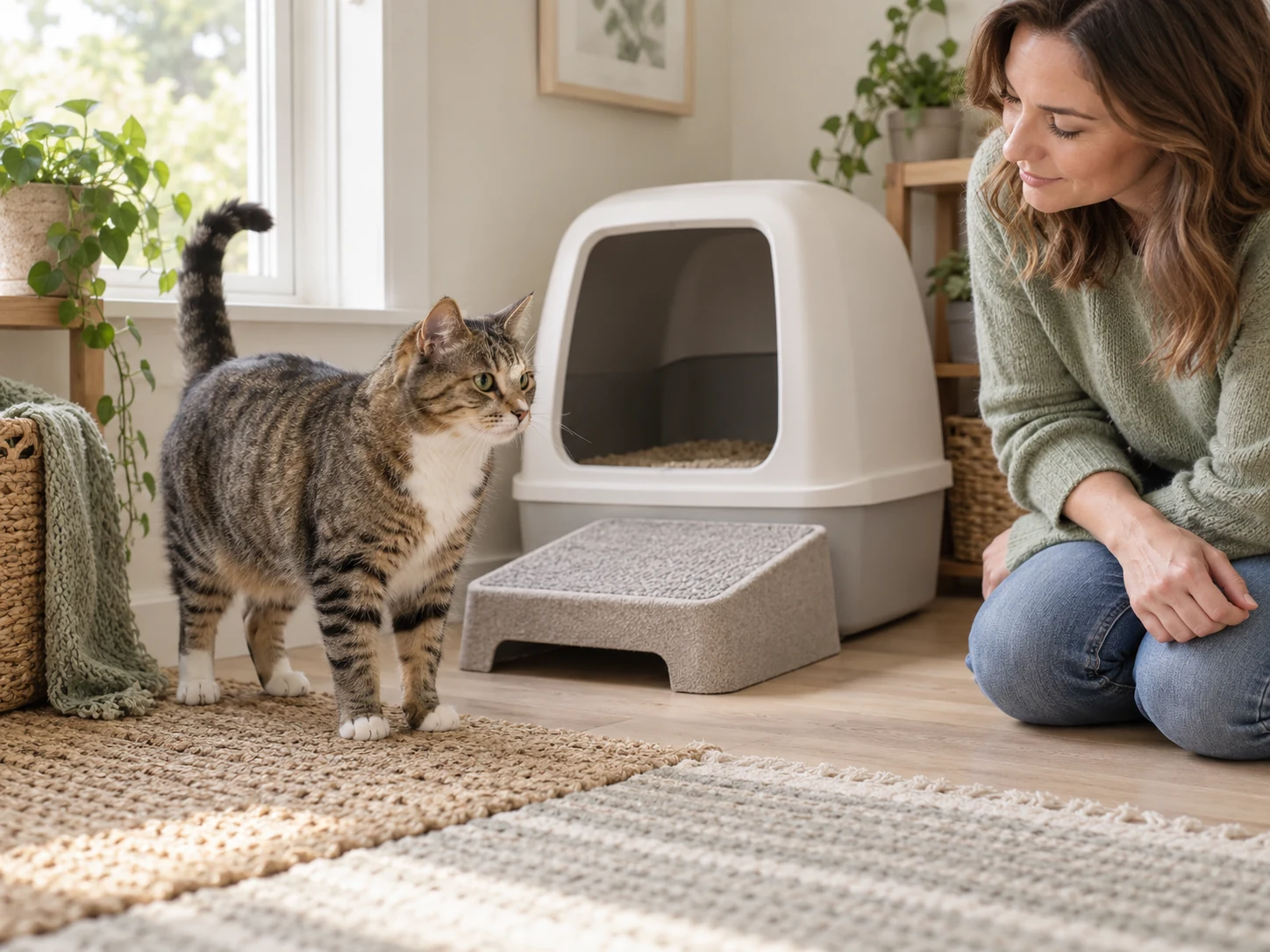
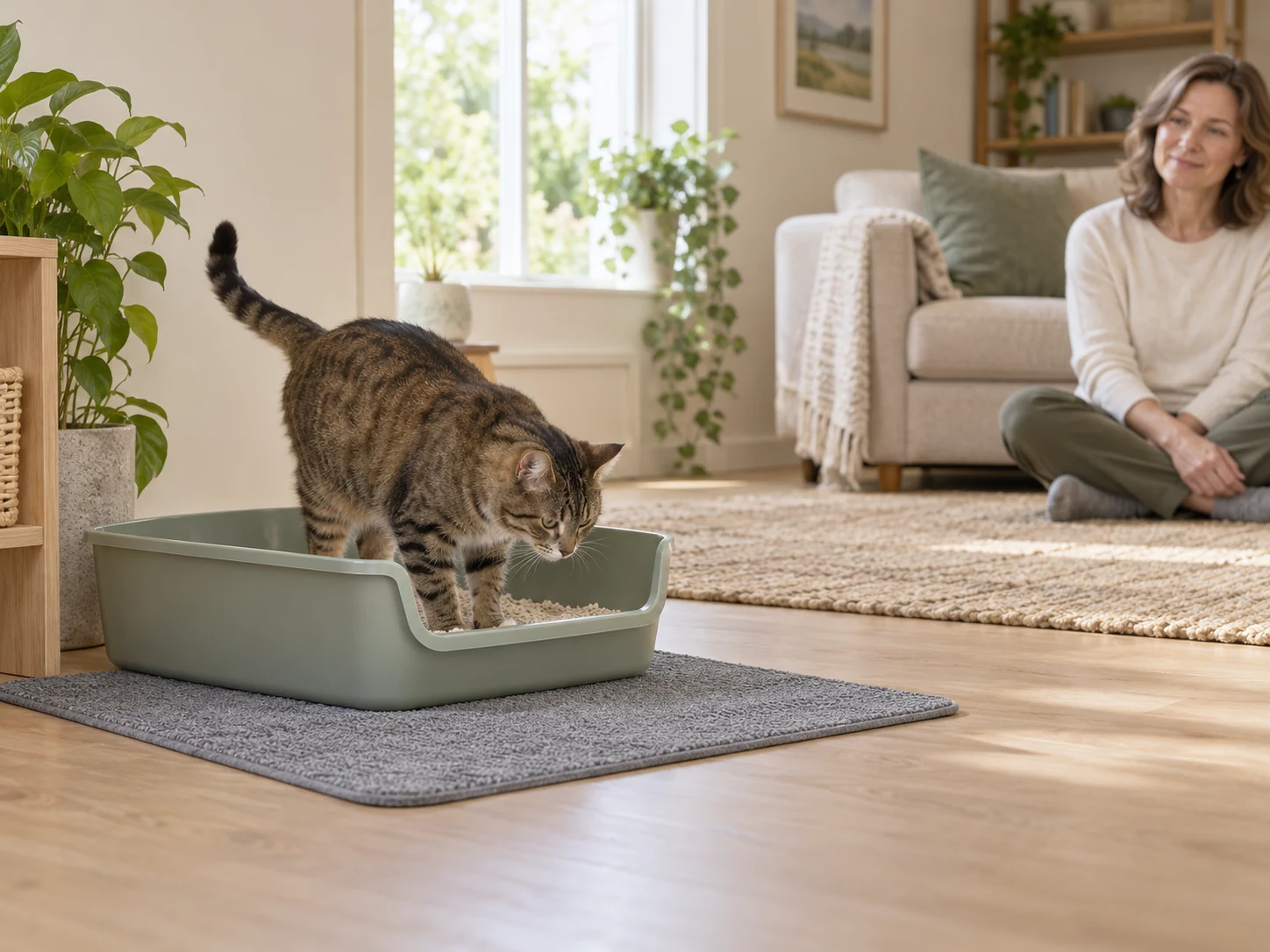
AI-created editorial scene of a clear approach. The step and tray are generic, not the Whisker Litter-Robot 4 ramp or an installation example.
The Litter-Robot 4 ramp is worth considering when your cat can use the globe comfortably but needs a more gradual route to its entrance. Check the fence version and reserve the larger installed footprint before ordering; the ramp does not make an unsuitable litter box accessible to every cat.
For an existing LR4 owner, the main decision is whether this particular approach improves entry without blocking the room or complicating maintenance. A cat that cannot manage the route may need a low-entry ordinary box rather than another accessory.
Confirm the LR4 and the fence version
This is the Litter-Robot 4 ramp, with model-specific mounting arrangements. The manufacturer’s ramp page specifies LR4 compatibility and two installation hinges. Do not infer LR3, LR5 or other-brand fit from a similar-looking ramp or a general stairs listing.
Fence identification is the important detail that a broad compatibility statement can hide. Whisker’s installation guide distinguishes an older mini fence with a plastic shield from the newer fence without that shield. Their mounting choices are different.
| Your LR4 configuration | Manufacturer’s mounting route | Check before ordering |
|---|---|---|
| No fence | Use the Ramp Hinge on the bezel | Matching hinge is present and undamaged |
| Older mini fence with plastic shield | Remove that fence; follow the no-fence route | The ramp does not mount with this old fence left in place |
| Newer fence without plastic shield | Keep it with the Ramp Fence Hinge, or remove it and use the Ramp Hinge | Identify the fence visually with the matched guide |
Do not identify a fence solely by the robot’s purchase date. Check the actual component, particularly if a previous owner or replacement part changed the unit. Ask Whisker if the installed shield, fence or another accessory does not match the guide’s pictures.
Who is the Litter-Robot 4 ramp for?
Whisker positions the ramp as an entry aid with a textured surface and non-slip rubber feet. Its gradual approach can be relevant for a cat that hesitates at the standard front access. That is an intended use, not evidence of pain relief, rehabilitation or a guarantee that a senior cat will accept it.
Observe the existing problem first. Does the cat hesitate at the entrance, struggle to approach the box, or avoid entering even after reaching it? An accessory addressing the approach cannot enlarge the globe or change the cat’s preference for an enclosed space.
The AAFP and ISFM guidance on litter-box access recommends attention to location, adequate resources and low entrances for older cats. If mobility or toileting changes are new, involve your veterinarian. Do not assume that age alone identifies the cause or that a ramp resolves it.
- A reasonable candidate: an LR4-using cat that tolerates the globe and can comfortably walk the ramp’s route.
- Check carefully first: a hesitant cat, a tight corner placement or a household with another pet that can block the approach.
- Choose a different arrangement: the cat cannot negotiate the entry, the box remains too restrictive, or the installed ramp blocks essential access.
Keep a familiar accepted litter option available while assessing any change. A product chosen to make access easier should not become the only route to a toilet before the cat accepts it.
Measure the larger installed footprint
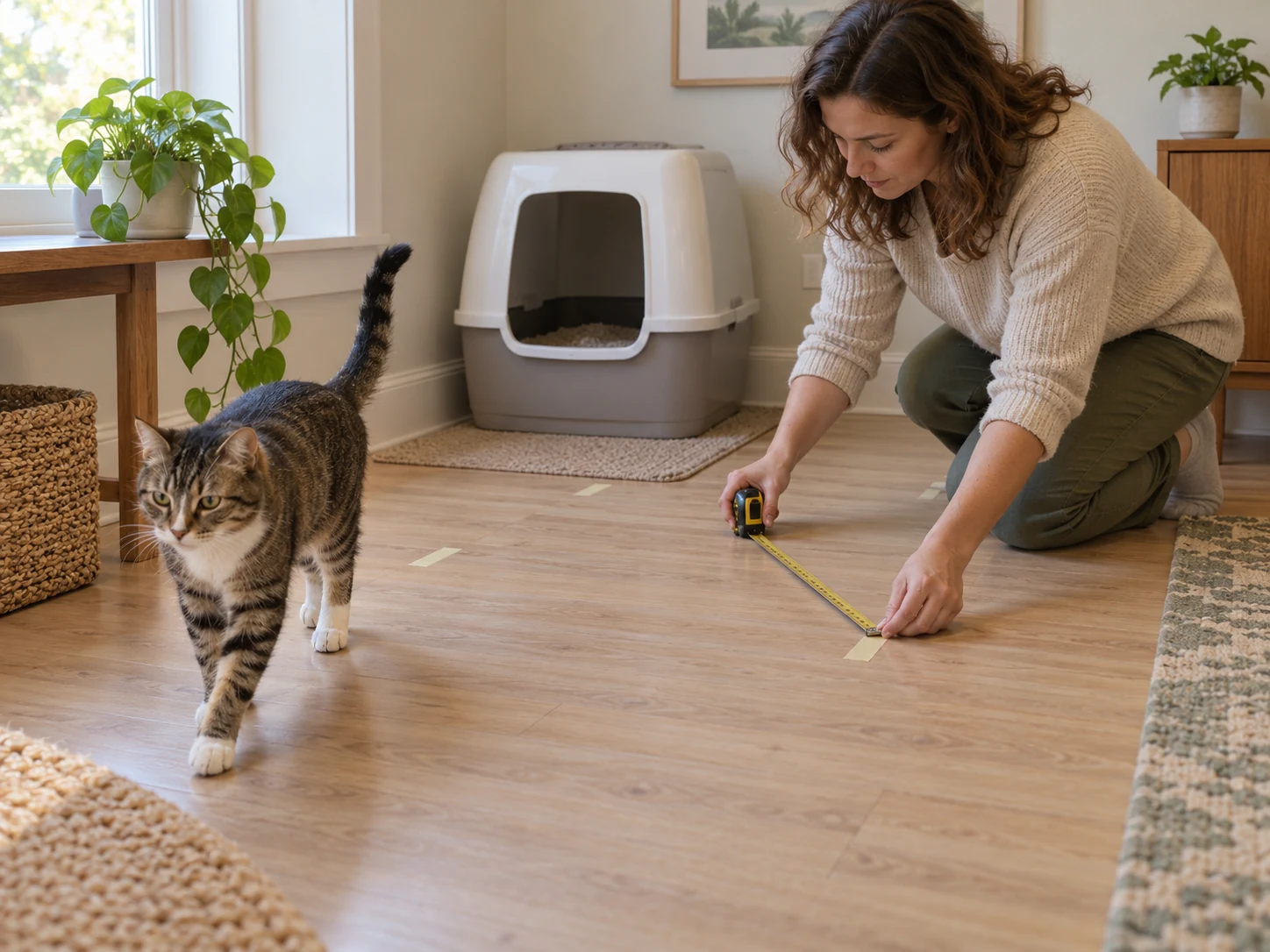
Reserve 22 inches of width and 38 inches of depth for the LR4 with this ramp, using Whisker’s published installed footprint. The same product page lists the unit without the ramp at 22 inches wide and 27 inches deep. These are useful planning dimensions, not a complete service-clearance specification.
Mark that rectangle on the floor without blocking your cat’s current access, then check the actual room. A door swing, hallway route or cupboard can make a nominally sufficient floor area awkward to use. Leave room for a person to reach the unit and for the cat to approach and leave without being cornered.
The ramp’s separate 17 × 7 × 22-inch size listing is not the installed robot footprint. Adding that entire separate dimension to the unit’s depth would also ignore how the parts overlap. Use the manufacturer’s explicit assembled footprint rather than constructing a new one from retail fields.
The LR4 manual requires a firm, level surface and says the robot should not touch a wall or corner. Mats should sit in front rather than partly under the unit. Adding a ramp is not a reason to wedge the robot against a wall to regain space.
Also check maintenance access. You still need to remove the waste drawer and reach the bonnet and globe as instructed. There is no verified universal number for the extra service space every room needs. A static rectangle that fits cannot prove that emptying and cleaning will remain convenient.
Separate floor footprint from service access
| Check | Known reference or your measurement | Pass condition |
|---|---|---|
| Installed LR4 plus ramp | Published footprint: 22 in wide × 38 in deep | The complete rectangle fits without wall contact, door conflict or blocked exit. |
| Fence and hinge | Actual fence: ___; selected mounting route: ___ | The component matches Whisker’s pictured guide; do not identify it by purchase date alone. |
| Cat approach and exit | Unobstructed route observed: ___ | The cat can enter and leave comfortably; keep a familiar accepted alternative. |
| Waste drawer | Pull-out route checked: ___ | The drawer can be removed without trapping the unit in the corner. |
| Bonnet and globe care | Access and handling route checked: ___ | You can follow the service instructions; no universal extra-clearance number is supplied. |
Count the installation as unconfirmed if a required movement has not been checked. The 38-inch depth is the assembled footprint, not a promise that all maintenance fits inside that rectangle.
What the specified white ramp offers
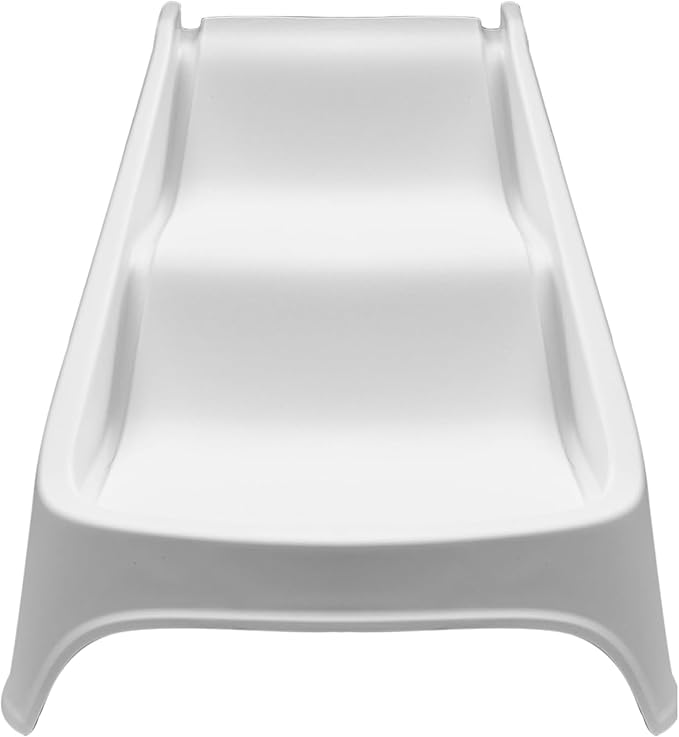
The selected Amazon item is the white Whisker Litter-Robot 4 Cat Ramp. Its retailer model field is 1099406; match the actual product name, color and included mounting parts rather than relying on a generic category heading.
If your fence and floor plan match, check the Whisker Litter-Robot 4 Cat Ramp in White on Amazon. Confirm the ramp package and hinges before purchase; the buying option is the accessory, not a complete litter robot.
PRODUCT MENTIONED
Whisker Litter-Robot 4 Cat Ramp — White
Amazon · Details on the retailer’s website
Its practical strengths are the matched attachment design, a manufacturer-documented fence choice and a published assembled footprint. The textured surface is also intended to help catch litter. These features make the fit decision easier than guessing how an unverified platform attaches.
The limitations matter just as much: it takes more floor depth, needs the correct fence configuration, adds another surface to keep clear and cannot guarantee acceptance or eliminate tracking. Traction, litter capture, load capacity and individual ease of use have not been independently verified for this ramp. A rubber foot’s presence is not proof of stability on every wet, dusty or uneven floor.
If you are still deciding on the whole machine, the Neakasa and Litter-Robot comparison discusses that broader choice. Choose a ramp only after confirming that LR4 itself suits the cat, then check the approach, fence and room.
Install with the matching hinge instructions
Follow Whisker’s ramp installation guide for the exact pictures and snap locations. Keep cats away while working, and follow the complete LR4 manual’s requirement to unplug before servicing. The guide’s final Reset action applies after assembly is complete and the unit is powered.
For a no-fence installation, the guide first removes the fence if one is present. The Ramp Hinge then snaps onto the bezel with both ends seated tightly. The ramp attaches while held parallel to the floor, then rotates down. Its central rib aligns with the hinge’s central groove to keep the placement centered.
With the newer fence retained, use the Ramp Fence Hinge instead. Its small rear protrusions secure it to the fence edge. Center it as the guide shows, snap it into place and attach the ramp. Do not try to force this arrangement onto the older mini fence.
Before allowing use, check that the prescribed connections are seated, the ramp reaches the floor normally and the approach is unobstructed. Reconnect and power the fully assembled unit according to its instructions, then press Reset as directed to zero the weight sensors. Stop if a mounting part is damaged, a connection does not fit or the unit responds unexpectedly.
No tools are required for the described attachment. That does not authorize drilling, bending parts, adding improvised screws or removing sensor protections to make another configuration work.
Keep the approach usable after installation
Check the ramp as part of the daily litter-area routine. Remove loose litter so the route is clear, and inspect the feet and attachment for displacement. If you move the robot or change accessories, recheck its level placement and the manufacturer’s reset instructions.
The ramp guide permits rotating the ramp upward to tip collected litter back into the globe only in the no-fence configuration. It expressly excludes that action when a fence is installed. Do not copy a convenient-looking movement from the other mounting arrangement.
Watch the cat’s route instead of relying on the product’s intended purpose. A cat that bypasses the ramp or pauses repeatedly may not find it useful. Another cat waiting at the entrance can remain a problem even with a gradual approach; distributed litter resources and a clear exit still matter.
Do not force a cat onto the ramp or into the globe. The LR4 manual also requires every cat using Automatic Mode to weigh at least 3 pounds. A ramp’s kitten-oriented marketing does not lower that minimum or change the matched operating instructions.
Frequently asked questions
Does the ramp work with the old mini fence?
Not with that older fence left installed. Whisker’s guide says to remove the older mini fence with its plastic shield and use the Ramp Hinge route. The newer fence can remain with the Ramp Fence Hinge. Identify the actual fence using the guide before choosing the mounting method.
How much depth should I plan for?
Whisker specifies a 38-inch installed depth and 22-inch width with the ramp. Reserve additional practical room for approach, doors and maintenance rather than treating that footprint as all the space required. Keep the robot level and clear of wall contact as its manual directs.
Will the ramp stop litter tracking?
The textured surface is intended to reduce tracking, but the sources do not establish that it eliminates scattered litter for every cat or litter type. Keep the steps clear and judge the actual result. Do not use a claimed tracking benefit to overlook an awkward or blocked entrance.
Is it a solution for any senior cat?
No. Mobility, comfort, the entrance and enclosed space all matter. A low-entry ordinary box may be more suitable when the cat cannot comfortably negotiate this route. New mobility or toileting changes merit veterinary assessment, and an accepted alternative should remain available during the change.
Buy only after checking the complete route
The Litter-Robot 4 ramp makes the most sense for a cat already comfortable with the machine when its existing approach is the remaining obstacle. Identify the fence, check the hinge route and measure the 22-by-38-inch assembled footprint before committing. Include the room needed to approach, exit, empty the drawer and maintain the unit.
Then evaluate the cat’s response without forcing the change. The matched white ramp is a specific accessory option, with clear limits: more floor depth, fence conditions and no guarantee of acceptance or litter capture. If the larger arrangement still leaves the cat struggling or cornered, keep a familiar accessible alternative and reconsider the setup.
Comments are reviewed before they appear publicly. Please keep questions and feedback relevant to this article.