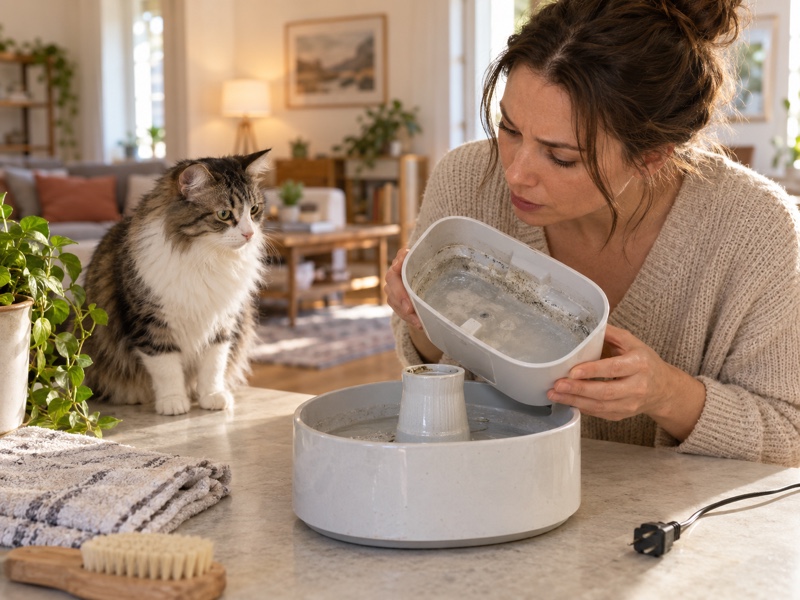
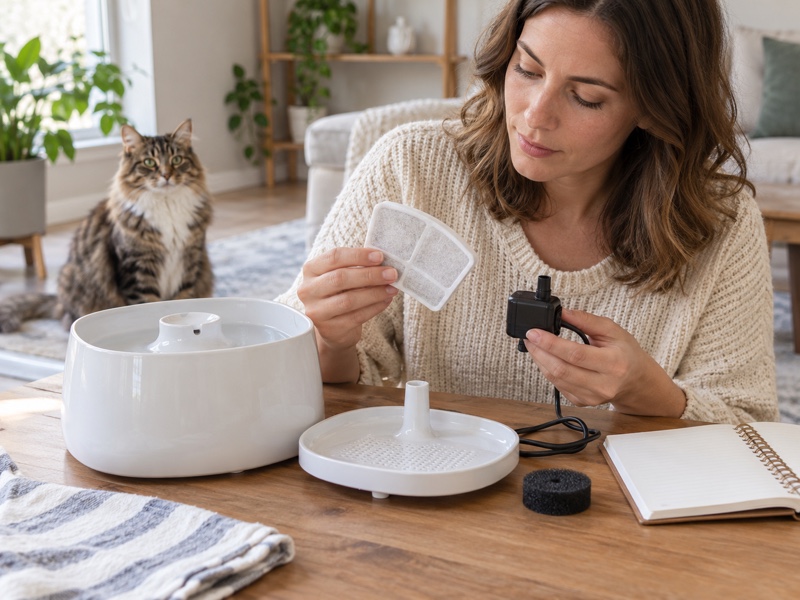
AI-created generic fountain inspection scene; the visible residue has not been identified as mold or a particular organism.
Finding a dark patch, cloudy film or slippery surface can make you search for mold in a cat water fountain. A photograph or a fingertip cannot reliably identify the organism or residue. Mineral deposits, food particles and microbial film can look different across materials and lighting. The useful first step is the same: stop offering that water, provide a clean alternative bowl, unplug the fountain and inspect what can be cleaned or replaced.
A cleaning brush may help reach a narrow channel, but it is not a disinfectant or a substitute for a filter. One optional tool is the PETKIT Cleaning Set, model PK2301, Amazon ASIN B0C6QF5SY6, a brush, tweezers and sponge set. It is most relevant to someone with a PETKIT fountain who needs access to corners and a removable pump impeller. Do not buy a new fountain or brush before checking the manual for your actual device.
Respond to suspected mold in a cat water fountain
Switch the fountain off and disconnect it from power before handling water or pump components. Set out a freshly washed bowl of clean water so the cat still has a drinking option. Then pour away the fountain water and separate only the parts your model’s manual allows you to remove. Keep the electric base and any non-submersible power components away from the sink. If the manual is unavailable, identify the exact model before taking the pump apart.
Do not tell yourself that a dark patch is definitely mold or that a clear-looking patch is harmless. The CDC explains that water-handling devices can develop a slime layer called biofilm; that information does not identify what is on a particular pet fountain. A stain may be residue, scale, biofilm or something else. The action is to clean the surfaces thoroughly and evaluate whether any part can no longer be made clean or safe under the manufacturer’s directions.
If the cat refuses water, seems ill, or has new vomiting, diarrhea or unusual behavior, contact a veterinarian. Do not try to diagnose exposure from the fountain’s appearance or wait for a home cleaning experiment to resolve a sick cat’s symptoms. The clean backup bowl should remain available while you inspect and dry the device.
| Observation | Parts to check | Immediate boundary |
|---|---|---|
| Slippery film on accessible plastic | Bowl, tank, lid, spout and corners | Unplug, wash according to the manual, rinse and dry before reuse |
| Dark mark in a narrow channel | Removable spout or pump housing, if the manual permits | Do not scrape electrical parts or assume a brush alone disinfects them |
| Dirty or overdue filter | Exact filter type and replacement schedule for your model | Replace with the compatible part; cleaning the housing does not renew a spent filter |
| Persistent odor or residue after proper washing | Seals, scratches, pump and inaccessible cavities | Stop use and seek the maker’s part or whole-unit guidance |
Photograph the buildup and record its location before cleaning if you may need to ask the manufacturer about an inaccessible area. That is a useful service record, not a laboratory identification. Do not put a fountain back in use while you still see loose residue, smell a strong odor or suspect water has reached an electrical area that must stay dry.
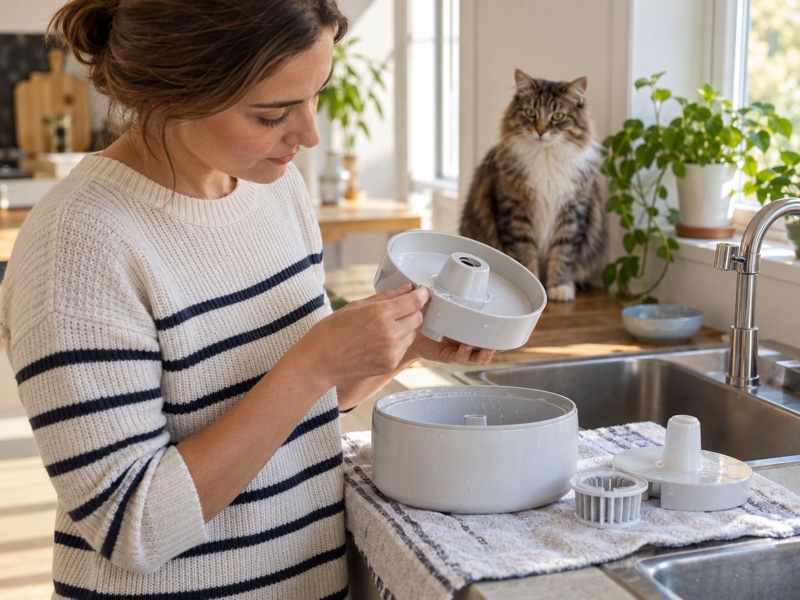
Clean each accessible path without guessing the device design
The CDC’s pet-supply cleaning guidance distinguishes cleaning, which physically removes dirt using soap or detergent and water, from disinfecting, which uses chemicals to kill germs. It says to follow an item’s own care instructions. For ordinary pet-water items, frequent cleaning is a sound habit; additional disinfection needs the correct product and instructions. A wet disinfectant can be hazardous to pets, and the CDC specifically warns against phenol-containing disinfectants around cats.
Use the fountain’s manual as the controlling source for which parts can go under running water, whether a detergent is approved, and whether a dishwasher cycle is allowed. Remove the reservoir, drinking tray, lid and any accessible cover in the order shown. Wash each washable surface and reach the edge where water returns to the tank. Rinse away detergent and loosened residue. Let parts dry as instructed before reassembly. Never immerse a powered base or sealed motor unless its own manual expressly allows it.
Check the pump path separately
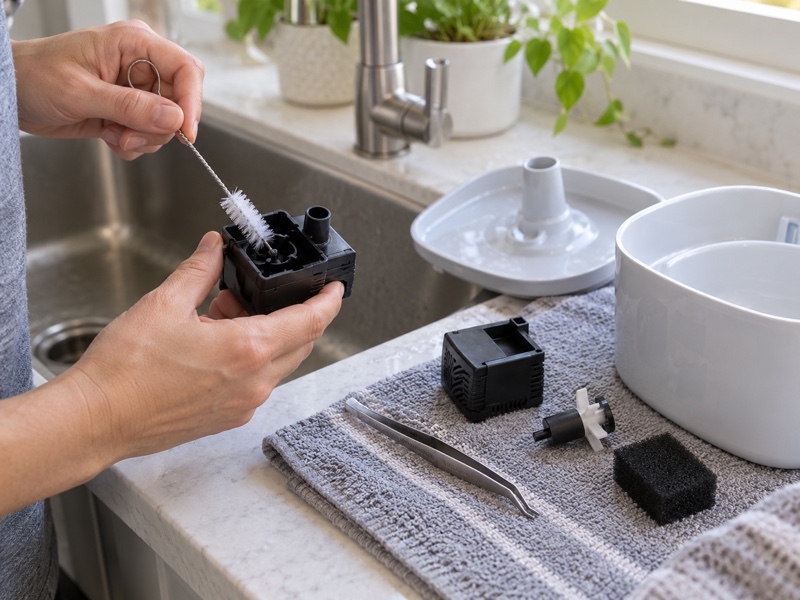
Pay attention to the pump pathway. Flowing water passes through the inlet, housing and outlet, where a narrow brush may help if the manufacturer designed those parts to open. Take off a removable cover or impeller only if the model instructions show how. Do not force a clip or pry at an axle. A damaged pump can create a new leak or fail to circulate water, and a cleaning tool does not make a broken part serviceable.
Replace the correct filter when due
The filter is a separate decision. A used filter is not restored by wiping the fountain bowl. Replace it at the interval and under the conditions set by the exact fountain and filter maker. If the filter looks discolored, smells, has been exposed to heavy contamination or is overdue, consult that schedule and replace as directed. If you do not know the fountain model, identify it from its label or manual before ordering a cartridge. Similar-looking filters can have different dimensions and media.
If a surface remains rough, deeply scratched, stained in an unreachable seam or smelly after proper cleaning, contact the manufacturer about replacing that part. If a sealed area cannot be accessed and continues to produce residue, stop using the fountain until the maker clarifies whether it can be serviced. A filtration system cannot sterilize a dirty reservoir or compensate for a contaminated cavity upstream.
Where the PETKIT PK2301 cleaning set helps
PETKIT’s official Cleaning Set page identifies model PK2301 and says it is intended for PETKIT smart water fountains. It describes a narrow brush for channels, a soft sponge for surfaces and tweezers that can help remove a pump impeller on a design where the manual permits that step. PETKIT lists the brush at approximately 5.4 × 0.4 inches and the sponge at 2.7 × 1 inch. These are tool dimensions, not proof that every opening in every fountain can be reached.
The current Amazon B0C6QF5SY6 listing calls it “PETKIT Cat Water Fountain Cleaning Kit, Include Brush Tweezers and Sponge.” The manufacturer model is PK2301. The exact selected product is a cleaning tool set, not a replacement filter, pump, fountain or antimicrobial treatment. Check the listing contents at checkout and compare your own fountain’s manual before buying. The product photo shows the current retailer packaging, not a promise of compatibility with another brand.
Use the brush only on surfaces the manual permits you to clean with it. A soft tool can remove film from a narrow corner more effectively than a fingertip, but careless pressure can scratch plastic or damage a small pump part. The tweezers are for a removable part, not for probing a powered unit. Keep the kit clean and dry after use, and replace a worn sponge if it starts to shed or hold residue.
If your PETKIT fountain has approved removable parts that are difficult to reach, check the exact PETKIT PK2301 cleaning set on Amazon. A household brush that fits and can be kept clean may also do the job; buy the set only if its particular shapes solve an access problem you actually have.
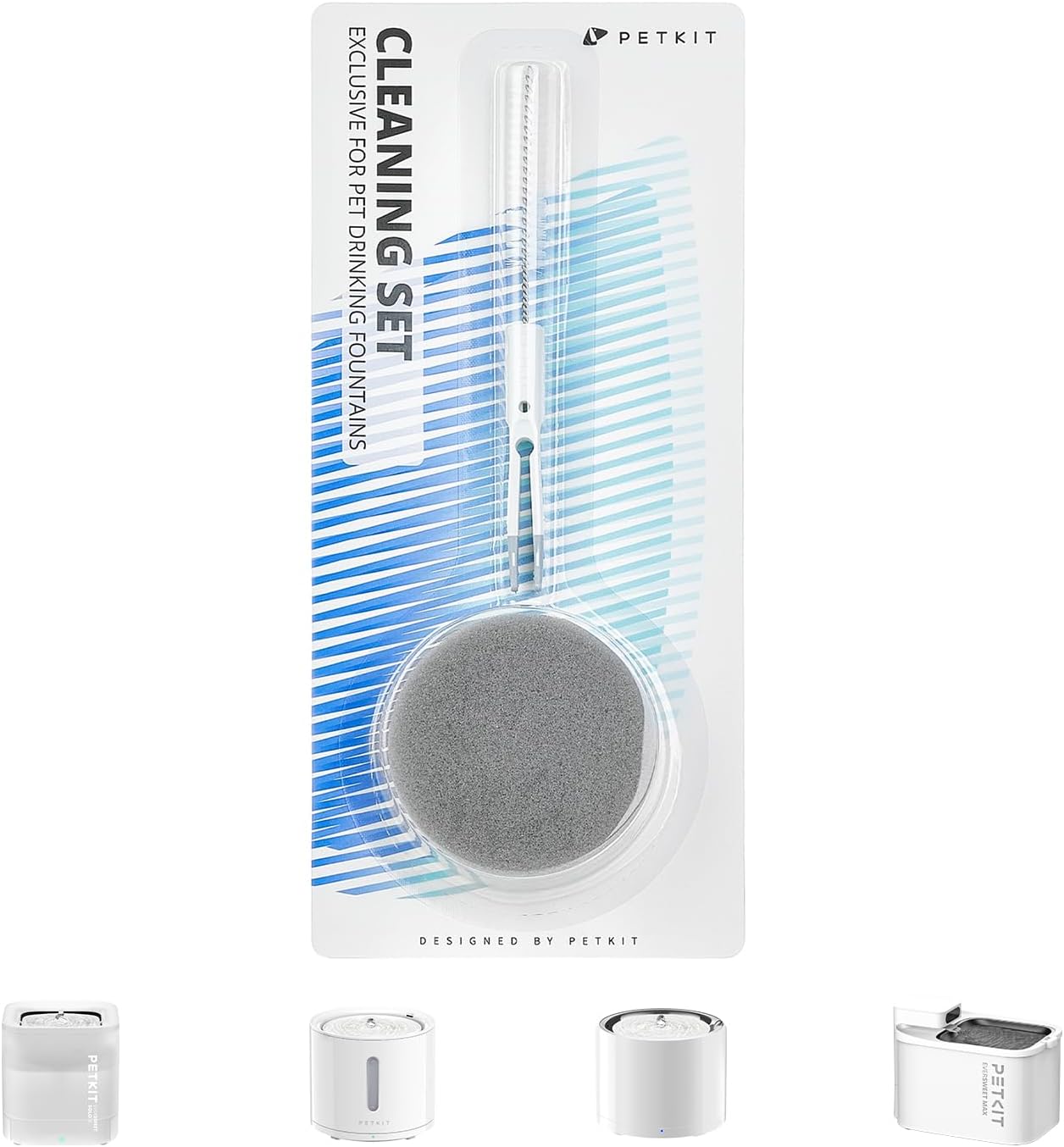
PRODUCT MENTIONED
PETKIT Cleaning Set PK2301
Amazon · Details on the retailer’s website
Set a practical cleaning and replacement routine
Keep water fresh and inspect the drinking surface every day. The CDC offers daily cleaning as an example for water bowls and advises more frequent cleaning when an item looks dirty or smells bad. A fountain’s tank, flow path and filter add model-specific steps; follow the maker’s maintenance schedule for full disassembly and filter replacement. Do not treat a fixed interval as proof that a fountain can wait until the calendar date if visible buildup appears sooner.
A simple log can record when you emptied and washed the fountain, cleaned the pump, replaced the filter and noticed recurring film. If buildup returns unusually quickly, the log helps separate a missed compartment from a schedule that is too long for your household. Multi-pet use, hair, food near the water station, warm conditions and a cat that paws at the water can all change how soon surfaces need attention. These are factors to observe, not a diagnosis of a specific organism.
After reassembly, fill with fresh water and check flow while you watch. Look for leaks and listen for abnormal pump noise. If the pump does not run or water enters a power connection, unplug it and contact the maker. Do not bypass a sensor or run a dry pump to see if cleaning “fixed” it. Return the fountain to the cat only when the water path is clean, parts are seated correctly, and the unit works according to its instructions.
Keep the backup bowl even after the fountain is running. It offers a clean water source during future cleaning, outages or filter changes. If the cat avoids the cleaned fountain, do not force it to drink from that unit; use the bowl and investigate the cause. The animal’s drinking behavior is as important as the pump’s flow indicator.
Mold in a cat water fountain: common questions
Can I tell whether the dark material is mold from a photo?
No. Color and texture alone cannot reliably identify mold or another organism. Treat visible buildup as a reason to stop use, provide clean water, inspect and clean the device according to its manual. Seek expert help for an inaccessible or recurring problem.
Does replacing the filter clean the whole fountain?
No. A fresh filter does not remove film from the reservoir, lid, spout or pump housing. Clean washable parts and replace the filter on the exact model’s schedule.
Does the PK2301 set disinfect water?
No. PETKIT describes a brush, tweezers and sponge. They help physically clean accessible surfaces. They are not chemicals, a sterilizer, a filter or a guarantee that a contaminated part is safe again.
Can I put the pump in a dishwasher?
Only if the exact pump’s manual explicitly allows it. Many fountains separate washable parts from components that must not be immersed or heated. Unplug first and follow the model-specific instructions.
When should I stop cleaning and replace a part?
Ask the manufacturer when a seal, pump or surface remains damaged, inaccessible or persistently dirty after its approved cleaning process. Replace a consumable filter as directed. Do not keep running a unit with a suspected electrical problem or recurring residue in a sealed area.
Mold in Cat Water Fountain: clean before buying
Suspected mold in a cat water fountain is a signal to pause use, offer a clean bowl, unplug and examine the entire water path. The PK2301 kit can make PETKIT’s accessible corners easier to scrub, but it cannot identify growth, disinfect a unit or substitute for a compatible filter. Follow the device’s manual, retire parts that cannot be restored, and ask a veterinarian about a cat that seems unwell or stops drinking normally.
Comments are reviewed before they appear publicly. Please keep questions and feedback relevant to this article.