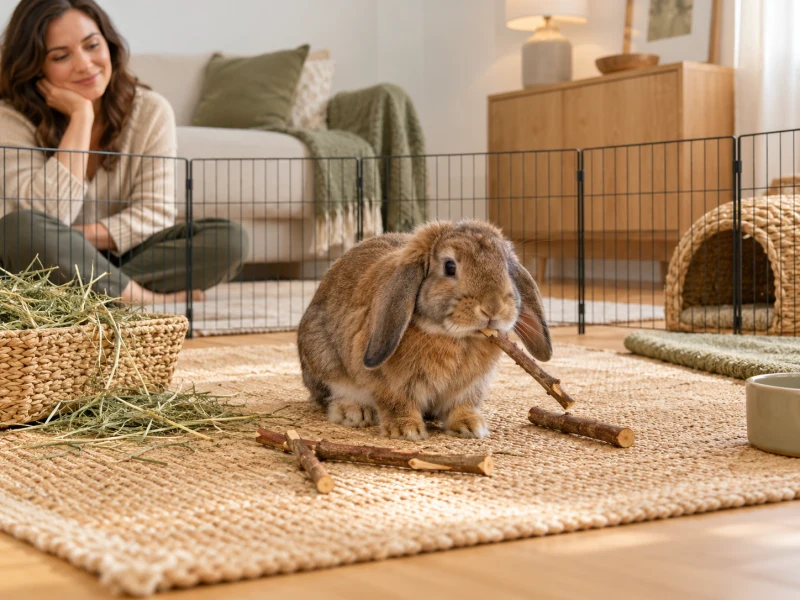
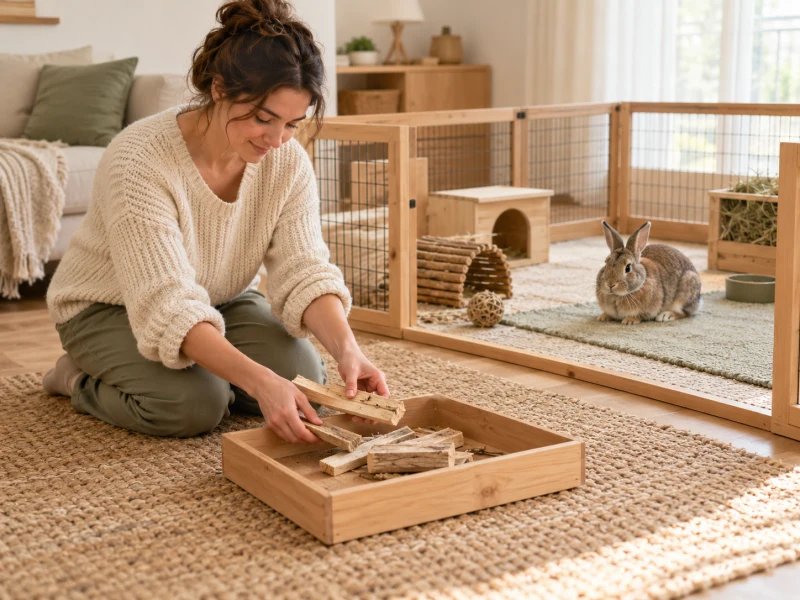
AI-created generic rabbit enrichment scene; not a named-model product photograph or a hands-on test.
Good rabbit chew toys offer a suitable material and an activity your rabbits actually use. Start with identified untreated wood, inspect its condition and give the animals room to choose whether to investigate. A large toy bundle or a “dental health” claim is not enough to establish that a particular product suits the rabbit.
One commercial option is Oxbow Enriched Life Apple Stick Bundle, Amazon ASIN B07RSGRVKC, listed reference 744845963167. Oxbow describes untreated apple sticks that can be separated from the bundle. That is a clear product identity; it is not independent proof of a dental treatment or a promise that every rabbit will enjoy it.
Rabbit chew toys: start with material and purpose
The useful first question is what the toy lets the rabbit do. A chew, a hide, a forage activity and room to run serve different purposes. Do not expect one stick bundle to provide all of them, or choose solely by the number of pieces on a package.
PDSA’s rabbit-enrichment guidance recommends a range of activities, space and rabbit companionship as well as suitable toys. Its chew suggestions include identified untreated safe woods such as apple. That supports a material-based choice, with ordinary inspection and supervision still necessary.
| Option or activity | What it can contribute | What to check |
|---|---|---|
| Named untreated wood chew | An opportunity to gnaw and investigate a defined material. | Wood identity, treatment status, condition and the product’s own directions. |
| Separate sticks rather than a fixed bundle | A simpler object to offer, inspect and remove. | Remove packaging and handle bindings only as the instructions permit. |
| Plain suitable cardboard activity | Exploration, pulling and a different texture. | Packaging attachments, condition and whether the rabbit destroys it in a concerning way. |
| Hay-based forage opportunity | Part of an ordinary food and exploration routine. | Fresh material and access that does not require using an unsafe structure. |
| A hide and open movement space | Choice, retreat and room for activity. | Stable construction and clear access; a chew does not replace the habitat. |
These are categories of enrichment, not a list of interchangeable retail recommendations. The right combination depends on what is already present and how the rabbits use it. Add something with a distinct purpose rather than filling the enclosure with several versions of an ignored object.
What the Oxbow Apple Stick Bundle offers
The official Oxbow product page identifies high-quality untreated apple sticks and says the bundle can be dismantled and offered as individual pieces. That makes the chosen product a practical option when you want to know the wood source rather than relying on an unidentified branch.
The selected listing and original package image identify the Enriched Life Apple Stick Bundle. Check the current packaging and its instructions when the item arrives. Do not infer a fixed number of identical sticks, a guaranteed individual-stick length or a particular useful lifespan from an overall retail dimension field.
Oxbow markets the item for natural chewing and exploration. Those are intended activities, not evidence that the bundle prevents dental disease, corrects an existing tooth problem or replaces normal care. A toy can be useful without making a clinical promise.
Consider the Oxbow Apple Stick Bundle if you want a named untreated-applewood option that can be offered as separate pieces and inspected easily. Skip it if the rabbit is not interested, the material arrives damaged or you are looking for a substitute for appropriate food, space, companionship or veterinary care.
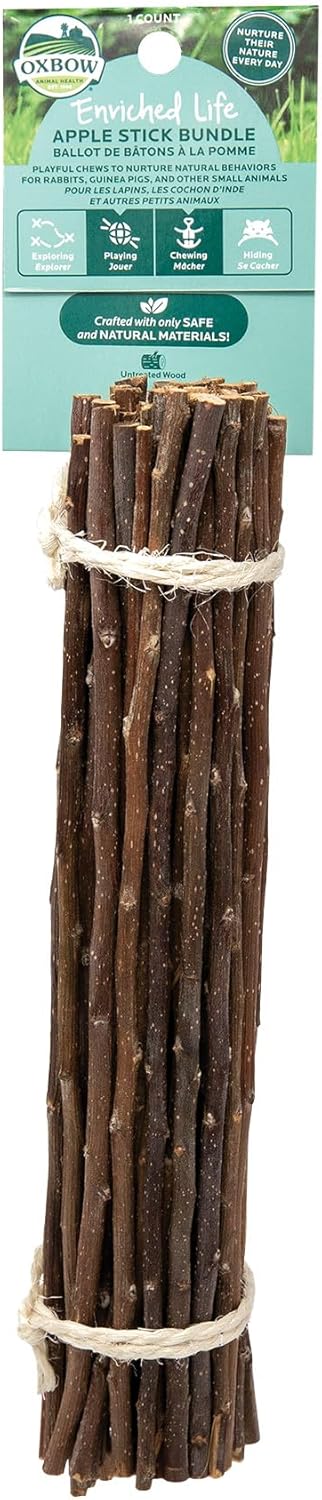
PRODUCT MENTIONED
Oxbow Enriched Life Apple Stick Bundle
Amazon · Details on the retailer’s website
Inspect rabbit chew toys before offering them
Look at the actual item rather than only the product title. Check for unexpected coatings, damp storage, visible mold, damaged attachments and broken pieces. Do not offer an item that is in poor condition simply because its original material is usually appropriate.
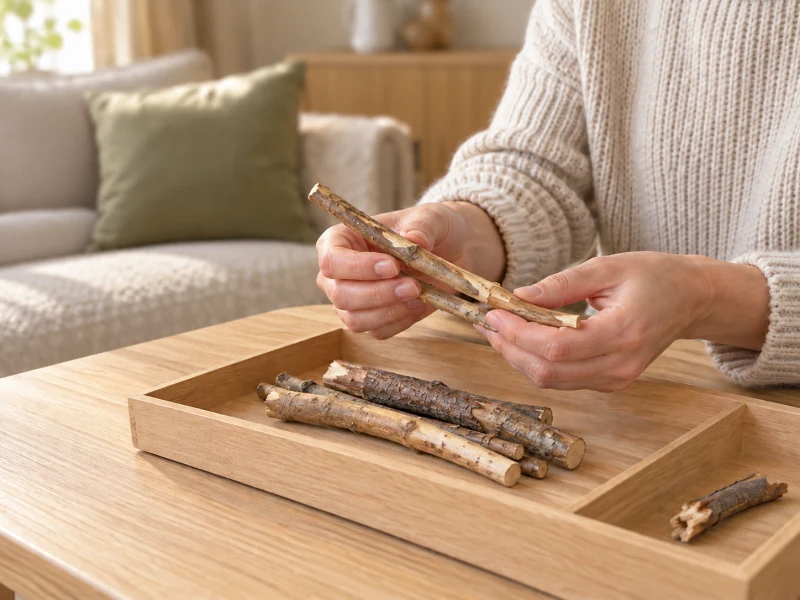
Follow the package directions for removing retail packaging and separating the bundle. The manufacturer’s statement that it can be dismantled does not establish that every tag or binding is intended for chewing. Prepare the pieces away from the rabbits and keep discarded packaging out of their reach.
For wood from outside a packaged product, identify the species and exposure history before considering it. “Natural” includes materials that can be unsuitable. Do not assume a rinse can make an unknown, treated or contaminated branch appropriate, and do not collect roadside branches as a cheap equivalent to a known product.
Once offered, inspect the object again as it changes. Natural materials do not remain in their original condition indefinitely. Remove pieces that are damaged, soiled or no longer suitable, using the product guidance and the animal’s behavior to decide when the activity should end.
Give the rabbit choice rather than forcing interest
Put a suitable chew where the rabbits can investigate it without being cornered or separated from ordinary resources. Start with a simple offering and observe. Pressing a stick toward an animal’s mouth is not a useful test of whether it likes the material.
Some rabbits may investigate quickly; others may ignore a new object. Interest can change with the location, texture or the other activities available. Do not interpret disinterest in one toy as proof that the rabbit needs a bigger purchase or a stronger flavoring.
If you use the bundle as separate pieces, begin with an arrangement that is easy to monitor. Keep the surrounding floor clear enough to see debris and retrieve an item without chasing the animal. Avoid creating a hanging or tied structure unless the product instructions support that setup and its risks have been assessed.
The practical measure of success is an appropriate activity the rabbit chooses, with no concerning damage or behavior. It is not how quickly the item disappears or how much material you can persuade the animal to consume.
Choose rabbit chew toys within a complete habitat
A chew belongs alongside an appropriate diet, fresh water, movement, retreat and rabbit companionship. PDSA emphasizes those wider needs in its enrichment advice. Buying a toy cannot compensate for an enclosure that leaves little room to move or for a rabbit living without suitable social contact.
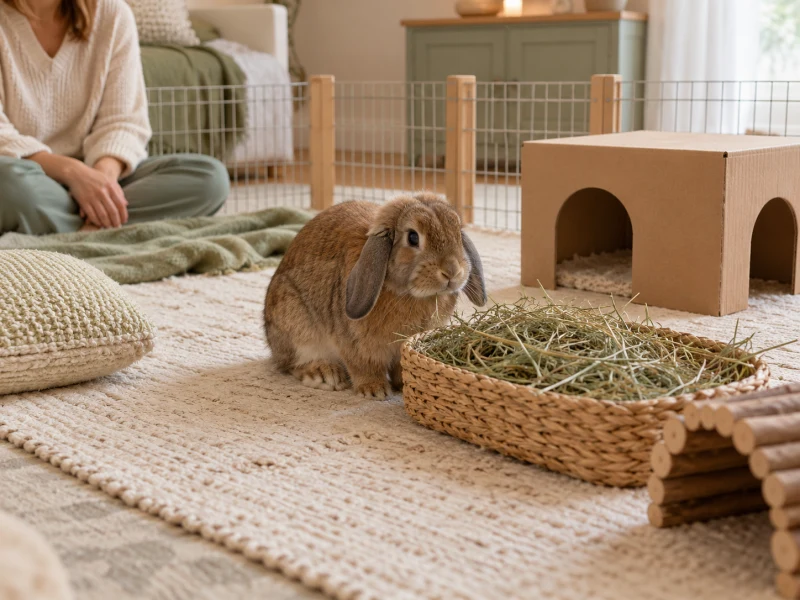
Keep ordinary feeding hay available as part of the established diet instead of treating a wood stick as its replacement. Forage activities can add interest without requiring a commercial treat in every toy. Use the food plan appropriate to the animals rather than increasing extras simply to encourage play.
Think about access in a shared space as well. Place enrichment so one rabbit does not have to squeeze past another to reach food, water or a hide. Observe how the pair or group actually uses the area. Two pieces offered in a poor location can be less useful than one well-placed choice and adequate space.
A plain hide or suitable cardboard activity may add a different behavior when there is already enough chewing material. PDSA gives examples such as boxes with more than one opening and hay-filled cardboard tubes. Check the individual material and remove unsuitable packaging rather than assuming every delivery box is ready for use.
Rotation helps you notice what gets used
Keep a modest selection available and rotate some items instead of adding everything at once. PDSA suggests swapping toys periodically, which also creates an opportunity to inspect and clean items that are out of use. The exact rhythm should suit the material and the condition of the habitat.
Record simple observations if you are comparing choices: which texture is used, where the rabbit chooses to investigate and what becomes soiled quickly. You do not need a score or a claim that one toy is objectively best. The purpose is to avoid repeatedly buying something the animals ignore.
Do not apply a blanket washing routine to every chew. Follow the manufacturer’s care instructions for the actual material, and discard an item that cannot be restored to an appropriate condition. A wet wooden chew is not ready to return merely because another plastic toy has dried.
Keep spare supplies in a clean, dry place and separate from household chemicals. Check stored natural material before offering it, even when the package is unopened. Storage and condition are part of product suitability, not an afterthought to the original purchase.
Buy a manageable quantity before a larger assortment
Start with enough to assess interest and maintain a clean supply. A bigger pack is not automatically economical if most pieces remain unused or become soiled in storage. Compare the material and the amount you can realistically inspect, rather than treating the lowest cost per piece as the whole decision.
Keep a note of the product name and package instructions when you replenish it. If a later delivery looks different, check it before offering it. A previous acceptable batch does not establish the condition or contents of the next package.
Dental claims need a separate boundary
Rabbits chew naturally, and suitable chewing opportunities belong in enrichment. That does not establish that a marketed chew will correct a particular animal’s teeth or explain a change in appetite. Avoid using toy interest as a home diagnostic test.
If a rabbit has trouble eating, a concerning change in chewing or another sign that it is unwell, get veterinary advice instead of trying a harder stick or a different bundle. Keep the product packaging if you need to explain what material was offered.
Likewise, do not describe a product as veterinarian-approved for your rabbit unless there is a relevant, documented assessment. A brand’s general promotional wording is different from a veterinarian evaluating the individual animal. Toy selection cannot replace a dental examination for a rabbit with a mouth concern.
Before buying the Apple Stick Bundle
Check whether the missing activity is actually chewing, whether a known untreated-wood product adds something useful and whether you can inspect it routinely. Consider the space and other resources already available before choosing a larger assortment.
If a defined applewood option fits that need, check the Oxbow Apple Stick Bundle on Amazon for the selected product and current package instructions. Keep the recommendation limited to the identified item; a familiar brand name does not establish that every chew in its range uses the same material.
Common questions
Are all wooden rabbit chew toys suitable?
No. Identify the wood, treatment status and condition. A named untreated material is a better starting point than an unknown branch, but the actual item still needs inspection and appropriate use.
Can I separate the Oxbow Apple Stick Bundle?
Oxbow’s product page says it can be dismantled and offered as individual pieces. Follow the current packaging directions and remove retail attachments as directed before offering it.
Will a chew bundle treat a rabbit’s dental problem?
A rabbit with eating or chewing difficulties needs veterinary advice; changing toys is not a substitute for assessing the animal.
How many rabbit chew toys should I buy?
Start with a useful range of activities and observe what the rabbits use. There is no universal piece count that replaces space, suitable food, companionship, inspection and sensible rotation.
Comments are reviewed before they appear publicly. Please keep questions and feedback relevant to this article.