AI-created generic scene; the rabbit and comb are not a Hair Buster product photograph or a handling demonstration.
A useful rabbit grooming kit starts with the rabbit’s coat, tolerance of handling and the tasks you can perform safely. For routine loose-coat care, a suitable gentle tool, secure footing and a way to record changes matter more than the number of accessories in a box. Nail care, tight mats and skin problems require separate decisions; a deshedding comb is not an answer to every grooming problem.
The selected product is the Small Pet Select Hair Buster Comb, model 611138712248, ASIN B06ZZXF81G. It is one comb, not a complete kit. The manufacturer describes rounded metal tines and a removable rubber sleeve intended to catch loose fur. Those features make it a candidate to assess, rather than proof that it suits every rabbit, coat or grooming technique. The cited specifications do not include an independent handling trial for this comb.
Build a rabbit grooming kit around specific jobs
Separate routine coat care from procedures you have not been shown. A kit can look comprehensive while containing a tool that is too aggressive for your rabbit or an accessory you cannot use safely. Start with a clear purpose for each item, then leave out anything that does not serve that purpose.
| Item or category | Possible role | Limit or stopping point |
|---|---|---|
| Suitable soft brush or carefully chosen comb | Routine grooming and loose-coat removal | Stop if it catches, pulls skin or causes distress; rounded tips do not remove all risk |
| Secure nonslip surface | Stable footing during short, supported sessions | A towel is not a restraint technique or permission to work at an unsafe height |
| Rabbit-appropriate nail clippers | Nail maintenance after practical instruction | Do not cut when you cannot identify the safe area or hold the rabbit securely |
| Notebook or phone record | Track coat changes, tool response and questions for the vet | Photographs and notes do not diagnose skin disease |
| Rabbit-experienced professional contact | Handling demonstration, difficult mats, nails or abnormal findings | Ask for help before escalating force or introducing a cutting tool |
The Rabbit Welfare Association & Fund grooming guide distinguishes soft brushes, rubber brushes or mitts and carefully used combs. It also warns against assuming that dog and cat fur-removal tools are appropriate for rabbits. Evaluate the actual tool design and its use, rather than relying on a multi-species label.
Check the selected Hair Buster’s identity and design
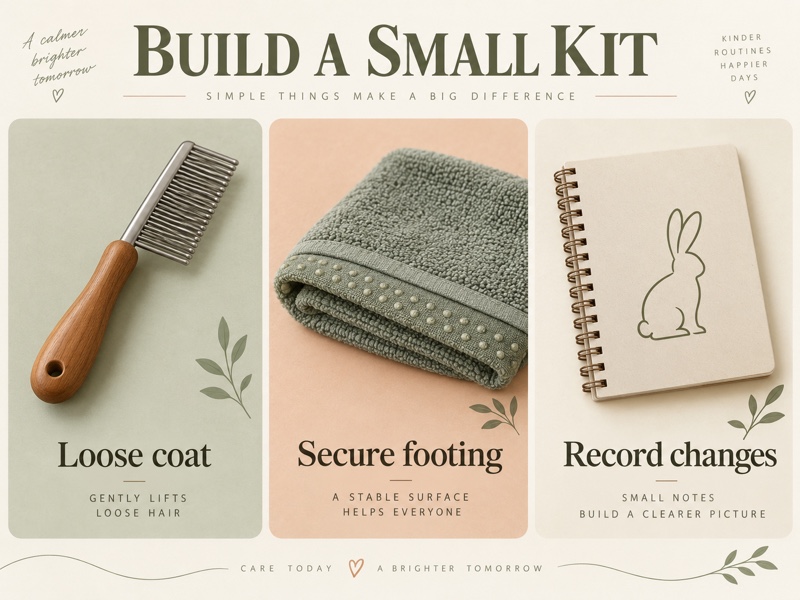
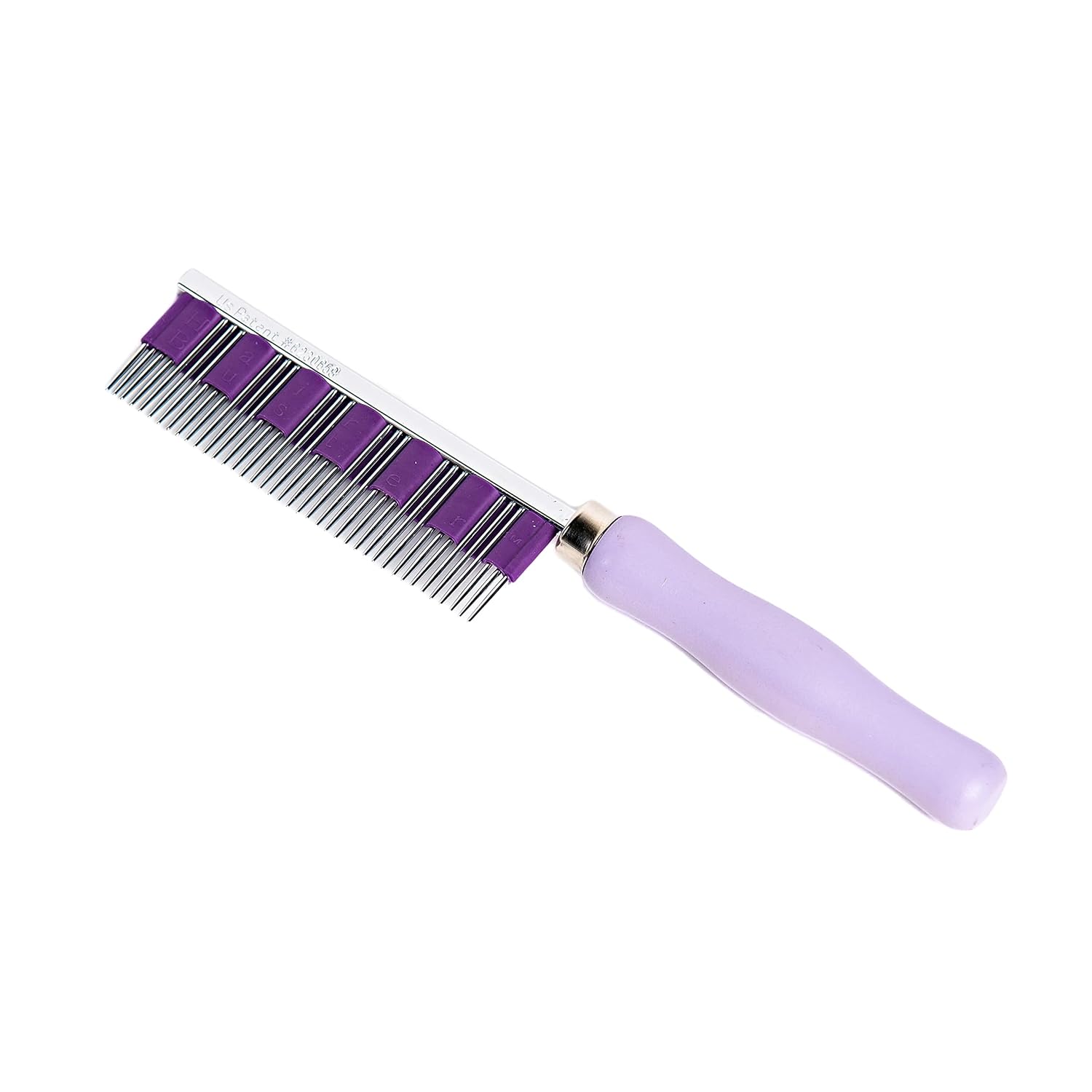
The exact selected listing names rabbits, cats and dogs and identifies model 611138712248. Its current retailer image shows metal tines, a purple sleeve along their base and a pale-purple handle. Use that original image to identify the listing. The AI-created editorial illustrations show generic combs, not this ASIN.
Small Pet Select’s HairBuster product page describes rounded tips, metal construction and a fur-catching rubber band. It also describes a wooden handle; the retailer photo shows a colored outer finish. Do not infer an unverified handle material or exact tooth spacing from the photograph. The reviewed pages do not establish a usable tine-length or spacing specification for comparison.
The rubber sleeve is intended to grip loose hair. Gripping can also increase resistance, so a tool that catches fur still needs a careful, light approach. Do not keep pulling when a section resists. Inspect the comb before use for bent tines, rough edges, looseness, trapped debris or a damaged sleeve. A new product should be checked just as carefully as an old one.
The listing’s 13 × 10 × 2-inch dimensions field is not a verified drawing of the comb’s working head. It should not be used to calculate the number of strokes needed, compare tooth reach or promise suitability for a small rabbit. If those measurements matter to your choice, obtain a clear part measurement from the supplier.
Match a rabbit grooming kit to the coat
A short coat, a heavy moult and long hair create different practical problems. For a short-coated rabbit that tolerates gentle routine brushing, the aim is to remove loose coat without repeatedly scraping one area. For a rabbit shedding heavily, plan more observation and several manageable opportunities rather than assuming a stronger tool or longer session is better.
Long-haired rabbits need a coat-care plan that addresses tangles before they tighten. RWAF notes that combs can be useful for long coats and moulting short coats, but must be used carefully. That is general tool guidance, not an endorsement of this model. Ask a rabbit-experienced vet or groomer to demonstrate a suitable technique for your rabbit’s coat and handling needs.
Distinguish loose fur from a mat attached close to skin. If you cannot tell where the skin lies or the comb cannot pass without pulling, stop. The manufacturer’s marketing describes work on thick or matted fur, but it does not establish that you should pull this comb through a tight mat. Delicate skin and resistance take priority over completing a section.
Frequency also needs context. RWAF encourages daily grooming and checks, while the veterinarian-authored Rabbit.org grooming resource describes routine brushing with more attention during heavy shedding. Use regular observation and a coat-specific plan rather than promising one fixed interval for every rabbit. An elderly, ill or handling-sensitive rabbit may need professional adaptation.
PRODUCT MENTIONED
Small Pet Select Hair Buster Comb, Model 611138712248
Amazon · Details on the retailer’s website
Prepare calm, supported sessions
Set out the tool and clear the area before bringing the rabbit into the session. Choose a stable nonslip setting and a position you have been shown to use safely. If you are not confident, arrange a handling demonstration first. Buying a towel and watching a still picture does not teach safe restraint.
Keep the rabbit supported in a natural position and begin with a brief, low-pressure introduction. Let the rabbit investigate the inactive tool nearby. Then follow the technique demonstrated for that rabbit, stopping at resistance rather than increasing pressure. Check the skin and coat as you go; collecting the largest pile of fur is not a useful success measure.
RWAF specifically warns against turning a rabbit onto its back to make it motionless. This response is not proof of relaxation. Do not use “trancing” to finish grooming, nail clipping or photographs. Similarly, do not continue because a rabbit has stopped struggling after a stressful attempt.
If the rabbit tries to escape, twists, kicks or becomes distressed, stop the task safely. Do not chase it with the comb or tighten your grip to complete a timetable. Several short, manageable sessions may be more practical, but some rabbits still need professional assistance. Tool choice cannot compensate for unsafe handling.

Keep nail tools separate from coat tools
A complete shopping list may include nail clippers, but their presence does not make nail trimming a beginner procedure. RWAF describes scissor and guillotine designs made for animal nails and advises against ordinary scissors or human nail clippers. Choose the tool after a practical demonstration, including how to identify where cutting is safe.
Do not guess with dark nails or an uncertain grip. Ask your rabbit-experienced vet to assess nail length and demonstrate the technique, or book the trim. Do not guess a cutting angle or amount to remove, or improvise treatment for bleeding. The selected Hair Buster is a coat comb and has no nail-trimming function.
Inspect the feet as part of routine observation, without forcing access. Worn fur, sore areas, swelling or difficulty moving are reasons to seek advice rather than add a harsher tool. Grooming equipment does not correct unsuitable flooring or establish the cause of a foot problem.
Know when a rabbit grooming kit is the wrong solution
Skin redness, persistent flaking, a painful area, discharge or a new lump needs assessment rather than a harder grooming session. RWAF recommends a rabbit-savvy vet for abnormal findings and warns that rabbits’ skin is easily damaged. Do not diagnose a bald patch from an online picture or treat it with a dog or cat product because the comb’s packaging lists those animals.
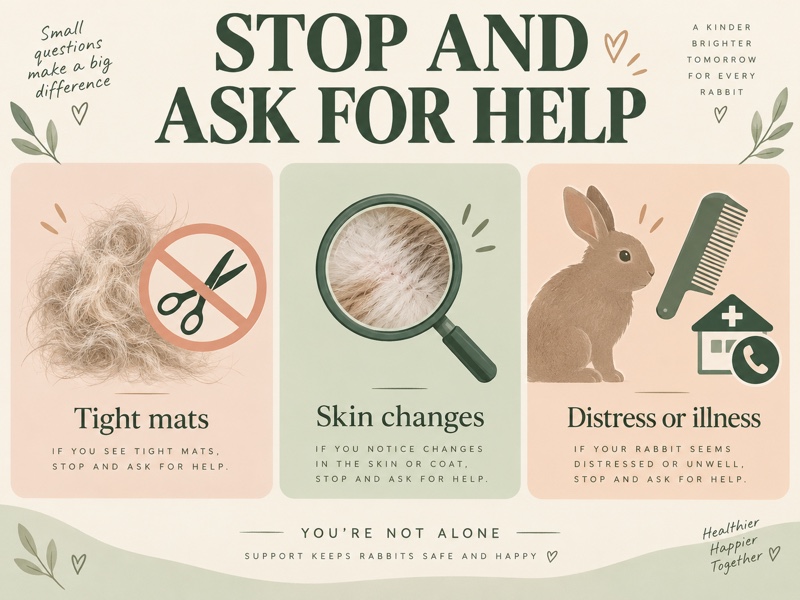
For a tight mat, avoid placing scissors between the mat and skin. If gentle handling cannot resolve it without pulling, seek professional help. A rabbit-experienced professional can decide whether clipping is appropriate and which equipment is suitable. A cutting tool marketed for another species is not a safe automatic next step.
Soiled hindquarters also need a cause-and-care assessment. Do not turn a grooming shopping guide into a routine full-bath procedure. RWAF explains that wetting a rabbit creates handling and drying risks. If there is possible flystrike, injury or illness, contact a rabbit-experienced vet promptly instead of spending time combing the area or ordering an accessory.
The selected product’s advertising includes broad language about preventing hairball problems. A prevention or treatment effect has not been independently verified for the comb. Grooming removes some loose coat; it does not prove normal digestion or replace veterinary care for a rabbit that appears unwell. More fur on the comb is not evidence that a health risk has been eliminated.
Clean, inspect and store the comb
Small Pet Select instructs owners to remove visible trapped hair and, for a more thorough clean, remove the rubber sleeve and run the comb under warm water. Follow the supplied instructions for the actual item and let it dry before storage. That description is a cleaning method, not a validated disinfection procedure for a contagious condition.
Check that the sleeve is correctly seated before reuse and keep loose parts away from the rabbit. Store the comb clean, dry and out of reach. If the handle, tines or rubber are damaged, resolve the defect before another session. Do not file a damaged tine, add household lubricant or use a chemical cleaner without suitable supplier guidance.
Record which tool was used, the areas groomed and any resistance or skin change. These notes help you ask a focused question: did the tool catch in one location, did the coat change suddenly, or does the rabbit resist all handling? They are more useful than assuming that a product rating predicts your rabbit’s experience.
Questions about a rabbit grooming kit
Is the selected Hair Buster a full kit?
No. ASIN B06ZZXF81G is a single comb. Nail clippers, towels, brushes and other grooming supplies are separate purchases. Confirm the exact item and current package contents before ordering.
Does “rounded tines” guarantee gentle grooming?
No. It is a manufacturer-described feature, not a guarantee against pulling, excessive pressure or damaged skin. Inspect the tool, use a demonstrated technique and stop when it catches or the rabbit becomes distressed. The rubber sleeve’s hair-catching action does not remove those limits.
Should I add an electric clipper for mats?
Do not add a cutting procedure simply because a mat resists the comb. Ask a rabbit-experienced professional to assess it, especially near skin or sensitive areas. Rabbit clipping needs its own tool selection and handling guidance; a dog grooming kit is not an automatic substitute.
Buy the smallest useful rabbit grooming kit
Choose tools you can use safely for the rabbit in front of you. The selected Hair Buster may be considered as one loose-coat tool after checking its condition, coat suitability and handling approach. Keep nail care, tight mats and abnormal skin findings on a separate professional-help pathway. A smaller kit with a clear purpose is easier to assess than an assortment of unfamiliar tools.
If that role fits your plan, view the Small Pet Select Hair Buster Comb. Confirm model 611138712248, ASIN B06ZZXF81G, the actual package contents and delivery for your address.
Comments are reviewed before they appear publicly. Please keep questions and feedback relevant to this article.