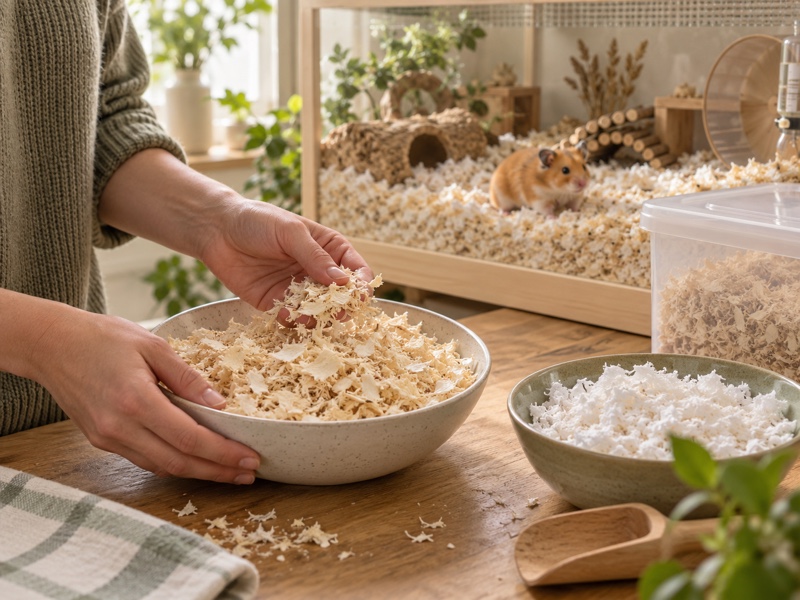
AI-created generic material-planning scene; not a Small Pet Select product photograph, complete habitat plan or dust test.
Aspen bedding for hamsters can be considered when the material is clearly identified, has no added fragrance and is suitable for your hamster’s housing plan. It still needs a dust check and enough structure for burrowing. “Natural,” “heat-dried” and “low dust” do not mean that every bag is free of irritants or that loose shavings alone will hold a stable tunnel.
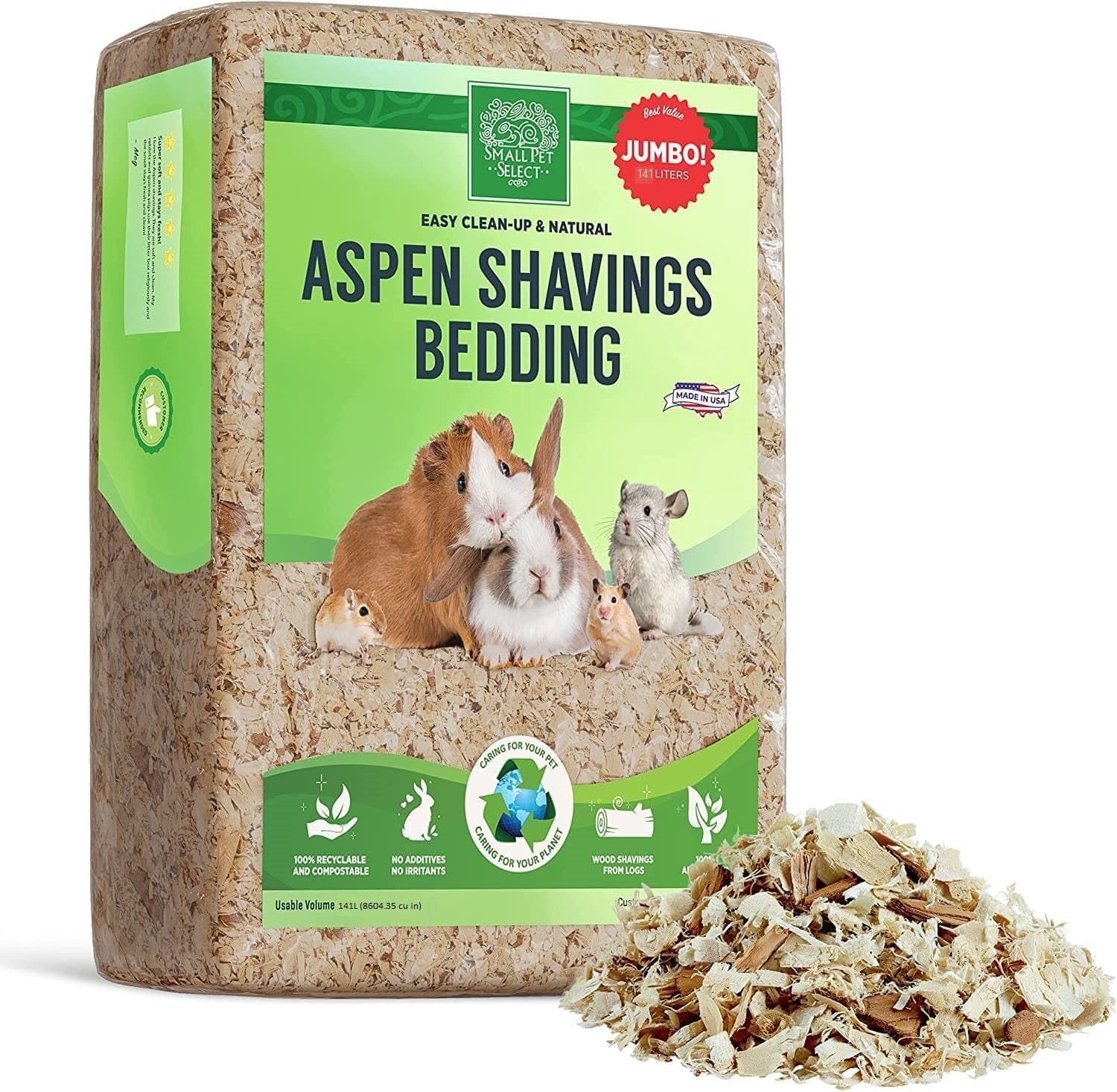
The selected product is Small Pet Select Premium Aspen Bedding, 141 L, ASIN B0725L68KB. The current listing identifies heat-dried aspen shavings and includes hamsters among its intended animals, despite the shorter title naming rabbits and guinea pigs. Independent dust, absorbency and tunnel-stability results have not been verified for this exact material and pack.
Aspen bedding for hamsters: read the material label
Confirm the wood species instead of choosing a bag described only as “wood shavings.” Small Pet Select’s Aspen Shavings Bedding page describes shavings cut from logs, heat treatment, no additives or dyes, and low dust. These are manufacturer statements. They do not replace inspection of the delivered batch or establish a health outcome for your hamster.
The exact Amazon selection is the single 141 L pack, not the 41 L size or a two-pack available on the brand site. Its original retailer photo labels 141 L as usable volume. The shipping-style dimensions in the listing do not describe an enclosure or the depth that one pack will provide. Keep material, pack quantity and habitat coverage as separate checks.
| Label or claim | Useful interpretation | What it does not prove |
|---|---|---|
| Aspen shavings | Identifies the intended raw material | That unidentified wood shavings are equivalent |
| Heat-dried or heat-treated | Describes the supplier’s processing | Sterility, zero mold risk or guaranteed respiratory safety |
| Low dust | A feature to check in the actual bag | No fine particles or no possible irritation |
| No added artificial scent | Avoids relying on fragrance to mask waste | That wet bedding can remain in place |
| 141 L usable volume | A starting quantity for a coverage estimate | A fixed lifespan or guaranteed settled depth |
Broad small-animal compatibility is not one shared husbandry plan. A guinea pig’s surface bedding and a hamster’s deep burrowing substrate serve different needs. Read the hamster-specific guidance before applying a replacement interval or shallow layer intended for another animal.
Understand why bedding recommendations differ
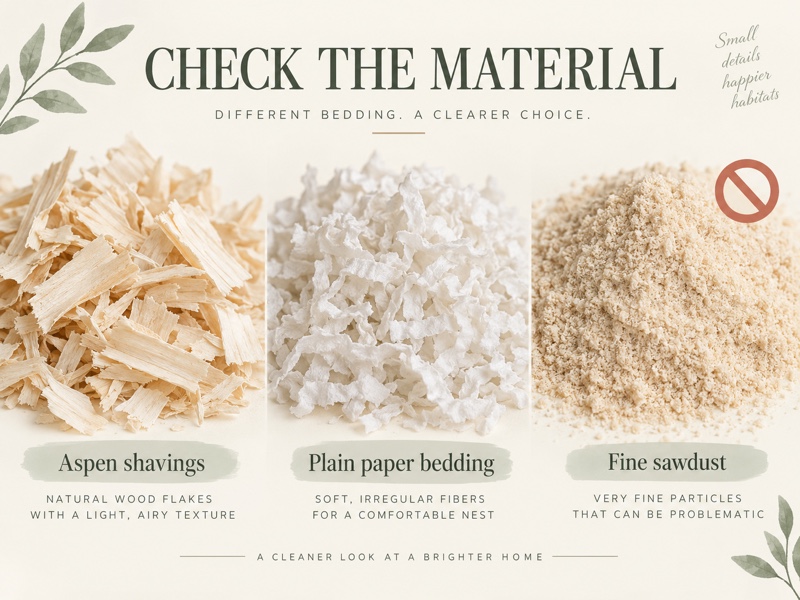
Sources do not describe wood bedding in identical terms. Blue Cross’s hamster guide allows aspen while advising against most other wood shavings and sawdust. PDSA’s hamster guide also lists aspen as an option, but explains that it needs paper-based material mixed in to support burrows.
By contrast, VCA’s general rodent-housing resource favors paper bedding and is more cautious about wood shavings overall. That is a meaningful difference in scope and advice. The species-specific sources support conditional use of aspen, not the brand’s sweeping reassurance that owners need not worry about respiratory or other health problems.
If your hamster already has a health concern, obtain advice from a small-mammal vet before choosing or changing substrate. A supplier’s safety language is not individualized veterinary guidance. You can also choose an appropriate plain paper-based substrate instead of treating aspen as necessary for every enclosure.
Check dust before adding aspen bedding for hamsters
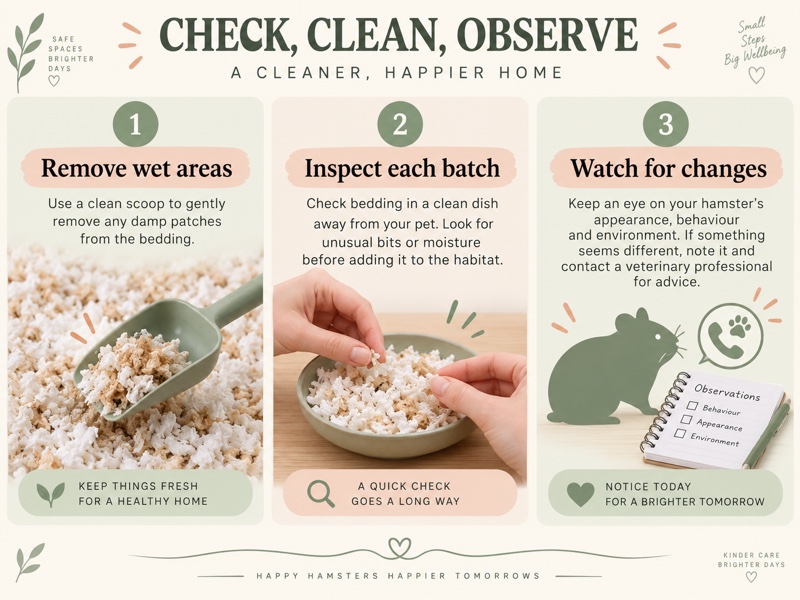
Open the bag away from the hamster and inspect a small amount in a clean tray. Look for excessive fine material, damp clumps, unusual discoloration, foreign objects or an unexpected strong odor. This is a practical acceptance check, not a laboratory dust measurement. A photograph cannot establish the concentration of airborne particles.
Handle it gently and avoid pouring from height into an occupied enclosure. Do not deliberately generate a cloud beside the hamster to see whether it reacts. If the batch seems dusty or contaminated, stop and contact the supplier or select a suitable alternative. Do not mask the problem with fragrance or assume that shaking out some fines makes an unsuitable batch safe.
The absence of a visible cloud does not prove zero dust. Likewise, one brief observation without sneezing does not establish long-term tolerance. Keep the packaging and batch information, and note when the substrate was introduced. If you observe a persistent change in breathing, eyes, skin or behavior, seek veterinary advice rather than diagnosing the cause from the bedding label.
Store unused material dry and protected from household chemicals and moisture. Heat treatment at manufacture does not protect a bag from later damp storage or a leaking bottle. Do not use musty or visibly moldy bedding, and do not spray a fresh batch with disinfectant or scent before placing it in the habitat.
Plan usable depth and burrow structure
When planning aspen bedding for hamsters, allow a substantial digging layer, not merely enough shavings to cover the floor. Blue Cross recommends at least 20 cm of suitable digging bedding, while PDSA recommends no less than 25 cm, approximately 10 inches. These are welfare-guidance recommendations, not a product-specific performance specification or a US legal requirement.
For a practical plan, allow room for at least the deeper 25 cm recommendation where burrowing is provided, alongside the enclosure’s other requirements. Depth is only one variable: the substrate must also hold useful structure. PDSA specifically notes that aspen on its own is poor at supporting burrows and recommends adding paper-based bedding.
No tested mixing ratio for this Small Pet Select pack was established in the reviewed sources. Do not invent one or assume a decorative top layer of paper solves collapsing tunnels. Evaluate the prepared substrate’s structure and follow a hamster-specific care plan. If it repeatedly collapses, improve the material arrangement rather than simply adding more loose wood to the same shallow base.
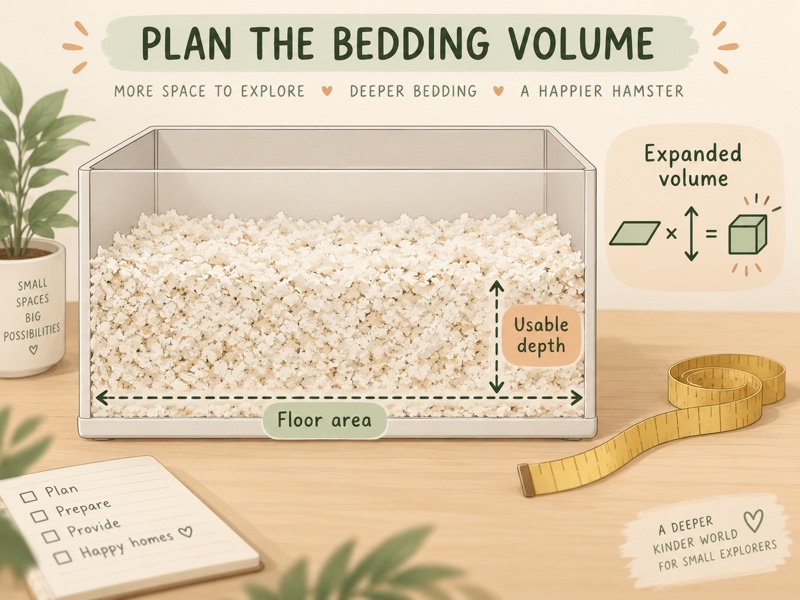
Plan support for heavy equipment independently of soft bedding. Deep substrate changes where the hamster can dig, and a surface that looks level can hide excavated areas. Check the enclosure and accessory instructions so that shelters or other heavy items cannot become unstable as the hamster burrows. The AI-created empty-container illustration shows a volume concept, not a complete habitat construction plan.
PRODUCT MENTIONED
Small Pet Select Premium Aspen Bedding, 141 L
Amazon · Details on the retailer’s website
Estimate how much bedding your enclosure needs
Use the internal floor area of the bedding zone and its intended depth. For a rectangular space, length × width × depth gives a rough geometric volume. When measurements are in centimeters, divide the result by 1,000 to convert cubic centimeters to liters. This estimate describes space, not a guaranteed number of bags.
For example, a 100 × 50 cm area filled to 25 cm has a simple geometric volume of 125 L. The selected pack’s 141 L usable-volume label is numerically above that figure, but settling, packing, mixed materials, compartment shape and later top-ups change what is needed. Do not promise that one pack fills every enclosure of that footprint to a stable working depth.
Measure the actual area you intend to fill; outside dimensions and shelves do not create additional continuous floor space. Nor should a shortage of substrate be solved by reducing a hamster’s digging layer to a thin covering. Budget for the complete initial setup and a reserve for removing wet or spoiled areas.
Compare delivered cost per labeled usable liter only when pack quantities and volume definitions are comparable. Compressed package size, bag weight and expanded volume are different measures. A lower unit cost is useful only if the material is acceptable and performs its intended role. Prices and the amount of bedding needed between cleanups can vary.
Clean wet areas without following a generic calendar
Inspect the habitat regularly for wet bedding, spoiled food, bottle leaks and soiled areas. Remove the affected material and address the source of moisture. Fluffing a wet patch is not equivalent to removing urine-soaked substrate, even if a manufacturer’s general care wording mentions fluffing between changes.
The brand page recommends very frequent replacement, while Blue Cross’s hamster guidance describes local cleaning and less frequent larger cleans that preserve some familiar unsoiled bedding. Those instructions have different contexts. Do not copy a whole-bedding change every one or two days into every deep hamster setup, or use a longer interval as permission to leave damp material in place.
Maintain aspen bedding for hamsters through regular inspection and a routine matched to the individual habitat and species-specific advice. When a larger clean is needed, provide secure temporary accommodation, use appropriate cleaning instructions and let the enclosure dry fully before refilling. Retain only suitable clean material where the care guidance supports it; contaminated or wet bedding is not worth saving to preserve a smell.
Ventilation matters alongside the substrate. A deep layer is not a reason to obstruct the enclosure’s air openings or remove its secure lid. Check the habitat as a system: moisture source, airflow, bedding condition and the hamster’s behavior. A fresh bag cannot compensate for a persistently leaking drinker or unsuitable enclosure.
Avoid unsuitable substitutes and additives
Do not substitute workshop sawdust, unidentified aromatic shavings or scented litter on the assumption that they are another form of aspen bedding. The species-specific sources distinguish acceptable aspen from most generic wood shavings and discourage fragrance. A supplier’s precise material declaration is more useful than the word “natural” on an unrelated bag.
PDSA and Blue Cross also warn against fluffy nesting materials such as hamster wool; PDSA names cotton wool, kapok and bamboo fluff among unsuitable choices. Softness in a hand is not the same as suitability for a hamster that carries, burrows in or may swallow material. Avoid adding loose fibrous fluff to improve an unstable bedding mix.
Paper-based bedding should also be selected deliberately. Confirm its ingredients and absence of added fragrance, and inspect its condition rather than assuming every shredded household paper is interchangeable. An aspen-and-paper mix still needs an appropriate structure; no tested ratio has been verified for the specified pack.
Questions about aspen bedding for hamsters
Is this 141 L pack automatically safe for every hamster?
No. The manufacturer includes hamsters in its intended uses, and species-specific welfare sources allow suitable aspen, but batch condition, dust, substrate structure and individual needs still matter. The cited specifications do not include an independent trial of this exact pack.
Can I use aspen alone for deep tunnels?
PDSA says aspen does not support burrows well on its own and recommends paper-based material for added stability. No exact ratio or tunnel-strength result for this product was verified. Assess the complete substrate plan instead of treating pack volume as proof that the tunnels will hold.
Does heat drying make it sterile?
The reviewed manufacturer page describes heat treatment, not a verified sterile product. Inspect and store it appropriately. Dampness, contamination or an unusual odor after delivery should be resolved, rather than dismissed because the material was treated during production.
Choose aspen bedding for hamsters with clear limits
Confirm the actual aspen label, the single 141 L pack and the condition of each batch. Plan enough suitable digging depth and paper-supported structure, check moisture regularly and retain an alternative material plan if the product does not suit your hamster. Do not turn broad supplier assurances into a promise of zero irritation or disease prevention.
If those checks support your choice, view Small Pet Select Premium Aspen Bedding, 141 L. Confirm ASIN B0725L68KB, the pack quantity and delivery for your address.
Comments are reviewed before they appear publicly. Please keep questions and feedback relevant to this article.