AI-created food-selection concept; not RPEL-10 packaging, a measured portion or a complete feeding plan.
Rabbit pellets belong within a feeding plan, not at the center of a purchase based on bag size alone. Check the exact formula, intended life stage and ingredients before comparing cost. A bulk pack is useful only when the food fits the rabbit and can be stored and used appropriately.
The Small Pet Select RPEL-10 option is a ten-pound pack of its Timothy Rabbit Food Pellets. It contains soy ingredients and is positioned by the manufacturer for rabbits seven months or older. Those two details can settle the buying decision before broad words such as premium or fortified become relevant.
Choose the diet role before the rabbit pellets
PDSA’s rabbit feeding advice places hay and grass at the foundation of the diet, with a limited amount of suitable pellets. Pellets are not a reason to reduce access to appropriate hay or to turn the feeding bowl into the rabbit’s whole diet.
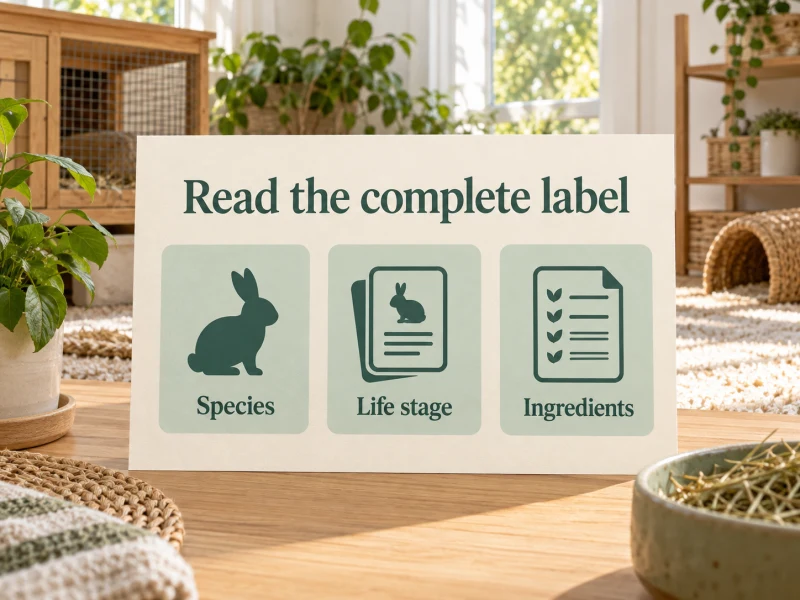
Keep individual needs in view. Age, body condition, dental problems and a veterinarian’s existing plan can change what is appropriate. A product marketed for adults cannot establish the right choice for every young, elderly, underweight or unwell rabbit.
If the rabbit is already on a specific diet, identify why before replacing it. A supplier’s general feeding description does not override clinical advice. Ask the treating veterinarian about a proposed change when the reason for the current diet is unclear.
A muesli-style mixture is a different purchase from a uniform pellet. PDSA advises against muesli feeding because rabbits may select components and miss a balanced intake. A photograph of several food shapes should prompt a closer look at the actual product, not an assumption that more visible variety is better.
Match rabbit pellets to the actual RPEL-10 formula
The current Small Pet Select rabbit-food page identifies a Timothy-based formula and several pack options. RPEL-10 is the selected 10 lb option. Do not confuse a separate Soy-Free formula, a smaller bag or a different species’ pellets with this product.
Small Pet Select Timothy Rabbit Food Pellets, RPEL-10, ASIN B00ID70IFY, is a conditional choice for a rabbit whose life stage and established feeding plan suit this formula. Match the 10 lb pack and check the delivered ingredient label. Pass when the rabbit needs a different prescribed diet, a younger-life-stage plan or a soy-free product.
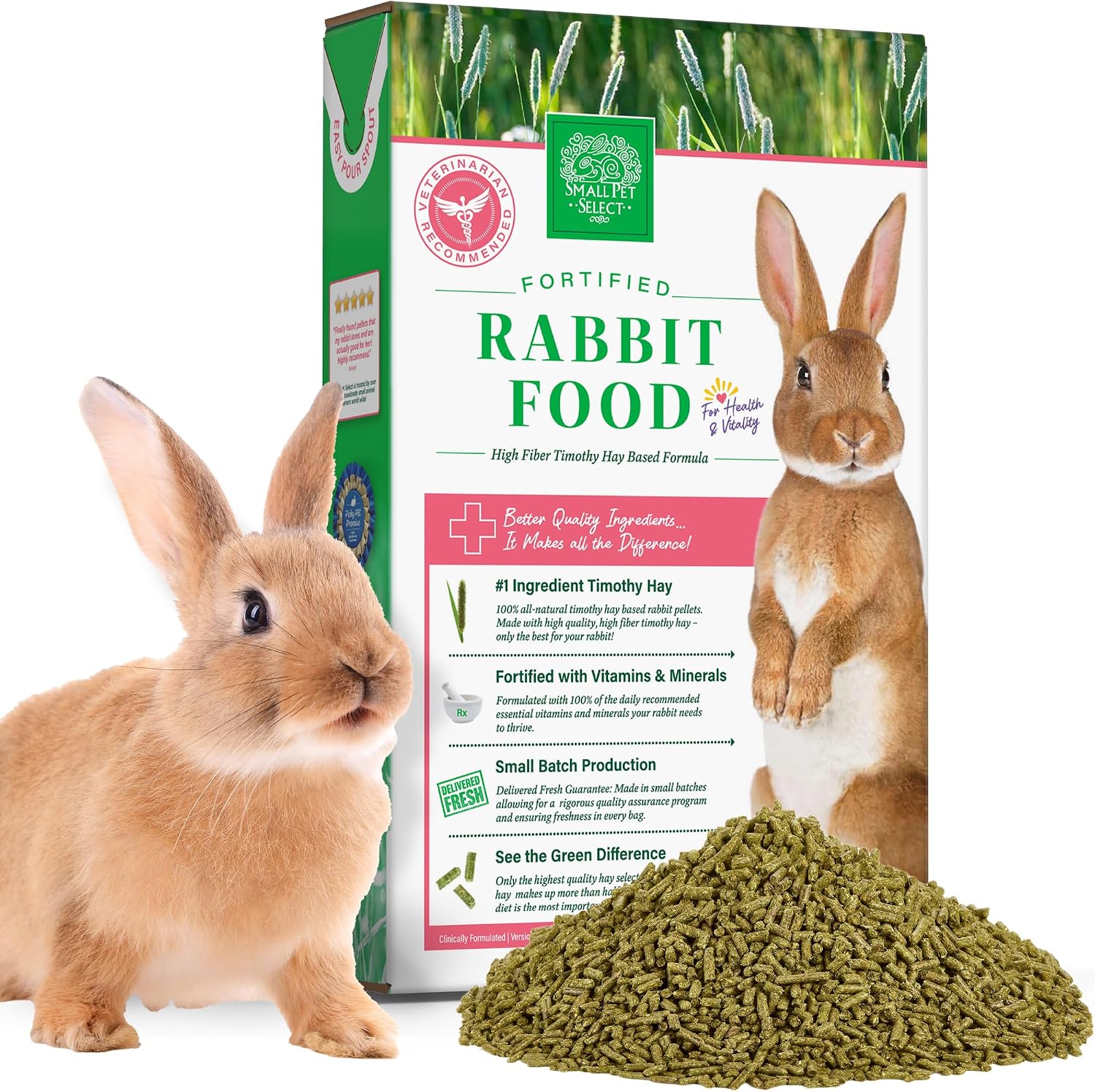
PRODUCT MENTIONED
Small Pet Select Timothy Rabbit Food Pellets, RPEL-10, 10 lb
Amazon · Details on the retailer’s website
The manufacturer describes the target as rabbits seven months and older. Treat that as its stated product positioning, not an independent examination of your rabbit or proof that every animal reaches the same feeding needs on the same birthday.
Confirm net pack weight rather than using a retailer’s generic item-weight field. The selected pack is ten pounds; the manufacturer also gives 4.53 kg. A conflicting miscellaneous weight elsewhere in a listing should be resolved against the selected size and delivered label.
Check rabbit pellets for soy and other ingredients
Timothy hay appears first in the current manufacturer ingredient panel. The formula also lists soybean hulls, soybean meal and soybean oil, among other ingredients. Wheat middlings, molasses, minerals and vitamins are listed as well.
Consequently, RPEL-10 is not a soy-free purchase. Do not let a search result for the brand’s other products override the actual formula. If an ingredient must be avoided under a veterinary plan, compare the entire current label before ordering.
The presence of molasses also means the formula should not be casually described as having no added sweetening ingredient. That observation does not quantify the final sugar content or establish that the product is unsuitable for every rabbit. It identifies a claim that the ingredient list cannot support.
Do not interpret the list as a ranking of complete diets by one ingredient alone. Suitability depends on the full product and the animal’s needs. A familiar hay name can help identify the formula without proving that the bag should replace the rest of the diet.
Compare rabbit pellets by the stated guaranteed analysis
The current manufacturer panel specifies minimum and maximum values, not a laboratory result for every serving. Preserve those qualifiers when comparing products. A minimum is not an exact value, and a maximum is not the amount the rabbit necessarily receives.
| Current label field | Stated value | What it does not establish |
|---|---|---|
| Crude protein | 14% minimum. | An exact measured percentage in a particular bag. |
| Crude fat | 2% minimum. | A suitable individual energy allowance. |
| Crude fiber | 25% minimum; 29% maximum. | Permission to replace long-stem hay. |
| Calcium | 0.4% minimum; 0.6% maximum. | A treatment plan for a urinary or other medical condition. |
Compare like-for-like label fields and keep the original units. Do not convert these figures into an assumed dry-matter analysis without the required information. A neat comparison table becomes misleading when one product’s minimum is presented as directly equivalent to another product’s typical result.
Use the numbers to support a question for the manufacturer or veterinarian when needed. They cannot determine a daily portion from a product photograph, and they do not establish a universal ideal for rabbits with different conditions.
Match the rabbit pellets bag size to your routine
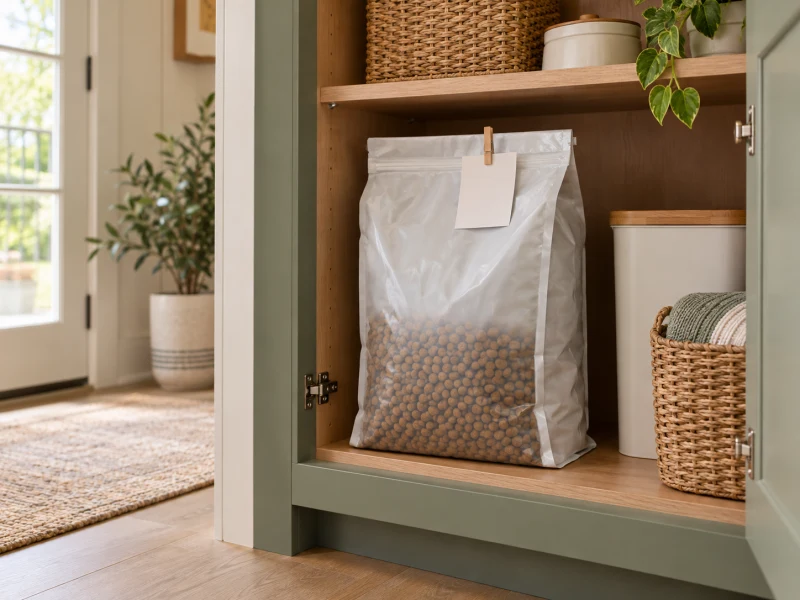
A larger supply can reduce repeated ordering, but it also creates a storage commitment. Small Pet Select directs cool, dry storage. Choose a pack that can be kept identifiable and protected from moisture rather than buying the largest size automatically.
Check the package condition on arrival and retain the lot and date information. If you transfer food to a suitable storage container, keep that information with it. An unmarked bin makes later questions about the exact formula or a questionable batch harder to answer.
Do not mix a new supply into old food before inspecting it. Visible contamination, moisture damage or an unexplained abnormal smell warrants a product question rather than an attempt to disguise it by blending. Contact the seller or manufacturer when the delivered condition is uncertain.
Compare the actual delivered price and selected pack size when deciding value. Do not use a fixed cost-per-day estimate without an appropriate individual feeding allowance. A cheaper price per pound is a poor reason to change a diet that does not need changing.
Change rabbit pellets before the old supply runs out
PDSA recommends gradual dietary changes. Keep enough of the established food to make an appropriate transition under the rabbit’s care plan, rather than allowing the old supply to disappear and making an abrupt switch unavoidable.
Introduce one deliberate change at a time where practicable. A new pellet, new treats and several unfamiliar foods arriving together make it harder to understand a later change in eating or droppings. Keep a simple record of what changed and when.
Continue observing ordinary eating and droppings. PDSA treats a rabbit stopping eating as an urgent reason to contact a veterinarian. Do not delay that call while trying a tastier pellet or waiting for a new food to become familiar.
Keep familiar hay and the wider routine available as appropriate. A refusal of one food should be assessed in context; a rabbit that has stopped eating normally needs a different response from a household simply comparing labels for its next planned order.
Keep retailer categories and health claims in perspective
A retailer may place ordinary pet food in a broad veterinary-diet category. That field does not establish a prescription status or approval for a particular medical condition. Use the actual manufacturer label and treating veterinarian’s advice.
Likewise, wording about freshness, quality or expert preference does not prove a clinical outcome. A recognizable formula and readable guaranteed analysis support a more useful buying decision than an assumed endorsement of this exact bag by an unidentified professional.
Do not buy on the expectation that pellets will cure dental disease, restore appetite or resolve digestive symptoms. Those are health questions. Keep product selection separate from treatment and avoid changing a prescribed diet to pursue a marketing promise.
Ask a precise question when the label does not settle it
For a product discrepancy, send the manufacturer the exact formula name, pack size and photograph of the delivered label. Ask which information applies to that package. A general question about whether the brand is good cannot resolve a specific difference in ingredients or analysis.
For an individual feeding question, bring the current diet record and the proposed label to the rabbit’s veterinarian. Explain any existing condition and what you want to change. Keep the two roles separate: the manufacturer can clarify its formula, while the clinician can assess whether that formula fits the animal.
Buy rabbit pellets when the formula and the plan both fit
Choose RPEL-10 when its Timothy-based, soy-containing formula suits the rabbit’s established needs and the ten-pound supply fits the household’s storage and replenishment routine. Select another appropriate option when the required life stage, ingredient restriction or veterinary plan differs.
Before ordering, confirm the full product name, RPEL-10 code, ten-pound size and current label. Before feeding, check the delivered package and plan any transition. These are separate decisions; a correct order can still need a gradual change in the feeding routine.
Keep the final purchase proportionate to its role. Appropriate hay, water, suitable other foods and daily observation continue after the bag arrives. A pellet purchase is successful when it supports that routine rather than replacing it.
View Small Pet Select Timothy Rabbit Food Pellets, RPEL-10, 10 lb on Amazon.
Comments are reviewed before they appear publicly. Please keep questions and feedback relevant to this article.