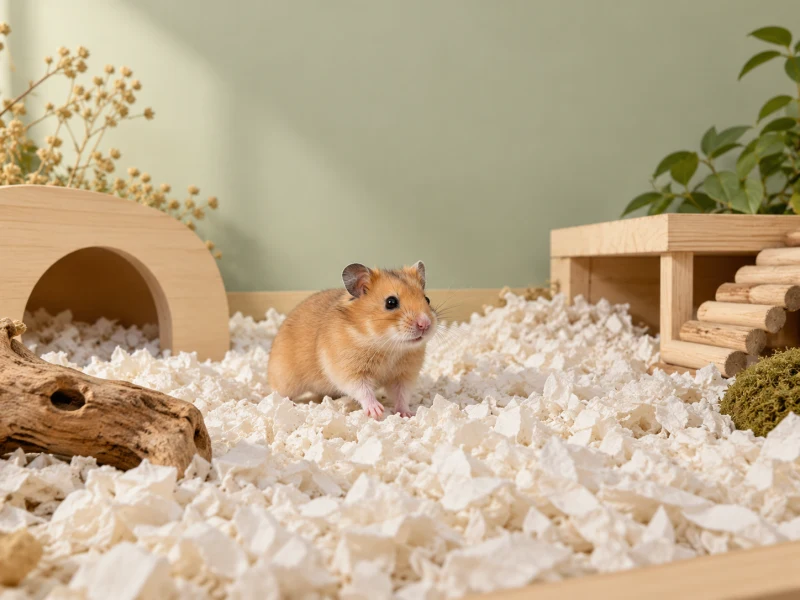
AI-created substrate scene; not BDING-178L, a complete enclosure, a measured depth or a tunnel-stability test.
Choose hamster bedding for the digging space and care routine you can actually provide. A large number on the package is useful only after checking the material, usable volume, depth and plan for removing wet patches. Scented masking or a dust-free headline cannot replace those checks.
Paper can be a practical main material, while aspen or hemp may have a role in an appropriate mixture. The choice is not settled by the word natural. Processing, additives and the structure of the finished bedding matter alongside its ability to absorb a spill.
Plan hamster bedding around the digging area
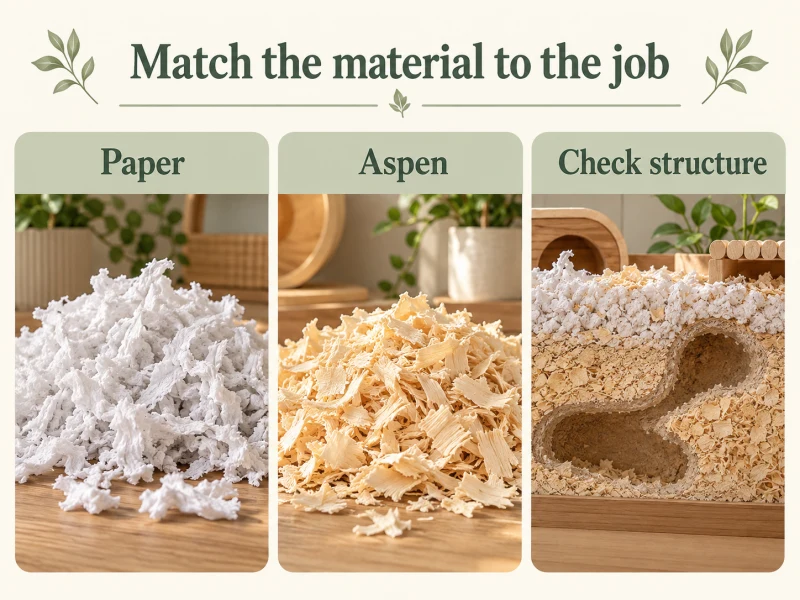
Measure the actual space available for the substrate before comparing bags. Record the enclosure’s internal footprint, the digging area and the depth that can be maintained without blocking ventilation or access. A tall mound in one corner is different from a usable digging area that stays accessible.
Leave the wider habitat plan separate. Adequate floor space, an appropriate wheel, hiding places, water and enrichment still need attention. Bedding cannot compensate for an enclosure that cannot accommodate the animal’s normal movement and care needs.
Blue Cross’s hamster care advice calls for a deep digging layer and names dust-extracted paper, wood pulp and hemp among material options. Its minimum depth advice is 20 cm. PDSA’s hamster guidance specifies at least 25 cm, or about 10 inches. These are different stated minimums, not evidence that a thin decorative layer is enough.
Choose the applicable care plan and make sure the enclosure can support it safely. Do not reduce the depth simply because one large bag is convenient to carry. Equally, do not bury equipment or build an unstable layout just to reach a number without considering the rest of the habitat.
Compare hamster bedding materials by their finished form
| Material | Potential role | Buying check | Limit to remember |
|---|---|---|---|
| Suitable paper or wood-pulp bedding | Main digging material or part of a mixture. | Fiber identity, additives and processing information. | Paper products do not all have identical structure or dust. |
| Aspen bedding | A possible component in an appropriate setup. | Exact wood and finished product, not a generic shavings label. | Do not assume loose aspen alone holds burrows well. |
| Hemp bedding | Another material considered in species-care guidance. | Small-animal use and product processing. | Burrow structure may need a suitable paper component. |
| Fluffy nesting fibers | Unsuitable nesting material. | Recognize cotton wool, kapok and similar strands. | Soft appearance does not establish safe nesting material. |
PDSA notes that aspen and hemp do not hold burrows well on their own and can be used with suitable paper bedding. That supports a material decision; it does not establish one verified mixing ratio for every pack and enclosure.
Do not substitute an unidentified wood shaving or sawdust product because aspen appears in a care source. Blue Cross treats aspen as an exception to its broader advice against wood shavings and sawdust. The exact material and its preparation still need to be known.
Compare the actual finished fibers rather than assigning every material one fixed performance score. A pack may vary in compression or texture, and independent evidence is needed before claiming a particular product has superior tunnel stability, absorption or dust control.
Check paper bedding labels before choosing the jumbo pack
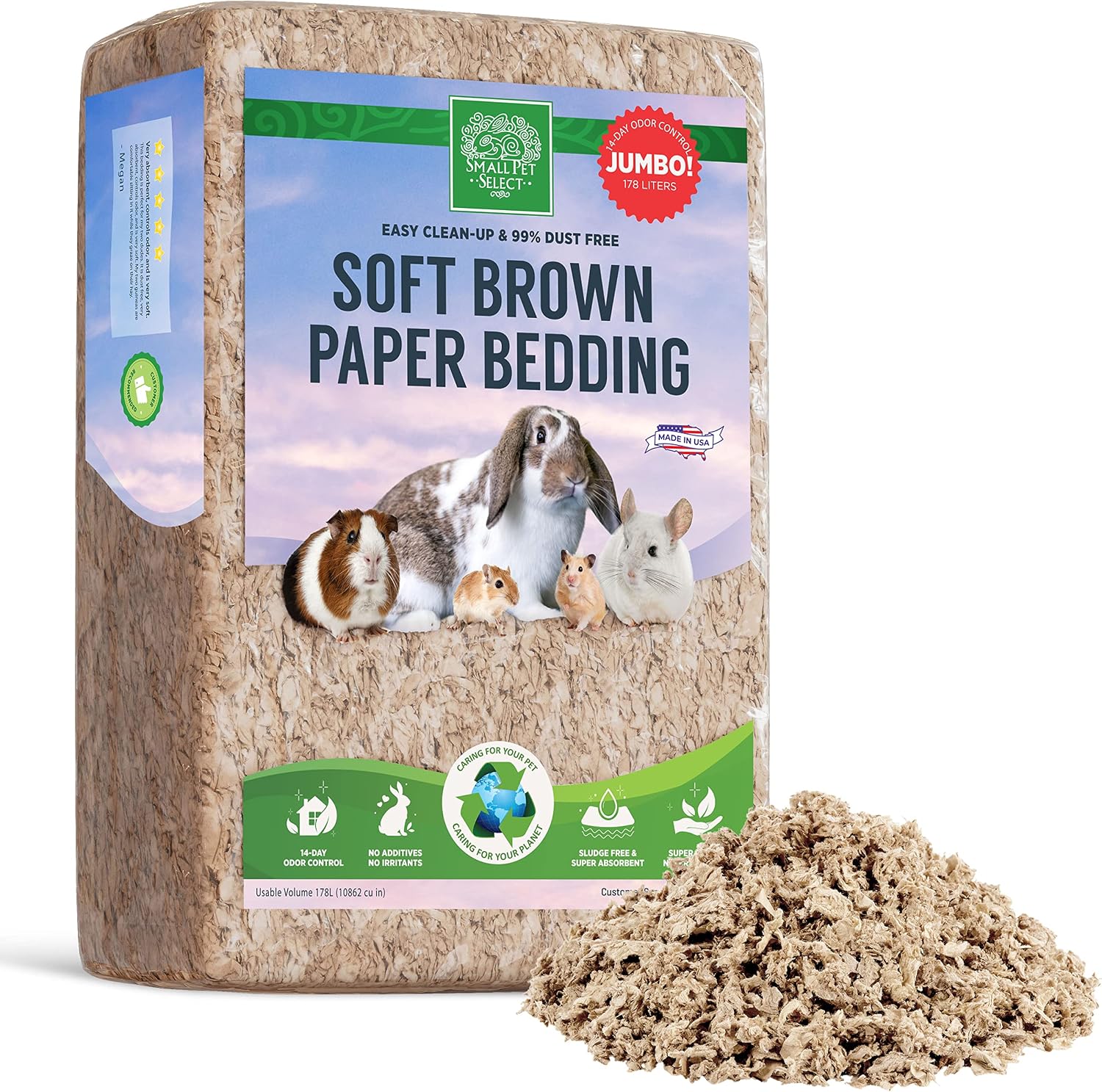
The Small Pet Select Soft Paper Bedding page identifies its natural brown bedding as virgin fiber. Match that product with BDING-178L rather than assuming a white-paper variant or a different pack has the same composition and usable volume.
Small Pet Select Natural Soft Paper Bedding, BDING-178L, ASIN B01CPO7JW0, is one paper option when you want the natural brown virgin-fiber product and have space to store the jumbo pack dry. Its manufacturer lists hamsters among the intended animals. Choose it for that defined material and pack identity, not a guarantee that every tunnel will hold or every hamster will tolerate it.
PRODUCT MENTIONED
Small Pet Select Natural Soft Paper Bedding, BDING-178L, 178 L usable
Amazon · Details on the retailer’s website
The selected pack’s stated usable volume is 178 L. The manufacturer’s size table distinguishes that from 52 L compressed. One figure describes the prepared supply; the other describes its packed form. Neither figure is a weight, a guaranteed enclosure fill or a promise about how long it will last.
Read the delivered bag as well as the online selection. A different color or size option may change the product being ordered. If the identity or contents do not match the planned purchase, resolve the discrepancy before opening and mixing the supply into an occupied habitat.
Use manufacturer performance wording cautiously. A dust-reduction statement on a bag is not proof that no airborne material can occur or that a pet cannot react. Avoid turning broad claims about irritants or odor into a medical assurance.
Compare usable hamster bedding volume before buying
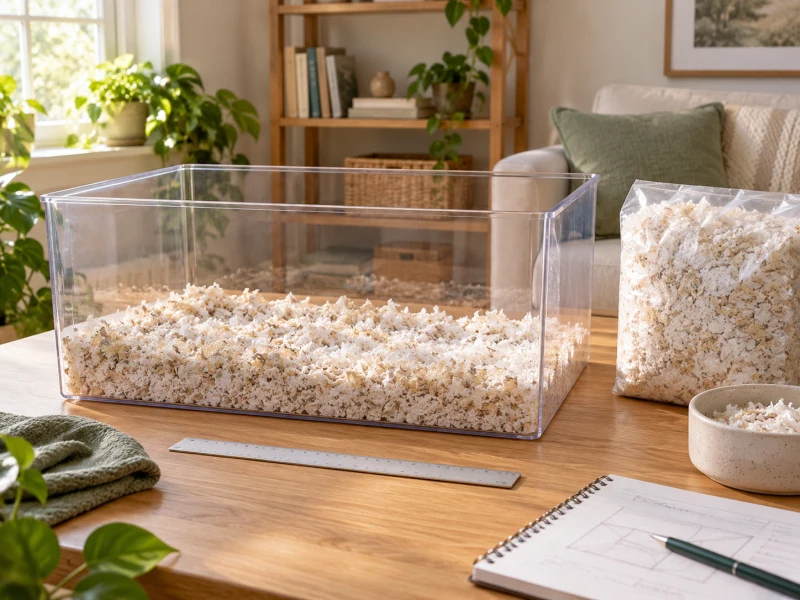
Put competing packs on the same basis. Record whether each quantity is compressed or expanded and whether a multipack figure describes one bag or the total. A cheap-looking package can be difficult to compare when the listing does not explain those distinctions.
A simple space calculation helps expose a mismatch. A hypothetical rectangular digging area measuring 120 cm by 60 cm at 25 cm deep represents 180 L of geometric space. That is arithmetic, not an enclosure minimum, a hamster-care endorsement or a prediction that one bag will create that exact finished bed.
Real layouts contain supports, equipment and uneven surfaces. Material also settles and is removed during cleaning. Use the calculation to plan and ask better questions, then confirm the actual prepared arrangement without assuming the stated usable volume measures identical in every home.
Compare the price you actually see with a clearly stated usable volume only when the units are comparable. Include delivery and storage in your decision. A larger pack is poor value when it cannot be kept dry or handled conveniently during a routine clean.
Make a comparison sheet before adding a second bag
Write down the material, stated additives, usable quantity and intended role for each candidate. Mark missing information as missing. A detailed advertisement for one product and a sparse title for another are not a fair basis for declaring either the better bedding.
Separate must-have conditions from preferences. An identifiable, suitable material and a workable digging arrangement are purchase conditions. Color and the convenience of a large pack are preferences to consider after those conditions are met.
Keep storage in the comparison. Can the unopened supply be kept away from leaks and household chemicals? Can the opened pack be closed and moved without scattering material? If a bulk purchase needs a container, include that space and handling task rather than assuming the bag will remain manageable wherever it is left.
For a household sharing care, agree which material is used in which area. Keep the current bag label available so a second carer does not replenish with a similar-looking substitute. A simple note about the intended product and spot-cleaning approach can prevent more confusion than a complicated material ranking.
Reconsider the plan when the actual arrangement differs from the sketch. A deep layer that blocks an opening or makes a necessary check impossible needs a layout correction. Do not accept a compromised habitat merely to use all the material already purchased.
Use a mixture for a clear purpose
Decide what a second material is meant to improve before adding it. The purpose might be a suitable structure within the digging area, rather than a cosmetic contrast or an attempt to use up an unsuitable bag.
Keep every component identifiable. A mixture does not become appropriate merely because one approved paper product has been added to it. Exclude unsuitable fibers, perfumes and unknown substances before considering how the remaining materials work together.
Follow a suitable species-care plan instead of inventing a universal paper-to-aspen percentage. The care sources identify useful material categories and limitations; they do not supply a controlled comparison of every brand or establish that a particular mixture always resists collapse.
Make substantial habitat changes deliberately. Keep access to familiar, dry and unsoiled material where appropriate, and avoid discarding the entire established environment simply to create a new color scheme. The hamster’s use of the habitat matters more than a neat photograph of untouched bedding.
Plan hamster bedding spot cleaning around wet areas
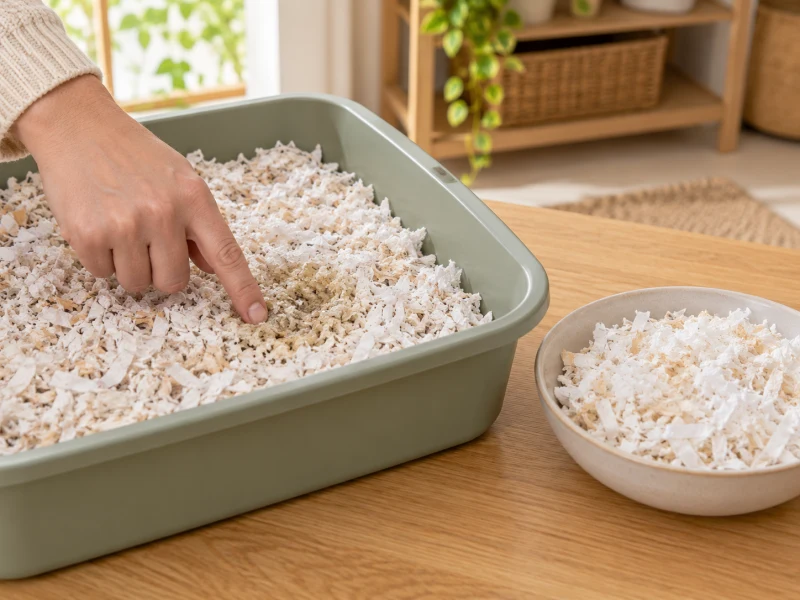
Inspect for wet or soiled areas and remove affected material as part of daily care. PDSA emphasizes spot cleaning and preserving suitable familiar bedding during larger cleans. Do not treat all material that has been in the enclosure as equally contaminated.
Check the water area when wet patches recur. More bedding will not resolve an ongoing leak or a badly placed container. Correct the underlying problem while keeping drinking water available and avoiding an unnecessary complete habitat disturbance.
Separate clean storage, waste and tools used for the enclosure. Keep household cleaning chemicals away from material that will return to the animal. Follow an appropriate enclosure-cleaning method and let cleaned components dry as required before rebuilding the habitat.
Odor is information to investigate, not a reason to add perfume. Look for wet material, spoiled stored food or an access problem. If the pet seems unwell or its behavior changes, seek veterinary advice rather than assuming a different substrate will settle the issue.
Exclude unsuitable nesting material at the shopping stage
Blue Cross and PDSA caution against fluffy nesting materials, including cotton wool and similar fibers. Avoid a product whose softness is promoted while its strands and intended use remain unclear. An image of an animal curled beside it does not establish suitability.
Do not use household scraps, treated materials or scented products as an improvised equivalent to an identified small-animal substrate. If a candidate’s ingredient information is missing, pause the purchase instead of filling the gap with a general assumption about paper or wood.
Keep chewing, bathing and bedding products in their own roles. A species-specific bathing material is not a large-volume substrate substitute. A decorative natural object is not automatically suitable for mixing throughout a digging layer.
Choose hamster bedding for the next refill as well as the first fill
Keep a short record of the selected product, pack identity and actual use. Note how much you prepare, which areas need spot cleaning and whether the storage arrangement remains dry. Those observations are more useful for a later purchase than an unsupported promise that one jumbo pack lasts a fixed number of weeks.
Review the choice if the material is unusually dusty, damp or contaminated on arrival. Keep the package and relevant batch information for a seller or manufacturer question. Do not introduce a questionable supply just because replacing it is inconvenient.
Choose the natural brown Small Pet Select pack when an identified paper material and large usable supply fit the planned habitat and storage. Choose a smaller suitable supply or a different evidence-based material arrangement when handling, structure or the pet’s needs make that more practical.
Species needs remain the starting point. If the household is still deciding which small pet to keep, compare guinea pig and hamster care commitments before buying bulk substrate. A bedding bargain is a small part of a much longer care decision.
View Small Pet Select Natural Soft Paper Bedding, BDING-178L, 178 L usable on Amazon.
Comments are reviewed before they appear publicly. Please keep questions and feedback relevant to this article.