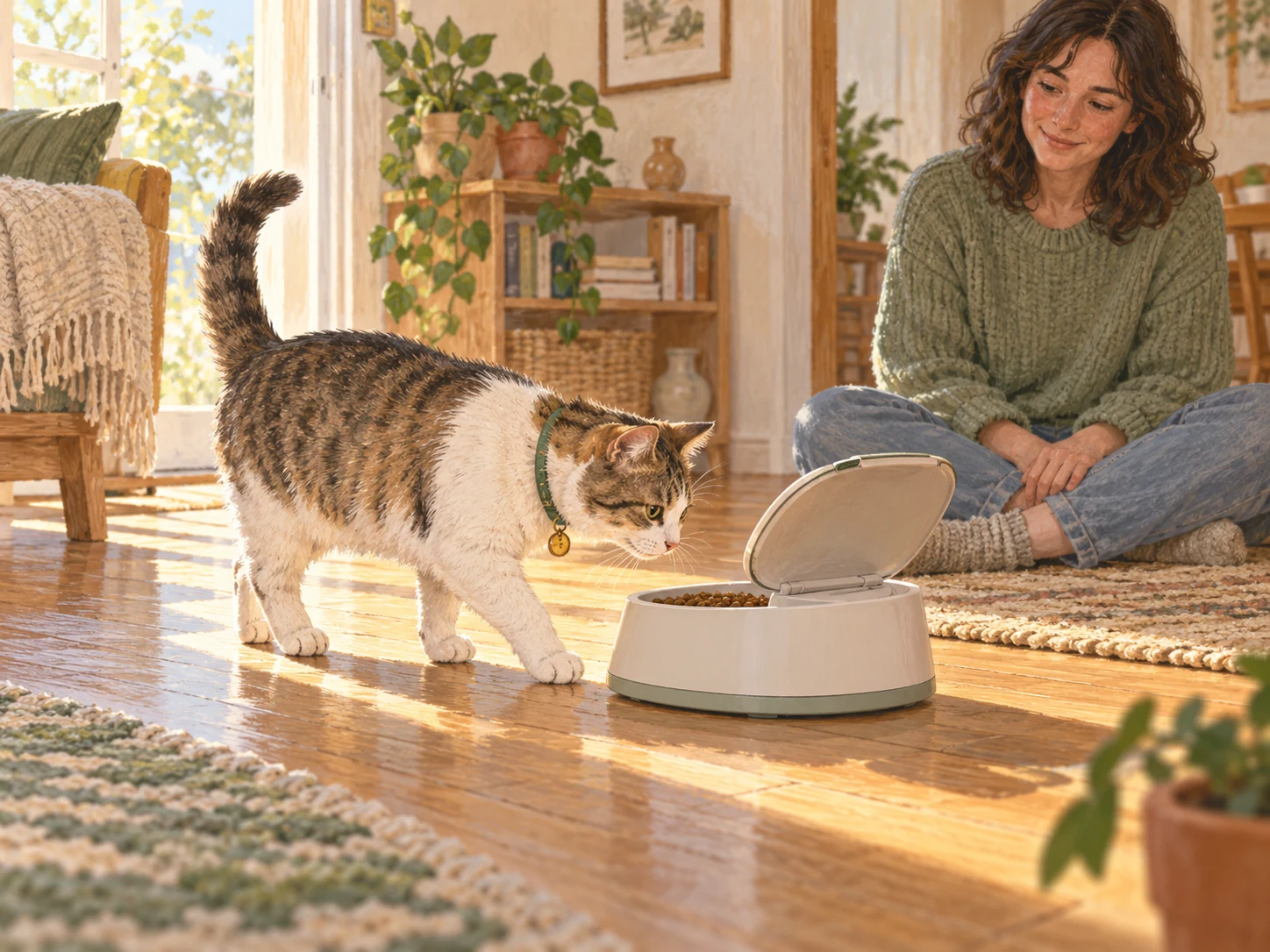
AI-created editorial scene: selective feeding needs a compatible tag and a cat comfortable approaching the station. Generic equipment, not a PLAF301 photo or test.
An RFID cat feeder uses a compatible identification tag to control access to a food bowl. It can help organize separate feeding, but you need to check which tag it reads, how many identities one unit supports, and whether the cat can comfortably approach the reader and lid.
The PETLIBRO One PLAF301 reads its dedicated collar tag, not an implanted microchip. One unit pairs with one collar tag. That distinction matters before purchase: a multi-cat product description does not mean one bowl recognizes and serves several cats with independent diets.
Decide what you need the RFID cat feeder to control
Separate two problems: distributing food at a time, and limiting which animal can reach that food. A basic timed dispenser may handle the first without handling the second. An RFID-controlled lid adds an access step, but it still needs a workable feeding location and supervision during introduction.
Start with your current routine. If one cat is regularly pushed away, feed separately under supervision before assuming technology will fix the relationship. The Feline Veterinary Medical Association’s cat-feeding guidance recommends separate stations with distance and visual separation, rather than requiring cats to eat together.
If the cats need different prescribed diets, ask your veterinarian how to manage access and monitor intake. A lid does not prove that a diet plan is being followed, and a feeder should not be relied on to administer medication unless the treating professional has specifically designed that plan.
| Your need | What to check | What not to assume |
|---|---|---|
| Scheduled dry meals | Compatible food, settings, and actual output | RFID is required for every timing problem |
| Access for one identified cat | Exact tag compatibility and reader setup | Any RFID tag or implanted chip will work |
| Several individual diets | Separate stations and an individual feeding plan | One unit supports several independent identities |
| A cat that dislikes collars or moving lids | Comfortable gradual introduction and an alternative | The cat will adapt because the device is automatic |
| Medical feeding concerns | Veterinary advice and direct observation | An app log establishes a diagnosis or treatment result |
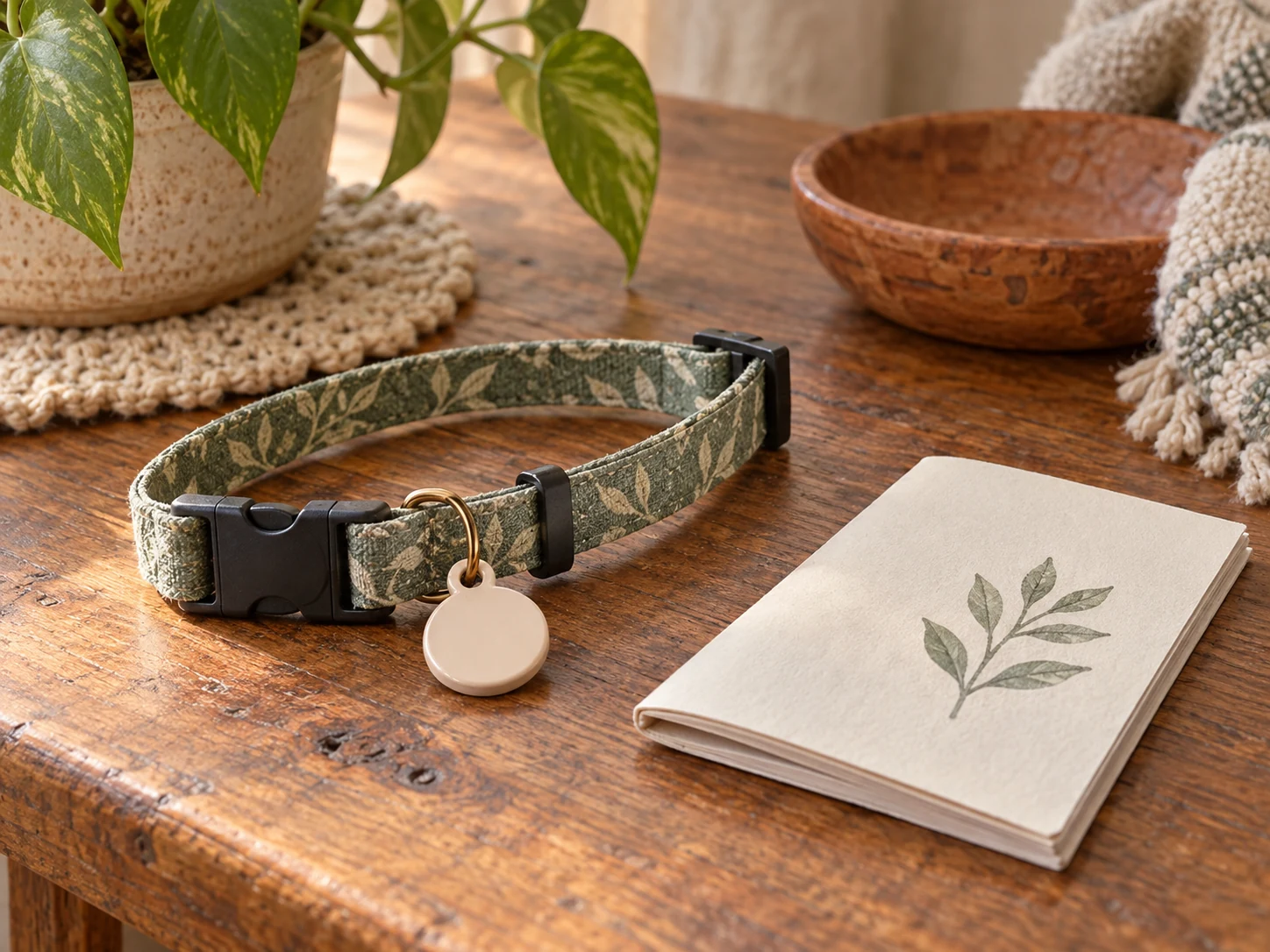
RFID cat feeder does not always mean microchip feeder
RFID describes identification technology; it does not establish universal compatibility. A product can require its own external collar tag rather than reading an implanted microchip. Confirm this before buying, particularly if avoiding a collar is the reason you want selective feeding.
The PETLIBRO One product FAQ states that the PLAF301 works with its dedicated tag, not microchips or other brands’ tags, and that a unit syncs with one collar tag. The brand describes a 4.2-gram tag on a snap-release collar. That is a product description, not a guarantee that a particular cat will accept or safely wear it in every situation.
Check collar fit and condition according to the supplied instructions, and observe the cat during introduction. If the cat cannot use the required collar comfortably, keep another feeding arrangement. Do not tape the tag to the bowl or improvise a modification that defeats the intended identity check.
Place the RFID cat feeder and reader correctly
The PLAF301’s reader mat is an essential part of recognition, not an optional decorative placement mat. PETLIBRO’s FAQ says recognition will fail if the reader is not correctly installed. Check its connection and setup as part of daily inspection rather than assuming the lid alone contains the entire identification system.
The manufacturer’s One RFID manual calls for a dry, level surface and says the RFID reader is not waterproof. It also tells users to keep the reader away from metal objects. Do not put the assembly where splashes, a leaking water bowl, or washing the floor will soak the reader.
For several One units, the manual specifies more than 10 inches, approximately 25 centimeters, between feeders to help prevent interference. The manufacturer’s current placement FAQ also specifies at least 5.9 inches between a Dockstream fountain and a One RFID feeder. That equipment spacing is not a promise of enough social separation between cats. You may need a different layout so that each animal can eat without facing or passing another.
Observe the whole access cycle with the intended cat: approach, tag recognition, lid movement, eating, and leaving. Check that the cat can reach the bowl normally and is not avoiding the reader. Do not force an animal into position merely to make a recognition test succeed.
PETLIBRO One RFID cat feeder: PLAF301
The selected PETLIBRO RFID Automatic Cat Feeder is model PLAF301, ASIN B0CX8VKMD9. The Amazon listing’s included-components section identifies one 3-liter feeder, one dedicated tag sensor, an RFID reader, a removable stainless-steel bowl with lid, and two bowl shields. Confirm the delivered package; the brand website also sells multi-unit packs.
The manufacturer specifies dry food only, with kibble from 2 to 15 millimeters in diameter. It supports 2.4 GHz and 5 GHz Wi-Fi; “5G” in the retailer title refers to the Wi-Fi band, not a mobile cellular connection. The app provides scheduled meals and feeding records, but a Wi-Fi claim does not establish coverage at the spot you choose.
| Feature | Established information | Decision limit |
|---|---|---|
| Identity | PLAF301; ASIN B0CX8VKMD9 | Match this model and the one-unit package |
| Recognition | One dedicated collar tag per unit; reader required | Not an implanted-microchip or universal-tag reader |
| Food | 3 L nominal hopper; dry kibble 2–15 mm | No wet-food cooling or compatibility established |
| Connectivity | 2.4 GHz and 5 GHz Wi-Fi | Not cellular service; verify your local setup |
| Backup | Three alkaline D batteries, not supplied | Emergency backup; Wi-Fi is disabled on battery-only operation |
| Cleaning | Stainless-steel bowl is dishwasher safe under the manual | Powered base and electronic reader must not be washed as a whole |
When this model fits the feeding plan
Consider the One if you want a dedicated dry-food station for one identified cat and can meet the collar, reader, placement, and maintenance requirements. It is less suitable if you need implanted-chip recognition, wet-food storage, a collar-free arrangement, or one unit to distribute independent meals to multiple tags.
For a wet-food routine, the PETLIBRO Polar wet-food guide addresses a different food-storage format. Its cooling and tray setup should not be transferred to this dry-food RFID model.
Food-stealing resistance and feeding-record accuracy have not been independently verified for this setup. A lid and shields may restrict access, but do not assume that another determined pet can never interfere. Observe your actual household before relying on the setup for a cat with a tightly controlled diet.
View the PETLIBRO One PLAF301 RFID feeder on Amazon.
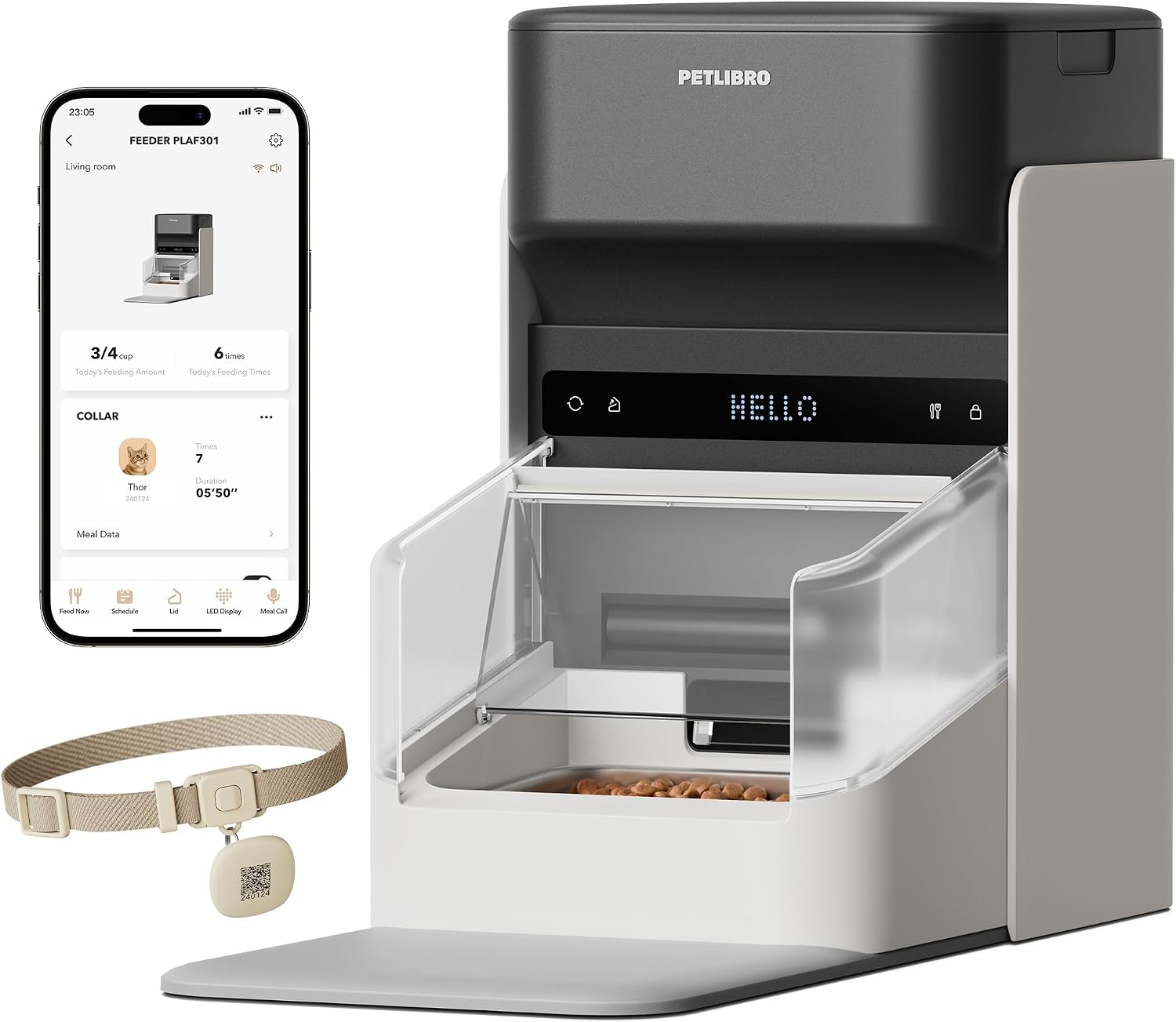
PRODUCT MENTIONED
PETLIBRO One RFID Smart Feeder PLAF301 — One Unit
Amazon · Details on the retailer’s website
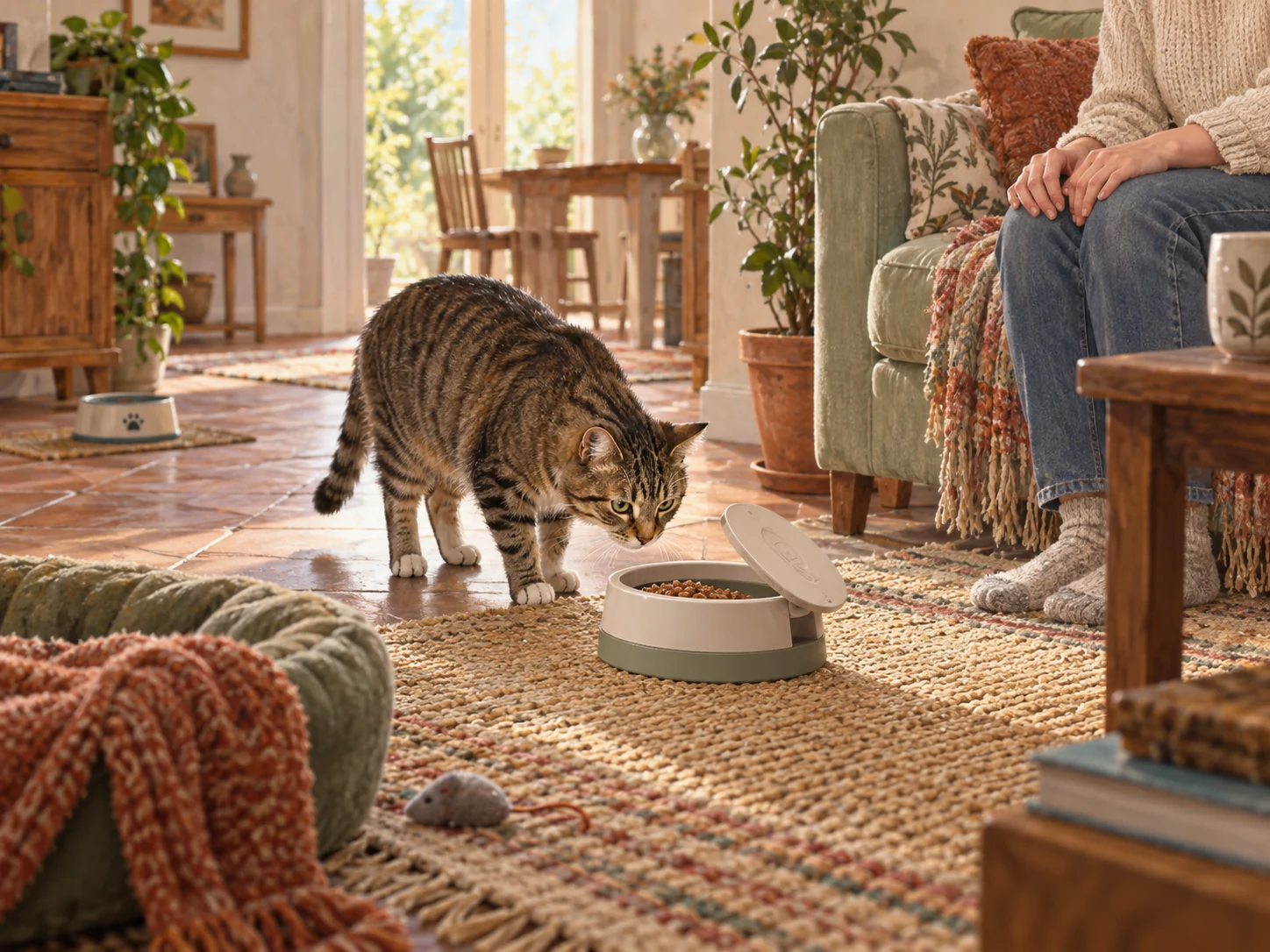
Introduce the RFID cat feeder before automatic meals
Keep a familiar feeding option available while the cat learns the new station. The goal is comfortable access to food, not a successful app pairing at the expense of eating. Read the exact training and lid-setting instructions rather than repeatedly closing the lid in front of a hesitant cat.
- Check the location. Use a dry, level spot with a comfortable approach, clear exit, and the required equipment separation.
- Assemble correctly. Install the reader, bowl, lid, and permitted shields according to the manual. Check connections before introducing food access.
- Pair the dedicated tag. Follow the manual’s pairing method and the PETLIBRO app instructions; do not assume another tag will substitute.
- Observe without rushing. Confirm that the cat can approach and eat comfortably. Stop and reassess if collar handling or lid movement is a problem.
- Check dispensing separately. Use compatible kibble and measure actual output against the individual feeding plan.
- Watch other pets. Check whether they crowd, block, or interfere with the intended cat’s station, even when they cannot normally unlock it.
Do not withhold a needed meal to make the cat use the machine. If the cat does not eat normally, provide an appropriate alternative and seek veterinary advice about reduced intake. The equipment is useful only if the cat can actually use it.
Treat feeding logs as records, not proof of consumption
An RFID cat feeder can organize information about recognition and scheduled feeding, but a record is not automatically a verified measurement of food swallowed. Read what the app’s fields mean. A recorded visit, a dispensed portion, and a consumed gram are different events.
Use logs alongside direct observation, leftover checks, and the feeding plan. If you notice a change, inspect the food path, reader, connection, and cat instead of concluding immediately that the animal’s appetite changed. Technology can add useful clues while also creating equipment-related explanations.
Cat Friendly Homes’ resource guidance stresses access to individual food bowls and separated resources. An app dashboard does not replace that physical arrangement. Keep food, fresh water, toileting, and resting areas suitable for each cat.

Plan cleaning, power, and a manual backup
Before cleaning, follow the manual’s power-off instruction: unplug the cable from the outlet and remove the backup batteries. Use a soft damp cloth on the base and avoid washing electronic components. Only the stainless-steel bowl is identified there as dishwasher safe. Do not rinse the reader mat or put the entire feeder in a dishwasher because one removable part can go in.
Use the original compatible power equipment and follow the manual for installing three alkaline D backup batteries. PETLIBRO says batteries are an emergency backup, not the sole normal supply; Wi-Fi is disabled during battery-only operation while stored meal schedules continue. Verify the permitted behavior at home and maintain a way to feed manually.
Inspect food, bowl access, reader connection, and the cat daily. A three-liter hopper does not establish a safe number of unattended days. Keep a responsible caregiver in the plan when you are away, especially if feeding access or a prescribed diet makes a missed meal significant.
Frequently asked questions
Will this RFID cat feeder read my cat’s implanted microchip?
No. The PETLIBRO One PLAF301 uses its dedicated collar tag and does not read implanted microchips or other brands’ tags. Confirm this distinction before ordering. A device being described as RFID does not establish universal compatibility with every form of animal identification.
Can one One feeder recognize two cats?
The manufacturer says one unit syncs with one collar tag. Do not assume a multi-cat marketing description means multiple independent identities at one bowl. A household needing separate access may need separate stations and an individual feeding plan; equipment spacing and cat comfort both matter.
Is the RFID reader mat waterproof?
No. The manual identifies the reader as not waterproof and requires a dry setup. It is an electronic identification component, not a washable feeding mat. Protect it from splashes and follow the cleaning directions for each part instead of rinsing the whole assembly.
Can I put wet food in the One PLAF301?
No. PETLIBRO specifies dry kibble from 2 to 15 mm for this model. A closing bowl lid is not refrigeration and does not turn the hopper into wet-food storage. Use a suitable wet-food routine if that is what the cat’s feeding plan requires.
Choose a selective station the cat can use comfortably
An RFID cat feeder is most useful when its identification system solves a real access problem without creating a new barrier to eating. Check the tag, one-unit identity limit, food compatibility, reader placement, and the cat’s response before focusing on app features.
The PETLIBRO One PLAF301 is a defined dry-food option for one dedicated collar tag, with clear limits around microchips, water exposure, and backup power. Plan gradual introduction, direct meal observation, and daily cleaning and connection checks. If your cat cannot use the required collar or station comfortably, keep an appropriate separate feeding arrangement. Successful identification is only part of the goal; dependable access to the right meal is the result that matters.
View PETLIBRO One RFID Smart Feeder PLAF301 — One Unit on Amazon.
Comments are reviewed before they appear publicly. Please keep questions and feedback relevant to this article.