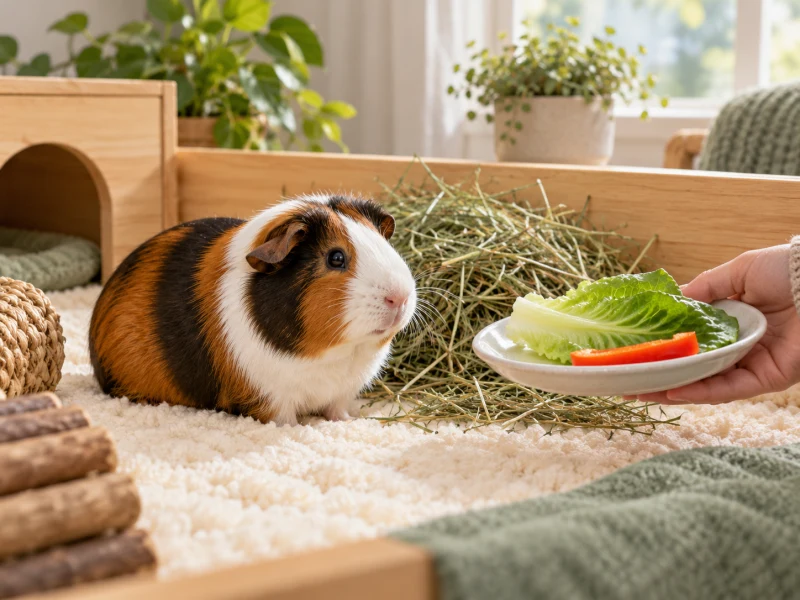
AI-created guinea-pig feeding scene; not a measured portion, complete diet or documented feeding test.
Choose vegetables for guinea pigs as one part of a hay-based daily diet. Start with recognizable foods such as romaine lettuce, cilantro and bell pepper, wash them under plain running water, and introduce unfamiliar ingredients gradually. A colorful bowl cannot replace unlimited appropriate hay or an individual feeding plan.
For a healthy adult already eating normally, the useful decision is which familiar greens to prepare and how to handle them. A guinea pig that is pregnant, growing, losing weight or being treated for urinary or digestive problems needs advice specific to that animal before its diet changes.
Keep hay at the center of the feeding routine
NC State’s veterinary care advice places grass hay at the center of guinea-pig feeding and describes leafy greens as a smaller part of the daily diet. Fresh vegetables add variety; they do not supply the same continuous chewing and fiber opportunity as hay.
Check the hay supply before preparing the salad. Then consider the guinea pig’s usual plain, species-appropriate pellets, its familiar vegetables and any directions from its vet. Adding more of one category because another has run out changes the diet rather than maintaining it.
Keep clean drinking water available as well. Moist leaves can contribute water, but they are not a reason to remove a working bottle or an accessible water bowl. Check the actual drinking outlet and whether each animal can reach it; a full container alone does not prove that water is flowing.
Identify vegetables for guinea pigs by their actual names
Buy a named vegetable rather than an unidentified mixed leaf. Romaine, iceberg and a bag simply labeled salad are different choices. A pre-seasoned salad, a ready-made meal and plain fresh leaves also have different ingredients, even when the package photographs look similar.
VCA’s guinea-pig feeding information includes romaine and other leaf lettuces, cilantro and bell pepper among fresh-food options. Those names provide a starting point for checking an existing diet; they do not make every quantity or combination suitable for every animal.
| Food to identify | Practical preparation decision | Limit to remember |
|---|---|---|
| Romaine lettuce | Separate the leaves, inspect them and rinse away soil. | A familiar leafy component, not a replacement for hay. |
| Red or green leaf lettuce | Confirm the named lettuce instead of using an unspecified mixed salad. | Do not assume iceberg is nutritionally equivalent. |
| Cilantro | Check that it is correctly identified, fresh and free of added dressing. | Introduce it gradually if it is unfamiliar. |
| Bell pepper | Use plain fresh pepper; remove the stalk and loose seeds during preparation. | Vitamin C content does not make a whole pepper an individual serving. |
| Parsley, kale or other greens | Check the exact ingredient against the animal’s feeding plan. | Suitable-food lists are not instructions to feed all greens in equal amounts. |
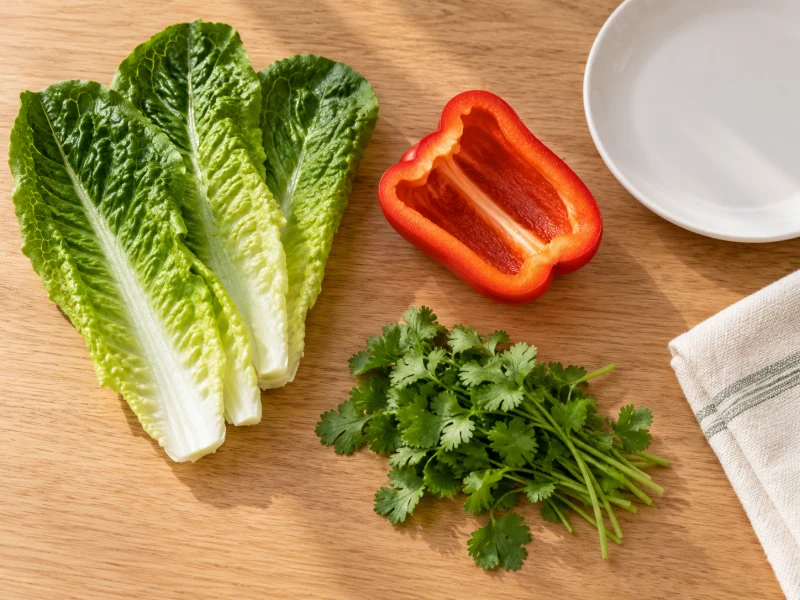
Keep the shopping list short enough to identify every ingredient reliably. If a household member brings home a different leaf, leave it out until its identity and suitability are clear. Guessing from color or shape is a poor substitute for a name on the package or a reliable produce label.
Choose variety without treating every green as interchangeable
UC Davis’s nutrition information emphasizes moderation and variety and lists several vegetables that contribute vitamin C. That is a reason to consider the complete diet, rather than repeatedly adding more of whichever food has the most appealing nutrient claim.
Different veterinary resources organize their food lists differently. A vitamin-C list answers a different question from a list considering mineral content or an individual animal’s urinary history. One source naming a vegetable does not cancel a vet’s instruction to limit it for a particular guinea pig.
For an established healthy adult, retain familiar ingredients while making a small, deliberate change. Do not introduce several unfamiliar foods together and then try to identify the cause if appetite or droppings change. Keep a simple note of what changed and when.
A fruit-flavored treat or dried vegetable snack is also not interchangeable with the fresh ingredient. Its serving directions, ingredients and role can differ substantially. There is no need to buy an additional supplement or packaged treat simply to prepare an ordinary vegetable dish.
Wash vegetables for guinea pigs with plain water
Prepare the animal’s food on a clean surface with clean hands and utensils. Keep it apart from raw meat, dirty sink surfaces and cleaning chemicals. Discard moldy produce rather than trying to make it acceptable by washing it.
The FDA’s fresh-produce cleaning advice recommends plain running water and advises against soap or produce-washing detergents. It also recommends washing produce before cutting so surface dirt is less likely to move into the food.
Separate leafy vegetables so water reaches the surfaces you intend to serve. Rub produce gently where appropriate, inspect the folds and remove damaged portions from otherwise sound produce. A quick spray over the top of a tightly packed handful may leave soil underneath.
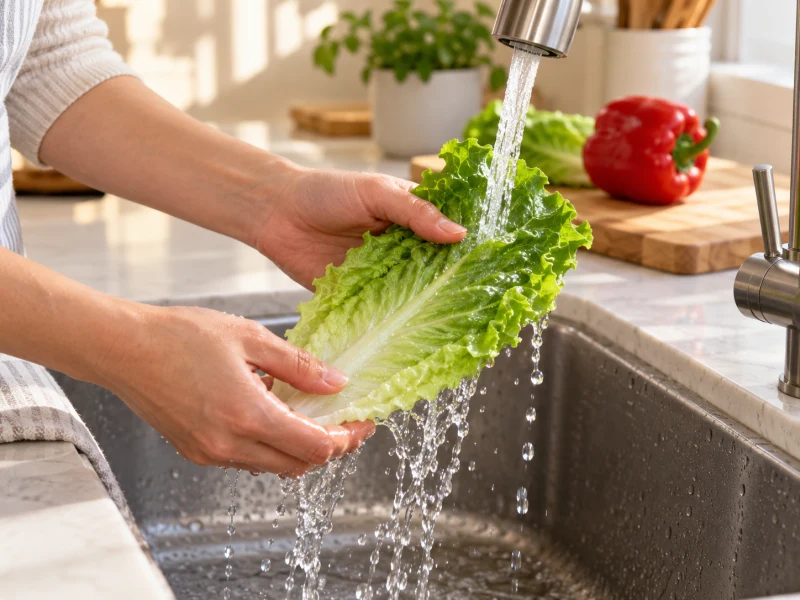
Use a clean towel or clean preparation surface after rinsing. Do not add dressing, oil, salt or seasoning. Keep the familiar shape and presentation manageable for the individual animal, especially if a vet has given instructions concerning dental problems or difficulty eating.
Prepare only what you need rather than leaving a large mixed batch on the counter. Return the remaining produce to suitable food storage promptly. Follow its label and normal food-safety requirements; a warm kitchen is not storage for cut vegetables.
Introduce new vegetables for guinea pigs gradually
Offer a small amount of one unfamiliar suitable food alongside the established routine, rather than replacing the usual meal with it. Watch whether the guinea pig actually eats it, continues eating hay and produces its normal droppings. Acceptance of one bite is not proof that a much larger amount will suit it.
Use the same observation routine for each animal in a group. An empty dish can mean that one confident guinea pig ate most of the vegetables. Place food so all animals have access and observe quietly without repeatedly lifting or chasing them.
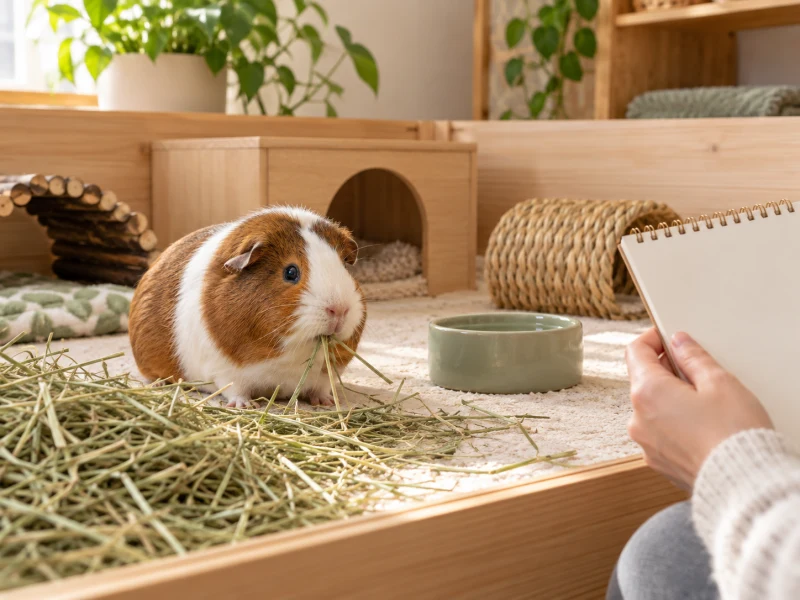
A short care note can record the date, the ingredient, how much was offered relative to the usual portion, and any change in appetite or droppings. It does not need to become a nutrient calculation. Its purpose is to give the next caregiver and, if necessary, the vet a clear account.
Remove uneaten fresh food before it deteriorates and clean the feeding dish. Do not keep adding fresh leaves on top of old damp remains. A clean, predictable routine is more useful than an elaborate salad that nobody checks after serving.
Make the care note easy to find rather than depending on memory. If one person prepares food and another checks the enclosure later, agree who removes leftovers and reports a change. Keep replacement ingredients off the menu until the usual caregiver confirms them. This is especially useful when a familiar vegetable is unavailable at the store: an ordinary shopping inconvenience does not require an abrupt dietary experiment.
Vitamin C requires a diet decision, not a marketing shortcut
Guinea pigs require vitamin C from their diet. NC State specifically discusses bell pepper as a useful source and warns against relying on vitamin C added to drinking water. The animal’s overall intake, food freshness and individual condition still matter.
Check the manufacture and storage information on pellets rather than assuming that the word fortified proves an unlimited shelf life. If you are concerned about adequacy, take the pellet label, usual fresh-food list and any supplements to an experienced vet. That provides a better basis for advice than adding several overlapping products.
Do not calculate a treatment dose from a vegetable photograph, a pet-store label or another owner’s routine. Pregnancy, illness and a previous diagnosis can change the discussion. A dietary concern deserves a feeding review rather than an automatic purchase.
When appetite changes, stop experimenting and contact a vet
Reduced eating, fewer droppings, unusual droppings, lethargy or difficulty chewing should prompt veterinary advice. Do not wait for a favorite vegetable to restart normal eating or assume that a sudden refusal is merely fussiness. NC State identifies not eating as a potentially urgent problem in guinea pigs.
Describe when the animal last ate normally, what changed in its food, and what you noticed about drinking and droppings. Keep the usual food labels and any care notes available. Avoid trying a succession of new foods or supplements while an animal appears unwell.
Build a vegetable routine the whole household can follow
Write down a small set of familiar vegetables for guinea pigs, the individual feeding instructions, and who checks leftovers and water. Keep the list with the existing care plan so holiday cover does not become an improvised menu.
When deciding whether guinea pigs fit your household at all, compare their daily feeding and companionship responsibilities with the care needs of guinea pigs and hamsters. Their foods and daily routines are not interchangeable.
Keep appropriate hay available, identify each fresh ingredient, wash it with plain water and make changes gradually. For a healthy adult eating its established diet, careful preparation and quiet observation usually matter more than adding another accessory to the shopping basket.
Comments are reviewed before they appear publicly. Please keep questions and feedback relevant to this article.