
AI-created home-care illustration; the comb is generic, not Andis 65730 product photography or a test.
Yorkie grooming between cuts should follow the coat your dog wears now. A shorter pet trim and a long silky coat need different amounts of preparation, but both benefit from gentle inspection, manageable sections and a clear washing and drying plan.
Keep the routine within what you can do comfortably. A fine metal comb may help with an appropriate coat check; it does not make a close mat, an eye-area trim or an unfamiliar paw haircut a suitable beginner task.
Start Yorkie grooming with texture and length
The Yorkshire Terrier Club of America’s coat information describes the typical fine, silky coat and also notes that individual Yorkies can have cottonier, woollier or different coat textures. A breed photograph therefore cannot establish the routine for your dog.
Check the actual length and how the hair behaves. Does it lie freely, catch around equipment contact or become difficult to separate? Discuss those observations with the groomer instead of choosing a schedule solely from the breed name.
In its Yorkie grooming interview, the American Kennel Club distinguishes show-coat maintenance from a pet trim and describes the extra work of keeping a longer coat clean and tangle-free. A manageable pet length can be worth discussing when the longer style exceeds the household’s care time.
A shorter trim still needs observation. It does not prevent every knot, remove the need to dry wet hair or explain a new sore area. The useful plan changes with the individual coat and care conditions.
Inspect fine hair before Yorkie grooming
Use good light, comfortable footing and a position the dog accepts. Look at accessible coat gently before introducing the comb. Do not lift a tangle away from the body to create an apparent gap for another tool.
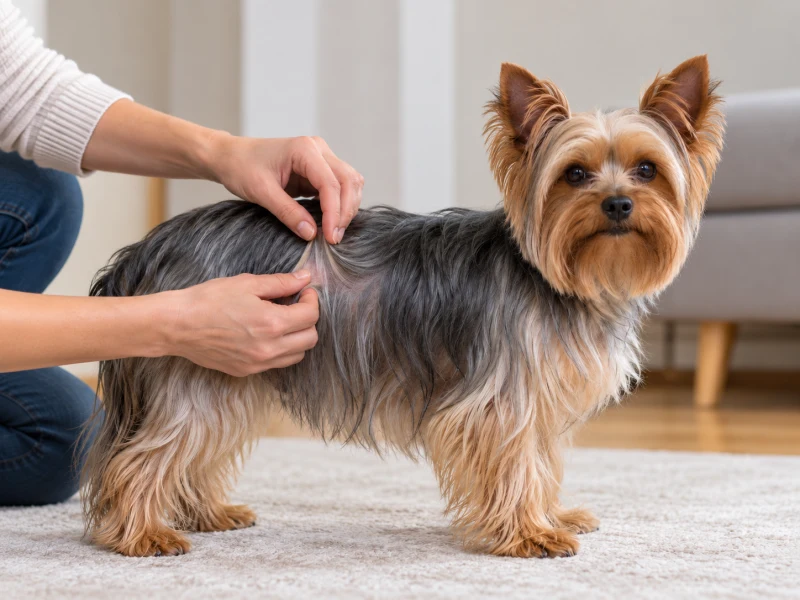
Separate ordinary loose hair from a resistant knot or close mat. If the skin is hidden, the area feels compacted or handling causes pain, stop and obtain appropriate assessment. Fine hair is not a reason to use more force or make repeated attempts.
The club’s grooming section highlights checks around the ears, under the legs and around the neck and chest. These are observation areas, not instructions to hold the dog in an awkward pose. Work only where you can see and handle comfortably.
| What you see | Useful home task | When the plan changes |
|---|---|---|
| Short pet coat that lies freely | Gentle inspection and suitable light maintenance | New sensitivity, redness or repeated catches |
| Longer silky hair | Small demonstrated preparation and finishing checks | Hidden skin or hair that moves as one compacted patch |
| Contact area under a harness | Observe the hair after equipment is removed | Recurring tangling, dampness or irritation needs review |
| Dirty or gritty coat | Assess a suitable cleaning and drying plan | Dragging a comb through dirt or wetting existing mats without help |
| Eyes, ears, paws or sanitary area | Identify work for the next professional visit | Unfamiliar cutting or treating a new symptom at home |
Keep Yorkie grooming focused on manageable sections
Have the groomer demonstrate the appropriate brush, section size and handling on your dog’s actual coat. The metal comb can then be a separate gentle check where that task is appropriate. Do not treat it as the first tool for every patch.
A smooth pass and a catch are different observations. If the comb catches, stop and inspect without pulling. A finer tooth area is not a required second pass, and changing tools does not make a resistant patch safe.
The AKC interview recommends regular brushing and attention to changes as a young dog’s coat develops. Use an individual routine rather than extending a session to meet a fixed number of minutes. More collected hair does not establish a better result.
Dogs Trust’s handling advice supports gentle positive introduction and stopping when the dog becomes uncomfortable. Keep accepted touch, the sight of a tool and actual grooming in manageable stages rather than combining every unfamiliar experience at once.
An Andis comb for a separate finishing role
The selected option is Andis 65730, ASIN B004UTDHP2, silver and listed at 7½ inches. It has coarse and fine tooth areas on one straight spine. The size describes the listed comb length, not an exact tooth-gap measurement.
The Andis Company product-video record identifies 65730 as a 7.5-inch steel comb. The current Andis store’s 7½-inch comb carries a different number, 68550. Check the selected 65730 and supplied directions rather than treating those numbers as interchangeable.
A longer straight tool can feel awkward around a small dog’s contours. Control, visibility and the actual working area matter more than choosing a product broadly advertised for all sizes. Rounded tooth ends do not guarantee comfortable pressure or prevent pulling attached hair.
Consider the Andis 65730 when a separate gentle comb check belongs in your Yorkie’s demonstrated maintenance routine and the length feels controlled in your hand. Skip it if the coat already resists gentle work, the area is too small to manage comfortably or your existing appropriate tool meets the need.

PRODUCT MENTIONED
Andis Steel Comb — 65730, 7½ Inch
Amazon · Details on the retailer’s website
Review harness-contact hair after ordinary use
Check accessible neck, chest and under-leg contact areas when the walking equipment is off. Note whether hair lies freely or repeatedly catches in the same region. Do not pull a buckle or strap through tangled hair to finish removing equipment quickly.
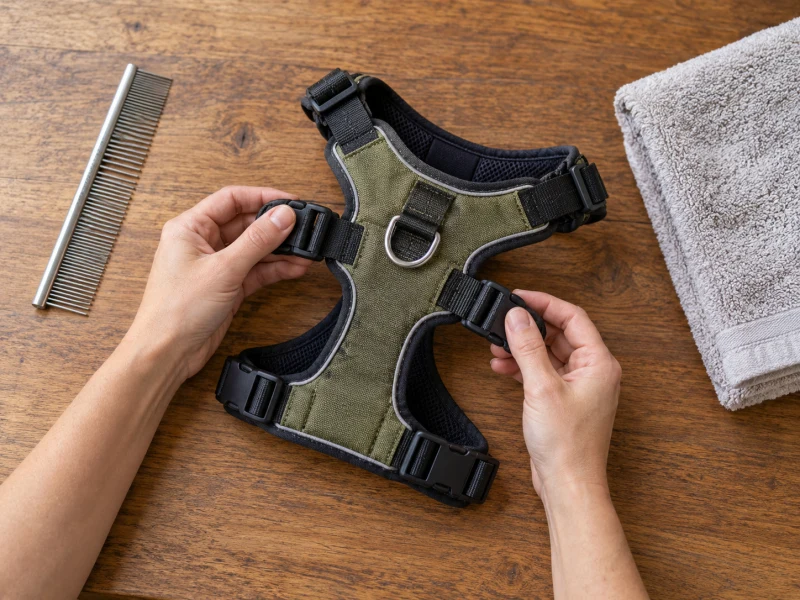
Friction, retained dampness and the actual coat length can change the workload. A recurring issue deserves a fit and care discussion with appropriate help. A new harness brand is not automatically the solution, and grooming cannot establish that equipment fits correctly.
Tell the groomer where the problem occurs and show the actual equipment when useful. That can inform a practical maintenance plan without improvising a shorter cut at home. Ask the vet about redness, skin damage or pain rather than treating it only as a cosmetic tangle.
Plan Yorkie grooming baths around coat condition
Assess the coat before bathing. Blue Cross warns that existing mats become more difficult during shampooing. The AKC Yorkie interview also cautions against brushing a dirty coat. Grit, close matting or discomfort calls for a suitable care plan rather than choosing between forceful combing and an unplanned bath.
Use an appropriate dog product matched to the actual coat and skin needs, and follow its label. A detangler or conditioner requires its own suitable directions; no product, dose or mixture is established by the word silky.
Have stable footing, rinsing access and drying arranged before wetting the dog. Rinse as directed and keep water and product away from the eyes, ears and nose. Do not turn general coat maintenance into ear flushing, anal-gland work or treatment for tearing.
Set the bath interval with the care team and actual conditions. A show-coat routine is not a universal calendar for a household pet. Persistent odor, itching or a new coat change needs assessment rather than repeated washing.
Dry gently and check beyond the surface
The AKC’s drying advice recommends gently pressing a towel into the coat instead of vigorous rubbing that can create tangles. Let the dog accept the towel handling and keep the work comfortable.
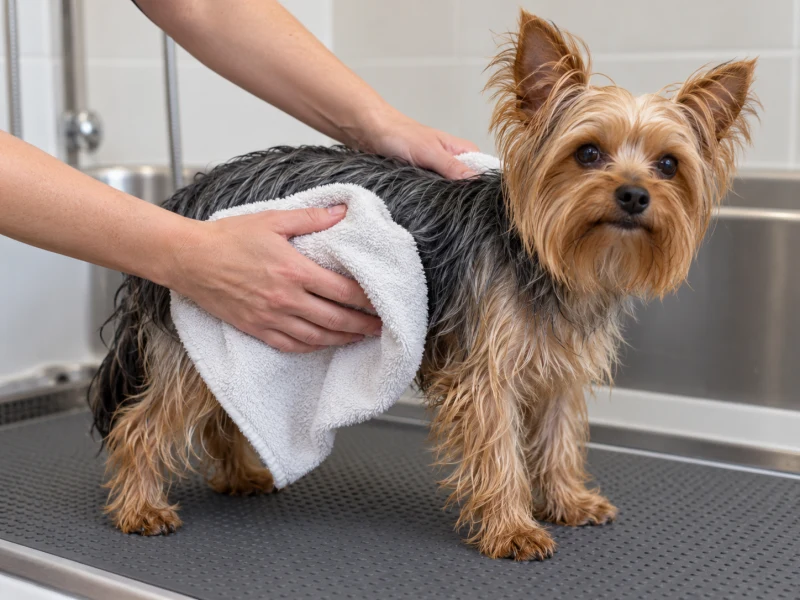
A towel stage may not complete drying for a longer coat. Check the actual result and ask the groomer how to finish it on your dog’s length. A dry-looking outer layer does not show that every area is dry.
If powered drying is needed, use suitable dog equipment and follow its exact instructions with gradual introduction and continuous supervision. The AKC cautions against substituting a human blow dryer or relying on heat. Do not invent a universal setting or nozzle distance from a photograph.
If the dog cannot remain comfortable or you cannot finish appropriate drying, use professional support. A short pet trim does not justify leaving unresolved damp areas, and increasing heat is not a substitute for a manageable routine.
Keep fine-hair care and close cutting separate
Leave unfamiliar eye, ear-edge, paw and sanitary trimming to a suitable professional. A comb does not create a reliable skin shield for scissors. Fine hair can move with the skin, and a small dog can still change position during cutting.
Ask about unexplained tearing, ear odor, pain or skin changes rather than covering them with grooming products. Coat inspection can reveal a concern without establishing its cause. Do not copy a breed-style procedure as treatment.
Use Yorkie grooming notes between appointments
Record the current length, areas maintained comfortably, recurring snags and any change after wet walks or harness wear. Bring those observations to the groomer and ask which home tasks should remain, change or stop.
Inspect the comb for damaged or rough teeth, remove hair and follow its own care directions. No particular chemical soak or sterilization method has been verified for this exact listing. Store it dry and protected from damage, away from the dog.
A practical trim can reduce work, but no cut removes every care responsibility. Choose a length and appointment plan you can sustain while the coat remains comfortable.
Questions about Yorkie coat maintenance
Does every Yorkie have the same silky coat?
No. The breed club describes texture variation. Base the routine on the actual coat and its response, with professional advice when it becomes difficult to maintain.
Can fine teeth clear a stubborn knot?
Do not force them through resistance. Stop for a close mat or hidden skin and ask for appropriate help. A finer section is a different contact, not an escalation step.
Can I keep a longer coat without doing haircuts myself?
Yes, with a workable professional plan and suitable home maintenance. If the care burden is too high, discuss a more practical length rather than extending unfamiliar cutting tasks.
Maintain a coat the household can manage
Yorkie grooming works best when actual texture, length and contact areas guide the routine. Keep preparation gentle, arrange washing and drying before starting, and use professional help for resistance, pain or unfamiliar close work.
If a separate comb check fits that routine, check the Andis 65730 7½-inch comb on Amazon. Choose it for a defined task rather than a promise that one tool can maintain every silky coat.
Comments are reviewed before they appear publicly. Please keep questions and feedback relevant to this article.