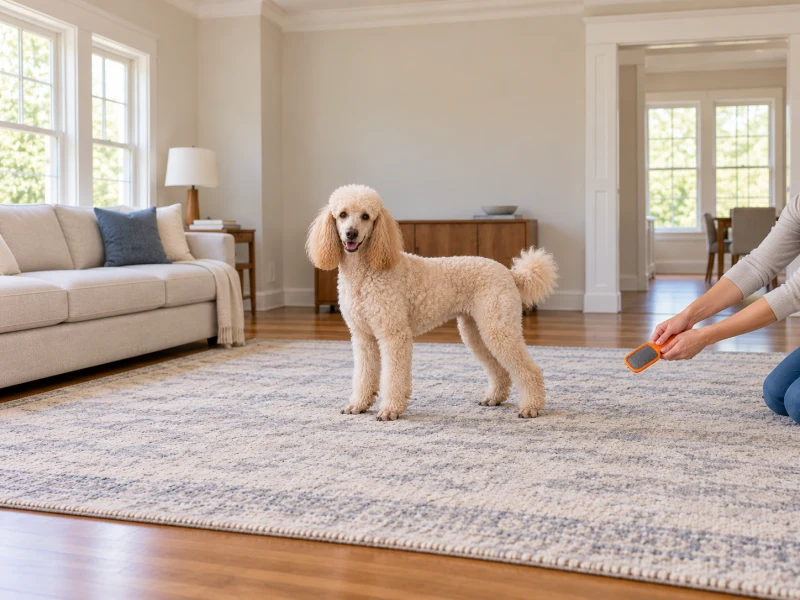
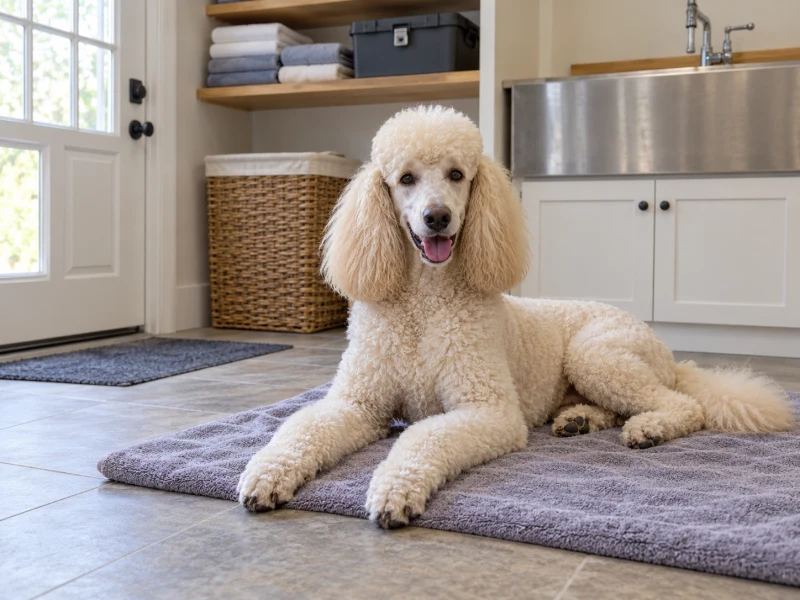
AI-created between-appointments illustration using a generic brush; not a FURminator or Andis product test.
Poodle grooming between professional appointments is mainly about keeping the existing coat manageable: observe the curls, use suitable gentle preparation, check for resistance and arrange washing and drying when appropriate. A home session does not have to become a haircut.
Start with the length your dog actually wears and the care your groomer has demonstrated. A short pet trim and a longer styled coat create different maintenance demands. If the routine is repeatedly difficult, discuss a more manageable length rather than relying on stronger tools.
Plan poodle grooming around the current coat
The American Kennel Club’s Standard Poodle article describes routine brushing and the greater ongoing care of longer trims through an interview with professional Poodle handler and groomer Gail Wolaniuk. It also emphasizes avoiding scratches and contacting a vet about wounds or skin changes.
Use those coat-care principles with an individual plan. A breed name does not establish one home frequency, tool pressure or appointment interval. Ask your groomer what the current length needs, which areas you can maintain and what should bring the next appointment forward.
Keep show styling and ordinary home upkeep separate. Maintaining comfortable curls between appointments does not require reproducing a show trim, choosing close blade numbers or working around the face, feet or ear canal.
Check the coat before poodle grooming
Observe a small accessible area in good light while the dog accepts gentle touch. A smooth-looking surface can conceal resistance beneath it. Check whether you can see and handle the area comfortably before deciding that it is suitable for routine brushing.
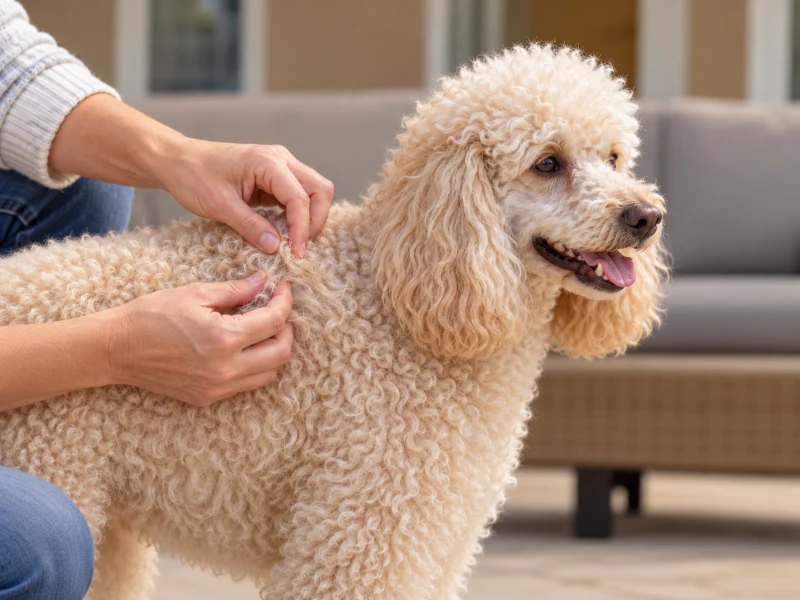
FURminator’s Large Firm Slicker directions call for checking the pet for sores, bruises and skin conditions before brushing. They highlight behind the ears and under the legs as areas where matting can occur. Observing those regions does not mean forcing access to them.
Record resistance near harness contact, recurring damp areas or a change in handling tolerance. Avoid lifting or pulling the hair to prove the skin is clear. Pain, a close mat or an area you cannot assess needs appropriate professional attention before a home-care attempt.
| Coat or area | Home-maintenance question | Reason to pause |
|---|---|---|
| Shorter pet trim | Which light checks and tools did the groomer demonstrate? | Assuming short hair means no tangles or skin changes |
| Longer curls | Can you check small prepared sections comfortably? | Surface looks tidy but the tool repeatedly catches |
| Behind ears and leg-contact areas | Can you observe without an awkward pose or pulling? | Hidden skin, tight hair or guarded movement |
| Harness-contact coat | Has friction or retained moisture changed the hair? | Repeated local tangling or irritation |
| Face, feet and other sensitive work | What needs a separate professional appointment? | Unfamiliar cutting or handling outside the demonstrated routine |
Prepare small sections, then check the result
Ask the groomer to show how to separate an appropriate small section of your dog’s coat and use the selected brush without scraping. Keep enough visibility to observe the work. A general instruction to reach the coat does not authorize pressing pins into skin.
Use short, smooth strokes with hair growth as the matched brush directions require. Move on when the planned area is prepared rather than repeating passes to collect more hair. Stop if the tool pulls, the skin moves with a knot or the dog becomes uncomfortable.
A suitable comb can provide a separate gentle check after preparation. It should not be used to force a failed brushing section into appearing finished. If the comb catches, identify the issue or ask for help rather than repeatedly switching tools over the same spot.
Keep the task small enough to end comfortably. Dogs Trust’s handling advice supports gradual positive introduction and stopping at discomfort. Being able to hold the dog in place does not establish comfortable cooperation.
A slicker option for poodle grooming maintenance
The selected FURminator Large Slicker Brush is ASIN B09JFXFDNX, with retail model field 4048422153184 and manufacturer 8in1 Pet Products GmbH. Its current listing describes a split flexible head, curved and straight pin faces and a Large format.
The US manufacturer’s Large Firm Slicker page describes a curly-, long- or medium-coat role and short smooth strokes. The delivered regional package still needs to match the selected retail product. Do not assume that a US family page proves identical package contents or warranty terms for every regional listing.
A flexible head and no-scratch wording do not prove that a firm slicker suits every poodle or cannot irritate skin. Pin feel, handling and the accessible area all matter. Comparative comfort, brushing time and durability have not been independently verified.
Consider the selected Large slicker when your groomer confirms that its working area and pin contact suit the actual coat, and your dog accepts gentle preparation. Skip it when the head is awkward for the area, skin is sore or the problem is compacted matting rather than routine maintenance.
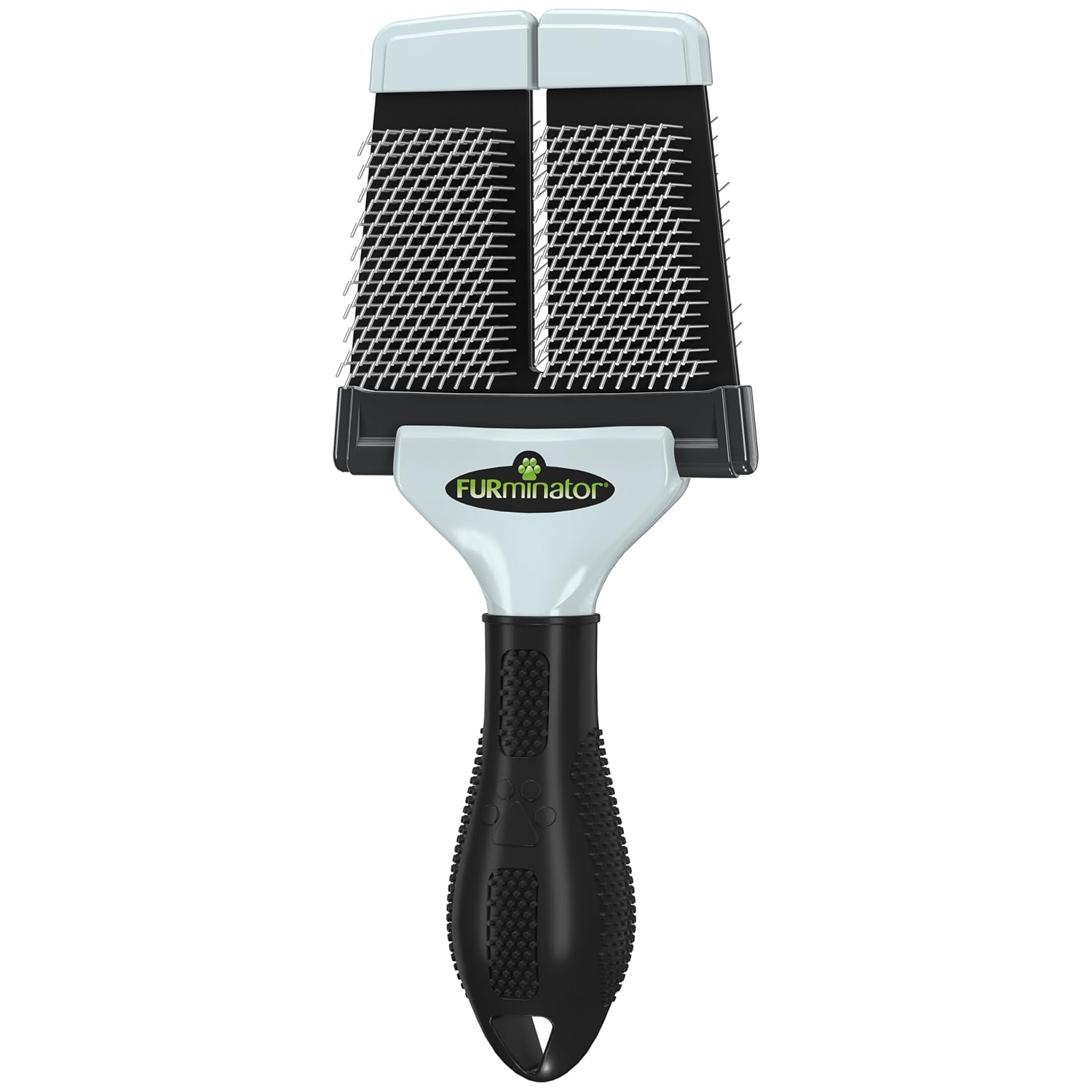
PRODUCT MENTIONED
FURminator Large Slicker Brush — 4048422153184
Amazon · Details on the retailer’s website
A separate comb for a gentle finishing check
The selected Andis 65730 is a silver 7½-inch steel comb, ASIN B004UTDHP2, with coarse and fine areas. Its role is a suitable maintenance or finishing check rather than a permission to pull through a resistant mat.
The Andis Company product-video record identifies 65730 as a 7.5-inch steel comb. Andis currently lists its 7½-inch comb as 68550; that different number should not silently replace the selected product or establish the same supplied directions.
Exact tooth-gap measurements remain unverified. The 7½-inch size describes the listed comb length, not its spacing or the area that should touch the coat. Inspect the delivered teeth and learn which section fits the demonstrated task.
Consider the Andis 65730 when a separate comb check fits your poodle’s demonstrated routine and the tool feels controlled in your hand. Stop when it catches; the fine section is not the next mandatory step for a patch that already resists gentle work.

PRODUCT MENTIONED
Andis Steel Comb — 65730, 7½ Inch
Amazon · Details on the retailer’s website
Set washing and drying before a home bath
Blue Cross’s grooming advice places coat preparation before bathing and warns that existing mats become more difficult during shampooing. If the coat is already compacted or uncomfortable, arrange assessment before wetting it.
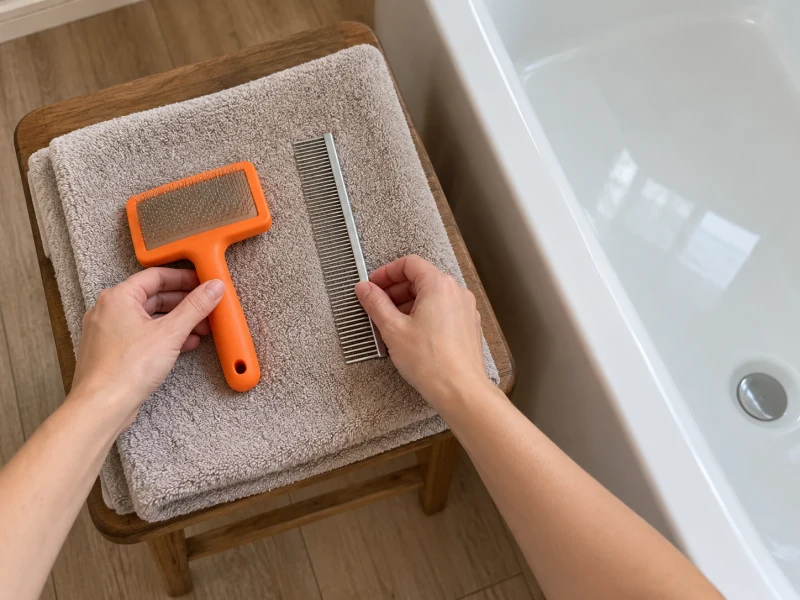
Have suitable footing, rinsing access and a drying plan ready. Choose an appropriate dog product and follow its actual directions; a general breed article is not a substitute for an individual skin-care plan or permission to use an unsuitable shampoo.
Rinse as directed and plan adequate drying, including areas where the outer curls can conceal moisture. A dry-looking surface is not a reliable check of the whole coat. Ask the groomer how to assess the result on your dog’s length and density.
Powered drying adds its own sound, heat, airflow and electrical requirements. Follow the exact equipment instructions, keep connections away from water and supervise continuously. Do not invent a universal nozzle distance or setting, or leave the dog with running equipment while doing another task.
If you cannot complete a suitable drying routine, use professional bathing and drying rather than improvising. A simpler between-appointments plan can concentrate on comfortable coat checks until that setup is resolved.
Use poodle grooming notes to adjust the next appointment
Record which areas stay comfortable, where the comb catches and how long the actual care fits into the household routine. Note changes after harness wear, wet walks or a length change. Specific observations are more useful than asking for an identical haircut when maintenance is not working.
Ask the groomer to assess recurring friction areas and discuss a practical coat length. Taking more hair off everywhere is not automatically the answer; the appropriate trim, handling and skin condition need individual assessment.
Contact the veterinarian about sores, pain, unusual hair loss or a sudden change in tolerance. Grooming can reveal a concern without diagnosing it. Keep unfamiliar ear work, dental procedures and close trimming out of the home coat-maintenance session.
Maintain the tools without adding another coat problem
Remove collected hair and inspect the brush and comb according to their supplied care directions. Check for rough or bent pins, damaged teeth and loose components before another session. Store the tools dry and protected, beyond the dog’s reach.
No common chemical soak or dishwasher method has been verified for these two products. A metal comb and a flexible brush head may need different treatment. Ask the manufacturer when cleaning instructions are unclear rather than leaving residue or damaging the working surface.
Questions about poodle grooming between visits
Does every poodle need the same schedule?
No. Actual length, density, activity, handling and skin condition affect the plan. Agree on a workable routine with the groomer and revise it when the coat becomes difficult to maintain.
Can a slicker safely remove every mat?
No. A firm brush and flexible head do not make close matting or hidden skin a routine home job. Stop and arrange appropriate assessment rather than applying more force.
Must I learn a full haircut to maintain the coat?
No. Keep home work within demonstrated coat checks, suitable brushing and any manageable washing and drying. Styling and unfamiliar sensitive work can remain professional tasks.
Keep the coat comfortable between appointments
Poodle grooming at home should support the professional plan, with small observable tasks and clear stopping points. Work from the actual coat length, check resistance early and settle washing and drying before starting a bath.
If the demonstrated routine calls for them, check the selected FURminator Large Slicker Brush and Andis 65730 comb on Amazon. Each has a separate conditional role; neither replaces professional help with painful or compacted coat.
Comments are reviewed before they appear publicly. Please keep questions and feedback relevant to this article.