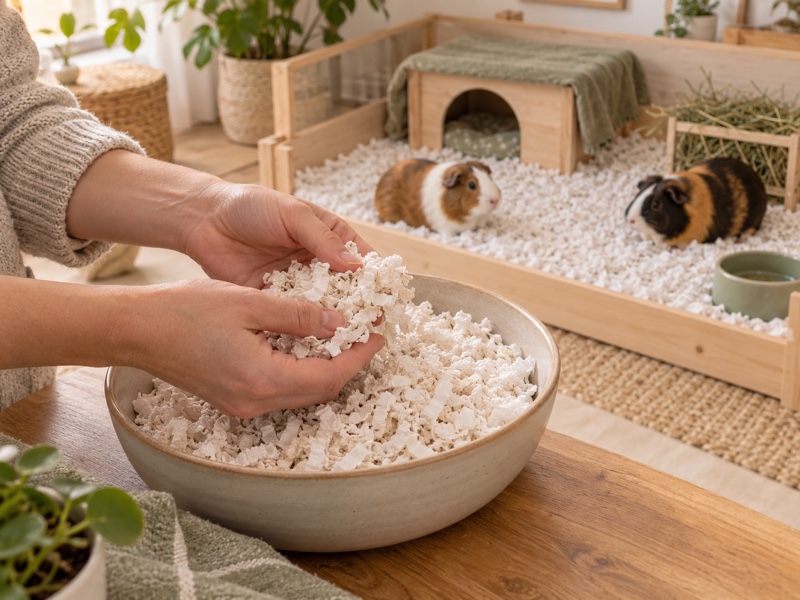
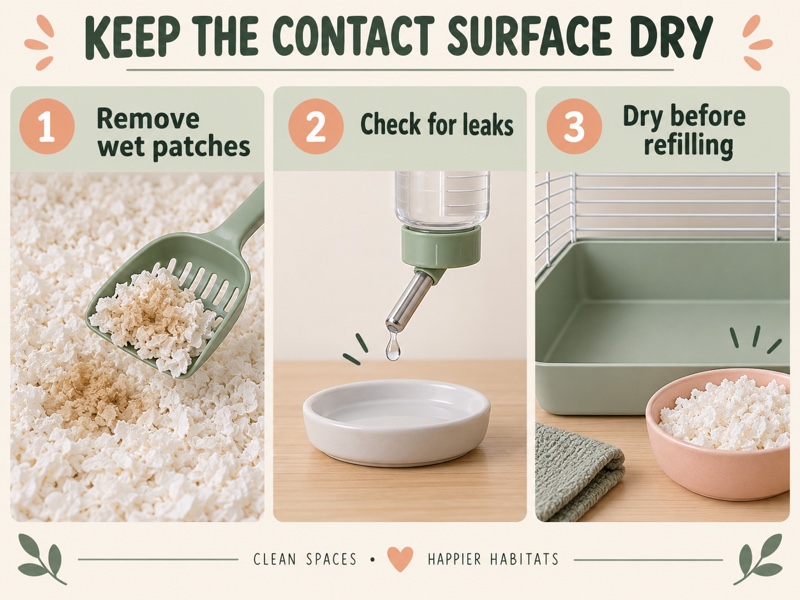
AI-created generic care-planning scene; not a Small Pet Select product photograph, absorbency test or complete housing plan.
Paper bedding for guinea pigs should provide a soft, dry contact surface that you can inspect and clean reliably. A white color may make used areas easier to see, but absorbency and odor claims do not remove the need to check beneath the surface. Choose a clearly identified material and plan for daily removal of wet bedding, especially around shelters and drinking points.
The selected product is Small Pet Select White Paper Bedding, model JMWB-2, 356 L total, ASIN B09H9V2Z39. The retailer image shows two packs marked 178 L each. This is the standard white selection, not a lavender, rose or other botanical version. Independent absorbency, dust and guinea-pig foot-comfort results have not been verified for this product.
Paper bedding for guinea pigs: check the actual contents
The Amazon listing describes unbleached paper fiber, a white appearance and odor-control and low-dust features. Its title and model identify the selection; they do not settle every ingredient question. Read the delivered package, especially if an order is substituted or packaging changes.
There is an unresolved composition difference. The listing says “100% unbleached paper fiber,” while Small Pet Select’s current white-paper product page identifies 5% food-grade binder fibers that do not break down or digest. The brand also uses broad “no additives” wording. These statements should not be combined into an independently verified claim of pure cellulose with no other material.
The manufacturer says the paper comes from surplus human food packaging, rather than printed recycled paper or paper-mill sludge. That is sourcing information supplied by the company, not a laboratory contaminant report. If precise composition matters for your guinea pig’s care plan, ask the supplier to reconcile the current label and binder information before use.
| What to check | Current source information | Decision limit |
|---|---|---|
| Exact selection | JMWB-2, ASIN B09H9V2Z39, 356 L total | Do not substitute a scented or botanical version without checking its contents |
| Pack quantity | Retailer image shows two 178 L usable-volume packs | 356 L is the combined labeled volume, not one pack’s compressed dimensions |
| Composition | Paper-fiber listing claim; brand separately identifies binder fibers | Do not claim the formula is independently verified as 100% cellulose |
| Dust and odor | Supplier marketing claims | No documented independent test or guaranteed cleaning interval |
| Disposal | Brand advises against garden composting this white product | Paper appearance does not establish complete biodegradability |
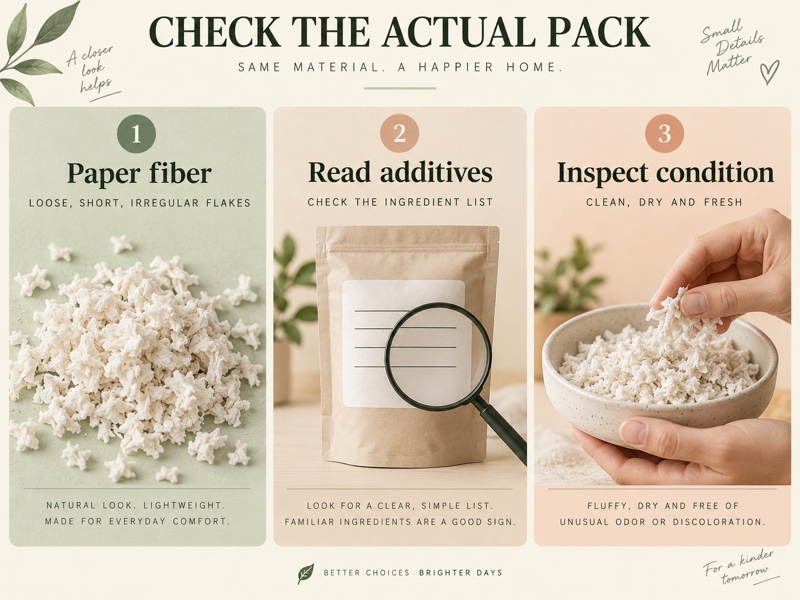
Choose a dry surface rather than a fragrance
A bedding choice needs to work where guinea pigs actually sit, walk and rest. The PDSA guinea-pig housing guide emphasizes suitable surfaces and clean, dry bedding. Its maintenance advice includes removing wet or dirty material daily. A fresh-smelling top layer is not enough if the material underneath remains wet.
Choose the plain version deliberately and verify the actual package’s scent and ingredient information. The reviewed listing’s description of white paper does not justify a blanket claim about every product in the brand’s bedding range. Likewise, botanical ingredients are not automatically suitable because they are natural. Do not add fragrance, oils or deodorizing powder to the bedding.
Look at the contact area beneath hides, near hay and below the water supply. If the surface compacts into damp clumps or the guinea pigs avoid an area, investigate the bedding condition and the cause. Do not keep adding dry material over a soaked layer and assume the problem has been absorbed away.
For an animal with an existing foot, skin or breathing concern, ask a guinea-pig-experienced vet about the housing and substrate plan. A soft-looking paper sample does not diagnose a problem or establish that it will prevent one. The product’s comfort language remains a supplier claim.
Understand volume before buying paper bedding for guinea pigs
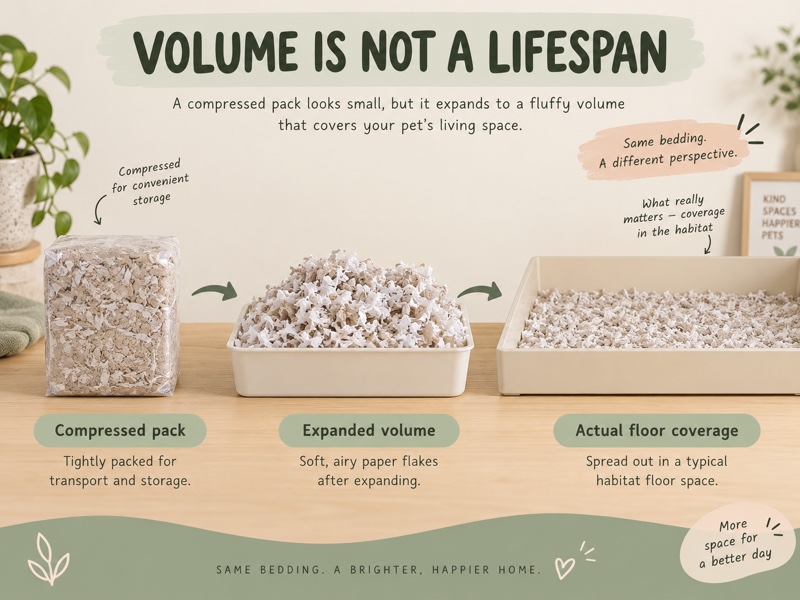
The 356 L selection represents two labeled 178 L packs in the original retailer image, consistent with the brand site’s 178 L two-pack option. Confirm both the number of packs and each pack’s usable-volume label on arrival. Do not mistake a listing’s physical dimensions or weight for the expanded amount you can spread across the floor.
To estimate coverage, measure the internal area of the zone you intend to bed and multiply by the planned loose depth. In centimeters, divide length × width × depth by 1,000 to get liters. For illustration, 100 × 100 × 3 cm equals 30 L geometrically. This is a calculation example, not a recommended enclosure size, bedding depth or tested coverage result for this product.
Actual usage changes with settling, the shape of the habitat, feeding and resting zones, and how much wet material you remove. A manufacturer-labeled usable volume is a starting point for planning supplies. It does not promise a fixed number of cage refills or days before cleaning.
Guinea pigs are not hamsters, so do not apply a hamster’s deep tunnel-building target to this surface-bedding decision. They still need suitable space, shelter, hay and enrichment. A large bedding pack cannot make an undersized or poorly arranged habitat appropriate.
Inspect each batch before the guinea pigs use it
Open a pack away from the animals and check a small amount in a clean tray. Look for damp clumps, unusual odor, discoloration, foreign pieces or excessive fine material. Handle the bedding gently and avoid pouring it from height into an occupied pen. These checks can reveal an obvious problem, but they are not a measurement of dust or chemical residues.
The retailer text uses a 99% dust-free claim, while the pictured packaging shows different dust-free wording. No supporting method or independent result was verified. Treat those numbers as supplier marketing rather than a guarantee that a guinea pig will never be irritated. A visible white material can still contain fine particles.
Stop if a batch appears unsuitable and contact the supplier. Do not add scent to cover an unexpected smell or spray disinfectant onto fresh substrate before placing it under the animals. If the guinea pigs develop concerning eye, skin or breathing changes, obtain veterinary advice rather than assuming the cause or repeatedly trying new beddings.
Keep the product label, batch details and date introduced. Those records are useful if you need to discuss an issue or request a replacement. A photo of the packaging can document what arrived, but it does not certify the composition or performance of the contents.
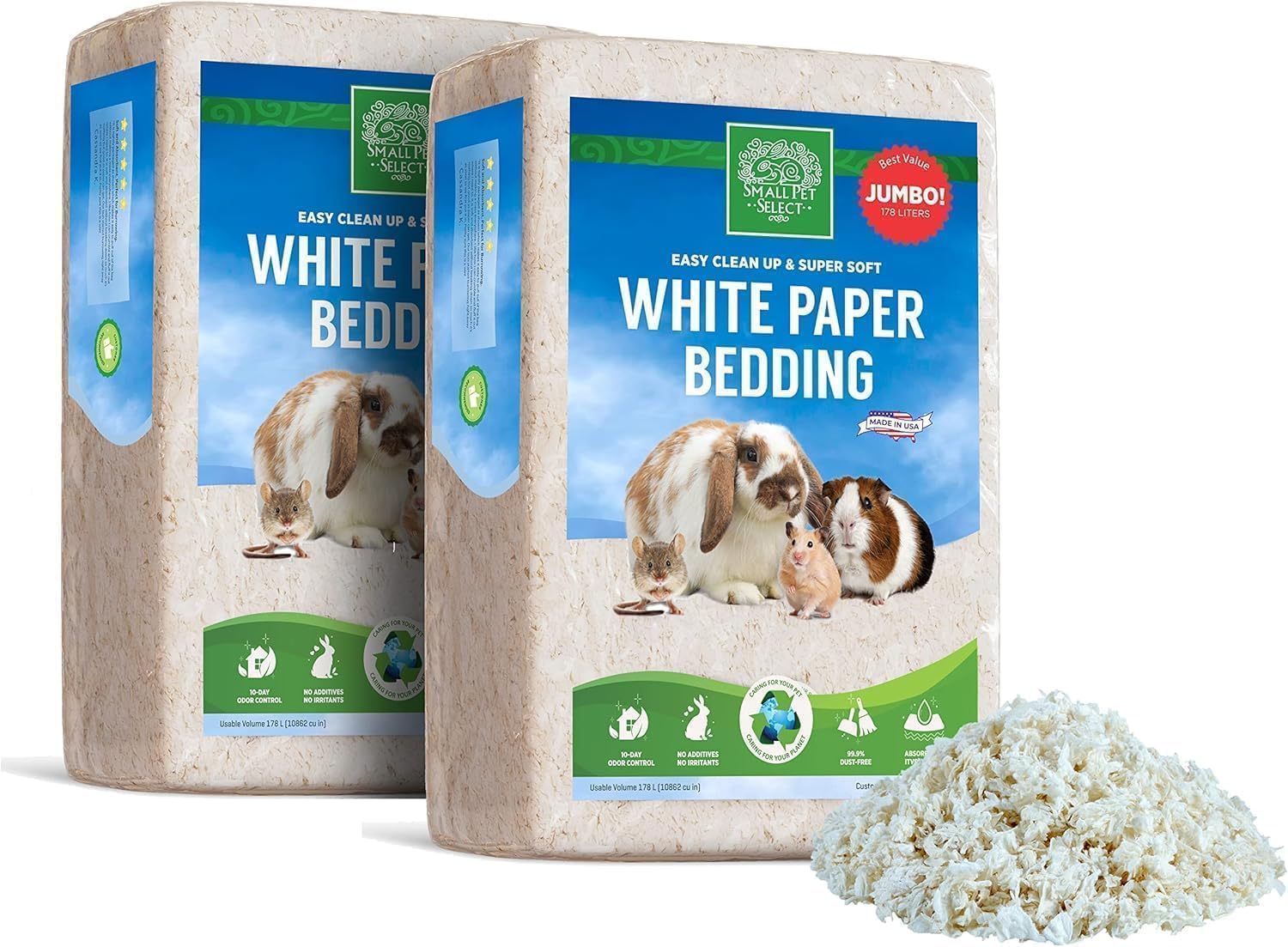
PRODUCT MENTIONED
Small Pet Select White Paper Bedding, JMWB-2, 356 L Total
Amazon · Details on the retailer’s website
Clean paper bedding for guinea pigs by condition
Blue Cross’s guinea-pig care guidance calls for daily spot cleaning and describes a full clean about weekly on average, adjusted to the animals and housing. PDSA also separates daily removal of wet material from larger cleaning jobs. Neither approach supports leaving visible wet bedding in place because a package advertises odor control.
- Check the resting places, drinking area and other frequently used zones every day.
- Remove soiled paper, spoiled food and wet material down to the affected base, rather than covering them.
- Inspect the water supply for leaks or blockage and correct the source of unusual moisture.
- Refill the cleared area with suitable clean bedding and check that the surface remains usable.
- For a larger clean, move the guinea pigs to secure temporary accommodation and follow the habitat and cleaner instructions.
- Return clean bedding and animals only once the cleaned area is dry and safe to use.
The listing’s “up to 10 days” odor-control language is not a safe waiting period between inspections or a guarantee for your enclosure. Waste distribution, number of guinea pigs, water leaks and airflow affect the result. Use your routine observations to adjust cleaning, and keep enough replacement material available for unexpected wet areas.
Do not fluff a damp clump back into the dry bedding. Removing the affected material is a different action from redistributing it. If an area becomes wet repeatedly, investigate the drinker, habitat layout and the guinea pigs’ needs before concluding that more absorbency is the only answer.
Keep feeding hay and bedding roles distinct
Paper substrate does not replace feeding hay. Blue Cross emphasizes a constant supply of suitable non-dusty hay and discusses hay as part of guinea-pig bedding and comfort. Keep feeding supplies clean and check where hay falls into wet areas. Replenishing food and removing contaminated material are separate tasks.
Do not use the white background as a diagnostic test. It can make an altered-looking patch easier to notice, but color alone cannot tell you whether it came from urine, food, spilled water or a health problem. Record what you see and ask a vet about concerning changes instead of diagnosing from a stain.
Blue Cross also warns against fluffy stuffing-type bedding and coarse straw for guinea pigs. Household paper, fabric scraps and decorative fillers are not automatically equivalent substitutes for the specified paper substrate. Choose an appropriate material and check the actual product rather than judging by softness alone.
Compare the ongoing cost and storage
Use the delivered price divided by the combined labeled usable liters for an initial comparison, then record actual usage. Include the paper removed during daily care as well as larger refills. A cheap nominal liter is not useful if the batch is unsuitable or the contact surface remains wet.
Opening one pack at a time may help you keep the other protected, but confirm how you will store both before ordering. Choose a dry place away from pests, household chemicals and leaking containers. Keep open bedding protected without trapping moisture in damp material. Do not use a musty pack simply because it has been stored only briefly.
Watch pack quantity and volume definitions when comparing retailers. A 178 L single pack and a 356 L total two-pack are different purchases even if they share a similar photograph. The labeled volume does not guarantee an expansion ratio or a fixed number of weeks per order, and prices can change.
Dispose of this white bedding according to its label
The manufacturer’s current page says the white bedding is not completely biodegradable and advises against garden or yard composting because of the binder fibers. Do not replace that product-specific statement with a general claim that all paper bedding can go in the compost.
Follow the current package and local waste requirements for used bedding. Those requirements also concern what has been absorbed into it, not just the clean raw material. The brand’s statement about a different brown bedding product is not permission to treat this white JMWB-2 selection the same way.
Questions about paper bedding for guinea pigs
Does 356 L mean one giant pack?
The selected retailer image shows two 178 L usable-volume packs. Confirm the delivered quantity and labels. The total is not a compressed package measurement or a promise that the bedding lasts a particular number of days.
Is it independently verified as dust-free?
No. The reviewed sources contain supplier claims with differing numerical wording, but no independent dust test for this selection was verified. Inspect the batch and seek advice for concerning changes in the guinea pigs rather than treating a percentage as a health guarantee.
Can odor-control wording replace daily cleaning?
No. Remove wet and soiled material during daily checks and adjust larger cleaning jobs to the habitat’s condition. A dry top layer or little noticeable smell does not establish that the base remains clean and dry.
Choose paper bedding for guinea pigs with a care plan
Confirm the standard white JMWB-2 selection, two-pack quantity and current ingredient information. Treat its absorbency, dust and odor statements as supplier claims, and assess actual surface condition during daily care. Keep clean feeding hay available, store spare bedding dry and follow the white product’s disposal limits.
If those checks fit your setup, view Small Pet Select White Paper Bedding, 356 L total. Confirm ASIN B09H9V2Z39, two 178 L packs and delivery for your address.
Comments are reviewed before they appear publicly. Please keep questions and feedback relevant to this article.