
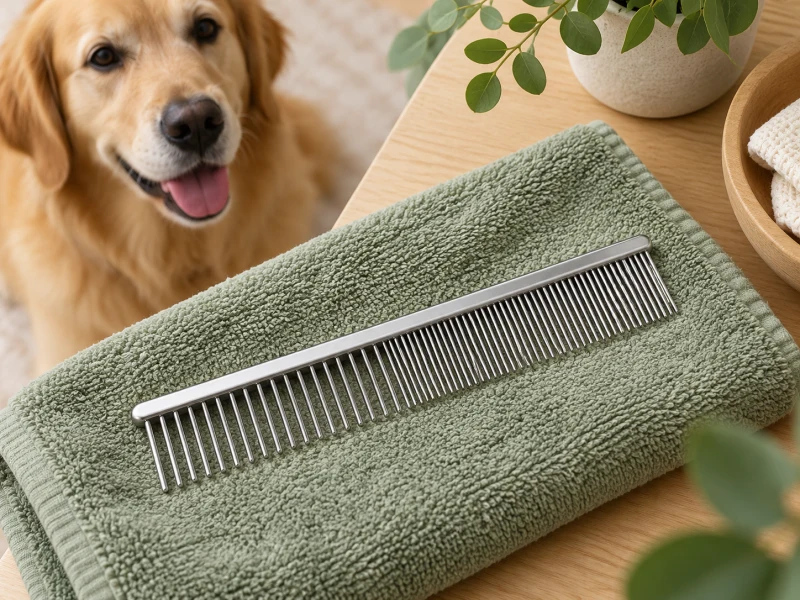
AI-created coat-check preparation scene; generic prop, not the Andis 65730 or a documented grooming test.
Choose a dog comb by whether its teeth can move gently through the coat you need to check. Tooth spacing, access and the way the dog responds matter more than a promise to remove every knot. Stop at resistance rather than pulling harder to make a tool seem suitable.
A comb can help reveal a small tangle missed during brushing and refine a prepared coat. It does not replace every brush, remove the need for coat-specific advice or make severe matting a straightforward home task. Start with the job you actually need to do.
Match a dog comb to the coat task
A straight comb gives a different working surface from a slicker brush, an undercoat rake or a rubber grooming tool. Think about whether you want to check through prepared hair, finish an area or remove loose material from a particular coat texture.
Blue Cross’s grooming advice distinguishes tools by coat and advises asking for help with selection when needed. A useful comb for one dog is not automatically a suitable first tool for another.
For a smooth short coat with loose surface hair, the short-haired dog brushing options may be more relevant. For a layered coat, compare the role of an undercoat rake before expecting a straight comb to do the same work.
| What you notice | Useful next step | What to avoid |
|---|---|---|
| Prepared coat with a few small catches | Use a suitable comb gently to locate resistance and reassess that area. | Repeatedly dragging the fine teeth through the catch. |
| Loose hair on a smooth short coat | Choose a coat-appropriate brushing tool first. | Buying a comb because more teeth appear more thorough. |
| Dense coat that is difficult to see through | Ask a groomer which tools and preparation fit that coat. | Assuming long-looking teeth prove access to the whole coat. |
| Tight mats, soreness or damaged skin | Stop home detangling and arrange appropriate professional advice. | Using a stronger comb, scissors or more pressure to force progress. |
Compare tooth spacing and the handle you will hold
Wider and finer sections give different amounts of space between the teeth. Start with the part that moves comfortably through the prepared area. A finer section that catches immediately is information about the coat, rather than a reason to increase force.
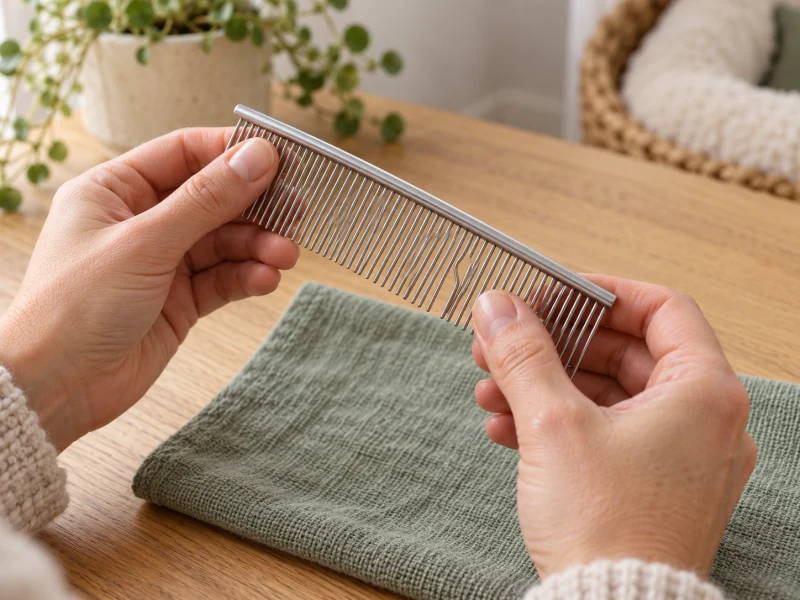
Inspect the teeth for straightness, smoothness and damage. Look at the ends and the places where they meet the spine. A photograph cannot establish how a particular tool feels against your own dog’s coat, so examine the delivered comb before using it.
Check your hand position too. A thin metal spine can feel different from a handled brush. You should be able to keep a relaxed, controlled hold without repeatedly shifting toward the teeth. Choose another design if the grip is awkward.
When the Andis 65730 dog comb is a sensible choice
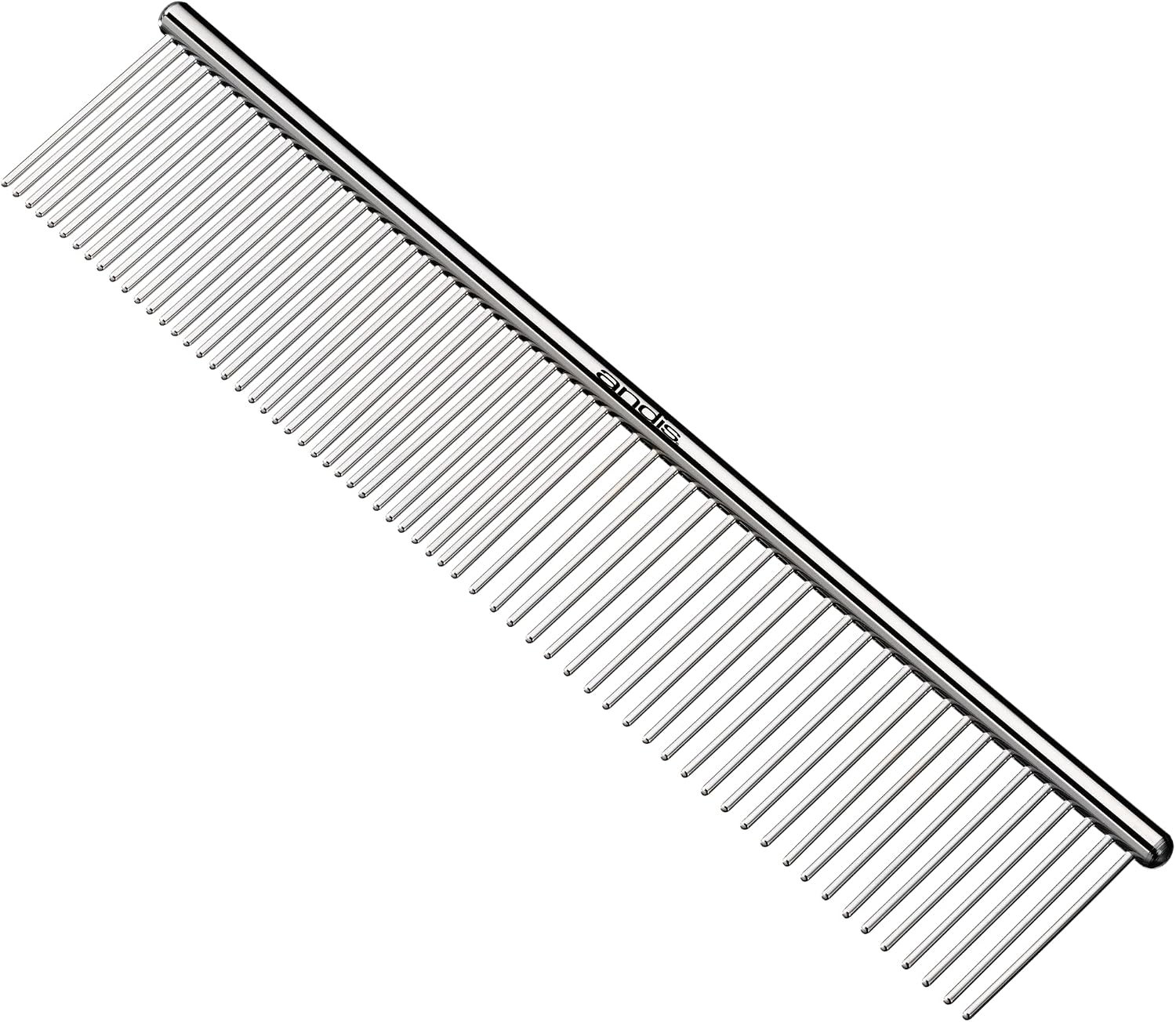
Consider the Andis 65730 7.5-inch steel comb when you want a straight manual comb with coarse and fine tooth sections for gentle coat checks and finishing. It is a simple option if that shape suits the coat and your grip. Skip it as a solution for tight mats, painful skin or a dog that cannot comfortably tolerate combing.
PRODUCT MENTIONED
Andis 65730 7.5-inch Steel Dog Comb
Amazon · Details on the retailer’s website
The selected retailer listing identifies model 65730 and a silver 7.5-inch steel comb under ASIN B004UTDHP2. Its product gallery shows the two tooth-spacing sections. Keep the exact retailer model and selected size together when ordering.
Andis’s current 7.5-inch comb page uses item number 68550. That is a different item number from the selected 65730 listing; a shared length or product-family name does not establish that every specification or replacement reference is identical.
If you need a particular model, match its package and instructions rather than choosing from a similar silver-comb thumbnail. Do not adopt a broad all-coats or dematting claim as proof that a straight comb can comfortably pass through your dog’s current coat.
Check a small prepared area before extending the session
Choose a quiet place and a secure surface. Let the dog investigate the tool without immediately bringing the teeth into the coat. Keep the first handling small enough that you can notice withdrawal, tension or discomfort.
Part a manageable section so you can see what you are doing. Move gently through prepared hair and stop when the tool catches. Do not repeatedly work an unseen knot close to the skin or cut into a mat because it seems too firmly attached to comb out.

The ASPCA’s grooming information describes grooming as an opportunity to notice coat and skin changes. Unexplained irritation or soreness needs assessment; it is not simply evidence that a different comb is required.
Ask a groomer to demonstrate an appropriate approach if the comb repeatedly catches or the coat condition is unclear. If clipping is proposed, the home clipper decision remains separate from comb selection. A comb that cannot move comfortably is not permission to shave a difficult area yourself.
Stop at resistance and maintain the dog comb
Keep the session comfortable rather than trying to finish every area at once. Do not hold a withdrawing dog more tightly so that you can continue. A short pause or professional help is preferable to turning routine coat care into a struggle.
Remove loose hair and follow the delivered cleaning instructions. Dry the tool before storage and inspect it before reuse. A bent tooth, rough edge or loose component is a reason to take it out of the routine, not a feature to work around.
Store the comb where it cannot be stepped on, bent under heavier equipment or reached by the dog. Keeping it visible and separate from sharp tools makes it easier to recognize wear before the next session.
Choose a dog comb that makes gentle coat checks easier. The Andis 65730 is one defined steel option, provided the spacing, grip and current coat suit it. If the tool catches or the dog is uncomfortable, change the plan rather than trying to prove that a comb can remove every mat.
Comments are reviewed before they appear publicly. Please keep questions and feedback relevant to this article.