
AI-created preparation scene; generic prop, not the Millers Forge 743C or a completed nail-trimming test.
Start dog nail trimming only when you can handle the paw comfortably, see what you are doing and identify an appropriate stopping point. The quick contains living tissue, so a confident-looking squeeze or a clipper guard cannot substitute for knowing your own dog’s nails.
For a first attempt, arrange a demonstration with a vet or veterinary technician. A useful home session may be a brief paw-handling exercise or one carefully assessed nail, rather than finishing every paw. Pain, a damaged nail or repeated withdrawal changes the plan.
Start dog nail trimming with a paw check
Look at the dog walking and resting before picking up a foot. Notice a split, a nail curling toward the pad, an unusual posture or reluctance to put weight on a paw. Arrange veterinary advice for pain or a damaged nail instead of treating it as routine trimming.
Check the individual nails rather than assuming every nail on a paw is alike. Dewclaws do not contact the ground in the same way as the main nails. The ASPCA’s nail-care information describes observing contact with the ground and snagging, rather than applying one calendar to every dog.
Do not use clicking sounds as the only assessment. Surface, gait and the individual nails affect what you notice. If the nails look overgrown or the dog has an existing mobility problem, ask your veterinary team how to manage them.
Practise comfortable paw handling without cutting
Choose a quiet moment on a stable non-slip surface. Let the dog remain in a comfortable position and begin with a light touch near the paw. Keep the tool separate while you find out whether ordinary handling is accepted.

The AKC’s nail-care guidance describes gradual introductions to touch, equipment and sound. Progress depends on the individual animal; a sequence shown over several days is not a deadline to finish regardless of the dog’s response.
Reward comfortable participation and release the paw between brief touches. If the dog stiffens, repeatedly pulls away or becomes increasingly worried, pause. Tightening your hold to continue may turn an introduction into a struggle.
If the nails need attention before home handling is established, arrange appropriate professional care while practising the preparation separately. The need for a trim does not mean a first home attempt must happen that day.
Prepare dog nail trimming tools and lighting
Use a suitable dog-specific tool in sound condition and have a professional show you how it should sit on the actual nail. Check the cutting edges and mechanism away from the animal. A loose, damaged or awkward tool should stay out of the session.
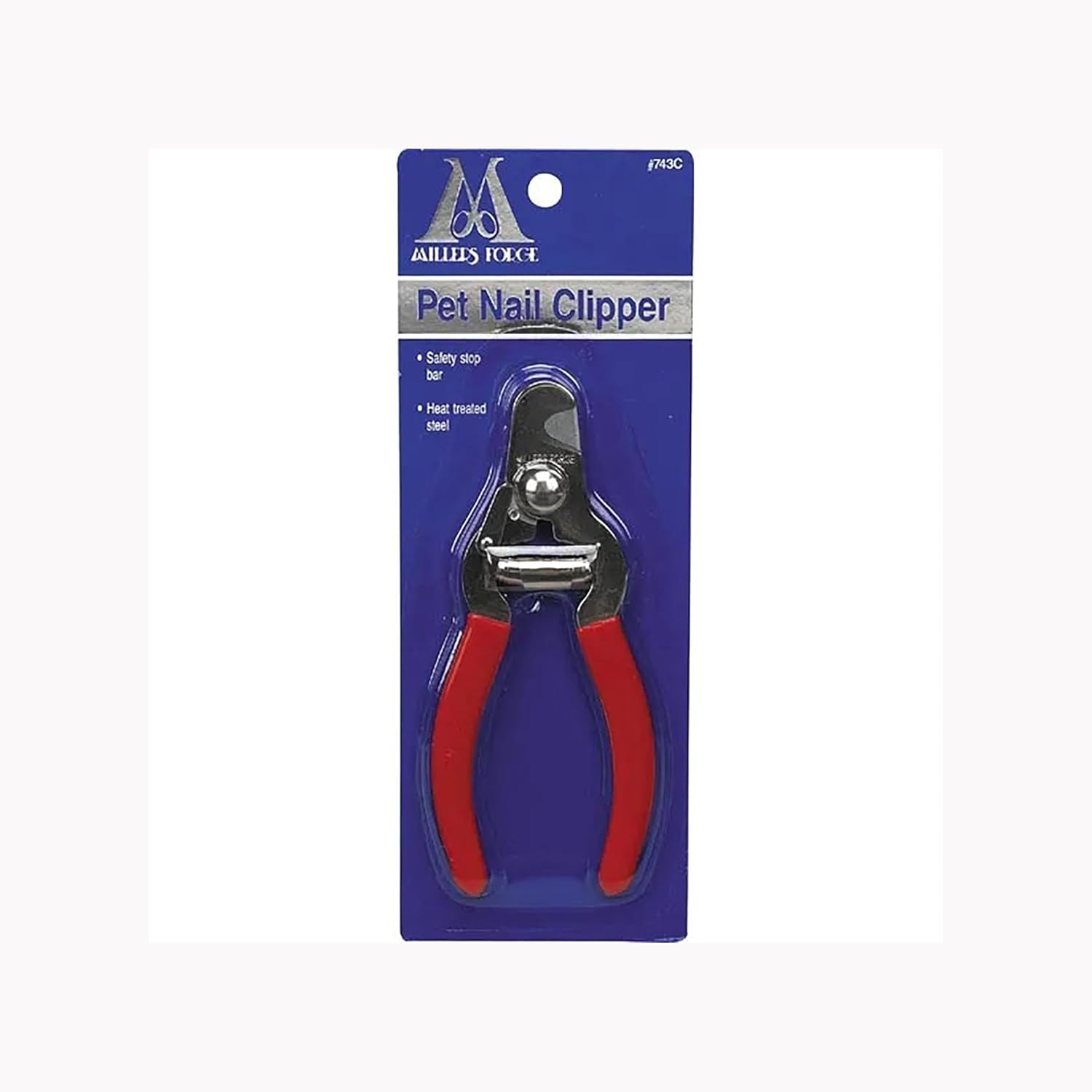
If you need a manual clipper and an experienced professional has confirmed that it suits your dog’s nails, consider the Millers Forge 743C for its listed small/medium-dog role. The plier-style tool has a physical stop bar, not a quick sensor. Keep a suitable existing tool rather than buying this model simply to start a session.
PRODUCT MENTIONED
Millers Forge 743C Nail Clipper with Stop Bar, Small/Medium
Amazon · Details on the retailer’s website
The selected 743C retailer page is ASIN B08QJRDNDD and its packaging shows red handles and the model number. The 743C model assessment covers hand fit and the stop bar in more detail. Neither a small/medium label nor that bar identifies the quick.
Set up enough light to see the nail without your own hand casting a heavy shadow. Keep the working area clear and any supplies recommended by your veterinary team within reach. Do not begin by hunting for equipment while the dog waits with a paw held.
Let the actual nail and tool determine the approach
Washington State University’s veterinary hospital recommends learning from a vet or technician and explains why the quick is harder to judge in dark nails. If you cannot identify a suitable stopping point, leave the cutting to appropriately experienced help.
Follow the demonstration for your particular tool. Guillotine and plier-style clippers have different arrangements; do not transfer the positioning from an illustration of one type to another. A universal angle or number of millimeters is not a substitute for assessing the nail in front of you.
After an appropriate lesson, work conservatively at the free tip as demonstrated and reassess between very small changes. Do not aim to reach a mark on a photograph, cut every nail to the same length or remove a large amount to finish quickly.
A grinder is a different tool with its own handling, heat and hair-entanglement considerations. The manual nail-filer discussion also addresses a different action from clipping. Do not switch tools mid-struggle and assume the new format removes the uncertainty.
Pause dog nail trimming when the picture is unclear
| What happens | Next action |
|---|---|
| The dog repeatedly withdraws, becomes tense or cannot settle. | Release the paw and pause; seek help with handling if the pattern continues. |
| You cannot see or judge the stopping point. | Do not guess. Ask a vet or veterinary technician to demonstrate. |
| The nail is split, painful or curling toward the pad. | Arrange veterinary assessment rather than a routine home trim. |
| The tool slips, damages the nail or needs an uncertain squeeze. | Stop and reassess tool condition, fit and technique with appropriate help. |
| There is bleeding or an apparent injury. | Stop the session and follow veterinary advice; seek prompt help for continuing bleeding or pain. |
If a nail is cut too short, remain calm and use only the first-aid approach your veterinary team has advised. The AKC discusses having an appropriate clotting product available and contacting a vet if bleeding does not stop. Do not keep trimming the remaining nails to complete a checklist.

Put the tool away when the session ends. A short period of comfortable participation is useful progress even when no nail was cut. Keep a simple note of what the dog tolerated and what you need demonstrated next time.
Keep the next session small and specific
Record the date and which nails received attention rather than relying on memory. Continue observing the paws during the ordinary home grooming routine. The right interval depends on the dog, activity and veterinary advice, not a universal reminder copied from a product listing.
Clean and store the tool according to its instructions, with cutting edges protected and access kept away from pets and children. Check its condition again before use; a steel body does not guarantee an unchanged cutting edge forever.
Approach dog nail trimming as a series of observable decisions: comfortable paw handling, clear visibility, an appropriate tool and a stopping point you understand. Get professional help when any of those is missing, and keep a suitable existing clipper rather than expecting a purchase to supply the skill.
View Millers Forge 743C Nail Clipper with Stop Bar, Small/Medium on Amazon.
Comments are reviewed before they appear publicly. Please keep questions and feedback relevant to this article.