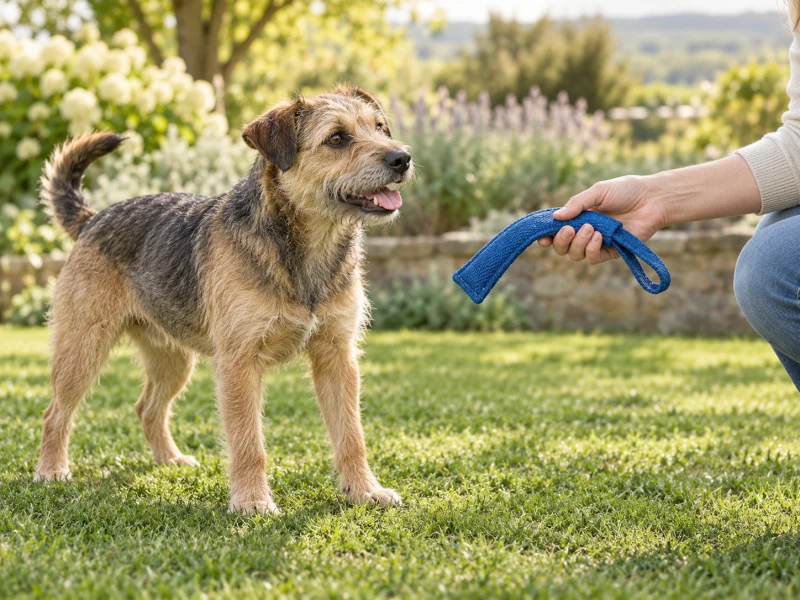
AI-created shared-play scene; generic prop, not the Tonka 5038, a size reference or a documented test.
Choose Tonka dog toys by the actual dog-toy model and your dog’s play style, not by the construction-truck name alone. The black-and-yellow 3-Ring Tug 5038 is a linked-ring toy for shared play. It is a more relevant choice for an owner who wants a grip at the opposite end than for a dog seeking an unattended chew.
The useful question is whether the complete toy gives both of you comfortable room. Nominal length, rugged styling and a medium/large label cannot answer that on their own. Check the openings, the dog’s mouth position and how easily you can pause and finish the game.
Which Tonka dog toys are actually made for dog play?
The selected 3-Ring Tug listing identifies a dog toy under model 5038 and ASIN B083LLHDX3, with Gramercy Products, Inc. named as manufacturer. Match those details and the black-and-yellow linked rings when ordering.
A child’s truck, wheel or construction accessory is a different object, even when the branding looks familiar. Do not offer a household toy to a dog because it seems sturdy or has a tire-like texture. Small parts and intended use need their own assessment.
Keep the packaging and receipt until you have checked what arrived. A seller photograph, the name of a brand store and an unrelated listing for a smaller ring are not interchangeable product identifiers. If the model or intended species is unclear, resolve that before opening it for play.
Decide whether the 3-Ring Tug 5038 fits your game
The Tonka 3-Ring Tug 5038 is worth considering for an adult-led tug game with a medium or large dog that can comfortably grip the ring structure. Choose it for shared play and distinct hand and mouth positions. Pass if the openings do not suit the dog, your hand cannot hold it comfortably, or the dog mainly wants to gnaw alone.
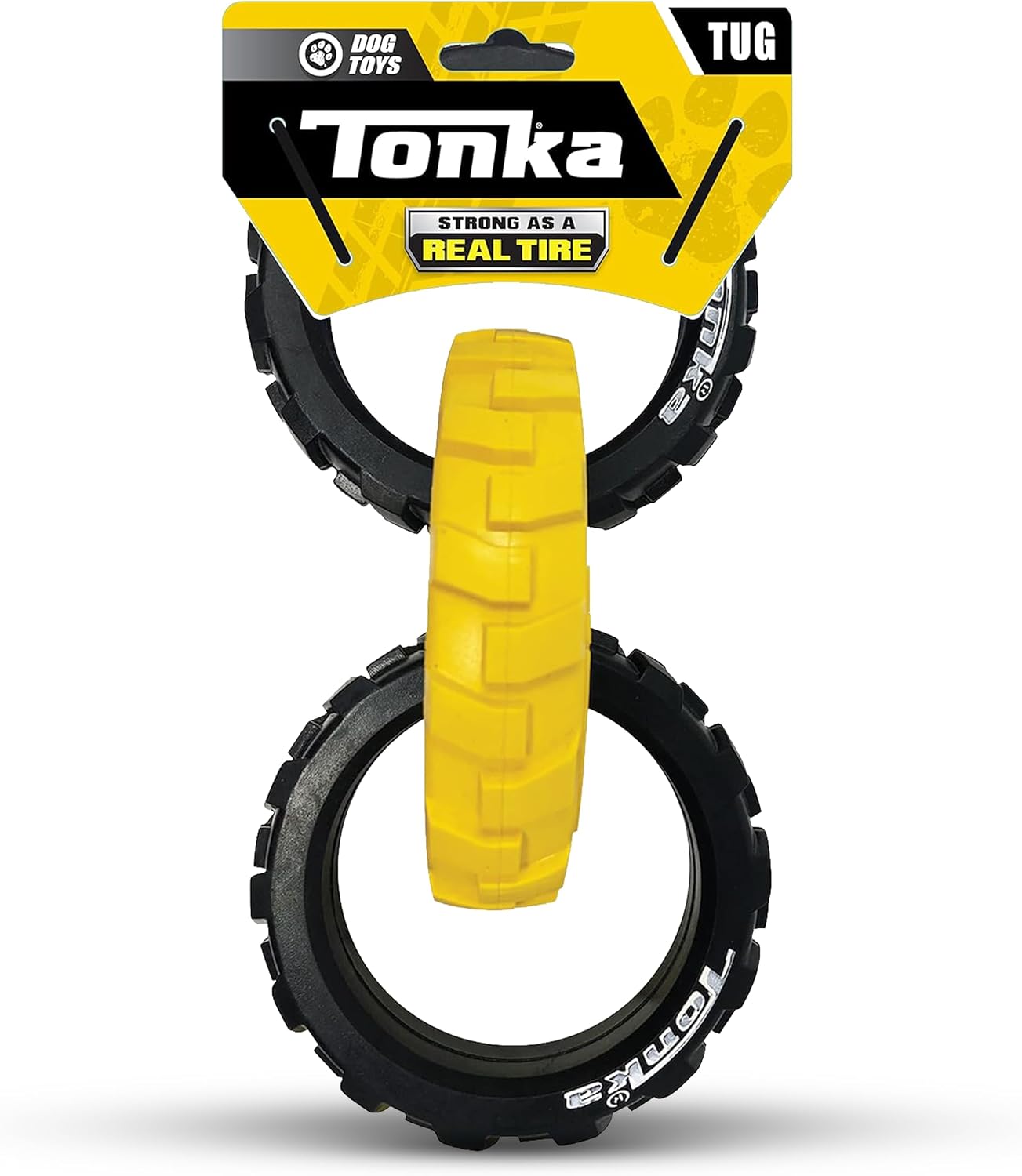
PRODUCT MENTIONED
Tonka 3-Ring Tug Black/Yellow 10.5-inch 5038
Amazon · Details on the retailer’s website
The selected listing describes a 10.5-inch toy for medium and large breeds. Treat that as the advertised model and nominal overall length. It does not describe the clear space inside each ring, the distance between your fingers and the dog’s teeth, or a guaranteed fit for a particular breed.
| Your situation | Why a linked-ring tug may help | Reason to pause |
|---|---|---|
| You want a shared tug game | Separate ends can give the person and dog identifiable gripping areas. | The dog repeatedly moves its mouth toward your hand. |
| You play outdoors | The listing positions this model for outdoor use. | Wet hands or mud make your actual grip unreliable. |
| Your dog prefers a substantial toy | A ring structure may be easier to locate and carry than a narrow strip. | The dog cannot comfortably pick up or release this model. |
| You want a solo chew | A tug structure does not establish suitability for unattended chewing. | The dog works on one junction until material starts to split. |
| You need water retrieval | Water resistance concerns material exposure. | There is no verified flotation or water-retrieval instruction for your use. |
Before buying, picture where each of you will hold it. A long object can still leave little practical separation if the dog chooses the middle. Consider another shape if your usual hand position brings your fingers close to the gripping area.
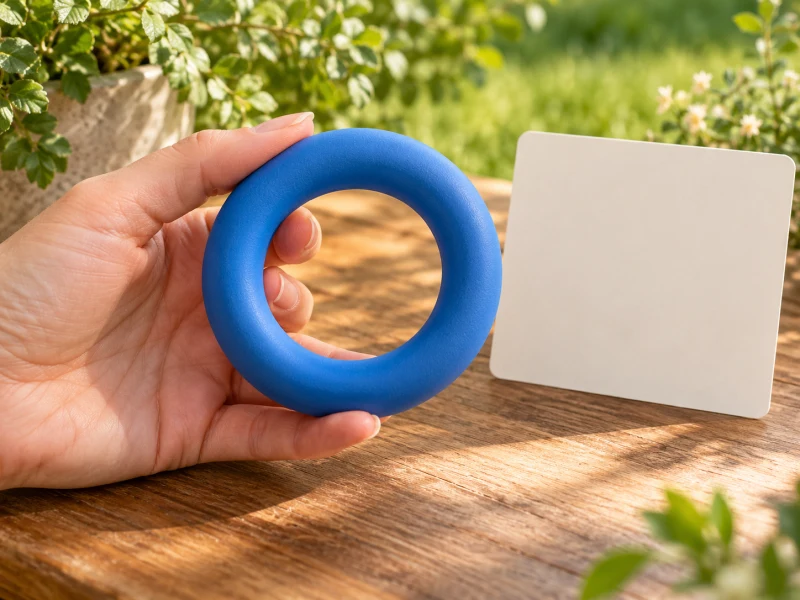
Look at grip space, not just the overall length
Check the complete ring and every connection when the toy arrives. Rounded openings should not be treated as handles for hooking fingers tightly around a pulling dog. Hold it in a way you can release, without wrapping an improvised strap around your wrist.
Offer a calm introduction while the dog is standing naturally. Let it investigate rather than pushing a ring over its muzzle or trying to place its mouth in an opening. Keep the toy away if it appears likely to trap a jaw or another body part.
Personal comfort matters too. A wet rubber surface, limited hand strength or an uncomfortable opening can make a shared game awkward. More material and a heavier-looking design do not necessarily create an easier grip for the person.
Compare the general grip choices in dog training toys and reward handling. A toy needs to work for the handler as well as the dog; a product label does not compensate for an uncomfortable hold.
Use Tonka dog toys for controlled play, with clear pauses
Blue Cross’s play advice describes gentle tug introductions, pauses and rewarding the dog for letting go by restarting play. The useful principle is an enjoyable shared game that can stop, rather than a contest to overpower the dog.
Start on level ground with room for both of you to move comfortably. Keep the dog’s paws on the floor and the toy at an accessible height. Do not lift the dog by the toy or use abrupt pulls to make the game look more energetic.
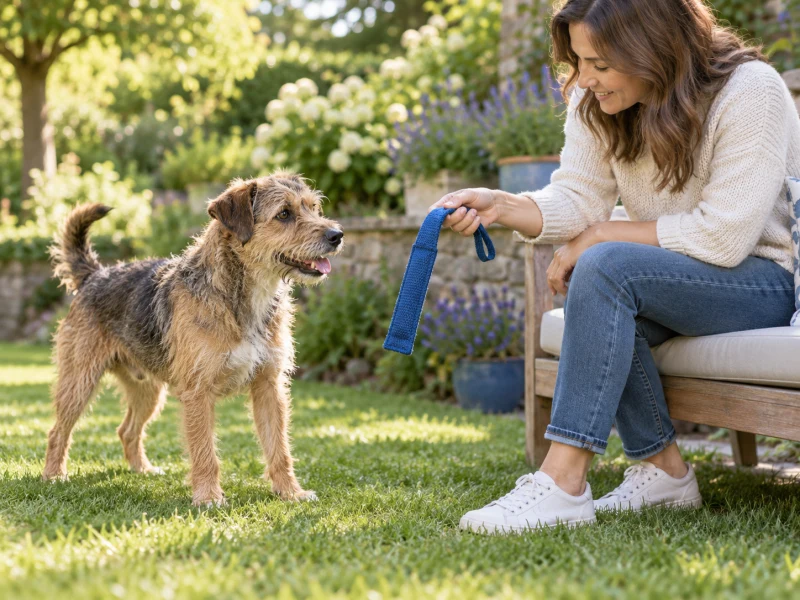
Let the first sessions tell you whether this shape suits the pair of you. Watch for a mouth that keeps slipping toward your fingers, a dog that becomes tense, or a grip that forces your wrist into an awkward position. Pause and change the activity rather than pulling harder.
End the session before the toy becomes something you must wrestle away. If releasing or guarding is a recurring problem, obtain qualified reward-based training help. Another rugged-looking toy will not by itself teach a comfortable handover.
Blue Cross’s toy-selection advice also distinguishes tug, chasing and other forms of play. A dog that prefers searching or carrying does not need to be persuaded into a tug game simply because a new toy was purchased.
Read outdoor and durability claims narrowly
The retail description calls the 5038 weather- and water-resistant. Those words are relevant to the advertised outdoor positioning, but they do not establish that the toy floats, can remain outside indefinitely or is safe for unsupervised use near water.
Bring it back after play so you can clean and inspect it. Exposure to dirt, standing water and garden debris creates maintenance work even for an outdoor-labeled object. Store it out of the dog’s reach rather than leaving it available for unseen chewing.
Judge tire-like ridges as a surface and grip feature, not as proof of a dental treatment. The listing’s toughness language does not provide a measurable lifespan for your dog. A visible split matters more than a promise about hours of fun.
A toy can remain attractive and still be a poor match for a powerful, concentrated chewer. Look at where your dog places pressure and whether it repeatedly works a connection. Shared tug and prolonged gnawing create different demands on the same object.
Inspect Tonka dog toys at every ring connection
Turn the toy over rather than checking only the bright outer surfaces. Look at the junctions, the insides of the openings and any area your dog repeatedly grips. Remove it from use if you find a crack, missing material or another sign of damage.
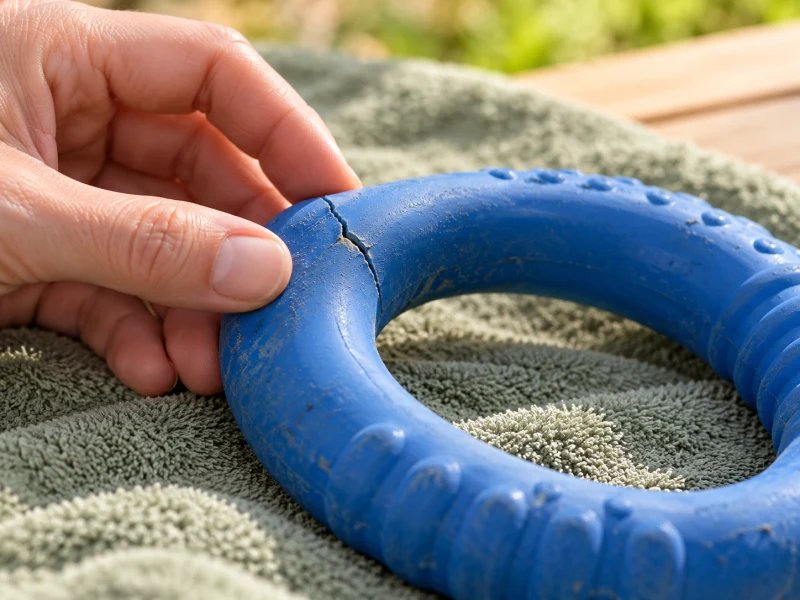
Do not cut off a damaged section and continue with the remainder. The complete linked structure is the product you bought; altering a ring changes its shape and the places where forces act. Glue and improvised knots are also poor substitutes for an intact toy.
Keep detached material away from the dog. Suspected swallowing, choking or injury needs prompt veterinary advice. Deal with that immediate concern before a retailer enquiry or a replacement purchase.
Follow the supplied care instructions and rinse away cleaning residue as directed. Let the openings dry and inspect again under good light. If the product arrives with unclear care or material information, ask the seller or manufacturer rather than borrowing instructions from a different rubber toy.
Account for the ordinary work after outdoor play
Put a towel and a suitable place to dry the toy into the daily routine before buying. A muddy object brought straight onto the sofa creates a different household problem from a clean toy kept with the walking equipment. The best location is one where you will actually notice damage and remember to put the toy away.
Consider who will run the game on an ordinary weekday. If the person who normally handles the dog finds this grip awkward, a product that looks impressive in a shop may rarely get used. Sharing a tug should be comfortable for that particular pair, not merely possible for the strongest person in the household.
Keep the buying decision reversible while checking the new item. Read the retailer’s return conditions and examine the unused toy promptly; do not wait until after a first wet, muddy session to discover that the shape was wrong.
Buy the particular tug shape, rather than the whole brand promise
Compare the 5038 with the type of interaction you already enjoy. It makes sense when an identifiable ring at each end gives you a useful shared grip and the dog stays comfortable during a supervised game. It makes less sense when the dog dislikes the mouth feel or wants a soft fabric toy.
The KONG Tug KG1E assessment shows a different handle arrangement. Use the geometry and material questions to compare your options, rather than assuming every tug or every brand fits the same pair of hands and mouth.
Choose Tonka dog toys one model at a time. For the black-and-yellow 3-Ring Tug 5038, comfortable separation, a manageable hold and an easy pause are better buying reasons than the strongest-sounding claim on the listing.
View Tonka 3-Ring Tug Black/Yellow 10.5-inch 5038 on Amazon.
Comments are reviewed before they appear publicly. Please keep questions and feedback relevant to this article.