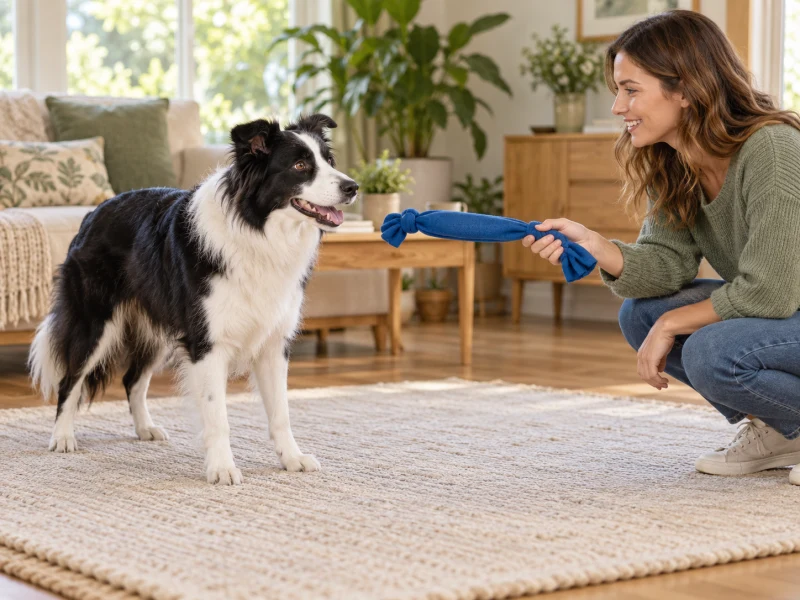
AI-created shared-play scene; generic prop, not the selected KONG Tug or a documented product test.
Choose tug toys for dogs by the space available for your hand, the shape your dog comfortably holds and the way you want to play together. A large label or a claim of toughness is less useful if your fingers end up beside the dog’s teeth or the toy is awkward to release.
Start with a simple shared game rather than a test of pulling strength. A suitable tug lets you invite play, pause it and put the toy away without a struggle. If the dog does not enjoy tug, choose another activity; a new purchase should not become a reason to force the game.
Choose tug toys for dogs around the person and the dog
Look at both ends of the toy. Decide where the dog will take hold and where your hand will naturally sit. A knot, ring or stitched handle is useful only if it leaves a manageable grip and enough separation for the actual pair using it.
Before buying tug toys for dogs online, compare the intended handle with one you already hold comfortably. That gives you a practical reference without assuming a familiar overall length means the same usable grip.
Think about an ordinary session at home. Are you standing, sitting or crouching? Does the dog prefer a broad surface or a narrow strip? Can you keep the toy at a comfortable height without bending your wrist or encouraging the dog to jump?
Those questions are more informative than choosing by breed alone. Dogs of similar size can have different mouth shapes and play habits, and handlers have different hand sizes and grip strength. A toy that suits one household member may be awkward for another.
| Buying decision | Check before the first game | Reason to choose differently |
|---|---|---|
| Hand grip | You can hold the intended area without winding material around your hand. | The grip slips, pinches or makes your wrist uncomfortable. |
| Mouth grip | The dog can investigate and take hold without being pushed into an opening. | The shape looks awkward, too bulky or easy to trap. |
| Separation | The dog has a gripping area away from your fingers. | The dog repeatedly shifts its mouth toward your hand. |
| Material | The dog likes the feel and you can inspect the whole object. | The animal immediately shreds, splits or avoids it. |
| Pause and release | You can stop moving and end the interaction calmly. | Play becomes tense or the toy must be wrestled away. |
| Maintenance | You can follow the care instructions and dry the toy. | Hidden dirt, loose fibers or damaged joints are difficult to check. |
Compare materials in tug toys for dogs
Fabric, rope and rubber offer different gripping surfaces. Softer fabric can be comfortable to hold, but seams and layers need inspection. Rope introduces individual strands and knots to check. Rubber can offer a defined handle, while splits and changes around connections remain reasons to stop use.
Do not turn those differences into a durability ranking without product-specific evidence. A fabric tug is not automatically unsuitable for a large dog, and a rubber tug is not automatically suitable for every strong chewer. What the dog does with it matters.
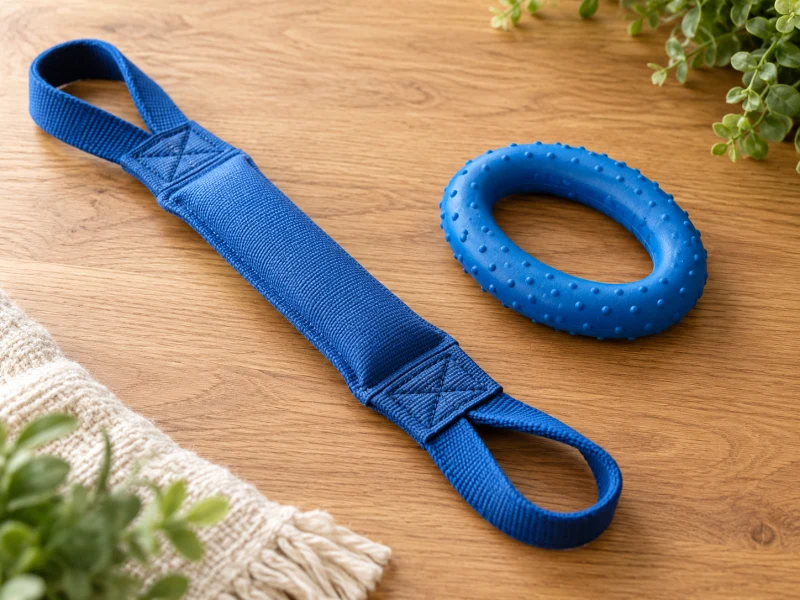
Check how much of the toy can be examined and cleaned. A complicated braid or a deep textured joint can hide debris. Ask whether you will notice wear on an ordinary day, rather than selecting the most elaborate construction because it looks substantial.
| Construction | What to examine | Practical ownership question |
|---|---|---|
| Flat fabric | Inspect both sides, seams and any padded layers. Check whether moisture makes the grip or mouth area difficult to manage. | Can you follow its washing instructions and notice a seam opening before another session? |
| Braided rope | Look at the whole braid, ends and knots rather than judging only the thickness of the middle. | Will you remove it if strands loosen, instead of treating additional fraying as normal enrichment? |
| Molded rubber | Check the size and shape of each opening and the condition of connecting sections. | Does the grip remain comfortable when the object is damp, and can you inspect every surface? |
These are maintenance questions rather than a scorecard declaring a material safest. Read the specific toy’s intended use and instructions before applying a routine learned with another object.
For a dog that quickly removes threads or concentrates on one junction, stop and reconsider the activity. Do not leave a tug available as a chew simply because it survived the first shared game. Interactive use and unseen gnawing create different demands.
Blue Cross’s toy-selection advice distinguishes tug from chasing and other play preferences. Choose around the dog’s interest, not an assumption that every dog needs the same collection of toys.
When the KONG Tug KG1E makes sense
The KONG Tug KG1E is worth considering when a medium or large dog and its adult handler both prefer a rubber tug with distinct gripping areas. Its flexibility and separate ends suit a shared game. Skip it if the actual handle openings are awkward for your hand or dog, or if your dog mainly wants to chew without a person joining in.
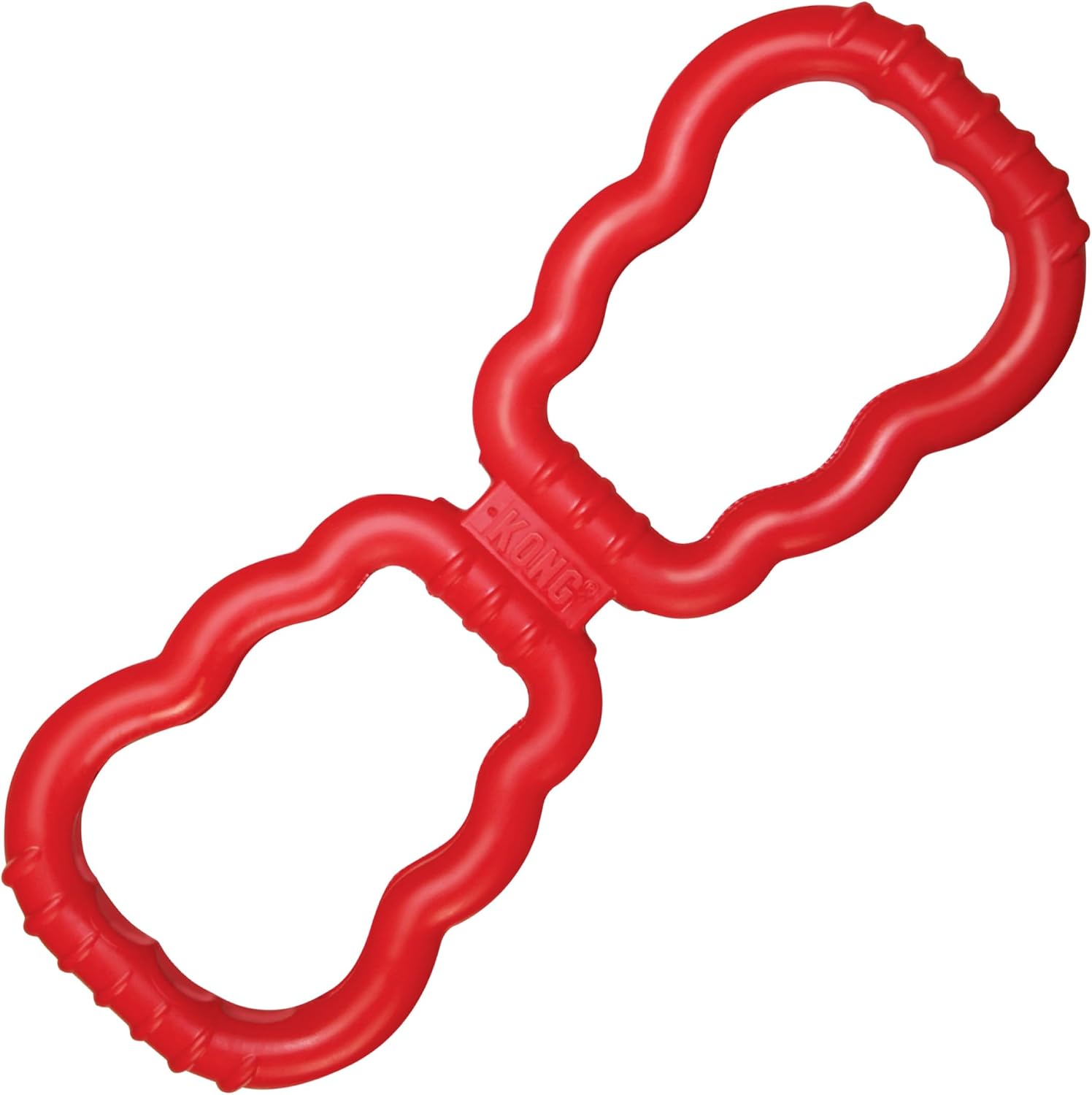
PRODUCT MENTIONED
KONG Tug Toy Medium/Large KG1E
Amazon · Details on the retailer’s website
KONG describes its Tug as a natural-rubber interactive toy with comfortable grips and material that stretches and returns to shape. Those are manufacturer descriptions of the design; they do not establish an independent pull-force rating or a guaranteed lifetime.
The selected KG1E listing identifies the red Medium/Large model under ASIN B000FEN1NO. Confirm that selection and the received package. A nearby listing for a rope, a ring or a different KONG shape may answer a different need.
Do not choose from the overall length alone. The usable opening, your hand position and the dog’s chosen grip matter more than a ruler measurement across the whole object. Examine the unused product before beginning a session that affects return eligibility.
For more detail about this particular shape, use the KONG Tug KG1E model assessment. The category decision remains whether rubber handles suit your shared play, rather than whether the brand makes a familiar toy.
Keep the game at a comfortable height
Choose a clear, level area where the dog can stand naturally. Move furniture or other objects that would force abrupt turns, and consider whether the floor is slippery. The play area should make the first introduction easy to observe.
Hold the toy within comfortable reach instead of raising it to encourage a leap. Do not lift the dog by the toy or suspend its weight from its teeth. More spectacular movement is not a useful measure of a better tug session.
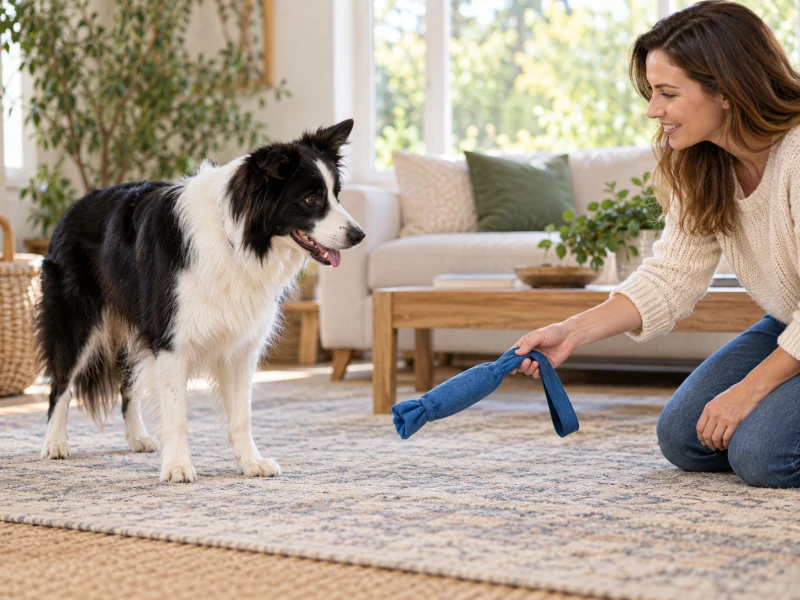
Offer an invitation and let the dog decide to engage. Pushing a toy into the mouth or dragging a reluctant animal toward it gives little useful information about suitability. A dog may prefer to sniff, carry or search for a toy rather than pull against a person.
Keep the first movement gentle and the first session manageable. If the dog loses its footing, keeps changing grip toward your hand or becomes difficult to settle, pause the interaction. Adjust the setting or choose a different activity rather than increasing force.
Keep the introduction separate from competing activities. A new tug offered beside a food bowl, another excited dog or a busy doorway makes it harder to see how the animal responds to the toy itself. Choose a quieter moment and clear route so the dog can step away without being followed or cornered.
If two household members use the same toy, check the grip with each person before assuming it suits both. A handle that works for a large hand may be uncomfortable for a smaller one. Agree where the toy is stored and which signs of wear mean it comes out of use.
Children should not be used as the test of a large dog’s tug strength. An adult needs to decide whether the animal, setting and handler are appropriate. Keep other dogs from joining unexpectedly while someone is assessing a new toy.
Build the pause into the purchase decision
Blue Cross’s play guidance describes making the toy still, allowing a release and rewarding letting go by restarting play. An easy pause is part of a good game, rather than an interruption that has to be overcome.
Choose a toy you can hold quietly without wrestling. Keep enough room to disengage and avoid winding a handle, rope or strap tightly around your wrist. A grip that only works when you pull continuously may not suit your household.
If the dog is tense over possession or you feel worried about approaching it, stop trying to force a handover. Obtain qualified reward-based training advice. Stronger material, a bigger handle or another tug will not by itself resolve a guarding concern.
Think about ending and storage as well as starting. The dog should not immediately regain access to an unsuitable toy when you turn away. Put shared-play equipment in a place where you can check it before the next session.
Inspect tug toys for dogs before and after play
Inspect the places where the mouth and hand apply pressure, then check the rest of the object. On fabric, look at seams and exposed layers. On rope, look for loose strands and altered knots. On rubber, look for splits, missing material and changes around openings.
Take a doubtful toy out of use. Do not repair a split with glue, tie an improvised knot through a damaged handle or trim away a torn section and assume the remainder is equivalent. An altered shape can create a different grip and wear pattern.
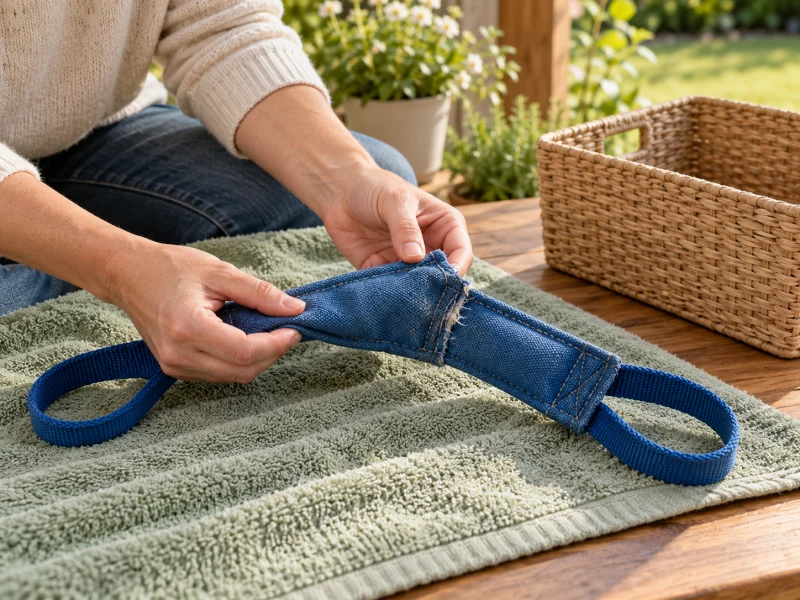
Keep detached material away from the animal. Contact a vet promptly if you suspect swallowing, choking or an injury. Product replacements and retailer questions are secondary to the dog’s immediate condition.
Follow the exact toy’s cleaning directions, rinse as required and allow it to dry before closed storage. A method for one washable fabric or one rubber product should not be applied to every tug without checking its instructions.
Choose the toy you will actually use together
A good purchase fits a routine, not just a basket of equipment. Decide who normally plays, where the game happens, how the toy will be cleaned and how you will notice wear. Buying several designs before trying one can make it harder to identify what the dog actually likes.
If you already own a suitable tug, check its condition and improve the play setup before ordering another. An awkward floor or an unclear handover will still be present after a parcel arrives. A replacement makes sense when the current object is worn or its design is genuinely mismatched.
For an animal that prefers another activity, compare the grip and reward decisions for dog training toys or the usable contents of dog-toy variety packs. A collection is only helpful when its pieces suit the dog and can be maintained.
Choose tug toys for dogs that give both participants a comfortable hold and a calm way to pause. For a medium or large dog that enjoys rubber grips, consider the KONG Tug KG1E. There is no need to buy a second near-identical toy. Keep the one that fits, inspect it and make the shared game the useful part of the purchase.
Comments are reviewed before they appear publicly. Please keep questions and feedback relevant to this article.